
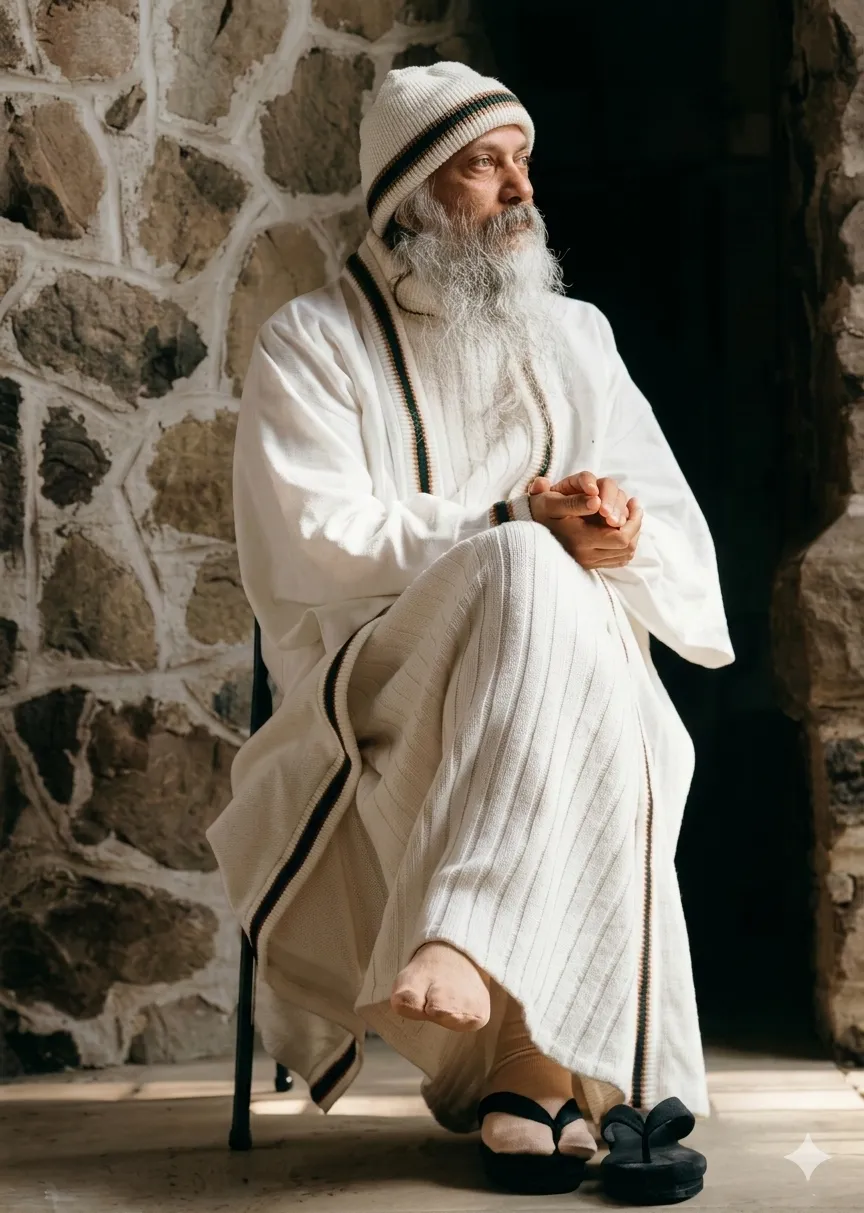
Keep your mind soft and open so birds and the talk can be heard together—don’t block anything, just let it all be.
From the Discourses
Passages where Osho speaks to this question — each links to the complete discourse.
Osho, the cuckoo’s cooing and your discourse go on together. Which should I attend to? Please tell me!
Shanti Swarup, why choose at all? Let both go together. The cuckoo’s cooing is not a disturbance to my discourse; it is the background. The cuckoo’s cooing supports exactly what I am saying; it is a base for the very ecstasy I am teaching. But ordinarily we have been taught one thing—concentration. And we fail to distinguish between concentration and meditation. The books say: meditation means concentration. Nothing could be more wrong. Meditation and concentration are entirely different. Concentration means: pull your attention back from everywhere and fix it in one place. It means: narrow the mind. Meditation means: make the mind vast. It means: open all the doors and windows. The cuckoo has sung—let that in; the sound of the train—include that too; and what I am saying—let that be there as well. There is no need to oppose any of it. Absorb everything together. And you will be…
तीसरा प्रश्न: ओशो, कोकिल की कुहू-कुहू और आपका प्रवचन, दोनों इकट्ठे चलते हैं। किस पर ध्यान करें? कृपया बताएं!
शांति स्वरूप, चुनो ही क्यों? दोनों को साथ-साथ चलने दो। कोयल की कुहू-कुहू मेरे प्रवचन में बाधा नहीं है, पृष्ठभूमि है। कोयल की कुहू-कुहू, मैं जो कह रहा हूं उसी को समर्थन है; मैं जिस मस्ती का पाठ पढ़ा रहा हूं उसी मस्ती के लिए आधार है। लेकिन हमें साधारणतः एक बात सिखाई गई है--एकाग्रता। और एकाग्रता और ध्यान में हम भेद नहीं कर पाते। किताबों में लिखा है: ध्यान यानी एकाग्रता। इससे गलत कोई और बात नहीं हो सकती। ध्यान और एकाग्रता बिलकुल भिन्न बातें हैं। एकाग्रता का अर्थ होता है: सब तरफ से ध्यान को खींच लो और एक जगह लगा दो। एकाग्रता का अर्थ होता है: चित्त को संकीर्ण कर लो। ध्यान का अर्थ होता है: चित्त को विस्तीर्ण करो! ध्यान का अर्थ होता है: सब द्वार-दरवाजे खोल दो। कोयल ने गीत गाया है, वह भी आए; और यह ट्रेन की आवाज, वह भी समाहित हो; और मैं जो बोल रहा हूं, वह भी। इन सब में विरोध करने की कोई जरूरत नहीं है। ये सब एक साथ आत्मसात कर लेने हैं।
Osho, to abide in oneself beyond the knower, knowledge, and the known—can one live in that state for an entire lifetime? Just as a lake is sometimes calm, sometimes playful, and sometimes stormy, does the self-realized one remain unaffected by worldly circumstances in the same way? Osho, dispel my ignorance!
Spring means harmony between season and mood. Meditation means harmony between you and the whole. You become harmonious. Whatever is, is perfectly okay—accepted. Nowhere any refusal, nowhere any opposition. Whatever is happening is auspicious. That is trust; that is meditation. Such meditation naturally takes you into an altogether new experience. Storms will rise; they will not stop because you meditate. Diseases will not stop coming to the body because you meditate. They will come. A thorn will sometimes pierce the foot. Raman had cancer; so did Ramakrishna—great storms came! Ramakrishna got cancer of the throat; he could neither eat nor drink. Vivekananda said to him, “What is not in your power! Why don’t you pray to the Lord at least to allow food and water to pass? We suffer watching you writhe.” Ramakrishna said, “Ah, it never even occurred to me to pray. How could it occur—to one whose prayer…
दूसरा प्रश्न: ओशो, ज्ञाता, ज्ञान और ज्ञेय से परे स्वयं में जो स्थित होना है, क्या उस अवस्था में आजीवन जीया जा सकता है? जिस तरह झील कभी शांत, कभी चंचल और कभी तूफानी अवस्था में होती है, क्या उसी तरह आत्मज्ञानी सांसारिक परिस्थितियों से प्रभावित नहीं होता है? ओशो अज्ञान हरें!
वसंत यानी मौसम और मिजाज के बीच समरसता। ध्यान यानी तुम्हारे और समस्त के बीच समरसता। समरस हो गए। ठीक है जो है, बिलकुल ठीक है, स्वीकार है। कहीं कोई अस्वीकार नहीं, कहीं कोई विरोध नहीं। जो रहा है, शुभ हो रहा है। यही आस्तिकता है, यही ध्यान है। ऐसा ध्यान स्वभावतः एक नई ही अनुभूति में तुम्हें ले जाएगा। तूफान उठेंगे, तूफान रुक नहीं जाएंगे तुम्हारे ध्यान करने से। ध्यान करने से शरीर में बीमारियां आनी बंद नहीं हो जाएंगी। बीमारियां आएंगी, शरीर में कभी कांटा भी चुभेगा। रमण को कैंसर हो गया, रामकृष्ण को भी...तो बड़े तूफान आए! रामकृष्ण को कैंसर हो गया गले का, तो भोजन न कर सकते थे, पानी न पी सकते थे। तो विवेकानंद ने उन्हें कहा कि आपके हाथ में क्या नहीं! आप क्यों नहीं प्रभु से प्रार्थना करते कि इतना तो कम से कम कर, कि कम से कम भोजन और पानी तो जाने दे! हम पीड़ित होते हैं आपको तड़पते देख कर।
'Neither distraction nor concentration.' A unique utterance! Ordinarily you think meditation means concentration. Meditation is not concentration. Because if you concentrate, there will be distraction; obstacle will come. You sit focusing on the image of Rama and a dog barks—mess. The dog’s bark will be heard, for as long as it is heard your focus on Rama is gone. For a moment you forgot. Your beads are rolling and the phone rings. For a second the mind went to the phone; the beads slipped. The hand may go on, but within, you missed. You become unhappy: obstacle. Meditation is not concentration; meditation is awareness. You sit—the dog barks—it is heard. The phone rings—it is heard. When the dog barks, there is no inner thought that 'the dog should not bark'. Who are you to stop the dog? The dog is not stopping you from meditating!
यह बड़ा अनूठा वचन है! साधारणतः तुम सोचते हो ध्यान का अर्थ: एकाग्रता। ध्यान का अर्थ एकाग्रता या कनसंट्रेशन नहीं है। क्योंकि अगर एकाग्रता करोगे तो विक्षेप होगा, बाधा पड़ेगी। तुम अगर बैठे थे अपना ध्यान लगाये राम जी की प्रतिमा पर और कोई कुत्ता भौंक गया, बस गड़बड़ हो गयी। क्योंकि वह कुत्ते का भौंकना तुम्हें सुनाई पड़ेगा न! जितनी देर कुत्ते का भौंकना सुनाई पड़ा, उतनी देर राम पर से ध्यान हट गया। एक क्षण को भूल गये। तुम अपनी माला फेर रहे थे और फोन की घंटी बजने लगी। एक सेकेंड को चित्त फोन की घंटी पर चला गया, माला हाथ से चूक गयी। चाहे हाथ फेरता भी रहे, लेकिन भीतर तो चूक गयी। तुम दुखी हो गये कि यह तो विक्षेप हो गया, बाधा पड़ गयी।
Some friends come to me and say, Osho, we keep hearing all sorts of sounds. When will this stop?
It is never going to stop. You are not to become unconscious so that you don’t hear sounds. No—meditation will not come by the stopping of sounds. Sounds are there, and within you no reaction, no response arises—meditation is concerned only with this much. A man is shouting next door; nothing happens to you: you hear, and nothing happens. A sister came to me today and said that in the last fifteen minutes of the afternoon silence her heartbeat increased a lot. So many sounds became audible that she got frightened; she felt like getting up and running away. Not hearing sounds would be a swoon. Hearing sounds and reacting by running away—that is the ordinary state. Hearing sounds and simply listening, remaining only the witness, the watcher—that is meditation. You are not to become stupefied. Whatever is happening, you will know it all—but it will become dreamlike. As long…
कुछ मित्र मुझे आकर कहते हैं कि ओशो, हमें सब आवाजें सुनाई पड़ती रहती हैं। यह कब बंद होगा?
यह कभी बंद नहीं होना है। आपको बेहोश नहीं होना है कि आपको आवाजें सुनाई न पड़ें। नहीं, ध्यान आपको आवाजें सुनाई पड़ना बंद होने से नहीं आएगा। आवाजें सुनाई पड़ रही हैं, आपके भीतर कोई रिएक्शन, कोई प्रतिक्रिया नहीं हो रही, बस ध्यान का संबंध इतने से है। एक आदमी आपके पड़ोस में चिल्ला रहा है, आपको कुछ भी नहीं हो रहा, आप सुन रहे हैं और कुछ भी नहीं हो रहा। एक बहन ने मुझे आज आकर कहा कि दोपहर के मौन के आखिरी पंद्रह मिनट में उसके हृदय की धड़कन बहुत बढ़ गई। इतनी आवाजें सुनाई पड़ने लगीं कि वह घबड़ा गई, उसे लगा कि वह निकल कर भाग जाए। आवाजें सुनाई न पड़ें, यह तो मूर्च्छा होगी। आवाजें सुनाई पड़ें और हम निकल कर भागने की प्रतिक्रिया करें, यह सामान्यता होगी। आवाजें सुनाई पड़ें और हम सुनें, और सिर्फ साक्षी और द्रष्टा रह जाएं, यह ध्यान होगा।