
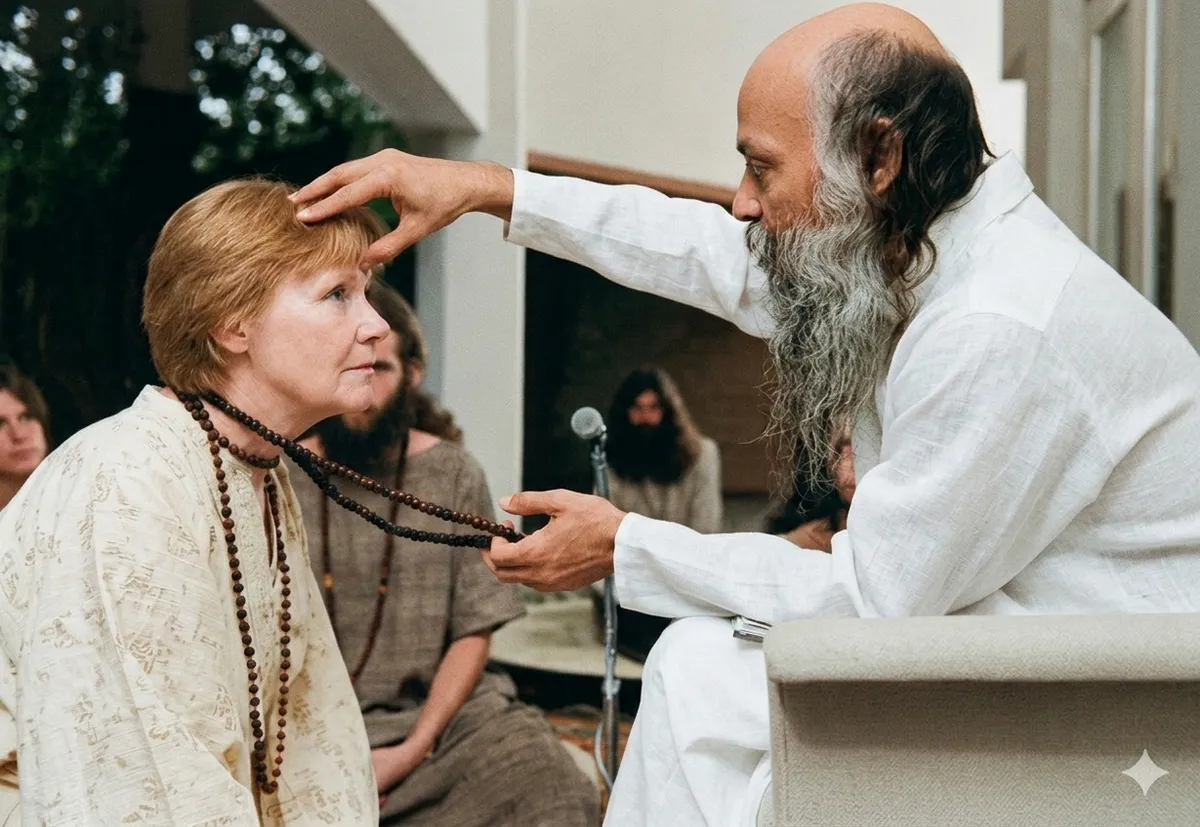
Your eyes draw you into silence so words fade; if you fight that and try to keep hearing, you feel jittery—relax and just look.
From the Discourses
Passages where Osho speaks to this question — each links to the complete discourse.
Osho, when you are giving a discourse, if I gaze at your face the words are not heard; and if I listen to the words, a kind of restlessness is felt. Why is this so?
Words are not of much value. Even if the words are not heard, it is all right; even if they are heard, there is no real gain. If you look toward me, it becomes meditation. If the meditation becomes right, if the wire is connected, the words will stop being heard—because to hear words, a restless mind is needed, an agitated, unquiet mind. In that moment—when the connection is made—the soundless will begin to be heard; that is the real satsang. It is not of much value that you hear what I say. If you can hear what I am, only then does it have value. Speaking is just a pretext; words are only devices. The arrival is into the soundless; the awakening is in silence. If this is happening, then drop all concern for words; just keep looking at me. Let the flame be joined. Forget that I am…
पहला प्रश्न: ओशो, जब आप प्रवचन कर रहे होते हैं, उस समय यदि आपका मुख निरखता हूं, तो शब्द सुनाई नहीं देते, और शब्द सुनता हूं तो बेचैनी सी मालूम होती है। ऐसा क्यों?
शब्द का मूल्य भी कोई ज्यादा नहीं है। शब्द न भी सुनाई पड़े, तो चलेगा, शब्द सुनाई भी पड़ जाए तो कोई लाभ नहीं है। मेरी तरफ देखोगे तो ध्यान बन जाएगा। अगर ध्यान ठीक बन गया, अगर तार जुड़ गया, तो शब्द सुनाई पड़ने बंद हो जाएंगे। क्योंकि शब्द सुनने के लिए भी एक बेचैन मन चाहिए। उद्विग्न मन चाहिए, अशांत मन चाहिए। उस घड़ी में, तार-बंधी घड़ी में निःशब्द सुनाई पड़ने लगेगा; वही असली सत्संग है। मैं क्या कहता हूं वह सुनाई पड़े, इसका बहुत मूल्य नहीं है। मैं क्या हूं वही सुनाई पड़ जाए, तो ही कोई मूल्य है। बोलना तो बहाना है, शब्द तो उपाय हैं, पहुंचना तो निःशब्द पर है। जागना तो मौन में है। अगर ऐसा होता हो तो शब्द की बिलकुल फिकर ही छोड़ दो; फिर मेरी तरफ देखते रहो। बंध जाने दो लौ को। भूल ही जाओ कि मैं बोल रहा हूं। कोई जरूरत नहीं है याद रखने की। शब्द को इकट्ठा करके भी कुछ पा न सकोगे। निःशब्द में जो सुन लोगे, निःशब्द को सुन लोगे, तो सब पा लिया। मौन में ही जुड़ सकते हो मुझ से। बोलने से तो टूट पैदा होती है। …
Osho, even though there is so much love for you, why do restlessness and anger sometimes arise while listening to you?
I have heard: a politician died, and his ghost went along with his bier. Another ghost was there at the cremation ground—an old ex-politician. The new politician’s ghost said, “Had I known that in dying such a crowd would gather, I’d have died long ago! Never in my life did such a crowd assemble. If only I had known earlier, I’d have died long ago!” There is a great relish in gathering a crowd. Behind it is a psychological truth. If no other way is found, a person resorts to upside-down means. In the early part of this century, in America, a man wanting to become famous shaved off half his hair and half his beard and mustache. He wandered the streets of New York for three days. Wherever he went, people stared in shock: what happened! His name was in every newspaper. In three days he was on everyone’s…
तीसरा प्रश्न: ओशो, आपके प्रति इतना प्रेम रहते हुए भी आपको सुनते वक्त कभी-कभी अकुलाहट और क्रोध क्यों उठने लगता है?
मैंने सुना है, एक राजनेता मरा तो उसकी प्रेतात्मा अपनी अरथी के साथ गयी। एक दूसरी प्रेतात्मा, एक पुराने भूतपूर्व राजनेता, वे भी वहां मौजूद थे मरघट पर। तो उस नये राजनेता की प्रेतात्मा ने उनसे कहा कि अगर मुझे पता होता कि मरने पर इतनी भीड़ इकट्ठी होगी, मैं कभी का मर गया होता। इतनी भीड़ इकट्ठी हुई, जिंदगी में कभी नहीं हुई थी! अगर मुझे पहले पता होता तो मैं कभी का मर गया होता! भीड़ को इकट्ठा करने का बड़ा शौक है, बड़ा रस है। उसके पीछे मनोवैज्ञानिक सत्य है। अगर कोई भी उपाय न मिले तो आदमी उलटे-सीधे उपाय करता है। एक आदमी ने अमरीका में इस सदी के प्रारंभ में अपने को प्रसिद्ध करने के लिए आधे बाल काट लिए, आधी दाढ़ी-मूंछ काट ली। न्यूयार्क की सड़कों पर वह तीन दिन घूमता रहा। जहां गया वहीं लोगों ने चौंककर देखा कि क्या हुआ! सब अखबारों में उसका नाम छपा। तीन दिन में वह आदमी हर आदमी की जबान पर था। और जब उससे पूछा गया कि यह तुमने किसलिए किया है, तो उसने कहा कि इसमें क्या कुछ बताने की बात है! …
Osho, when you sit silently, that silence doesn’t come within our grasp. But when you begin to speak, a glimpse of silence appears between two sentences, between two words. Yet in becoming so absorbed in understanding the meaning of your speech, that silence keeps slipping away. So please explain: when we listen, how should we listen to you?
It will be so—naturally. When I sit utterly silent, you are not able to sit silent; inside you the stream of thoughts flows, an undercurrent keeps moving—you start talking to yourself. The habit of inner talking has become so deep, so carved in stone, that not even for a moment do you find rest within. If I sit completely silent, you will simply forget me. Your inner stream becomes active, your old habit seizes you, you get absorbed in inner conversation. It’s a monologue—you speak alone, yet you do speak. Then even my silence is hard for you to see, because we can only see that which has its opposite as a background. A psychologist once did an experiment at a university. On a large black blackboard he drew a tiny white dot and asked the students, “What do you see?” Not one of them saw the big blackboard; all…
प्रश्न: ओशो, जब आप चुप बैठते हैं, तो वह मौन पकड़ में नहीं आता। लेकिन जब आप बोलने लगते हैं, तो दो वाक्यों के, दो शब्दों के बीच कुछ मौन की झलक मिलती है। लेकिन आपकी वाणी का अर्थ समझने में इतना मोह होता है कि वह मौन छूटता-छूटता जाता है। तो कृपया समझाएं कि जब हम सुनते हैं, तो आपको कैसे सुनें?
ऐसा होगा, स्वाभाविक है। जब मैं बिलकुल चुप बैठा हूं, तब तुम चुप नहीं बैठ पाते, तब तुम्हारे भीतर विचारों की धारा चलती है, अंतर-धारा बहती है, तब तुम अपने से बात करते हो। बात करने की आदत इतनी गहन हो गई है, इतनी पत्थर की लकीर की तरह हो गई है कि एक क्षण को भी भीतर तुम विश्राम को उपलब्ध नहीं होते। अगर मैं बिलकुल चुप बैठा हूं, तो तुम मुझे भूल ही जाओगे। तुम्हारे भीतर की धारा सक्रिय हो जाएगी, तुम्हारी पुरानी आदत तुम्हें पकड़ लेगी, तुम अंतर-वार्ता में लीन हो जाओगे। मोनोलॉग है, अकेले ही बोलते हो, लेकिन बोलते हो। फिर मेरा मौन भी तुम्हें दिखाई पड़ना मुश्किल है, क्योंकि वही हमें दिखाई पड़ता है, जिसकी पृष्ठभूमि में विपरीत मौजूद हो।
Osho, during discourse when I look at you, when I behold you, I hear your voice; but I don’t remain aware of what you are saying. So is this my swooning, unconsciousness? Please guide me.
No, Samadhi! It is not unconsciousness. Now for the first time you have begun to listen to me as one should. What I am saying is only a pretext—to keep you engaged, to keep you sitting here. It is with what I am that you have to connect. What is said in the words is nothing; what flows between the words is everything. The gap between two words—when sometimes I fall silent for a moment—then you will hear; only then is it heard. Forget what I say; don’t bother about that. Don’t forget what I am. It is not stupor. It is like stupor, but it is not stupor. It will feel like stupor. It is ecstasy, self-absorption. But self-absorption, too, seems like faintness; an intoxication descends. “The goblet slips, O saqi, the hands begin to tremble; Seeing your eyes, I fall into intoxication.” Let the intoxication grow. Let the…
सातवां प्रश्न: ओशो, प्रवचन के समय जब आपको देखती हूं, आपका दर्शन करती हूं, तब आपकी आवाज सुनाई पड़ती है; लेकिन आप क्या कह रहे हैं उसका ध्यान नहीं रहता। तो क्या यह मेरी मूर्च्छा है, बेहोशी है? कृपा कर मेरा मार्ग-दर्शन करें।
नहीं समाधि! बेहोशी नहीं है। अब पहली दफा जैसा मुझे सुनना चाहिए वैसा तुमने सुनना शुरू किया। जो मैं कह रहा हूं वह तो बहाना है--तुम्हें उलझाए रखने का; तुम्हें यहां बिठाए रखने का। जो मैं हूं, उससे ही जुड़ना है। जो शब्द में कहा जा रहा है, वह तो ना-कुछ है। जो शब्दों के बीच में बहा जा रहा है, वही सब-कुछ है। दो शब्दों के बीच में जो अंतराल है, जब कभी-कभी मैं क्षण भर को चुप हो जाता हूं, तब सुनोगे--तभी सुना।
Osho, people listen to discourses with their eyes closed. But I’m afraid to close my eyes even for a moment. I want to keep looking at you—only looking. When the light of your eyes enters mine, the divine experience that happens is beyond description. In that experience I can hear only half the discourse. What kind of thirst is this? Can it be quenched?
This is a sacred thirst—the longing of love and devotion. Do not be afraid of it. - Don’t imitate others. If your eyes want to remain open, let them; follow your own truth. - Words are secondary; the essential transmission is silent, through presence and the meeting of eyes. Missing some words is not a loss. - Allow the thirst to deepen; it purifies and burns the ego. When separation drops, the longing transforms. - In one sense, desire is never “quenched” by objects; in another, it fulfills itself when you dissolve into the beloved—the seeker and the sought become one. - Open or closed eyes are not the point; totality is. Let the experience take you beyond seeing the other to simply being. Shanta has asked: There are two kinds of people in the world—those who live through the ear, and those who live through the eye. Everything in…
दूसरा प्रश्न: ओशो, लोग आंख बंद करके प्रवचन सुनते हैं। और मैं डरती हूं कि कहीं एक पल के लिए भी आंख न बंद हो। मैं चाहती हूं कि आपको देखती रहूं, देखती ही रहूं। आपकी आंखों की रोशनी जब मेरी आंखों में आती है तो जो दिव्य अनुभव होता है, उसका वर्णन नहीं कर सकती। इस अनुभव में मैं आधा प्रवचन ही सुन पाती हूं। यह कैसी प्यास है? क्या यह पूरी हो सकती है?
पूछा है शांता ने। दुनिया में दो तरह के लोग हैं। एक, जो कान से जीते हैं; और एक, जो आंख से जीते हैं। दुनिया में हर चीज दो में बंटी है। एक ही दो में बंटा है, मगर दो में बंटे बिना दुनिया नहीं बनती। कुछ लोग आंख से जीते हैं। कुछ लोग कान से जीते हैं। जो कान से जीते हैं, वे मुझे आंख बंद करके सुनना पसंद करेंगे। उनका रस, उनका मुझसे संबंध कान से जुड़ेगा। जो आंख से जीते हैं, वे आंख बंद न कर पाएंगे। आंख बंद करेंगे तो उन्हें लगेगा कुछ खोया। कान उनके लिए पर्याप्त नहीं होगा। वे आंख से ही पीएंगे, वे आंख से ही सुनेंगे; आंख ही उनका द्वार है। जो तुम्हें सहज हो, वैसा ही करना। अगर आंख खोले रखने में ही रस आता हो, तो फिकर छोड़ो प्रवचन की। आधा सुना, कि नहीं सुना, चिंता न करो। आधे से ज्यादा, जो चूक गया है, उससे ज्यादा तुम्हें आंख से मिलेगा। अपनी प्रकृति को समझो। दूसरे आंख बंद करके सुन रहे हैं, इसकी नकल में मत पड़ना। नकल अक्सर भ्रांति में डाल देती है, हानि में पहुंचा देती है। कभी किसी की भूल कर नकल मत करना। …