
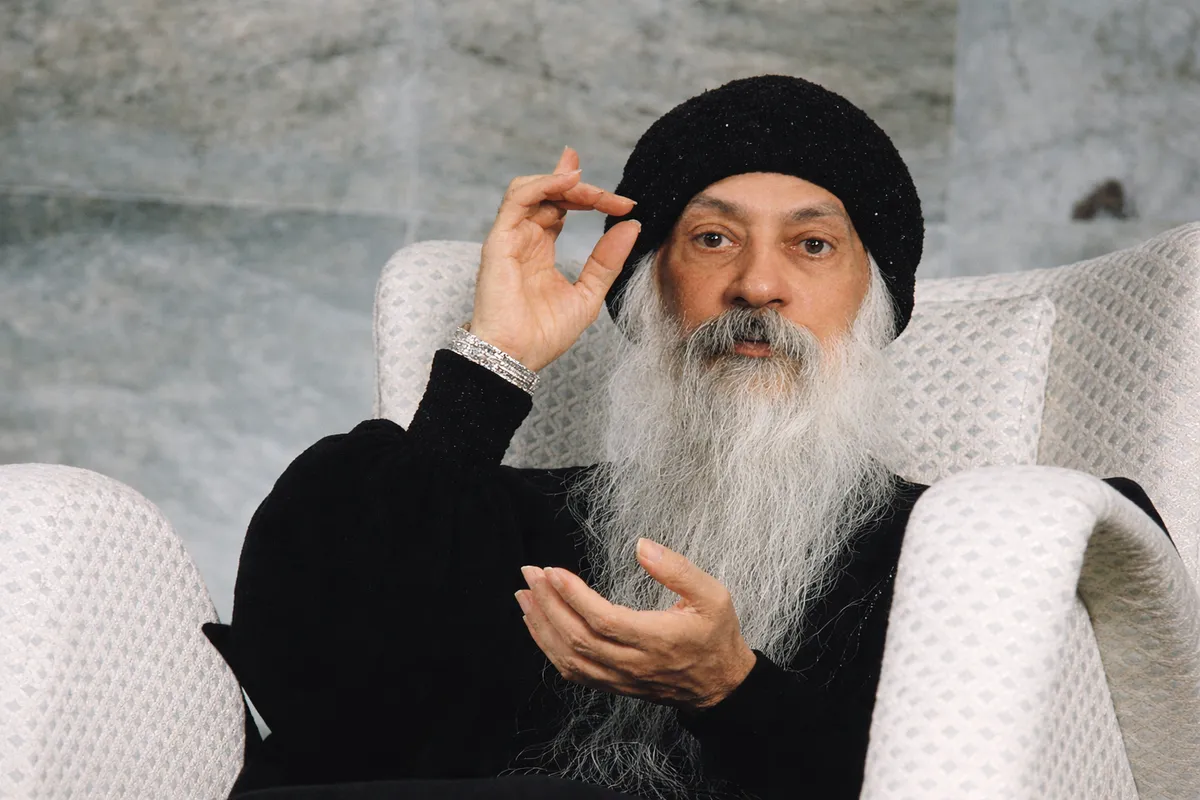
He used the word Bible to show the difference between a dry old book and a living teaching you can feel now, so you choose life over dogma.
From the Discourses
Passages where Osho speaks to this question — each links to the complete discourse.
Beloved master, what is the point of calling your juicy discourses, the bible?
[These discourses were first given under the title, THE RAJNEESH BIBLE -- Ed.] The point is clear. The Bible of the Christians is not juicy. They have destroyed a beautiful word, "bible." It has become dead. I want to make it alive. I love the word, and I want to give it all the juice that is possible. The point is very simple: so people can see the dead BIBLE and the living Bible -- the BIBLE which is just dry bones and the BIBLE which has juice. Now the choice is theirs. Okay?
Osho, a question arises in my mind. Last night you said some things about the scriptures. It seemed to me that whatever you say could also be found in the scriptures. And what you are saying is itself gradually becoming a scripture. And what you say about the scriptures will apply verbatim to what you yourself have said as well. One who can see will see it here too; one who cannot see will not see it here either. And one who can see will also see it in the ancient scriptures, while the one who cannot see will not see it there either. Then there remains no purpose in criticizing them.
If this much becomes clear to us, then you will see I am not condemning scripture; I am stating the factual situation of scripture. And what you say is right: much of what I say will be found in the scriptures—not because it is there, but because you will have understood me. If my words have been understood by you, you will find them in the scriptures, because in scripture you will find only what your understanding is. Whatever your understanding is, that is what you will find—because we project our own understanding into scripture. Ordinarily we think that understanding comes out of scripture. It does not. We put our understanding into the scripture. That is why a thousand commentaries on the Gita are possible. If understanding came out of the Gita, how could there be a thousand commentaries? And if Krishna had a thousand meanings, then Krishna’s mind must…
प्रश्न: ओशो, एक प्रश्न मेरे मन में उठता है। आपने रात को शास्त्रों के बारे में कुछ बात कही। मुझे ऐसा लगा कि आप जो भी कुछ कहते हैं, वह शास्त्रों में भी उपलब्ध हो ही सकता है। और आप जो कुछ कह रहे हैं, वह भी स्वयं में एक शास्त्र ही बनते चले जा रहे हैं। और जो बातें आप शास्त्रों के संबंध में कह रहे हैं, वह आपकी कही हुई बातों पर भी ज्यों की त्यों लागू हो जाएंगी। जो देखने वाला है, उसे इसमें भी दिखेगा। जो नहीं देखने वाला है, उसे इसमें भी नहीं दिखेगा। और जो देखने वाला है, उसे प्राचीन शास्त्रों में भी दिख ही जाता है। और न देखने वाले को उनमें भी नहीं दिखता। फिर उनकी निंदा का कोई प्रयोजन शेष नहीं रह जाता।
यह जो हमें खयाल में आ जाए, तो मैं शास्त्र की निंदा नहीं कर रहा हूं, शास्त्र की वस्तुस्थिति क्या है, वह कह रहा हूं। और वह जो तुम कहते हो, वह ठीक है। मेरी बहुत सी बातें शास्त्र में मिल जाएंगी--इसलिए नहीं कि वे शास्त्र में हैं, इसलिए कि तुम मेरी बातों को समझ लोगे। अगर मेरी बातें तुम्हें समझ में पड़ गईं, तो तुम्हें शास्त्र में मिल जाएंगी। क्योंकि शास्त्र में तुम्हें वही मिल जाएगा, जो तुम्हारी समझ है। जो तुम्हारी समझ है, वही मिल जाएगा। क्योंकि हम शास्त्र में अपनी समझ डालते हैं। आमतौर से हम सोचते हैं कि शास्त्र से समझ निकलती है। निकलती नहीं, हम शास्त्र में अपनी समझ डालते हैं। इसीलिए तो गीता की हजार टीकाएं हो सकती हैं। अगर गीता से समझ निकलती हो तो हजार टीकाएं कैसे हो सकती हैं? और कृष्ण के अगर हजार मतलब रहे हों तो कृष्ण का दिमाग खराब रहा होगा। कृष्ण का मतलब तो एक ही रहा होगा। हजार टीकाएं हो सकती हैं, लाख टीकाएं हो सकती हैं, क्योंकि हर एक व्यक्ति अपनी समझ उसमें खोज लेगा। …
Osho, sometimes I have the feeling that you are not quoting the bible correctly.
That's possible. I am not a scholar, and if sometimes it is correct, it is a miracle. It must be coincidence. I am not a Christian either. I am not concerned with what exactly is written in the book, I am more concerned with what happened to Jesus in his innermost core. It has happened to me too, sol know what it is. When I am saying anything, I am not saying it according to the Bible, but according to the Christ-consciousness. And if sometimes you find that I am saying something which is not in the Bible, then at least in your Bible you can add it. And it will be absolutely true. It is possible... because I am a drunkard. I speak out of my drunkenness. If you are listening from a scholarly standpoint, you may be worried, puzzled; and you will miss much. You will have to…
A friend has asked: Osho, according to your statements, all dharmashastras—the religious scriptures that express the ideas of Buddha, Mahavira, and so on—are useless. Then why shouldn’t the books through which your ideas are expressed also be considered useless? Why should a person not advance only through his own experience? What need is there to listen to you?
And in response there are Jain books that say the same: it is better to be crushed under a mad elephant’s feet than to take refuge in a Hindu Shiva temple. That is a great sin; death is better than that. I am against this mentality. This mentality has caused great harm. How could I be opposed to books, to ideas, to the experiences of those who have enriched life? But I am opposed to deadness, and to the insistence that whatever we are clinging to is the only truth. This is the sign of a violent mind. A nonviolent, loving heart does not make such insistences. It is always open to think and to inquire. Always impartial. I spoke to you about this the day before yesterday, so I will not go further into it now. Let me simply repeat: I am in favor of books; I am not…
एक मित्र ने पूछा है: ओशो, आपके कथनानुसार सब धर्मशास्त्र, धार्मिक पुस्तकें व्यर्थ हैं, जिनमें बुद्ध, महावीर वगैरह के विचार व्यक्त होते हैं। तो आपके विचारों की अभिव्यक्ति जिन पुस्तकों से है, उन्हें भी व्यर्थ क्यों न माना जाए? मानव अपने अनुभवों से ही क्यों न आगे बढ़े, आपको सुनने की भी क्या आवश्यकता है?
मेरा किताबों से, विचारों से, जीवन को जिन्होंने समृद्ध किया है उनकी अनुभूतियों से क्या विरोध हो सकता है? लेकिन जड़ता से मेरा विरोध है। और इस आग्रह से कि जो हम पकड़ कर बैठे हैं, वही सत्य है। यह बहुत हिंसात्मक, वायलेंट माइंड की सूचना है। यह अहिंसक, प्रेमपूर्ण चित्त ऐसे आग्रह नहीं करता है। वह हमेशा खुला होता है सोचने को, विचार करने को। हमेशा निष्पक्ष होता है। उस संबंध में मैंने परसों आपसे बात की है, इसलिए और उस संबंध में आगे कुछ नहीं कहूंगा। इतना ही पुनः कह देता हूं: किताबों के मैं पक्ष में हूं, शास्त्रों के मैं पक्ष में नहीं हूं। और मेरा फर्क आप समझ लें।