
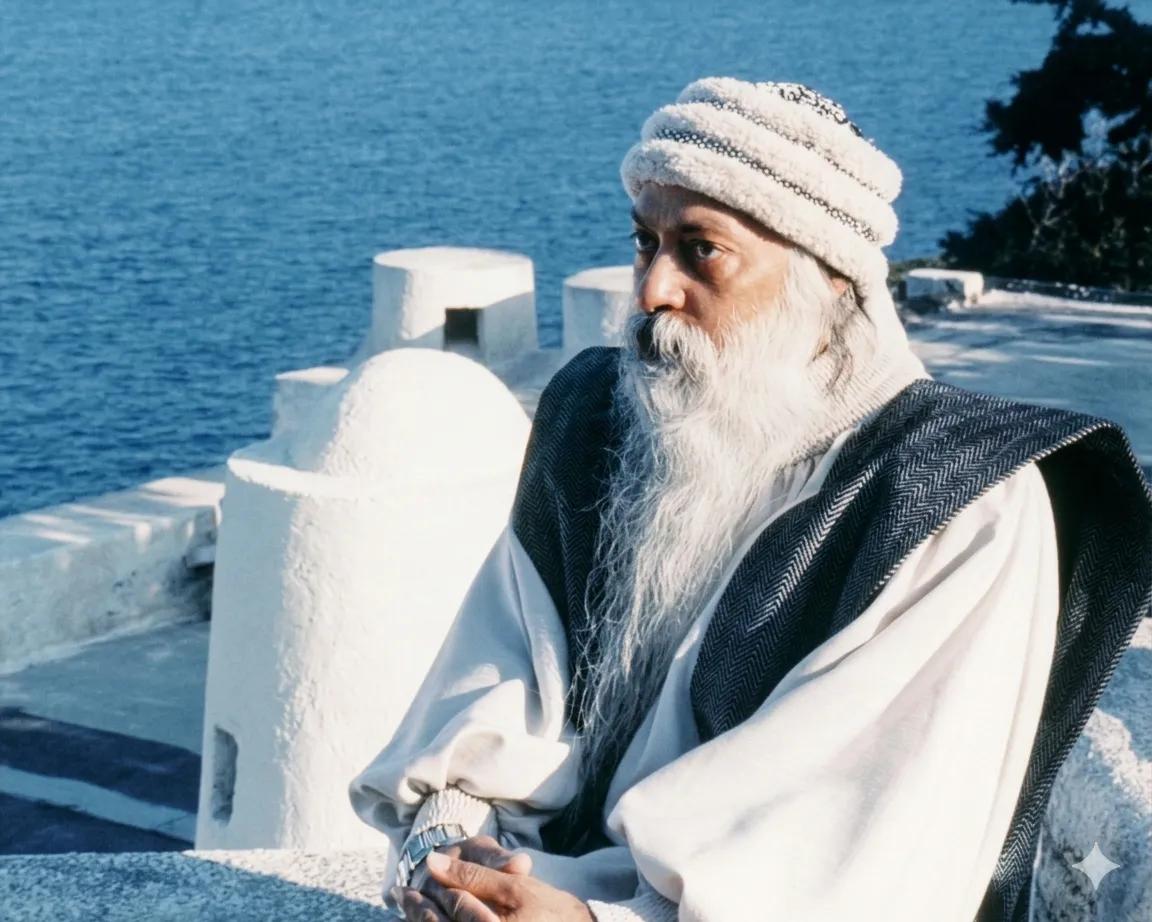
According to Osho, truth is not dependent on shastras; it precedes them. Scriptures can stuff memory and make scholars, but they cannot awaken living knowledge, which is consciousness itself. Realization demands inner search and self-transformation, not secondhand authority. The only true scripture and guru is your own being - by turning within, beyond worldly words, truth is directly known.
Books can talk about truth, but you only know it by looking inside and changing yourself.
From the Discourses
Passages where Osho speaks to this question — each links to the complete discourse.
How can we possibly know truth without the help of the shastras? Isn't it only through them we can know truth?
Do you mean to say that if all the scriptures, all the shastras, were destroyed that truth would also be destroyed with them? Is truth dependent on the shastras or are the shastras dependent on truth? My friend, the truth has never been attained by means of the shastras. On the contrary, the shastras were obtained, were revealed after the truth had been realized. It is not the shastras that are of value, it is the truth which is of value. The fundamental thing is the truth, not the shastras. And if truth could be attained through the shastras it would be a very cheap truth indeed. You could attain it without making any change in yourself. But the shastras can only fill your memory, they cannot give you knowledge of the self. And in the direction of truth a trained memory doesn't help at all. For truth, you have…
Why, Osho, isn't knowledge of the scriptures helpful in finding the truth?
Maneeshi, KNOWLEDGE IS NOT YOURS, THAT'S WHY. It is borrowed. And can you borrow truth? Truth is untransferable; nobody can give it to you. Not even an alive Master can transmit it to you. You can learn, but it cannot be taught. So what to say about dead scriptures, howsoever holy they may be? They must have come from some original source; some Master, someone awakened must have been at the very source of them -- but now they are only words. They are only words about truth, information about truth. To be with Krishna is a totally different matter from reading the Bhagavad Gita. To be with Mohammed, attuned, in deep harmony, overlapping with his being, allowing his being to stir and move your heart, is one thing. And just to read the Koran is a far, faraway cry; it is an echo in the mountains. It is not…
Do you think the study of the shastras is unnecessary then?
What purpose will the study of the shastras, of the scriptures, serve? You can't attain knowledge that way. It will just train your memory. You can learn a few things, but learning and knowing are two quite different things. You learn about God, about truth, about the soul. You will be able to give ready-made replies to questions about them. But there is no difference between that and what the parrot in your house repeats every morning -- what it has been taught to say. Truth is not to be found in the scriptures. It is in the self, in your self. The shastras are only words and they are meaningful only if one has realized truth within oneself. Otherwise they are not only useless, they are harmful. Truth cannot be known by learning the shastras but if you know the truth the shastras can certainly be known. But what…
Osho, how can one be free of scriptures and doctrines? They have such a grip that no way to be free seems visible.
Scriptures are not to be discarded. Where have I discarded them? Has anyone given as much respect to scriptures as I have? So how can I tell you to drop them? I am saying something else. I am saying that nothing of your purpose will be fulfilled by scriptures until your own samadhi happens. To give value to samadhi I say, “Drop scriptures,” otherwise you will cling to scripture and go on missing samadhi. I have heard: A young man went to America’s great millionaire, Morgan, and said, I have written this book. It is so astounding that millions of copies will sell and millions will benefit. Please publish it. Morgan asked—without even taking the book in his hand—What is the name of this book? The young man said: Its name is “A Hundred Ways to Make Money.” Morgan looked him up and down—shabby condition. He asked: How did you…
Osho, Dariya Sahib was not a scholar, not even educated. Then how did the dust of the scriptures settle on him, such that the Master had to blow it away?
I have heard: two small children were passing by a nudist camp—a settlement of people without clothes. They peeped through a small drainage hole in the wall. Everyone inside was naked—women and men. The boys were perhaps six or seven, schoolbags slung over their shoulders, returning from school. They were in great difficulty: which were women, which were men? They had never seen a naked woman or naked man; they knew only one distinction—if a sari is worn, it is a woman; without a sari, a man. Now they were in trouble. When they got home they said to their parents, “We passed the colony of the naked; we peeked.” The mother asked, “Who were there—men or women?” They said, “How can we tell? They were wearing no clothes!” Do you understand the children’s point? Their recognition is a recognition of clothes. But how much beyond clothes does your recognition…