
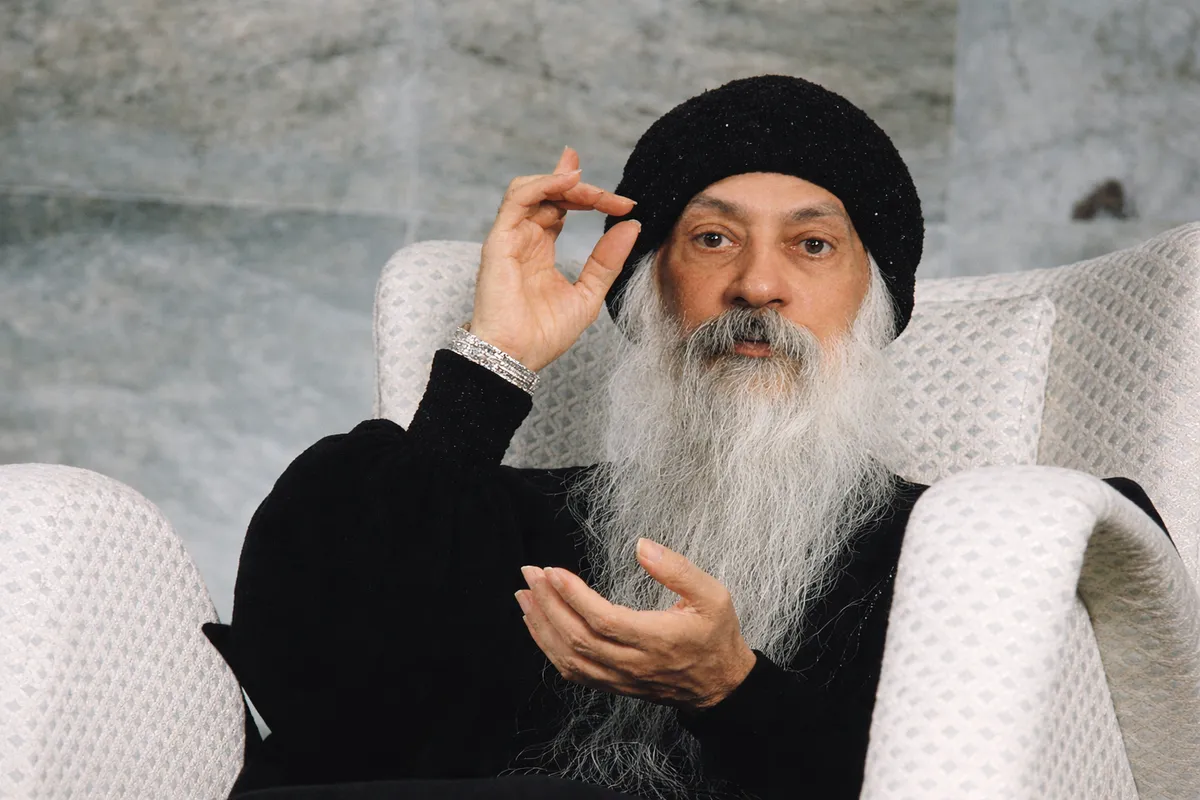
Osho's perspective on Non-Attachment
When Osho Spoke About Non-Attachment
Passages from the discourses where this theme comes alive.
Osho, Mahavira’s dispassion, Christ’s holy indifference, Buddha’s disregard, and Krishna’s non-attachment—what are their subtle similarities and differences? Please shed light on this.
In this, some similarities appear. Krishna will arrive at a peace like Buddha’s, because he has nothing to attain—whatever is, is already attained. At times he will appear dispassionate like Mahavira, for his joy knows no bounds. He will appear to proclaim God as Jesus does—but not because there is a God sitting in this world or the next: rather, because all is God. Krishna’s non-attachment is total surrender—“the disappearance of ‘I.’” To know that the “I” is not. Once this is known, whatever is happening is happening. There is nothing to be done about it. There is no possibility of our doing anything. Krishna sees himself as a wave in the ocean. Since there is no choosing, there is no attachment. If we understand correctly, non-attachment is not a state of mind; it is the dropping of all states of mind, the dropping of all positions—and becoming one with…
ओशो, महावीर की वीतरागता, क्राइस्ट की होली इनडिफरेंस, बुद्ध की उपेक्षा, कृष्ण की अनासक्ति, इनमें क्या सूक्ष्म समानता व भिन्नता है? इस पर प्रकाश डालें।
इसमें कुछ समानताएं मिलेंगी। कृष्ण बुद्ध जैसी शांति को उपलब्ध हो जाएंगे, क्योंकि कुछ उन्हें पाना नहीं है। जो भी है, वह पाया हुआ है। वे महावीर जैसे वीतराग दिखाई पड़ेंगे किन्हीं क्षणों में, क्योंकि उनके आनंद का कोई पारावार नहीं है। वे जीसस जैसे परमात्मा की घोषणा करते दिखाई पड़ेंगे। इसलिए नहीं कि इस लोक और परलोक में परमात्मा कहीं बैठा है, बल्कि सब कुछ परमात्मा ही है। कृष्ण की अनासक्ति समग्र समर्पण है, ‘मैं’ का न हो जाना है। ‘मैं’ है ही नहीं, यह जानना है। इसके जान लेने के बाद जो हो रहा है, वह हो रहा है। इसमें कोई उपाय ही नहीं है। इसमें हम कुछ कर सकते हैं, ऐसा है ही नहीं। इसमें हमारे द्वारा कुछ हो सकता है, इसकी कोई संभावना ही नहीं है। कृष्ण अपने को एक लहर की तरह सागर में देखते हैं। कोई चुनाव नहीं करना है, इसलिए कोई आसक्ति नहीं है। …
Questioner: what is the subtle difference, if any, between mahavira's transcendence of attachment, christ's holy indifference, buddha's indifference and krishna's non-attachment? And in what way are they the same?
There is a good deal of similarity between Christ's concept of neutrality, Buddha's idea of indifference, Mahavira's transcendence of attachment, and Krishna's non-attachment. These are the ways of looking at and meeting the world. But there are some basic differences too. While their end-points are similar, their approaches are very different. while their ultimate goal is the same, they differ much in the ways and means they use to achieve their ends. There is deep similarity between what Christ calls neutrality or non-alignment with the world at large, and what Buddha calls indifference to it. As the world is, with all its strange goings-on, its contradictions and conflicts, its struggles and trials, a seeker on the spiritual path will do well to keep a distance from it. But remember, neutrality can never be blissful; deep down it makes one sad and dull and drab. Therefore Jesus looks sad; even if…
This non-attachment—someone has asked—how can it arise in an ordinary person?
All are ordinary until non-attachment arises. So the question is not how it can come to “ordinary” people. Until it comes, everyone is ordinary; only when it flowers does extraordinariness bear fruit in life. Hence there are not two paths—one for the ordinary and one for the extraordinary—because “extraordinary” only means one who has attained non-attachment. Ask instead: how to attain it? How is this non-attachment to be realized? And before we ask that, first see how it was missed in the first place. How have we gone astray from non-attachment? In Krishna’s vision, non-attachment is our very nature. How did we miss our nature? So it is not that we have to do some special practice to acquire non-attachment. We only need to understand how we drifted from our nature. How did we lose non-attachment? Someone came to me and said, “I am searching for God.” I asked him,…
यह अनासक्ति, पूछा है, कैसे साधारणजन को आए?
सभी जन साधारण हैं जब तक अनासक्ति न आ जाए। इसलिए ऐसा सवाल नहीं है कि साधारणजन को कैसे आए। अनासक्ति जब तक न आए, तब तक सभी साधारण हैं। अनासक्ति आ जाए तभी असाधारणता जीवन में फलित होती है। इसलिए ऐसा नहीं है कि साधारणजन के लिए अनासक्ति का और रास्ता होगा, असाधारणजन के लिए और होगा। क्योंकि असाधारण का एक ही अर्थ है कि वह अनासक्ति को उपलब्ध हुआ है। कैसे उपलब्ध हो, ऐसा ही पूछें। यह अनासक्ति कैसे उपलब्ध हो? इसको भी समझने के पहले जरा इसे समझ लें कि यह चूक कैसे गई है? यह अनासक्ति हमसे चूक कैसे रही है? अनासक्ति कृष्ण की दृष्टि में स्वभाव है। हम चूक कैसे गए हैं स्वभाव से? इसलिए ऐसा नहीं है कि हमें कुछ साधना है अनासक्ति में। इतना ही जानना है कि स्वभाव से हम चूक कैसे गए हैं? हमने अनासक्ति खोई कैसे? कोई व्यक्ति मेरे पास आया और उसने पूछा कि मैं ईश्र्वर को खोजता हूं। तो मैंने उससे पूछा कि तुमने खोया कब? और अगर खोया हो तो खोज सकते हो। उसने कहा, नहीं, मैंने खोया तो कभी भी नहीं। …
Patanjali has stressed the importance of non-attachment, that is, cessation of desires, for being rooted in oneself. But is non-attachment really at the beginning of the journey, or at the very end?
You have to grow. Only then can you create love in others. It cannot be demanded. If you demand it, it can become an attachment, but not love. So the child will love the mother because she is his mother. The mother or the father, they become the goals. These are relationships, not love. Then he becomes attached to the family, and family is a destructive force because the family of the neighbor is separate. It is not lovable because you don't belong to it. Then your community, your nation... but the neighboring nation is the enemy. You cannot love the whole humanity. Your family is the root cause. And the family has not been bringing you to be a lovable person, and a loving person. It is forcing some relationships. Attachment is a relationship, and love -- love is a state of mind. Your father will not say to…
Profound Quotes on Non-Attachment
Explore our structured collection of meaning-mapped quotes regarding Non-Attachment.