
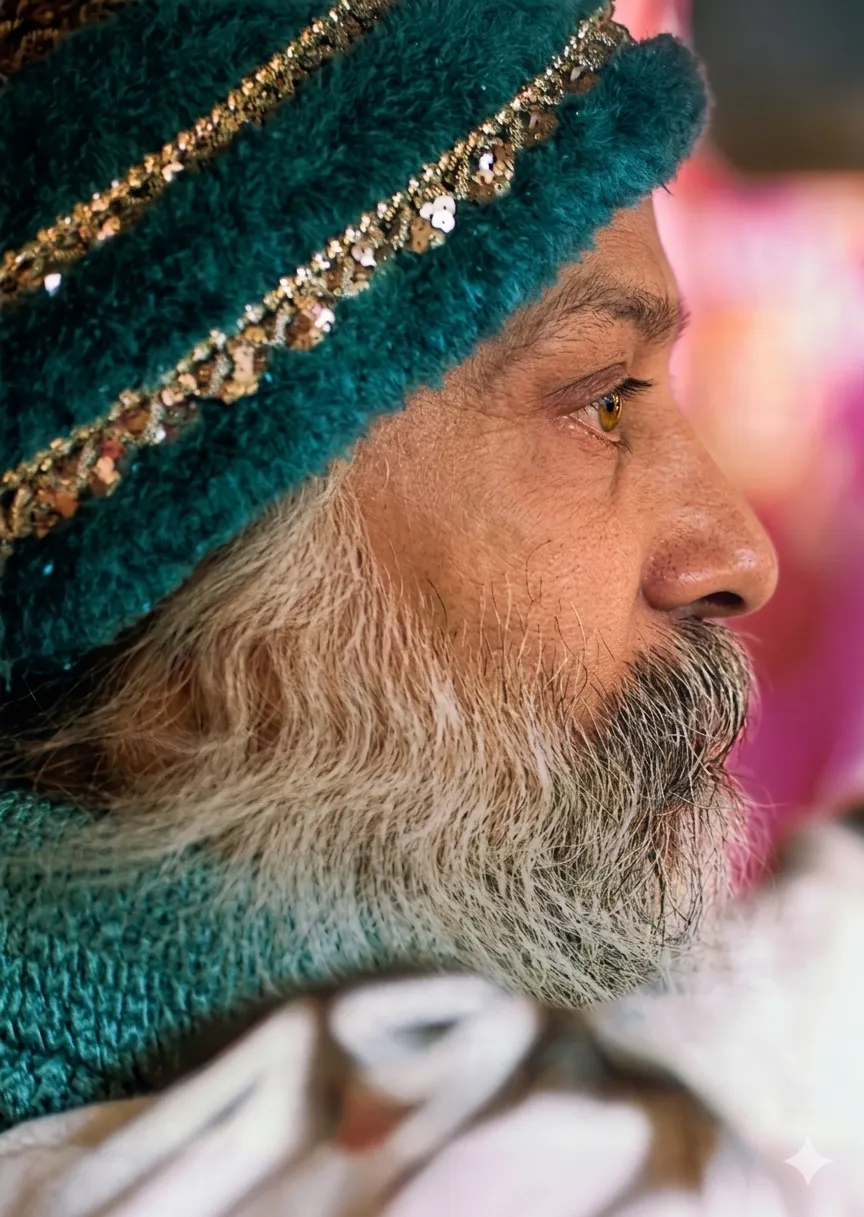
Osho's perspective on Tamas
When Osho Spoke About Tamas
Passages from the discourses where this theme comes alive.
Ego, is it? No, not ego. Tamas means lethargy—so much laziness that, as for what will happen tomorrow, where is the concern… what is there to do? Whatever will be, will be. For now, just keep walking quietly. Such laziness that even if someone were to come into this room and announce that tomorrow this house will catch fire, we would still go on living as though no fire were going to break out tomorrow—because if we accept that it will, then we would have to do something now. And that having to do something feels so heavy that not doing—letting things go on as they are—seems just fine.
If we accept that death is certain—whether ten years from now, twenty, or fifty, what difference does it make—if it becomes clear and firm in our consciousness that death is inevitable, then we will have to do something. We cannot go on living the way we are; we will have to make a change. And there is so much laziness about making that change that we say, “All right, we’ll see tomorrow; whatever happens, happens.” And this is what I call tamas. Tamas means a dense burden of darkness upon the mind that doesn’t let us do anything. Even if it is explained to us, it doesn’t let us act; even if we are warned, it doesn’t let us act. And our inclination not to act is such that, as things are going, we quietly keep moving along in the same rut. So it isn’t that there is no understanding…
प्रश्न: अहं नहीं? नहीं, अहं नहीं। तमस का मतलब लिथार्जी। इतना आलस्य है कि कल क्या होगा, उसकी कहां...क्या करें? जो होगा, होगा। अभी तो चुपचाप चलते चलो। इतना आलस्य है कि जैसे इस कमरे में आकर खबर कर दी जाए कि कल इस मकान में आग लगेगी तो भी हम ऐसे ही जीते चले जाएं जैसे कल आग नहीं लगनी है, क्योंकि अगर इसको हम मान लें कि कल आग लगेगी तो अभी हमें कुछ करना पड़ेगा। वह करना पड़ेगा, वह इतना भारी पड़ता है कि न करने में जैसा चल रहा है, ठीक चल रहा है।
अगर हम यह मान लें कि मृत्यु निश्चित है तो चाहे दस साल बाद, चाहे बीस साल बाद, इससे क्या फर्क पड़ता है, कि पचास साल बाद। अगर यह पक्का हमारे चित्त पर साफ हो जाए कि मृत्यु निश्चित है तो हमें कुछ करना पड़ेगा। हम जैसे जी रहे हैं फिर हम वैसे नहीं जी सकते, हमें फर्क करना पड़ेगा। और फर्क करने में इतना आलस्य है कि ठीक है, कल देखेंगे, जो होगा, होगा। और इसको मैं तमस कह रहा हूं। तमस का मतलब है कि एक घना अंधकार का बोझ है हमारे मन पर, जो हमें कुछ भी करने नहीं देता। यानी बता भी दिया जाए तो भी नहीं करने देता, खबर भी कर दी जाए तो भी नहीं करने देता। और नहीं करने का हमारा ऐसा भाव है कि जैसा चल रहा है वैसे रट में हम चुपचाप चलते चले जाते हैं। इसलिए ऐसा नहीं है कि नहीं बोध है चीजों का। बोध है, लेकिन मुल्क बोध को पकड़ नहीं पाता। बोध कुछ व्यक्तियों को है। उन्होंने चेष्टा की भी है अपनी तरफ से, सारा जो श्रेष्ठ है, वह बचा कर ले आए हैं। …
Tamas means inertia. Tamas means stopping. Tamas means to be held. Tamas is the binding force. Without tamas, things would keep moving and never stop. You throw a stone; if there were no tamas in the world, no restraining force, no obstruction, the stone would go on, on—how would it stop? Tamas is the obstructing energy. When you throw the stone, you give it the force of rajas. Hence your arm aches; energy left your hand. You lost something in throwing. And to the extent you gave energy, to that extent the stone goes far. As the energy ends, tamas pulls it down. What Newton called gravitation is a local application, a form of tamas. Tamas has many forms; gravitation is one. Tamas is the force that draws downward. By which you fall into hell—that is tamas. When you steal, tamas; when you lie, tamas.
… तम का अर्थ है, रुकना। तम बांधने वाली शक्ति है। अगर तम न हो, तो चीजें चलती ही जाएंगी और रुक न सकेंगी। तुम एक पत्थर उठाकर फेंकते हो, अगर तम न हो जगत में, कुछ रोकने की शक्ति न हो, अवरोध न हो जगत में, तो पत्थर फिर चलता ही जाएगा, चलता ही जाएगा, रुकेगा कैसे? तम है अवरोधक ऊर्जा। तो तुम फेंकते हो पत्थर को; जब तुम फेंकते हो, तो तुम उसे रज की शक्ति देते हो। इसलिए तुम्हारा हाथ दुखता है; शक्ति हाथ से गई। तुमने कुछ गंवाया पत्थर को फेंकने में। और जितनी शक्ति तुमने दी, जितने जोर से फेंका, जितना गंवाया, जितनी ऊर्जा दे दी पत्थर को, उतनी दूर पत्थर जाता है। जैसे ही ऊर्जा खतम हो जाती है, तम की शक्ति उसे नीचे खींच लेती है। जिसको न्यूटन ने ग्रेविटेशन कहा है, वह तम का ही एक स्थानीय उपयोग है, तम का ही एक रूप है। तम के और बहुत रूप हैं; लेकिन जिसको न्यूटन ने गुरुत्वाकर्षण कहा.। क्योंकि वह बैठा है बगीचे में और एक फल को उसने गिरते देखा। और उसे सवाल उठा कि जब फल गिरता है वृक्ष से, तो ऊपर की तरफ क्यों नहीं जाता? बाएं क्यों नहीं जाता? दाएं क्यों नहीं जाता? नीचे ही क्यों आता है? तम है नीचे की तरफ खींचने वाली शक्ति। …
Verse (Sanskrit): अप्रकाशोऽप्रवृत्तिश्च प्रमादो मोह एव च। तमस्येतानि जायन्ते विवृद्धे कुरुनन्दन।। 13।। यदा सत्त्वे प्रवृद्धे तु प्रलयं याति देहभृत्। तदोत्तमविदां लोकानमलान्प्रतिपद्यते।। 14।। रजसि प्रलयं गत्वा कर्मसङ्गिषु जायते। तथा प्रलीनस्तमसि मूढयोनिषु जायते।। 15।। Transliteration: aprakāśo'pravṛttiśca pramādo moha eva ca| tamasyetāni jāyante vivṛddhe kurunandana|| 13|| yadā sattve pravṛddhe tu pralayaṃ yāti dehabhṛt| tadottamavidāṃ lokānamalānpratipadyate|| 14|| rajasi pralayaṃ gatvā karmasaṅgiṣu jāyate| tathā pralīnastamasi mūḍhayoniṣu jāyate|| 15|| Translation: Absence of light, inaction, heedlessness, and delusion as well. These arise when Tamas is ascendant, O joy of the Kurus. 13. When Sattva has increased and the embodied meets dissolution, Then he attains the stainless worlds of the supremely wise. 14. Passing in Rajas, he is born among those bound to action; Likewise, dissolved in Tamas, he is born in wombs of the deluded. 15. Now let us take the sutra. O Arjuna, when tamas increases, darkness arises in the mind and senses.
हे अर्जुन, तमोगुण के बढ़ने पर अंतःकरण और इंद्रियों में अप्रकाश एवं कर्तव्य-कर्मों में अप्रवृत्ति और प्रमाद और निद्रादि अंतःकरण की मोहनी वृत्तियां, ये सब उत्पन्न हो जाती हैं।
What is tamas?
definitionProfound Quotes on Tamas
Explore our structured collection of meaning-mapped quotes regarding Tamas.