
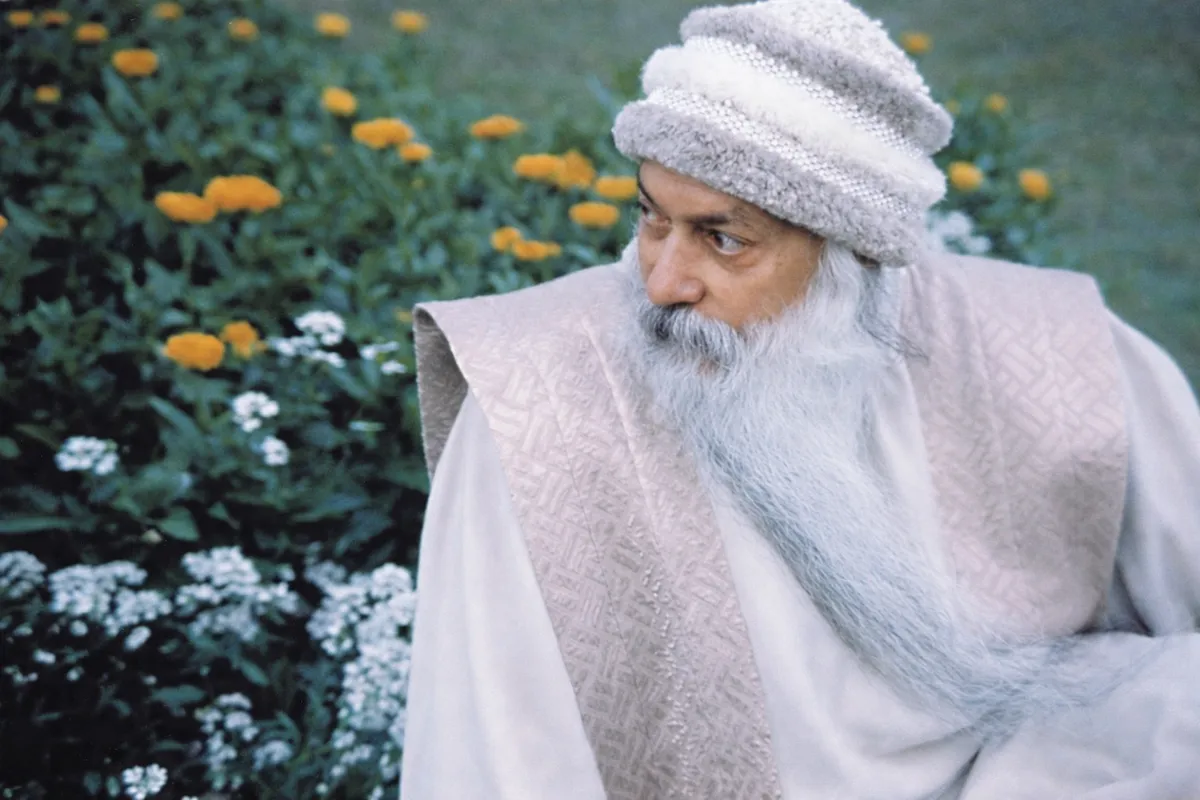
They all reach the same truth, but Jesus feels sad and still chooses, Buddha is calmly choiceless, Krishna is joyfully dancing, and Mahavira is quietly blissful.
From the Discourses
Passages where Osho speaks to this question — each links to the complete discourse.
Osho, Mahavira’s dispassion, Christ’s holy indifference, Buddha’s disregard, and Krishna’s non-attachment—what are their subtle similarities and differences? Please shed light on this.
In this, some similarities appear. Krishna will arrive at a peace like Buddha’s, because he has nothing to attain—whatever is, is already attained. At times he will appear dispassionate like Mahavira, for his joy knows no bounds. He will appear to proclaim God as Jesus does—but not because there is a God sitting in this world or the next: rather, because all is God. Krishna’s non-attachment is total surrender—“the disappearance of ‘I.’” To know that the “I” is not. Once this is known, whatever is happening is happening. There is nothing to be done about it. There is no possibility of our doing anything. Krishna sees himself as a wave in the ocean. Since there is no choosing, there is no attachment. If we understand correctly, non-attachment is not a state of mind; it is the dropping of all states of mind, the dropping of all positions—and becoming one with…
ओशो, महावीर की वीतरागता, क्राइस्ट की होली इनडिफरेंस, बुद्ध की उपेक्षा, कृष्ण की अनासक्ति, इनमें क्या सूक्ष्म समानता व भिन्नता है? इस पर प्रकाश डालें।
इसमें कुछ समानताएं मिलेंगी। कृष्ण बुद्ध जैसी शांति को उपलब्ध हो जाएंगे, क्योंकि कुछ उन्हें पाना नहीं है। जो भी है, वह पाया हुआ है। वे महावीर जैसे वीतराग दिखाई पड़ेंगे किन्हीं क्षणों में, क्योंकि उनके आनंद का कोई पारावार नहीं है। वे जीसस जैसे परमात्मा की घोषणा करते दिखाई पड़ेंगे। इसलिए नहीं कि इस लोक और परलोक में परमात्मा कहीं बैठा है, बल्कि सब कुछ परमात्मा ही है। कृष्ण की अनासक्ति समग्र समर्पण है, ‘मैं’ का न हो जाना है। ‘मैं’ है ही नहीं, यह जानना है। इसके जान लेने के बाद जो हो रहा है, वह हो रहा है। इसमें कोई उपाय ही नहीं है। इसमें हम कुछ कर सकते हैं, ऐसा है ही नहीं। इसमें हमारे द्वारा कुछ हो सकता है, इसकी कोई संभावना ही नहीं है। कृष्ण अपने को एक लहर की तरह सागर में देखते हैं। कोई चुनाव नहीं करना है, इसलिए कोई आसक्ति नहीं है। …
Questioner: what is the subtle difference, if any, between mahavira's transcendence of attachment, christ's holy indifference, buddha's indifference and krishna's non-attachment? And in what way are they the same?
There is a good deal of similarity between Christ's concept of neutrality, Buddha's idea of indifference, Mahavira's transcendence of attachment, and Krishna's non-attachment. These are the ways of looking at and meeting the world. But there are some basic differences too. While their end-points are similar, their approaches are very different. while their ultimate goal is the same, they differ much in the ways and means they use to achieve their ends. There is deep similarity between what Christ calls neutrality or non-alignment with the world at large, and what Buddha calls indifference to it. As the world is, with all its strange goings-on, its contradictions and conflicts, its struggles and trials, a seeker on the spiritual path will do well to keep a distance from it. But remember, neutrality can never be blissful; deep down it makes one sad and dull and drab. Therefore Jesus looks sad; even if…
Osho, what is the definition of God?
Words are very small. If you say God is light, then what of darkness? The scriptures have said that God is light. Suppose we accept this as a definition—then what about darkness? Where will darkness go? Darkness is too; in fact it is far more than light. Light sometimes is and sometimes is not; darkness is always, eternal. Where will you place darkness? If you say God is light, darkness is left out. If you say God is darkness, then light is left out. If you say God is both darkness and light, a contradiction arises: they cannot be together. Try to have both darkness and light in the same room. If you bring in light, darkness disappears; if you preserve darkness, you cannot have light. Then how can both be together? That becomes an impossibility. So you cannot say “both” either. Then the fourth device is to say: it…
पहला प्रश्न: ओशो, परमात्मा की परिभाषा क्या है?
शब्द तो बड़े छोटे-छोटे हैं। अगर कहो परमात्मा प्रकाश है, तो फिर अंधेरे का क्या होगा? ऐसा कहा है शास्त्रों में कि परमात्मा प्रकाश है। चलो मान लें इसे परिभाषा, फिर अंधेरे का क्या होगा? फिर अंधेरा कहां जायेगा? अंधेरा भी है, प्रकाश से कहीं ज्यादा है। प्रकाश तो कभी होता है कभी नहीं भी होता; अंधेरा सदा है, शाश्वत है। अंधेरे को कहां रखोगे? अगर कहा परमात्मा प्रकाश है, तो अंधेरा बाहर पड़ गया। अगर कहा परमात्मा अंधेरा है, तो प्रकाश बाहर पड़ गया। अगर कहो परमात्मा अंधेरा प्रकाश दोनों है, तो विरोधाभास होता है। दोनों एक साथ हो नहीं सकता। एक ही कमरे में अंधेरा और प्रकाश करके दिखाओ। प्रकाश करोगे, अंधेरा खो जायेगा; अंधेरा बचाओगे, प्रकाश न कर सकोगे। तो दोनों साथ कैसे होंगे? तब एक असंभव बात हो गई। तो यह भी नहीं कह सकते कि दोनों है।
Osho, is being attracted to Krishna not the same as being free of life’s other attractions?
One has to think a little. Here lies Krishna’s distinction. If you are attracted to Mahavira, you will have to be free of all the world’s attractions. If you go toward Mahavira, you will have to go against the world. That is Mahavira’s path. But with Krishna the matter is a little delicate and deep. Krishna says, if you want to come to me, you must seek me right within the attractions of the world; for I am present there too. There is no need to run away from there. Understand it like this. You relish food. If you listen to Mahavira, there will be a vow of non-taste (aswad-vrat). Then you must drop taste. Eat as a function, a necessity; do not savor. Put food into the body so that the body’s work may continue, but take no relish in it. Drop taste, continue eating. Let food become tasteless,…
चौथा प्रश्न: ओशो, कृष्ण के प्रति आकर्षित होना क्या जीवन के अन्य आकर्षणों से मुक्त होना नहीं है?
सोचना पड़े। यहीं कृष्ण का भेद है। अगर तुम महावीर में आकर्षित होते हो, तो तुम्हें संसार के समस्त आकर्षणों से मुक्त होना पड़ेगा। अगर महावीर की तरफ जाते हो, तो संसार के विपरीत जाना पड़ेगा। वह महावीर का मार्ग है। लेकिन कृष्ण के संबंध में मामला जरा नाजुक है और गहरा है। कृष्ण कहते हैं, अगर तुम्हें मेरी तरफ आना है, तो तुम्हें संसार के आकर्षण में ही मुझे खोजना पड़ेगा; क्योंकि मैं वहां भी मौजूद हूं। वहां से भागने की कोई जरूरत नहीं है। इसे ऐसा समझो। तुम्हें भोजन में रस है। अगर तुम महावीर की सुनते हो, तो अस्वाद व्रत होगा। तब तुम्हें स्वाद छोड़ना है। भोजन ऐसे कर लेना है कि काम है, जरूरत है; स्वाद नहीं लेना है। भोजन को ऐसे शरीर में डाल देना है कि काम शरीर का चल जाए, लेकिन उसमें कोई रस नहीं लेना है। स्वाद छोड़ना है, भोजन जारी रखना है। भोजन बेस्वाद हो जाए, अस्वाद हो जाए, स्वादहीन हो जाए, स्वादातीत हो जाए। स्वाद न रह जाए। बस, शरीर का धर्म है, पूरा कर देना है। तो भोजन ले लेना है। …
Osho, Krishna is supremely enlightened and beyond the three gunas, yet he deceives, lies, and wages war. Buddha, Mahavira, Lao Tzu, etc., do nothing of the sort. Kindly shed light on Krishna’s personality described above, in the context of the qualities of sattva, rajas, and tamas.
First, it is essential to understand that no comparison is possible between two enlightened ones. All comparisons are false. Every great being is unique; there is no second like him. In truth, even an ordinary person is unique. There is no other like you. The great one within you appears when you bring your own nature, your own destiny, to its fullness. You too are incomparable. There is no other person on earth exactly like you—neither today, nor ever before, nor ever after. Search the whole earth and you won’t find two identical leaves on a tree; not even two identical pebbles. And when your polish deepens and the supreme flowering of your life manifests, then you become like the summit of a Mount Everest. Even now you are unmatched; then you will be utterly unmatched. Now, perhaps, some accord with others is still possible; then there will be none.…
पहला प्रश्न: ओशो, कृष्ण परम ज्ञानी और त्रिगुणातीत हैं, फिर भी धोखा देते हैं, झूठ बोलते हैं, युद्ध करते हैं। बुद्ध, महावीर, लाओत्से आदि ऐसा कुछ भी नहीं करते। सत्व, रजस, तमस गुणों के संदर्भ में कृष्ण के उपरोक्त व्यक्तित्व पर प्रकाश डालने की कृपा करें।
… आप जैसा भी कोई दूसरा नहीं। आपके भीतर ही महापुरुष तब प्रकट होता है, जब आप अपने स्वभाव को, अपनी नियति को उसकी पूर्णता में ले आते हैं। आप भी बेजोड़ हैं। आप जैसा दूसरा कोई व्यक्ति पृथ्वी पर नहीं है। न आज है, न कल था, और न कल होगा। एक वृक्ष का पत्ता भी पूरी पृथ्वी पर खोजने जाएं, तो दूसरा वैसा ही पत्ता नहीं खोज पाएंगे। एक पत्थर का टुकड़ा भी, एक कंकड़ भी अपने ही जैसा है। और जब आपका निखार होगा, और आपके जीवन की परम सिद्धि प्रकट होगी, तब तो आप एक गौरीशंकर के शिखर बन जाएंगे। अभी भी आप बेजोड़ हैं। तब तो आप बिलकुल ही बेजोड़ होंगे। …