
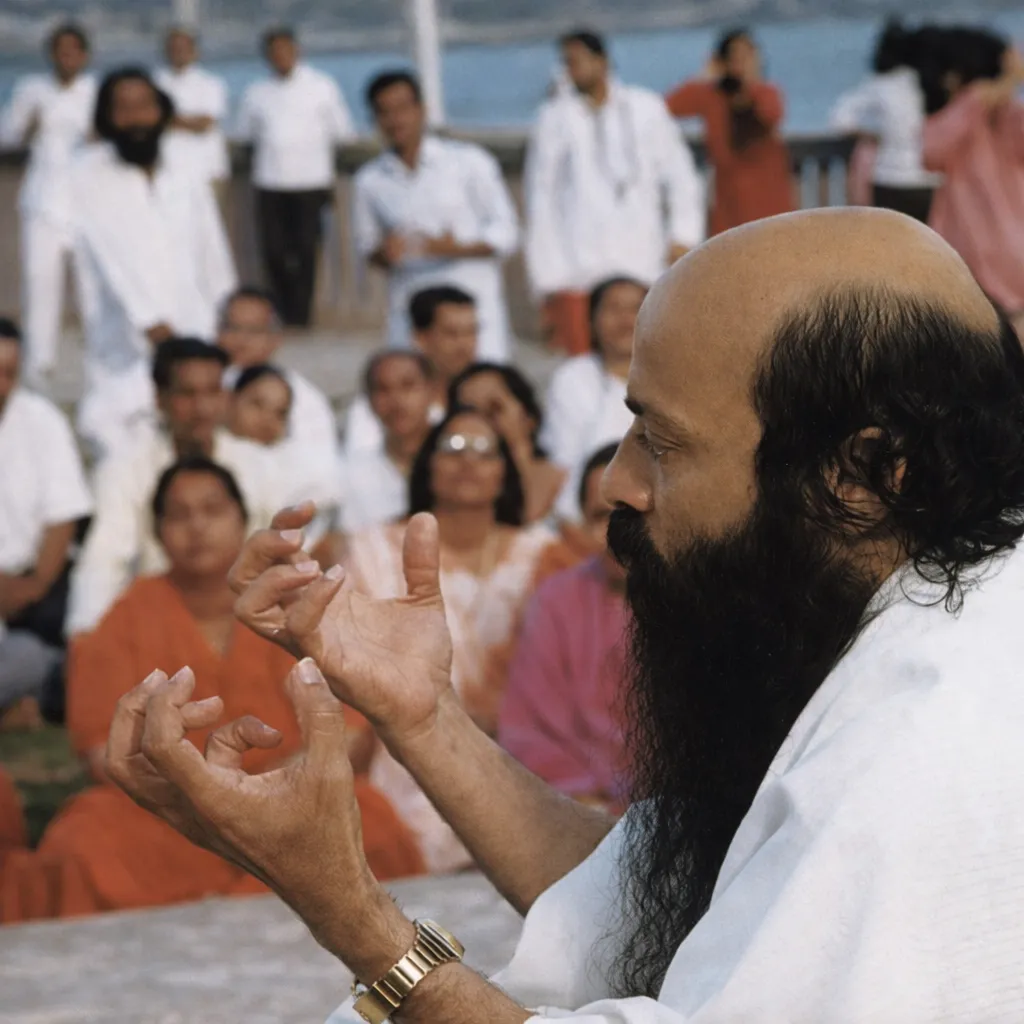
No—because each person is one-of-a-kind, whatever we know or feel is colored by who we are.
From the Discourses
Passages where Osho speaks to this question — each links to the complete discourse.
Osho, but in that knowing, Maharaj-ji, can there not be sameness—that as another has known, I may know the same? And may that sameness become available to me.
If you look very closely, such sameness is possible only if I am exactly as the other was. Otherwise it can never be. See the full implications: when I am knowing, my whole personality, my total being, is knowing. Only if your whole personality is exactly as mine, could the event of our knowing be one and the same. And no two persons are ever the same. In fact, forget persons—that is a far-off matter. Pick up a stone from a Delhi street; search the whole earth and you will not find another exactly like it. Pluck a flower from a garden; comb all the forests and you will not find another just like it. Here, each and every thing has its own uniqueness. And that very uniqueness is its soul. In my view, this uniqueness is its soul. A machine has no soul, because a machine is not unique.…
प्रश्न: ओशो, लेकिन उस जानने में महाराज जी, समानता तो हो सकती है, जैसा दूसरे ने जाना, वैसा ही मैं जानूं। और समानता मुझे उपलब्ध हो जाए।
यह जो, अगर बहुत गौर से देखेंगे: यह समानता तभी हो सकती है जब कि जैसा दूसरा था, वैसा ही मैं हूं। अन्यथा यह कभी नहीं हो सकती। अगर इसके पूरे इंप्लीकेशंस को समझेंगे, तो जब मैं जान रहा हूं तो मेरा पूरा व्यक्तित्व, मेरा टोटल बीइंग जान रहा है। और मेरा पूरा व्यक्तित्व, और अगर ठीक आपका पूरा व्यक्तित्व बिलकुल वैसा हो, जैसा मेरा है; तो हम दोनों के जानने की घटना एक ही हो सकती है। और व्यक्ति कभी दो एक जैसे नहीं हैं। व्यक्ति तो बहुत दूर की बात है, एक पत्थर उठा लें दिल्ली की सड़क का, तो सारी जमीन पर खोजने से ठीक वैसा दूसरा पत्थर हम नहीं खोज सकते। एक फूल एक बगिया में से चुन लें, और सारे जंगल छान डालें तो दूसरा फूल वैसा हम नहीं चुन सकते। यहां एक-एक चीज का अपना अनूठा होना है। और यह अनूठा होना ही उसकी आत्मा है। मेरे हिसाब में यह जो अनूठापन है, यह उसकी आत्मा है।
Osho, is the experience of the Divine different for each person?
Think of it like this: you go home from this garden, and your children say, “Tell us—what was the garden like?” A painter might tell you by making a painting: “It was like this.” A poet will write a poem—of the trees, of the winds passing through them, of the sun filtering between their leaves. Now a poem and a painting differ greatly. Or perhaps someone is a musician; he will not even write a poem—he will lift his vina. Why write? The winds passed through the trees and there was sound and resonance—he will reproduce that resonance on the vina. The colors in the trees he will translate into tones. The sun and shade he will pour into music. He will play the garden on his vina. Another will write a poem; another will render it on paper. The three expressions will differ. And if you look only at…
तीसरा प्रश्न: ओशो, क्या परमात्मा का अनुभव भी प्रत्येक का अलग-अलग होता है?
ऐसा ही समझो कि इस बगीचे से तुम गए घर, और किसी ने तुमसे कहा--तुम्हारे बच्चों ने कहा कि हमें भी तो कुछ बताओ कि बगीचा कैसा था? जो चित्रकार होगा, वह शायद चित्र बना कर बता देगा कि ऐसा था। जो कवि होगा, वह एक कविता लिखेगा--वृक्षों की, वृक्षों के बीच से गुजरती हवाओं की, वृक्षों के बीच-बीच से छनती सूरज की किरणों की, वह कविता लिखेगा। अब एक कविता में और एक चित्र में बड़ा फर्क है। या हो सकता है कोई संगीतज्ञ हो, वह कविता भी नहीं लिखेगा, वह अपनी वीणा उठा लेगा। क्यों लिखे कविता? हवाएं गुजरती थीं वृक्षों से और आवाज होती थी और नाद पैदा होता था, वह वीणा पर वही नाद पैदा कर देगा। रंग थे वृक्षों में, रंगों को वह ध्वनियों में बदल देगा। धूप-छांव थी, वह धूप-छांव को संगीत में उतार देगा। वह अपनी वीणा पर बजाएगा बगीचे को। कोई कविता में लिखेगा, कोई कागज पर उतारेगा।
Question: BELOVED OSHO, IS KNOWING AN INTELLECTUAL EXPERIENCE? The experience of knowing has two dimensions to it. One is objective knowing, the other is subjective knowing. Objective knowing is intellectual. That's what all of science goes on doing. It is intellectual knowing. Intellect is enough to know the object. The object is outside -- available to your eyes, available to experiments. You can dissect it, you can do whatsoever you want, all kinds of experimentation. It is available to the pure intellect. But your own being is not available to your intellect. Your own being is available only in silence, not in intellectual activity, but in a silent awareness. That is a totally different dimension and that is true knowing, knowing yourself. But that cannot be intellectual, because intellect is something that can only reach outwards; it has no way of reaching inwards.
Beloved Osho, full with the sweetness of your fragrance as I walk this path with you, I feel that to trust and wait is all that is needed of me.a wondering comes up in me as to whether some knowledge about esoteric subjects -- for example, chakras, collective unconsciousness, energy fields -- could be helpful along the way or not. Osho, is such knowledge useful? Or will whatever is needed come to me throughexperience, in its own time?
And each individual has differences, and differences come in such small things that you cannot conceive. For example, in the East people sit on the floor. In cold countries people cannot sit on the floor; the chair is absolutely necessary. Naturally, their backbones, their spines will have a different shape than those of the people who sit on the floor, and the experiences of their kundalini will be different. There are people who eat only one time a day. For thousands of years they have never eaten more often than that. In South Africa there are tribes which eat only one time in twenty-four hours. When they came across American missionaries, there was such laughter... "These idiots are eating five times! Breakfast -- and there is no fast at all, and they are having `break-fast.' And the whole day, something or other, and then coffee break and tea break, and…
Osho, between Sage Kapila’s Sankhya philosophy, Ashtavakra’s Mahageeta, and Krishnamurti’s teaching, is the only difference one of expression according to time and place? Kindly explain!
Now syadvada is the complete truth! And if someone says it is also partial, a quarrel will begin. “All are partial truths, but what I am saying is the complete truth”—this was the very quarrel. Syadvada was devised to settle that quarrel. Now syadvada too has become one more party, another controversy, another sect. Had syadvada truly been understood, there should be no Jain sect at all—because on the basis of syadvada a sect cannot stand. Syadvada means that truth is in all, and complete truth is in none; therefore there is no place for erecting sects. A sect necessarily claims: truth is here, not there. Syadvada cut the very root of sectarianism. Yet a Jain sect stands, now defending syadvada. Between these three—Kapila, Ashtavakra, and Krishnamurti—I am not asking you to seek a synthesis. I am saying: if you go into the depths of meditation, if you attain to…
पहला प्रश्न: ओशो, कपिल ऋषि के सांख्य-दर्शन, अष्टावक्र की महागीता और कृष्णमूर्ति की देशना में क्या देश-काल अनुसार अभिव्यक्ति का ही भेद है? कृपा करके समझाइये!
अब यह स्यादवाद पूर्ण सत्य है! अब अगर इसको कोई कहे कि यह आंशिक सत्य है, यह भी आंशिक सत्य है, तो झगड़ा खड़ा हो जायेगा। सब आंशिक सत्य हैं, लेकिन जो मैं कह रहा हूं वह पूर्ण सत्य है--यही तो झगड़ा था। इसी झगड़े को हल करने को स्यादवाद खोजा गया। अब स्यादवाद भी झगड़ा करने वालों में एक हिस्सा हो गया, एक पार्टी। वह भी एक विवाद है। वह भी एक संप्रदाय है। अगर स्यादवाद समझा गया होता तो जैनों का कोई संप्रदाय होना नहीं चाहिए, क्योंकि स्यादवाद के आधार पर संप्रदाय खड़ा नहीं हो सकता। स्यादवाद का अर्थ ही यह है कि सभी में सत्य है और किसी में पूर्ण सत्य नहीं है; इसलिए संप्रदाय खड़े करने की कोई जगह नहीं है। संप्रदाय का तो मतलब ही यह होता है कि सत्य यहां है, वहां नहीं है। स्यादवाद ने तो संप्रदाय की जड़ काटी थी। लेकिन जैनों का एक संप्रदाय खड़ा है, जो अब स्यादवाद की रक्षा करता है। इन तीनों के बीच तुमसे मैं समन्वय खोजने को नहीं कह रहा हूं। …