
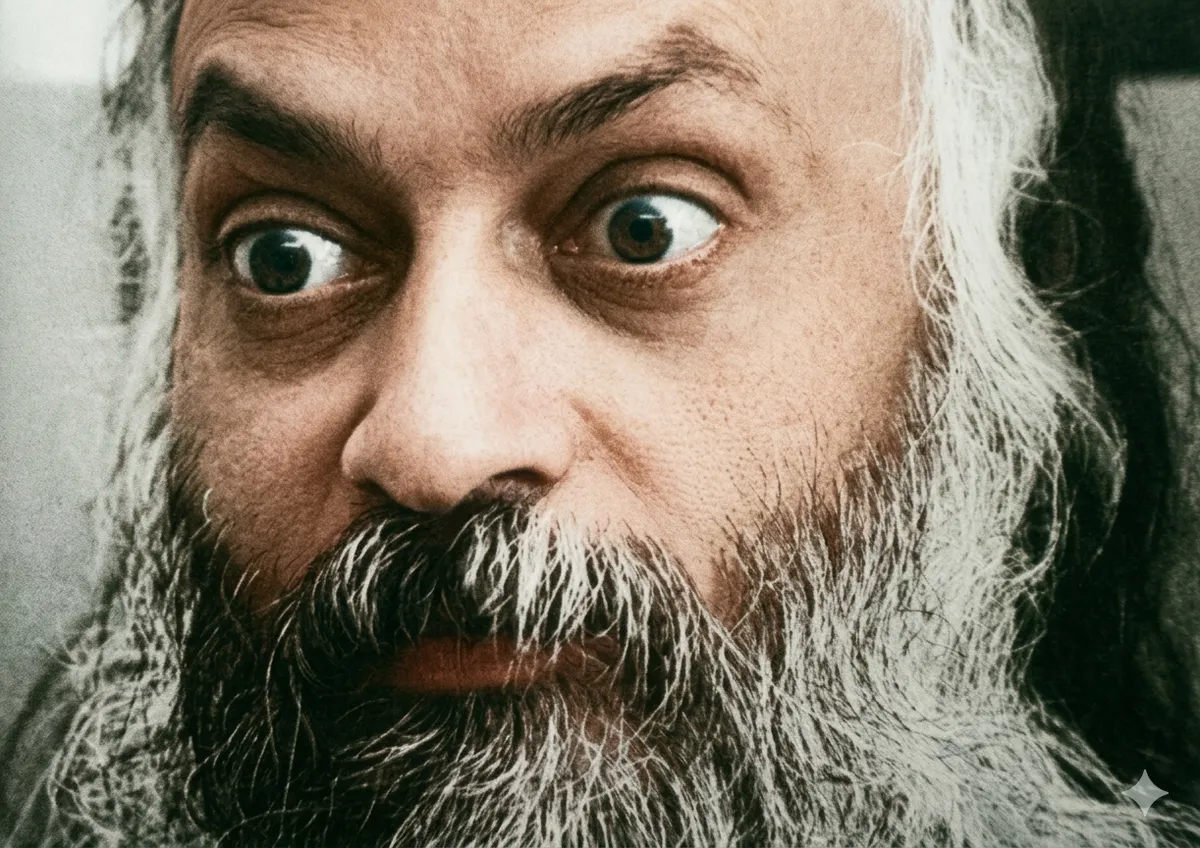
Osho's perspective on Dharma
When Osho Spoke About Dharma
Passages from the discourses where this theme comes alive.
It is asked again: “Is dharma the truth?”
Dharma is truth. Dharma means: a state of non-relationship. Dharma means: to be steady in one’s own nature; to be immersed in oneself. Nothing remains outside. No kind of connection with the outside remains. Not even the relationship with the master remains. The true master is the one who brings you to the place where you are freed even from the master. Such a master is called a satguru. The one who entangles you in himself is called a false guru—who says, “Don’t go beyond me. This is your halt; the destination has arrived. No further.” The one who holds you stuck in himself is a false guru. The one who lets you go beyond himself, who becomes a ladder, a doorway—so you climb and pass through—he alone is the satguru. And remember: a feeling of gratitude arises only toward the satguru. Toward a false guru, anger will arise—if not…
फिर पूछा है: ‘क्या धर्म सत्य है?’
धर्म सत्य है। धर्म का अर्थ है: असंबंधित दशा। धर्म का अर्थ है: अपने स्वभाव में थिर हो जाना; अपने में डूब जाना। कोई बाहर न रहा। किसी तरह का संबंध बाहर न रहा। गुरु का संबंध भी न रहा। वही है गुरु, जो तुम्हें उस जगह पहुंचा दे, जहां गुरु से भी मुक्ति हो जाए। उस गुरु को सदगुरु कहा है। उस गुरु को मिथ्या-गुरु कहा है, जो तुम्हें अपने में अटका ले। जो कहे, मेरे से आगे मत जाना। बस, यही तुम्हारा पड़ाव आ गया; मंजिल आ गयी। अब आगे नहीं। जो तुम्हें अपने में अटका ले, वह मिथ्या-गुरु। जो तुम्हें अपने से पार जाने दे, जो सीढ़ी बन जाए, द्वार बन जाए; तुम चढ़ो और पार निकल जाओ, वही सदगुरु। और ध्यान रखना: सदगुरु के प्रति ही अनुग्रह का भाव होता है। मिथ्या-गुरु के प्रति तो क्रोध आएगा आज नहीं कल; क्योंकि मिथ्या-गुरु वस्तुतः तुम्हारा दुश्मन है। पहले प्रलोभन दिया विकास का और फिर अटका लिया! पहले आशा जुटायी; तुम्हारे भीतर खूब आशा जगायी कि मुक्ति दूंगा। और फिर तुमने पाया कि एक नए तरह का बंधन हो गया। …
Osho, you often say that religion is rebellion, revolt. But by definition dharma is that which upholds all; dharma is the supreme law; dharma is eternal. How can that supreme, that eternal, be rebellious?
The danger is this: because of worshipping that corpse, whenever an intelligent person is born in your house and says, “Be free of this dead body,” the whole house turns against him. “You tell us to burn our mother? To burn our scripture? Our tradition that has always been—our fathers worshipped this corpse, and their fathers, and their fathers. From this has come our very birth. This is our culture, our civilization!” Whenever discernment is born in such a house, there is turmoil; rebellion becomes necessary. Some son has to rebel. And the irony is: the son who rebels is the one who stands for life. The traditionalist is an enemy of life, a mere follower of a line. He is a worshipper of the past—he has respect for the dead, and contempt for the living. Who were those who crucified Jesus? Not bad people—remember this. You often fall into…
पहला प्रश्न: ओशो, आप बहुधा कहते हैं कि धर्म विद्रोह है, बगावत है। लेकिन परिभाषा के अनुसार धर्म सबको धारण करने वाला है, धर्म परम नियम है, धर्म शाश्वत है। यह परम नियम, यह शाश्वत विद्रोही कैसे हो सकता है?
… वह कहेगा, हमारी मां को जलाने को कहते हो? हमारे शास्त्र को जलाने को कहते हो? हमारी परंपरा जो सदा से चली आई, हमारे पिता ने इस लाश को पूजा, उनके पिता ने पूजा, उनके पिता ने पूजा। इसी से तो हम सब पैदा हुए हैं। यह हमारी संस्कृति, यह हमारी सभ्यता। जब भी विवेक का जन्म होगा उस घर में, तभी उपद्रव शुरू होगा; तभी बगावत करनी पड़ेगी। किसी बेटे को बगावत करनी पड़ेगी। और मजा यह है कि जो बेटा बगावत कर रहा है, वही जीवन के पक्ष में है। परंपरावादी जीवन का विरोधी होता है, लकीर का फकीर होता है। परंपरावादी अतीत का पूजक होता है। मुर्दा के प्रति उसके मन में सम्मान होता है। और जीवित के प्रति उसके मन में अपमान होता है। जिन्होंने जीसस को सूली दी वे कौन लोग थे? …
Osho, in this series of talks you have often said, “Esa dhammo sanantano—this is the eternal dharma.” And the wonder is that each time it has appeared through you in a new form. Is the eternal dharma one or many?
Dharma is one, but its reflections can be many. On the full-moon night, the moon appears in the oceans, in lakes, and in tiny roadside puddles—the reflections are many. Pointing to the ocean I have said to you, “Esa dhammo sanantano.” Pointing to a small lake I have said, “Esa dhammo sanantano.” Pointing to a rain-filled puddle by the road I have said, “Esa dhammo sanantano.” I have said it many times, in many forms. But all these are reflections; the moon itself cannot be said. If you cling to the reflections you will only get more entangled. Whenever I have said, “Esa dhammo sanantano—this is the eternal dharma,” I have spoken of the reflection. Do not get caught in the reflection. I have only indicated. Do not grasp the finger that points. And as for the real moon above, no finger can point to it. Fingers fall short there;…
तीसरा प्रश्न: ओशो, इस प्रवचनमाला में आपने कई बार कहा है, एस धम्मो सनंतनो, यही सनातन धर्म है। और आश्चर्य तो यह है कि वह हर बार नये रूप में आपके द्वारा प्रकट हुआ है। क्या सनातन धर्म एक है या अनेक?
धर्म तो एक है, लेकिन उसके प्रतिबिंब अनेक हो सकते हैं। रात पूरा चांद निकलता है। सागरों में भी झलकता है, सरोवरों में भी झलकता है, छोटे-छोटे डबरों में भी झलकता है--प्रतिबिंब बहुत हैं। सागर में बताकर भी मैंने तुमसे कहा, एस धम्मो सनंतनो। छोटे सरोवर में भी बताकर कहा, एस धम्मो सनंतनो। राह के किनारे वर्षा में भर गये डबरे में भी बताकर कहा, एस धम्मो सनंतनो। मैंने बहुत बार कहा। बहुत रूप में कहा। लेकिन वे सब प्रतिबिंब हैं और जो चांद है, वह तो कहा नहीं जा सकता। इसलिए तुम और उलझन में पड़ोगे। मैंने जब भी कहा, एस धम्मो सनंतनो, यही सनातन धर्म है, तभी प्रतिबिंब की बात कही है। प्रतिबिंब में मत उलझ जाना। इशारा किया। इशारे को मत पकड़ लेना। और जो है ऊपर, वह जो चांद है असली, उसकी तरफ कोई इशारा नहीं किया जा सकता। अंगुलियां वहां छोटी पड़ जाती हैं। शब्द वहां काफी सिद्ध नहीं होते। और फिर उस चांद को देखना हो तो तुम्हें गदर्र्न बड़ी ऊंची उठानी पड़ेगी। और तुम्हारी आदत जमीन में देखने की हो गई है। …
Question: Maneesha has asked: OUR BELOVED MASTER, ARE WE ALL, THE TEN THOUSAND BUDDHAS, POTENTIAL VESSELS OF THE DHARMA? Maneesha, as far as being potential vessels of dharma, nobody is an exception. You all have the potential -- the same potential, the same highest peaks of consciousness, as any buddha. But you have to go inwards and find your treasures. Outside you are a beggar, everybody is a beggar. Alexander the Great came to India just three hundred years after Buddha had died. He wanted to meet some master. The name and the fame of Buddha had reached faraway shores -- even to Greece and Athens. Alexander's master was the father of Western logic, Aristotle. Aristotle had told him, "You are going to conquer the world, you must reach India. I don't want you to bring anything as a present for me, just meet an enlightened master.
Are we all potential vessels of the Dharma?
definitionIs dharma the truth?
definitionIs the eternal dharma one or many?
definitionWhat is the nature of dharma and mastery?
definitionWhat is the significance of the field of righteousness in the context of the Kurukshetra war?
definitionWhat is the ten-bodied herdsman?
definitionWhy did Krishna speak the Gita to Arjuna instead of Yudhishthira, the king of righteousness?
definitionProfound Quotes on Dharma
Explore our structured collection of meaning-mapped quotes regarding Dharma.