
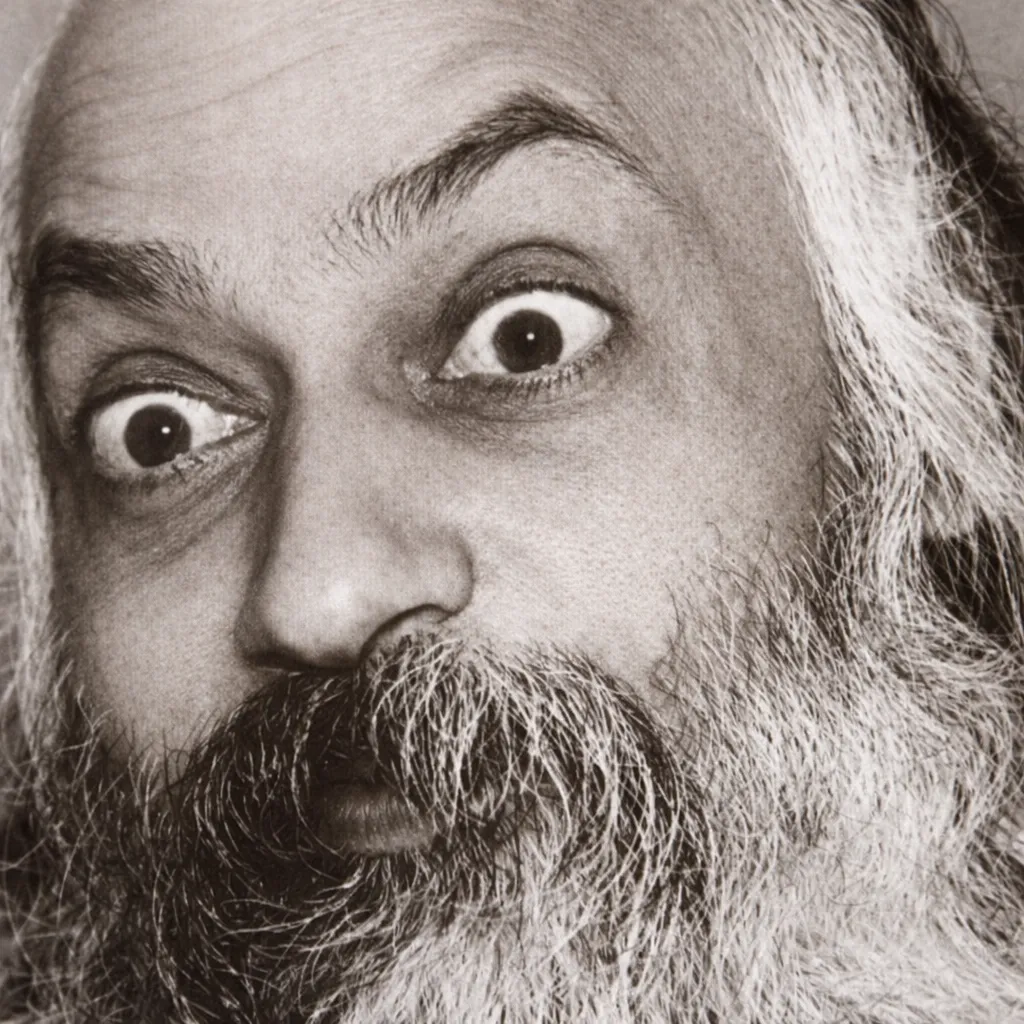
According to Osho, we must think of death because it’s not a distant event but a continuous process unfolding now. Denial is futile; every moment is a step in dying—birth begins the journey, like water heating toward steam. Facing this fact sobers and clarifies life, dissolving illusion and organizing our choices around what truly matters.
Think about death because it’s happening bit by bit right now, and remembering that helps you live honestly and choose what’s important.
From the Discourses
Passages where Osho speaks to this question — each links to the complete discourse.
A friend has asked: Osho, why should we think about death at all? We have life—let us live it. Be in what is present. Why allow the thought of death to come in between?
Just as there can be fear of sleep. Sleep is, in a way, a daily death. The day is life; the night is death. It is a piecemeal death. Every day we die a little, we sink within; in the morning we return fresh again. Then after seventy or eighty years the whole body gets tired—work, work, work—the body wears out. Then full death takes hold; the entire body changes. But we are very afraid of that. It is a deep sleep. Yet we are very afraid of it. Have you noticed that the body changes every morning too? It changes a little, which is why you don’t notice. It does not change completely; there is a partial transformation. When you go to sleep in the evening, your body is in one condition; when you wake in the morning, your body is in another. By morning the body has become…
A friend has asked: why should we think of death at all? We have life, let us live it. Let us live in the present. Why do we bring in the thought of death?
You may or may not have noticed that people who are engaged in a creative activity -- a painter, a musician, a poet, a writer -- are not too concerned with having sons, simply because they have found a substitute. Their paintings will survive, their poetry will survive, their sculptures will survive; they don't care about having a son. That's why scientists, painters, sculptors, writers and poets are not overly concerned with having sons. There is no other reason except that they have found a different kind of son. They have created a wave which will remain long after they are gone. Actually, they have found a son that will last even longer than yours, because even when your son has disappeared, the writer's book will still remain. A writer doesn't care much about having a son, about having an offspring. This does not mean, however, that he is carefree;…
Someone asked Osho's views on death and dying.
There is nothing as sure as death. Where there is life, there is bound to be death. He who bears not this fact in mind, wastes life, whereas he who knows this truth, obtains that which is immortal. I do not feel depressed at anybody's death, because there is no need to feel anything about it. However, it is a matter of sorrow, no doubt, if I see a life wasted. We have not to grieve after a dead body, but over a wasted life. You know, King Janak was called 'videh', i.e., without or beyond the body. Once, a young minister of his asked him, 'Your Excellency! How can you be considered without a body, when you do have a physical body? The king smiled but said nothing. After a few days, however, the king invited the minister for lunch. Such an invitation from the king himself was a…
Osho, you said the truth of life is death. Then what is the truth of death?
Buddha called this the state of suchness—accepting what is, as it is. No yes-and-no. No imposing your desire that it be like this or like that. As it is, let it be as it is. Kabir said: Just as it is—accept it as such. Because as long as you reject, you are fighting life—you are contending with God. You are trying to impose your will. You are not a seeker of truth; your ego is still thick. In accepting what is, as it is, the ego dissolves; there remains no place for it. The struggle is gone, the ego is gone. Ramana lay down. He consented: If death comes, it comes. What is in my hands? “Jih vidhi rākhe Rām, tih vidhi rahiye”—In whatever way Ram keeps you, remain that way. If death has come, it has come. This is how Ram wishes to take me—so be it. He was…
Can you talk about facing the death of each moment and letting go?
In the West now, there is a craze about how to prolong life. That simply shows that somewhere life is being missed. Whenever a country or a culture -- starts thinking about how to prolong life, it simply shows one thing -- that life is not being lived. If you live life, then even a single moment is enough. A single moment can be equal to eternity. It is not a question of length, it is a question of depth; it is not a question of quantity, it is a question of quality. Just think: would you like one moment of Buddha's life or would you like a thousand years of your own life? Then you will be able to understand what I mean about the quality, the intensity, the depth. In a single moment fulfillment is possible: you can bloom and blossom. But you may not bloom for one…