
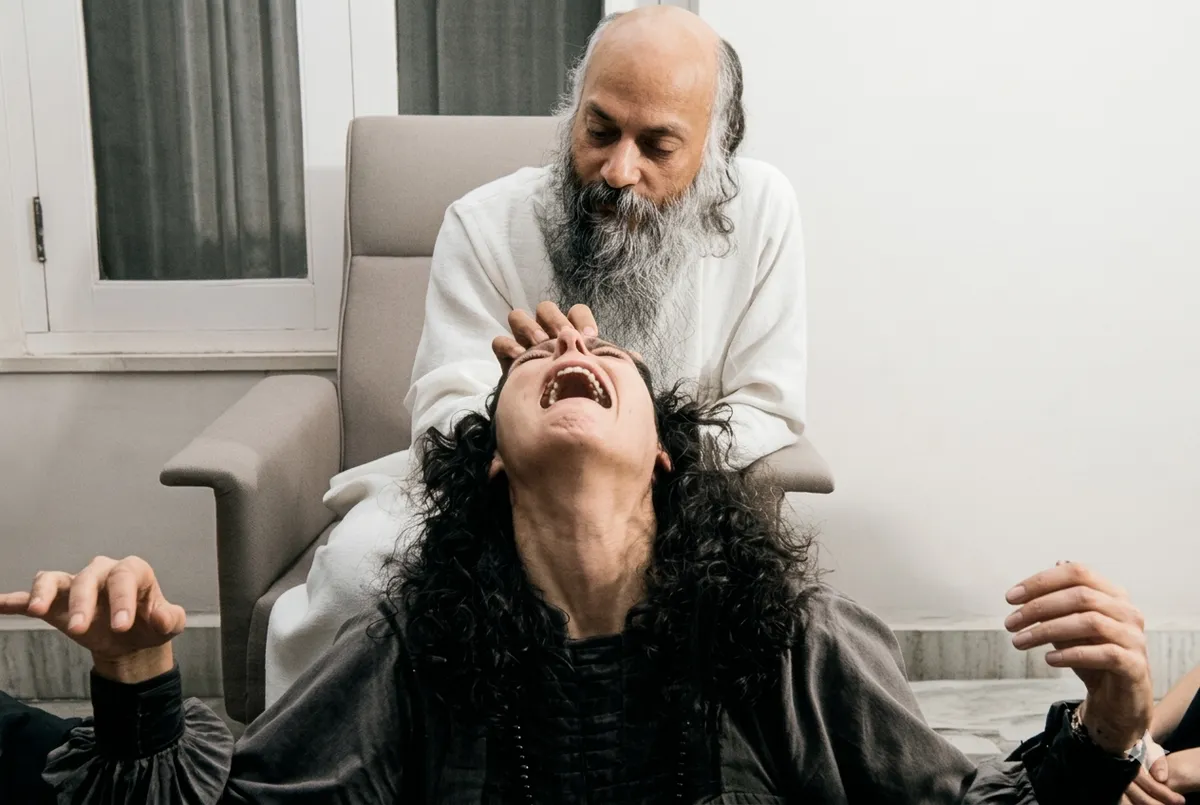
They don’t collect karma because no ego is acting—compassion just overflows naturally, like a lamp that shines on its own.
From the Discourses
Passages where Osho speaks to this question — each links to the complete discourse.
Osho, you say the same thing in countless ways. But when I listen to you, it feels as if I am hearing it for the first time. And I feel so much joy that I don’t feel like going back home. What should I do—what can I do—so that I can just keep listening to you!
You will feel as if you have been made to rise out of season, before time—as if you were not yet to go and yet had to go. And if you go in that way, your home will become even more desolate than before. I do not want to make your home desolate; I want to make your home a temple. I want that when you go home, your home’s new form is revealed. I do not want to tear you away from home, from the world, from family life. That is the newness of my sannyas: I do not want to sever you from the world; I want to join you to the world in such a way that your connection with the world becomes a connection with the Divine. Let the world no longer be a barrier between you and the Divine; let it become a means. If…
पहला प्रश्न: ओशो, आप एक ही बात कहते हैं अनेक-अनेक ढंगों से। पर जब आपको सुनता हूं तो उस समय यही लगता है कि पहली बार सुन रहा हूं। और इतना आनंद मिलता है कि वापस घर लौटकर जाने का जी नहीं करता। क्या करूं, मैं क्या करूं कि आपको सुनता ही रहूं!
… ऐसा लगेगा जैसे अभी जाना न था और जाना पड़ा। और अगर ऐसे तुम गये, तो घर और भी उदास हो जाएगा। जितना पहले था, उससे भी ज्यादा। मैं तुम्हारे घर को उदास नहीं करना चाहता। मैं तुम्हारे घर को मंदिर बनाना चाहता हूं। मैं चाहता हूं कि तुम जब घर जाओ, तो तुम्हारे घर का अभिनवरूप प्रकट हो। मैं तुम्हें घर से, संसार से, गृहस्थी से तोड़ नहीं लेना चाहता। वही मेरे संन्यास का अभिनवपन है कि मैं तुम्हें संसार सेे तोड़ नहीं लेना चाहता। …
Osho, if a Tirthankara wishes to take birth again, it would be in the physical body, right?
Now, this matter is quite another thing. This point, you see, is a completely different matter. Let me say a little about it. If a Tirthankara has to take birth—as a Tirthankara takes birth—there is a very interesting thing: before dying, he does not have to drop the fourth body. And there is a way not to drop it, a method. That way is the vasana—the urge, the seed-intention—of being a Tirthankara. When the fourth body is about to drop, one vasana must be saved so that the fourth does not drop. After the fourth has dropped you cannot be born again; the bridge through which you could return is broken. So, before the fourth body, the vasana of being a Tirthankara has to be preserved. That is why not all who are qualified to be Tirthankaras become Tirthankaras. Many who are qualified simply set out straight on the journey.…
प्रश्न: ओशो, तीर्थंकर यदि जन्म लेना चाहे तो स्थूल शरीर में लेंगे न?
अब यह जो मामला है, यह बहुत दूसरी बात हुई। यह जो बात है न, यह बिलकुल दूसरी बात है। थोड़ी सी बात कर लें। अगर तीर्थंकर को जन्म लेना हो, जैसा कि तीर्थंकर जन्म लेता है, तो एक बड़ी मजे की बात है और वह यह है कि मरने के पहले उसे चौथे शरीर को छोड़ना नहीं पड़ता। और न छोड़ने का एक उपाय है और उसकी विधि है। और वह है तीर्थंकर होने की वासना। तो चौथा शरीर जब छूट रहा हो तब एक वासना बचा लेनी पड़ती है, ताकि चौथा न छूटे। चौथे के छूटने के बाद तो जन्म ले नहीं सकते, फिर तो तुम्हारा सेतु टूट गया जिससे तुम आ सकते थे। तो चौथे शरीर के पहले तीर्थंकर होने की वासना को बचाना पड़ता है। इसलिए सभी लोग, तीर्थंकर होने के योग्य लोग तीर्थंकर नहीं होते। बहुत से तीर्थंकर होने योग्य लोग सीधे यात्रा पर निकल जाते हैं। थोड़े से लोग.और इसलिए उनकी संख्या भी तय कर रखी है। वह संख्या तय करने का कारण है कि उतने से काम चल जाता है, उतने से ज्यादा लोगों को वैसी वासना रखने की कोई जरूरत नहीं। …
Osho, while discussing mahavira, you had said that mahavira had achieved total self-realization in his previous birth and that he took another birth out of compassion only in order to express and tell to others what he had seen and known. Similarly, for krishna also you said that he was fully enlightened from his very birth.
PREVIOUSLY, WHEN I HAD A DISCUSSION WITH YOU IN JABALPUR, I HAD AN INTUITION THAT WHAT YOU HAD SAID ABOUT MAHAVIRA AND KRISHNA IS ALSO APPLICABLE TO YOU. IS IT TRUE THEN THAT YOU ALSO TOOK BIRTH OUT OF COMPASSION? IN THIS CONTEXT, WOULD YOU KINDLY THROW LIGHT ON YOUR PREVIOUS BIRTHS AND YOUR ACHIEVEMENTS IN THEM SO THAT IT MAY BE USEFUL TO SEEKERS? PLEASE ALSO EXPLAIN WHAT WAS THE TIME GAP BETWEEN YOUR LAST BIRTH AND THIS ONE. ... Even if I am not bound to your house, it makes no difference. ... I will have to come to your house. ... But there is a great difficulty: since people usually come to your house only to get something and you have also gone to others' houses only to demand something, it is naturally difficult to understand someone who comes to give you something. I will tell you one very incomprehensible
Osho, you said... then you will find that the devotee is God. The question arises: if one devotee prefers to be God and another wants to remain only a devotee, then which of the two is superior?
The one who wants to be God will not be able to be. And the one who wants to remain a devotee will become God. The question of superior or inferior does not arise, because only one of the two will happen. The one who does not want to be will be. The one who wants to be will be deprived. That very wanting is of the ego. But the matter is a little delicate. Sometimes humility too belongs to the ego. Beware that your humility may not be of the ego. Perhaps you are saying, “No, I don’t want to be,” because you know that those who refuse are the ones who attain. Then you are clever. Then your humility is adulterous. Your humility is not pure, not sacred, not virginal—it is like a prostitute. The one who wants to be God, whose ego says, “I must become God,”…
दूसरा प्रश्न: ओशो, आपने कहा... तब पाओगे कि भक्त ही भगवान है। प्रश्न उठता है कि एक भक्त भगवान होना पसंद करे और दूसरा सिर्फ भक्त रहना चाहे, तो दोनों में श्रेष्ठ कौन है?
जो भगवान होना चाहे वह तो हो न पाएगा। और जो भक्त भक्त ही रहना चाहे वह भगवान हो जाएगा। श्रेष्ठ-अश्रेष्ठ का सवाल नहीं उठता, क्योंकि एक ही हो पाएगा। जो नहीं होना चाहता वही हो पाएगा। जो होना चाहता है, वह तो वंचित रह जाएगा। वह तो चाह भी अहंकार की ही है। लेकिन मामला थोड़ा नाजुक है। कभी-कभी ऐसा होता है कि विनम्रता भी अहंकार की ही होती है। कहीं तुम्हारी विनम्र्रता भी अहंकार की ही न हो। कहीं तुम इसलिए ही न कर रहे होओ कि नहीं मैं नहीं होना चाहता, क्योंकि तुम जानते हो कि जो इनकार करते हैं वही हो पाते हैं। तो तुम चालाक हो। तो तुम्हारी विनम्रता व्यभिचारी है। तो तुम्हारी विनम्रता शुद्ध नहीं, पवित्र नहीं, कुंआरी नहीं, वेश्या जैसी है।
Osho, in your talk on Mahavira you said that Mahavira had already attained the ultimate in a previous birth, and, out of compassion, took birth again only to express it. About Krishna you said he was accomplished from birth. Now, from a conversation you and I had in Jabalpur, I had the impression that what you said about Mahavira and Krishna applies to you as well. If so, out of what compassion did you have to take birth? Please also shed light on your previous lives and their attainments so that seekers may benefit. And how much interval was there between the last birth and this one?
There is another reason. Compassion has a double meaning. It not only wants to give; it knows that if it only takes away from you and cannot give, it puts you in greater danger. If I can show you something, good; but if I cannot, and at the same time blind you to what you could see, your trouble increases. About these seven hundred years, two or three further things. One, I never thought this would come up, but in Poona it did. My mother must have been asked by Ramlal Pungaliya whether she had any earliest memory of me. I was surprised—because I did not know when it was said. She said publicly that I did not cry for three days and did not take milk for three days after birth. That is my first memory. Then nothing more was said, and the matter passed. But it is true.…
ओशो, महावीर पर हुई चर्चा में आपने बताया था कि महावीर पूर्व-जन्म में ही परम उपलब्धि को प्राप्त हो चुके थे। केवल अभिव्यक्ति के लिए करुणावश उन्होंने पुनः जन्म धारण किया था। इसी प्रकार कृष्ण के बारे में आपका कहना था कि वे तो जन्म से ही सिद्ध थे। अब, जब जबलपुर में आपकी और मेरी जो वार्ता हुई थी, उससे मुझे ऐसा आभास हुआ था कि जो बात महावीर और कृष्ण के बारे में आपने बताई थी वही बात आप पर भी घटित होती है। अतएव प्रश्न उठता है, यदि ऐसी बात है तो आपको किस करुणावश जन्म लेना पड़ा? इस संबंध में अपने पूर्व-जन्मों और पूर्व-जन्मों की उपलब्धियों पर भी प्रकाश डालने की कृपा करें, ताकि वे साधक के लिए उपयोगी हो सकें।
उचित एक कारण से और नहीं है। करुणा इस संबंध में दोहरे अर्थ रखती है। एक तो आपको जो देना है, वह भी करुणा चाहती है। लेकिन वह यह भी जानती है कि अगर सिर्फ आपसे कुछ छीन लिया जाए और दिया न जा सके तो आपको और खतरे में डाल दे। आपका खतरा कम नहीं होता, बढ़ जाता है। अगर मैं आपको कुछ दिखा सकता हूं तो दिखा दूं, और न दिखा सकूं और जो आपको दिखाई पड़ता था उसमें भी आप अंधे हो जाएं तो और कठिनाई हो जाती है। इस सात सौ साल में दो-तीन बातें और आपको खयाल में लेनी चाहिए। एक, कभी मेरे खयाल में नहीं था कि उसकी बात उठेगी, लेकिन अभी अचानक पूना में बात उठ गई। मेरी मां आई होगी, तो उसको रामलाल पुंगलिया ने पूछा होगा कि मेरा पहले से पहला उनको कोई खयाल हो तो मुझे बताएं। तो मैं तो सोचता था कि इसकी बात कभी उठने की बात नहीं होगी। हैरानी मुझे हुई क्योंकि मुझे तो पता ही नहीं था कि कब उनकी बात हुई। अभी उन्होंने मीटिंग में वहां इसको कहा। तो मेरी मां ने उनको कहा कि मैं तीन दिन तक रोया नहीं और तीन दिन तक मैंने दूध नहीं पीया। …