
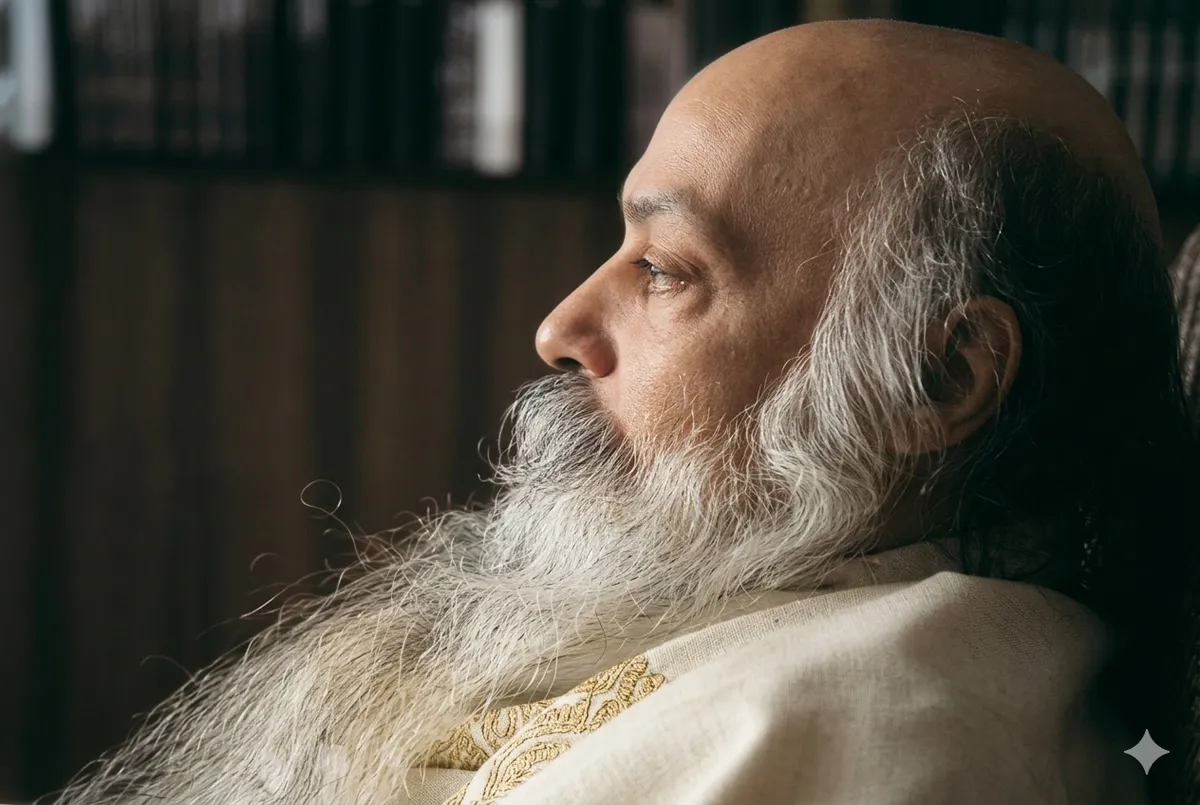
He wanted to discover truth by himself, learning from all of life instead of copying a teacher or a book.
From the Discourses
Passages where Osho speaks to this question — each links to the complete discourse.
Osho, why could Mahavira not find any master or sect at whose feet he could surrender? What was Mahavira seeking?
And remember: one who bows to someone is always stiff before someone else. One who touches somebody’s feet is eager to have others touch his feet. I once went to the ashram of a great sannyasin. On a big platform the head sannyasin was seated; below him, on a smaller seat, sat another sannyasin; below that, others were sitting on the floor. The head sannyasin said to me, “Do you see who is sitting beside me?” I said, “I don’t need to know; someone is sitting, that’s enough.” He insisted, “Perhaps you don’t know—he is the Chief Justice of the High Court. Not an ordinary man! But very humble—he never sits on the platform with me, always on the smaller seat below.” I said, “That I can see. But below even that small seat some others are sitting—he is not humble towards them; he sits above them. And they are…
प्रश्न: ओशो, महावीर को ऐसा कोई गुरु अथवा पंथ क्यों नहीं मिल सका, जिनके चरणों में महावीर अपना आत्मसमर्पण कर सकें? महावीर ऐसा क्या चाहते थे?
और ध्यान रहे, जो व्यक्ति किसी के प्रति झुकता है, वह किसी के प्रति सदा अकड़ा रहता है। और जो व्यक्ति किसी के चरण छूता है, वह किसी से चरण छुआने की आतुरता में रहता है। मैं एक बड़े संन्यासी के आश्रम में गया था। एक बड़े मंच पर संन्यासी बैठे हुए हैं, उनके मंच के नीचे ही एक छोटा तख्त है, उस पर एक दूसरे संन्यासी बैठे हैं, उस तख्त के नीचे और संन्यासी बैठे हुए हैं। उन बड़े संन्यासी ने मुझसे कहा कि आप देखते हैं मेरे बगल में कौन बैठा हुआ है? मैंने कहा, मुझे जरूरत नहीं है; कोई बैठा है जरूर, कोई जरूरत नहीं है। नहीं, उन्होंने कहा, आपको शायद पता नहीं, वे हाईकोर्ट के चीफ जस्टिस थे। साधारण आदमी नहीं हैं! लेकिन बड़े विनम्र हैं, कभी मेरे साथ तख्त पर नहीं बैठते, हमेशा छोटे तख्त पर नीचे बैठते हैं।
Osho, how could the iconoclast Mahavira accept himself as the twenty-fourth Tirthankara of the most ancient Jina tradition? Please explain!
Within this revolutionary tradition, Mahavira is the most glorious, the most brilliant. Therefore his words are worth understanding and contemplating. He must have been uniquely revolutionary; for the Jainas have two sects—Digambara and Shvetambara. The Digambaras hold that not a single word of Mahavira remains, no scripture remains. That too is part of the revolution. They say, no scripture is Mahavira’s word. The words we have are from the Shvetambara compilations. The Digambaras have no compilations. It is astonishing that the Digambaras did not preserve! But that too belongs to their deep revolt: if you preserve words, today or tomorrow they become scripture; preserve them, and soon they become Veda. Hence the Digambaras did not preserve Mahavira’s words. It is an extraordinary rebellion against scripture. They revere Mahavira, but preserved no texts—only what was passed personally from master to disciple; they did not write it down. Therefore, for the Digambaras,…
पहला प्रश्न: ओशो, परंपरा-भंजक महावीर ने स्वयं को प्राचीनतम जिन-परंपरा का चौबीसवां तीर्थंकर क्योंकर स्वीकार किया होगा? कृपया समझाएं!
महावीर इस क्रांतिकारी परंपरा में सबसे ज्यादा महिमावान, सबसे बड़े मेधावी व्यक्ति हुए। इसलिए उनके शब्द समझने जैसे हैं, विचार करने जैसे हैं, क्रांतिकारी तो अनूठे रहे होंगे; क्योंकि जैनों के दो संप्रदाय हैं--दिगंबर और श्वेतांबर। दिगंबर तो मानते हैं, महावीर का कोई भी वचन बचा नहीं, कोई शास्त्र बचा नहीं। यह भी क्रांति का हिस्सा है। वे कहते हैं, कोई शास्त्र महावीर का वचन नहीं। ये जो वचन हैं, यह श्वेतांबरों के संग्रह से लिये गये हैं। दिगंबरों के पास कोई संग्रह नहीं है। यह बड़े आश्चर्य की बात है कि दिगंबरों ने बचाया क्यों नहीं! यह भी उसी गहरी क्रांति का हिस्सा है। क्योंकि अगर बचाओ शब्दों को, तो आज नहीं कल वे शास्त्र बन जाएंगे। बचाओ तो शास्त्र आज नहीं कल वेद बन जाएंगे। इसलिए दिगंबरों ने तो महावीर के वचन बचाए ही नहीं। …
Osho, what new thing did Mahavira give us? Talk of love has been going on since the human race began.
Rabindranath wrote of an old man, a friend of his father’s, who lived next door and often came to their house. He troubled Rabindranath a great deal. Whenever Rabindranath wrote poems about God, the soul, the Supreme, the old man would laugh, grab his hand and shake it, and ask, “Have you experienced it? Have you seen God?” He would laugh so heartily that Rabindranath says he began to fear him. If he saw him on the street he would slip away, because the man would catch him there and ask, “Have you experienced God? Have you seen God?” And he did not have the courage to say yes. Truly, what experience had he had? He was writing poems. The man pestered him so much. But one day—it was the rainy season—he had gone out toward the sea. The sun had come out; it was morning. The sun’s reflection was…
Thus the thinkers of the West ponder: What is truth? The sadhakas of India ponder: What is liberation? What is moksha? What is the means to moksha? This is the difference between philosophy and religion. The philosopher thinks: what is truth? The religious seeks: what is moksha? Read the Western thinkers—you will find they do not think about moksha, they do not even consider it. In their books you will not find a discussion on moksha. Read India’s scriptures—you will find that apart from moksha we are seeking nothing at all. Buddha was passing by a village, and a man had fallen there—someone’s arrow had struck him as he moved through the forest. Buddha came near and said to the man: let us pull the arrow out. The man said: first tell me, who shot the arrow? First tell me: was the arrow poisoned or not?
इसलिए पश्चिम के मुल्क के विचारक सोचते हैं, सत्य क्या है? भारत के साधक सोचते हैं, मुक्ति क्या है? मोक्ष क्या है? मोक्ष का उपाय क्या है? दर्शन और धर्म में यहीं भेद है। दार्शनिक सोचता है, सत्य क्या है? धार्मिक सोचता है, मोक्ष क्या है? अगर आप पश्चिम के विचारकों को पढ़ेंगे तो आप पाएंगे, मोक्ष का कोई विचार ही नहीं करते हैं, मोक्ष का कोई खयाल नहीं करते। उनके ग्रंथों में मोक्ष के संबंध में कोई चर्चा नहीं मिलेगी। और अगर आप भारत के ग्रंथों को खोजेंगे और देखेंगे तो पाएंगे कि सिवाय मोक्ष के हम कुछ भी नहीं खोज रहे हैं। बुद्ध एक गांव से निकलते थे, और एक व्यक्ति वहां गिर पड़ा था। जंगल में वह जाता था और किसी का तीर उसे लग गया। बुद्ध उसके करीब से निकले और उन्होंने उस आदमी को कहा, इस तीर को निकाल लेने दें। …
Experience alone is life’s university. There words have no play. He who goes within must first drop the body—our outermost layer, like the doorway and wall one leaves entering a house. First the body is left; then, going deeper, the mind’s processes drop; deeper still, the heart’s feelings fall away. Arriving at the inmost home, only pure consciousness remains—not body, not mind, not feeling. In this purity, the first glimpses of liberation come. Mahavira says: by trigupti the experience of such a state will arrive—that alone is knowledge. Logic does not enter there, therefore no one can prove moksha exists; nor can anyone disprove it. What cannot be proved by logic cannot be disproved either. Only he who tastes it by experience will know—like the dumb tasting jaggery. He who tastes knows; even he cannot prove it to you.
अनुभव ही जीवन का विश्वविद्यालय है। वहां शब्दों की कोई प्रवृत्ति नहीं है। क्योंकि जो व्यक्ति भीतर जाएगा, उसे पहले तो शरीर छोड़ना पड़ता है। क्योंकि शरीर हमारा सबसे बाहरी रूप है। जैसे कोई आदमी इस भवन में अंदर आएगा तो दरवाजा, दरवाजे से लगी हुई चारदीवारी छोड़कर आना पड़ता है। तो पहले तो शरीर छूट जाता है। फिर जब और भीतर प्रवेश करते हैं तो मन की प्रक्रियाएं छूट जाती हैं। जब और भीतर प्रवेश करते हैं तो हृदय के भाव छूट जाते हैं। जब बिलकुल भीतर अपने घर में पहुंच जाते हैं, ठीक अंतर्गृह में, तो वहां शुद्ध चेतना बचती है, कोई भी और नहीं बचता--न शरीर, न मन, न भाव। इस शुद्ध अवस्था में मुक्ति के पहले दर्शन होते हैं। तो महावीर कहते हैं, त्रिगुप्ति के द्वारा ऐसी मुक्ति की दशा का अनुभव तुम्हें होगा, वही ज्ञान है। वहां तर्क का प्रवेश नहीं, इसलिए कोई मोक्ष को सिद्ध नहीं कर सकता कि है। न कोई सिद्ध कर सकता कि नहीं है। क्योंकि जो चीज सिद्ध ही नहीं की जा सकती तर्क से कि है, उसको असिद्ध भी नहीं किया जा सकता। …