
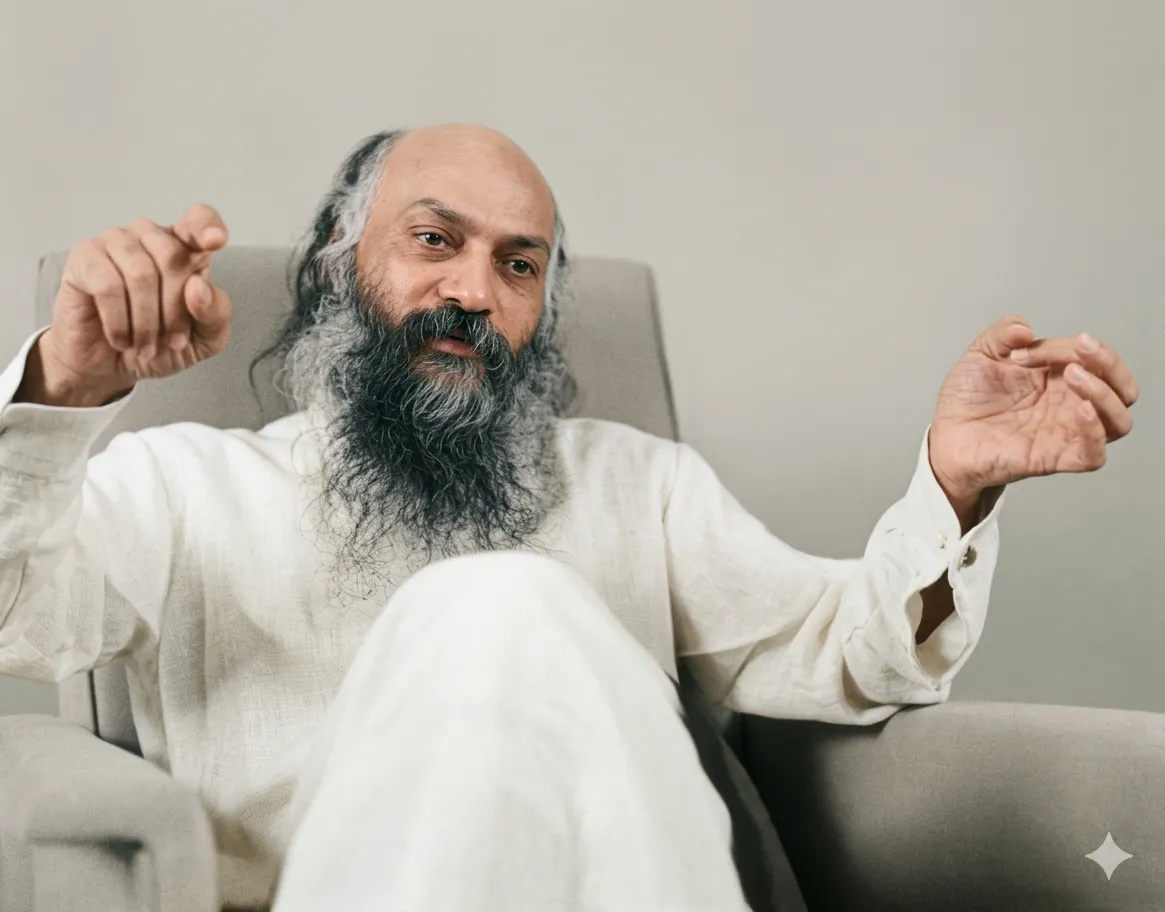
He spoke in the everyday language so everyone could understand him without needing priests to explain.
From the Discourses
Passages where Osho speaks to this question — each links to the complete discourse.
Osho, Kastur Bhai has asked: Why did Mahavira speak in Prakrit and not in Sanskrit?
And I take one basic reason to be that Mahavira spoke in the language of the people. He likely had very little contact with pundits. It may be that thousands of pundits remained unfamiliar with what he was saying. For pundits have their own bourgeois snobbery, an aristocratic attitude; they are not common folk. They neither speak nor think in the language of the common. They are the extraordinary, the chosen few, and everything in their chosen world is apart from the ordinary. The common people are outside the mansion, outside the temple. Sometimes, out of pity, out of grace, they tell the common folk something—but the deep and serious discussion goes on inside the temple, where the illiterate and the ordinary are forbidden to enter. One of the greatest revolutions of Mahavira and Buddha is also this: they brought religion straight into the marketplace, right into the heart of…
प्रश्न: ओशो, कस्तूर भाई ने पूछा है कि महावीर प्राकृत भाषा में क्यों बोले, संस्कृत में क्यों नहीं?
और मैं उसके बुनियादी कारणों में एक कारण मानता हूं कि महावीर उस भाषा में बोल रहे हैं, जो जनता की है। पंडितों से शायद उनका बहुत कम संपर्क बन पाया। हो सकता है हजारों पंडित अपरिचित ही रहे हों कि यह आदमी क्या बोलता है! क्योंकि पंडितों का एक अपना बुर्जुआपन, एक अभिजात भाव है, वे साधारणजन नहीं हैं! न वे साधारणजन की भाषा में बोलते, न सोचते। वे असाधारणजन हैं! वे किसी चूजन-फ्यू, चुने हुए लोग हैं, उन चुने हुए लोगों की दुनिया का सब-कुछ न्यारा है! साधारणजन से उसका कुछ लेना-देना नहीं! साधारणजन तो भवन के बाहर हैं, मंदिर के बाहर हैं! …
Question: OSHO, WHAT PLACE HAS MYSTICISM IN YOUR RELIGION? ... Mahavira never spoke in Sanskrit, Gautam Buddha never spoke in Sanskrit -- for the simple reason that they were trying to defy the priesthood. They spoke in the language of the people. They were condemned by the priesthood: "This is not the right way. You should speak in Sanskrit. And both of you are perfectly well educated " -- both were sons of great kings -- " you know Sanskrit, so why do you speak ordinary people's languages? They said, "For a certain reason: we want people to know that this mystifying has to be exposed. There is nothing in your scriptures, but because they are in a language which nobody understands, it is left to the people's imagination. Even the priest may not understand what he is reciting because Sanskrit has to be learned by memorizing, not by understanding.
Osho, what kind of Indian guru are you? We’ve heard you don’t even know Sanskrit!
English, therefore, is the most alive language on earth today--every year it digests eight thousand new words. No other language has such digestive power. It digests everything. You’ll be surprised: English even digested the Sanskrit word “pandit.” “Pandit” is used in English; the meaning is the same as in Hindi--a pompous pundit, hollow, stuffed with cow-dung. Digestive power is the mark of a living being. They can’t even digest “railgadi,” though it has caught on! Millions use it. The whole country understands “railgadi.” Neither Tamil nor Marathi nor Gujarati nor Punjabi nor Hindi has any difficulty with it. But he coined a word, and it didn’t fly. He tried very hard to make it fly--“lohpathgamini” (iron-path-goer)! It just doesn’t sit right; it sounds stupid. You’re going to the station, someone asks, “Where are you going?” You say, “I’m going to catch the lohpathgamini!” He’ll think your wife has run away…
पहला प्रश्न: ओशो, आप किस प्रकार के भारतीय गुरु हैं, हमने सुना है कि आपको संस्कृत भी नहीं आती!
अंग्रेजी इसीलिए सबसे ज्यादा जिंदा भाषा है आज पृथ्वी पर, प्रतिवर्ष आठ हजार नये शब्द पचाती है। दुनिया की किसी भाषा की इतनी पाचन-क्षमता नहीं है। सब पचा जाती है। तुम जान कर हैरान होओगे संस्कृत का ‘पंडित’ शब्द अंग्रेजी पचा गई। अंग्रेजी में पंडित शब्द का उपयोग होता है। मतलब वही होता है जो हिंदी में होता है--पोंगा पंडित, थोथे, गोबर भरे। मगर पाचन-शक्ति जीवित व्यक्ति का लक्षण है। ‘रेलगाड़ी’ को भी नहीं पचा सकते, जब कि चल पड़ा शब्द! लाखों लोग, करोड़ों लोग उपयोग कर रहे हैं। पूरा देश रेलगाड़ी शब्द समझता है। न तमिल को दिक्कत है, न मराठी को दिक्कत है, न गुजराती को दिक्कत है, न पंजाबी को दिक्कत है, न हिंदी को दिक्कत है। मगर उन्होंने एक गढ़ लिया शब्द, वह चला नहीं। बहुत चलाने की कोशिश की--लोहपथगामिनी! बात ही कुछ जंचती नहीं, बुद्धूपन सी लगती है। जैसे तुम जा रहे हो स्टेशन, कोई तुमसे कहे कहां जा रहे हो, तुम कहो लोहपथगामिनी को पकड़ने जा रहे हैं! तो वह समझेगा कि तुम्हारी पत्नी भाग गई या क्या बात है? लोहपथगामिनी! …
Osho, yesterday you said that jealousy is included in respect. I have immense respect for you, but the jealousy inherent in it keeps poisoning it, and I feel guilt and pain. Does reverence transcend this poison-laced respect?
It needs a little explaining—it's a delicate point. Whenever you respect someone, you do so because you see in that person something you do not have. You respect because you glimpse in the other something you would also like to possess. A beggar respects an emperor because he, too, longs to be an emperor. So on the one hand he respects, and inside he also envies. Because he is not yet an emperor but wants to be. You have attained what he wants to attain. He respects you as skillful, successful: “I stand far back in the line; you have gone ahead to where I should have been.” So you are powerful, clever, intelligent, strong—he respects you. But inside a fire of jealousy also burns—if he gets the chance, he would like to be in your place and push you aside. And if the beggar gets that chance, he will…
तीसरा प्रश्न: ओशो, आपने कल कहा, आदर में ईर्ष्या सम्मिलित है। आपके प्रति मुझमें अपार आदर है, लेकिन उसमें निहित ईर्ष्या उसमें जहर घोलती रहती है और मैं ग्लानि और पीड़ा का अनुभव करता हूं। क्या श्रद्धा इस विष-भरे आदर का अतिक्रमण करती है?
भिखारी सम्राट का आदर करता है, क्योंकि उसकी भी आकांक्षा है कि सम्राट हो। तो एक तरफ आदर भी करता है, भीतर ईर्ष्या भी करता है। क्योंकि सम्राट अभी वह है नहीं, सम्राट होना चाहता है। तुम हो गए हो, तुमने वह पा लिया है जो वह पाना चाहता है। इसलिए तुम्हें आदर भी करता है कि तुम कुशल हो, सफल हो, मैं पंक्ति में बहुत पीछे खड़ा हूं, तुम आगे पहुंच गए हो, तुम उस जगह पहुंच गए हो जहां मुझे होना चाहिए था। इसलिए तुम शक्तिशाली हो, होशियार हो, बुद्धिमान हो, बलशाली हो, तुम्हारा आदर करता हूं। लेकिन एक भीतर ईर्ष्या की आग भी जलती है--अगर मुझे मौका मिले तो उस जगह मैं होना चाहूंगा, तुम्हें हटाना चाहूंगा। और जब मौका मिल जाएगा इस भिखारी को तो यह सम्राट को हटा कर धक्का दे देगा, सिंहासन पर बैठ जाएगा।
Beloved Osho, mahavira was the twenty-fourth tirthankara of the jaina religion. Did the jaina religion start with the very first tirthankara or with mahavira? And what is the meaning of the word `jaina'?
And they became really rich, so rich that even kings had to borrow money from them. Nobody was a beggar, nobody was uneducated. And because they were such a small minority, attacked by all kinds of philosophies, they had to protect themselves; they sharpened their intellect. They created better arguments than anybody else, because for others it was a luxury to argue, but for Jainas it was a question of life and death. They had to win the argument; otherwise they were finished. So they have developed logical systems, great philosophies, which should be made available to the whole world. But the world cares only about numbers, and they are a non-converting religion, so the question of creating great numbers like the Catholics is not possible. They are non-converting because, according to them -- and I accept the idea -- the very effort to convert somebody is ugly. You can…