
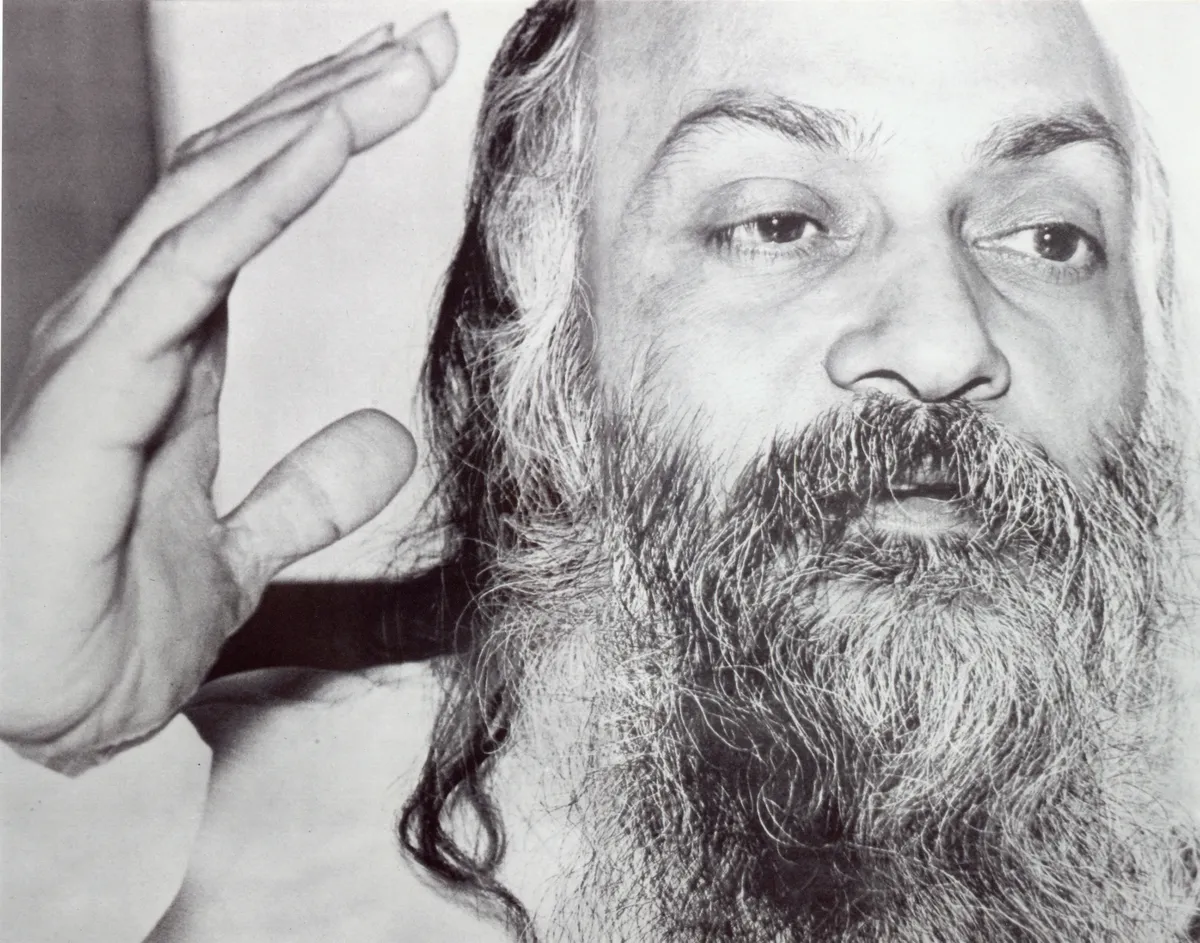
It’s better to directly know your true self beyond thoughts and others’ opinions than to just hear explanations about it.
From the Discourses
Passages where Osho speaks to this question — each links to the complete discourse.
Osho: a zen saying is: better to see the face than to hear the words. Wouldn't it be better to see the face and to hear the words?
IT IS ONE THING TO UNDERSTAND words, it is a totally different experience to understand the statements made by mystics. The words are simple. Anybody can understand them, but the implications can be understood only by those who have experienced the same kind of consciousness out of which those words have flowed. This Zen saying is one of the most significant sayings: BETTER TO SEE THE FACE... By 'the face' is meant your original face -- not the face that is reflected in the mirror, not the face this is reflected in other people's eyes, but the face that you had even before your parents were born, the face that you will have when your body has gone back to the dust, when you are dead. 'The original face' is a Zen way of speaking about your spiritual reality, about your innermost truth, about your individuality. The face that you…
Osho, when you are giving a discourse, if I gaze at your face the words are not heard; and if I listen to the words, a kind of restlessness is felt. Why is this so?
Words are not of much value. Even if the words are not heard, it is all right; even if they are heard, there is no real gain. If you look toward me, it becomes meditation. If the meditation becomes right, if the wire is connected, the words will stop being heard—because to hear words, a restless mind is needed, an agitated, unquiet mind. In that moment—when the connection is made—the soundless will begin to be heard; that is the real satsang. It is not of much value that you hear what I say. If you can hear what I am, only then does it have value. Speaking is just a pretext; words are only devices. The arrival is into the soundless; the awakening is in silence. If this is happening, then drop all concern for words; just keep looking at me. Let the flame be joined. Forget that I am…
I don't understand the concept of original realization, or the original face zen people talk about. Please explain.
ZEN HAS ITS OWN WAYS OF TALKING about the ultimate reality, or God. The original face is what God is. The original face means the face of you when you had no definition, when you had no body, no contours, no localization. The original face means your formless reality, when you were not even born, when not even your father or your father's father was born. Original face means the source energy, the absolute source energy, the original energy beyond which we cannot go -- beyond which there is no way to go. Original face means: drop all the masks, drop all the names and the forms, and just go on looking into yourself and try to find out that one thing that you have not created, that the society has not created, that is not a belief system, that has nothing to do with your mind. Go on looking,…
Why is a spiritual experience often called a vision? What is the difference between sight and vision? A while ago you spoke about what it is 'to hear'. Please, what does it mean 'to see'?
Be more sensitive -- less of belief, less of the head, and more of sensitivity. Be more sensuous, alive in your senses, and then suddenly one day you will see: it is not simply the light that is coming to you, it is God in the form of light; and it is not the tree that is standing there in front of you, but God; not the rock, but God; not the woman that you have fallen in love with, but a God; not the man, but God. When the insight becomes clear, unclouded, suddenly you start seeing that everywhere God is, because all is God. A man took a flower once, and without a word, held it up before the men seated in a circle about him. Each man in his turn looked at the flower, and then explained its meaning, its significance, all that it symbolized. The last…
Osho, if everything heard by the ear is false, then what significance remains in the Satguru’s teaching?
Falsehood is truth’s shadow. Understand it rightly: falsehood is the shadow of truth. That is why it can deceive; otherwise how could it? If falsehood were nothing like truth—not even a little—who would be fooled? A counterfeit coin deceives because it looks at least like a real coin—whether it is or not, it looks like it. Falsehood looks like truth—only looks. The outline of falsehood is exactly like the outline of truth. Only one thing is missing: in truth there is life; in falsehood there is no life. Your shadow has your shape, your outline. Your photograph is called yours for this very reason—everything looks like you. But a photograph is a photograph; you are you. What is the difference? Only this much: in you there is life; a photograph has none. It looks like you—how can it be you? Falsehood is truth’s photograph. You often think falsehood is the…