
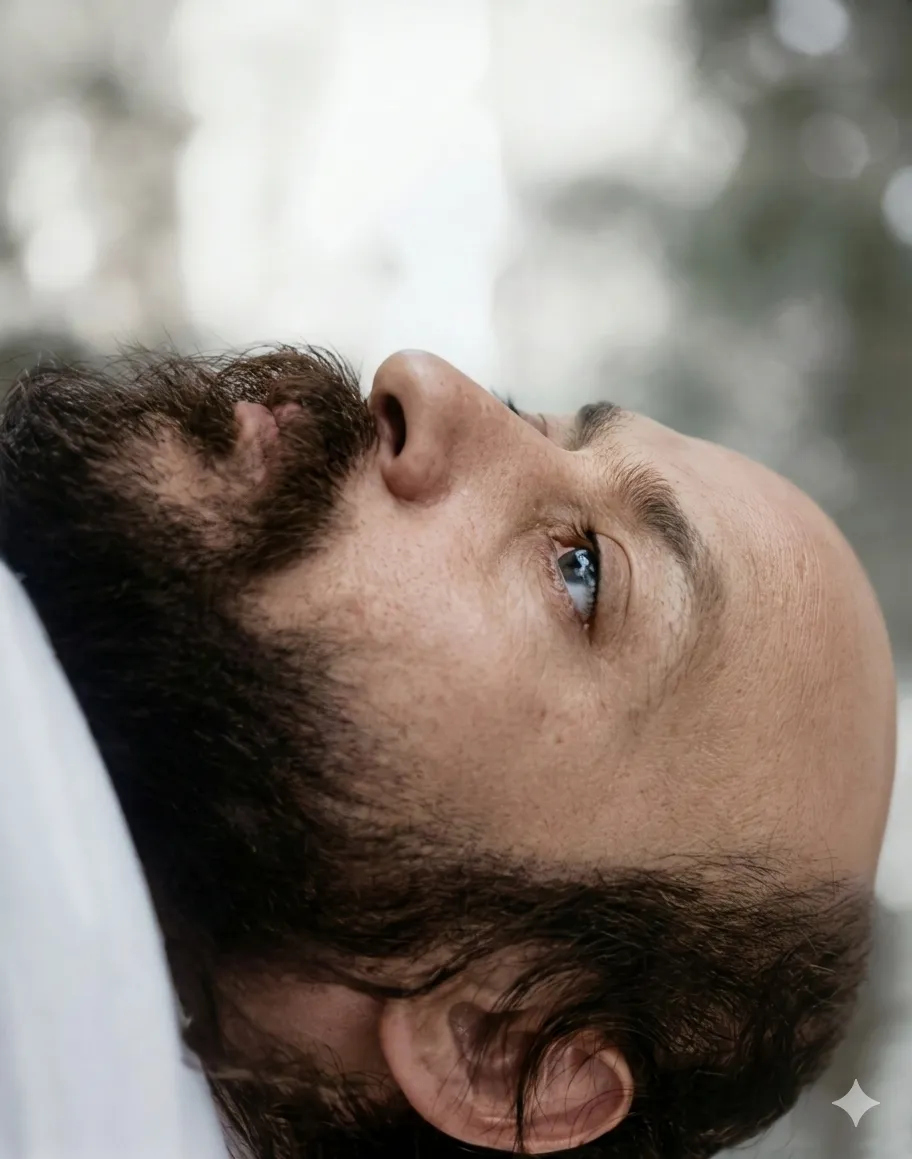
Don’t try to grab Zen—stop reaching outward and relax inward, because you already are it.
From the Discourses
Passages where Osho speaks to this question — each links to the complete discourse.
Osho, what is zen?
These sounds, these birds, these trees, these people, this silence... three thousand people disappearing into a silence, losing their identities, egos... and suddenly Zen is there! It becomes almost tangible. You can touch it, you can eat it, you can drink it. But there is no way to convey it through words. You have to be calm and quiet and contented so that you can be in the present. You have to be free of all care. Care simply means you are not trusting existence; you are trying to be careful on your own. You are afraid. You are not yet aware that existence cares for you, that it mothers you, that it fathers you. Once you start feeling the mothering, the fathering that surrounds you, in the air, in the sun, in the moon, in the stars, you drop caring for yourself. There is no need to be worried.…
Question: BELOVED OSHO, HYAKUJO HAD A UNIQUE WAY OF GUIDING MONKS. FROM MORNING TILL NIGHT HE KEPT ON SAYING, "WORK FOR ME IN THE FIELD, AND I WILL TEACH FOR YOU." HE THUS MADE HIS DISCIPLES WORK IN THE FIELD ALL THE TIME; BUT HE DID NOT SEEM TO BE PREPARED TO GIVE ANY LECTURES OR SERMONS. FINALLY, THE MONKS, NOT ABLE TO STAND IT ANY LONGER, WENT TO THE MASTER AND ASKED: "WOULD YOU PLEASE BE GRACIOUS ENOUGH TO GIVE US AN EDIFYING SERMON?" THE MASTER'S UNWAVERING REPLY WAS: "WORK FOR ME IN THE FIELD, AND I WILL TEACH FOR YOU." SEVERAL DAYS PASSED, AND THE IMPATIENT MONKS WENT TO THE MASTER AGAIN AND URGED: "PLEASE GIVE US A SERMON." THIS TIME, HE QUITE READILY AGREED TO DO SO. AFTER A WHILE ALL THE MONKS GATHERED TOGETHER IN THE HALL.
Like the empty sky it has no boundaries, yet it is right in this place, ever profound and clear. When you seek to know it, you cannot see it, you cannot take hold of it, but you cannot lose it. In not being able to get it you get it. When you are silent it speaks; when you speak, it is silent. The great gate is wide open to bestow alms, and no crowd is blocking the way.
And remember, when Zen says 'just sitting' it means just sitting -- nothing else, not even a mantra. If you are repeating a mantra you are not just sitting, you are again getting into some tommyrot, again into some mind thing. If you are not doing anything whatsoever.... Thoughts are coming, coming; they are going, going -- if they come, good; if they don't come, good. You are not concerned with what is happening, you are simply sitting there. If you feel tired you lie down. If you feel your legs getting tense you spread them. You remain natural. Not even watching. Not making any effort of any kind. That's what they mean by just sitting. Just sitting it happens. Zen is the feminine approach and religion is basically feminine. Science is male, philosophy is male -- religion is female. All that is beautiful in the world -- poetry, painting,…
The master fugai was considered very wise and generous, yet he was most severe both with himself and his disciples.
HE WENT TO THE MOUNTAINS TO SIT IN ZEN. HE LIVED IN A CAVE, AND WHEN HE WAS HUNGRY HE WENT TO THE VILLAGE FOR SCRAPS. ONE DAY A MONK CALLED BUNDO, ATTRACTED BY FUGAI'S AUSTERITIES, CALLED AT THE CAVE AND ASKED TO STAY THE NIGHT. THE MASTER SEEMED HAPPY TO PUT HIM UP, AND NEXT MORNING PREPARED RICE GRUEL FOR HIM. NOT HAVING AN EXTRA BOWL HE WENT OUT AND RETURNED WITH A SKULL HE FOUND LYING NEAR A TOMB. HE FILLED IT WITH GRUEL AND OF OFFERED IT TO BUNDO. THE GUEST REFUSED TO TOUCH IT, AND STARED AT FUGAI AS IF HE HAD GONE MAD. AT THIS FUGAI BECAME FURIOUS AND DROVE HIM OUT OF THE CAVE WITH BLOWS. 'FOOL!' HE SHOUTED AFTER HIM.'HOW CAN YOU, WITH YOUR WORLDLY NOTIONS OF FILTH AND PURITY, THINK YOURSELF A BUDDHIST?' SOME MONTHS LATER THE MASTER TETSGYU VISITED HIM AND…
Osho, I cannot understand the philosophy of zen. What should I do to understand it?
When all words are gone, your mirror has no more dust on it, no more mist on it. When you look at things you collect impressions; that is the dust -- that's what you call thinking. When you see a rose flower, the rose flower is outside you but it makes a reflection inside you. The rose flower will fade away by the evening, the petals will fall and disappear, but the inner rose flower, the rose that has become imprinted in your memory will continue. It will remain forever with you, you can always remember it. And if you are a sensitive, aesthetic, artistic person you can visualize it again and again; you can imagine it as if it is true. In fact, if you try you will be surprised: you can even experience the fragrance of the rose again. If you create the whole situation in your imagination:…