
Duryodhana trusted Bhima’s muscle and doubted Arjuna’s mind, but Krishna stepped in and made Arjuna decisive, changing everything.
From the Discourses
Passages where Osho speaks to this question — each links to the complete discourse.
Duryodhana can depend upon Bheema to have a war. There is a deep similarity between them. Both are of the same nature; deep down both have the same kind of thinking, both are the same type of person. Hence if Duryodhana saw Bheema as the central figure on the opposing side, he was absolutely right. Gita also proves later on that Arjuna is eager to desert. Arjuna appears as an escapist, which is highly possible with regard to a person like him. The war has proved tougher for Arjuna. For Arjuna, entering in war became possible only after he underwent a transformation. Only after attaining a new level of understanding could he agree to the war. Bheema was prepared to fight at whatever level of being he was. He accepted war as naturally as did Duryodhana; hence, it is not coincidental that Duryodhana should see Bheema as the central figure.
Osho, why did Mahavira call the soul “time”? Please tell us what relationship there is between time and the soul.
Albert Einstein considered two constituent elements of existence: time and space. And as his inquiry deepened, it seemed to him that calling them two was not quite right. So he chose a single term for both: spacetime. Space is outside; time is inside. If we understand life rightly, two things are needed for being. You need a place in which to be—you will occupy some room. You are sitting here; you have taken up a little space. That is kshetra, the sky, space. But that alone is not enough. If that were all, you would become an object. Then there would be no difference between you and a table or a chair. The table and the chair also occupy space, just as you do. The floor you are sitting on occupies space, just as you do. Then what is the difference between you and a stone? You have also occupied…
पहला प्रश्न: ओशो, महावीर ने आत्मा को समय क्यों कहा? कृपाकर बतायें कि समय और आत्मा में क्या संबंध है?
… टाइम और स्पेस। समय और क्षेत्र। और फिर बाद में जैसे-जैसे आइंस्टीन की खोज गहरी होती गयी, उसे यह भी प्रतीत होने लगा कि इन दो तत्वों को दो कहना ठीक नहीं है। इसलिए फिर उसने दोनों के लिए एक ही शब्द चुन लिया: स्पेसियोटाइम। समय-क्षेत्र। क्षेत्र बाहर है, समय भीतर है। जीवन को अगर हम ठीक से समझें, तो हमें होने के लिए दो चीजें चाहिए। कोई जगह चाहिए होने के लिए। हम कुछ जगह घेरेंगे। तुम यहां बैठे हो, तो तुमने थोड़ी जगह घेरी। वही है क्षेत्र, आकाश, स्पेस। लेकिन उतना काफी नहीं है। अगर उतना ही हो, तो तुम वस्तु हो जाओगे। …
Osho, did Arjuna, while listening to the wisdom of the Gita, attain the supreme knowledge then and there, or did his devotion-practice, his disciple’s practice, begin only afterward? When and how did he attain God-realization?
Arjuna attained the supreme state just by listening; he had nothing to do. Doing itself is a delusion. The notion that something must be done to attain the Divine is a concept of the ego. The Divine is present; you have to awaken, not do. If there is anything to “do,” it is only to awaken—nothing else. Open your eyes: the Divine stands before you. Look within: He is present within. Touch a tree: He will come into your hand. Gaze into the eyes of animals. Listen to the humming of the winds passing through the trees: you will hear His resonance. The real question is not how to find Him—He is. You are lost; God is not lost. A fish asks, “Where is the ocean?” Born in the ocean, dissolving in the ocean, it asks, “Where is the ocean?” The fish has fallen asleep; it has become empty of…
तीसरा प्रश्न: ओशो, अर्जुन गीता का ज्ञान सुनते-सुनते परम ज्ञान को उपलब्ध हो गया या उसके बाद से उसकी भक्ति-साधना या शिष्य-साधना का प्रारंभ हुआ? उसे भगवत्प्राप्ति कब और कैसे हुई?
अर्जुन सुनते-सुनते ही परम भाव को प्राप्त हो गया; उसे कुछ करना नहीं पड़ा। करना भी एक भ्रांति है। कुछ करना पड़ेगा परमात्मा को पाने के लिए, यह भी अहंकार की ही अवधारणा है। परमात्मा मौजूद है; तुम्हें जागना है, कुछ करना नहीं है। कुछ करना है तो बस जागना ही करना है, और कुछ भी नहीं करना है। आंख खोलनी है; सामने खड़ा है परमात्मा। भीतर देखना है; भीतर मौजूद है। वृक्ष को छूना है; वही तुम्हारे हाथ में आ जाएगा। पशुओं की आंखों में झांकना है। हवाओं के गुंजन को सुनना है वृक्षों से निकलते हुए। उसकी ही गूंज तुम्हें सुनाई पड़ जाएगी। …
Osho, couldn’t he have said, “Both are my friends; I will fight for neither side”?
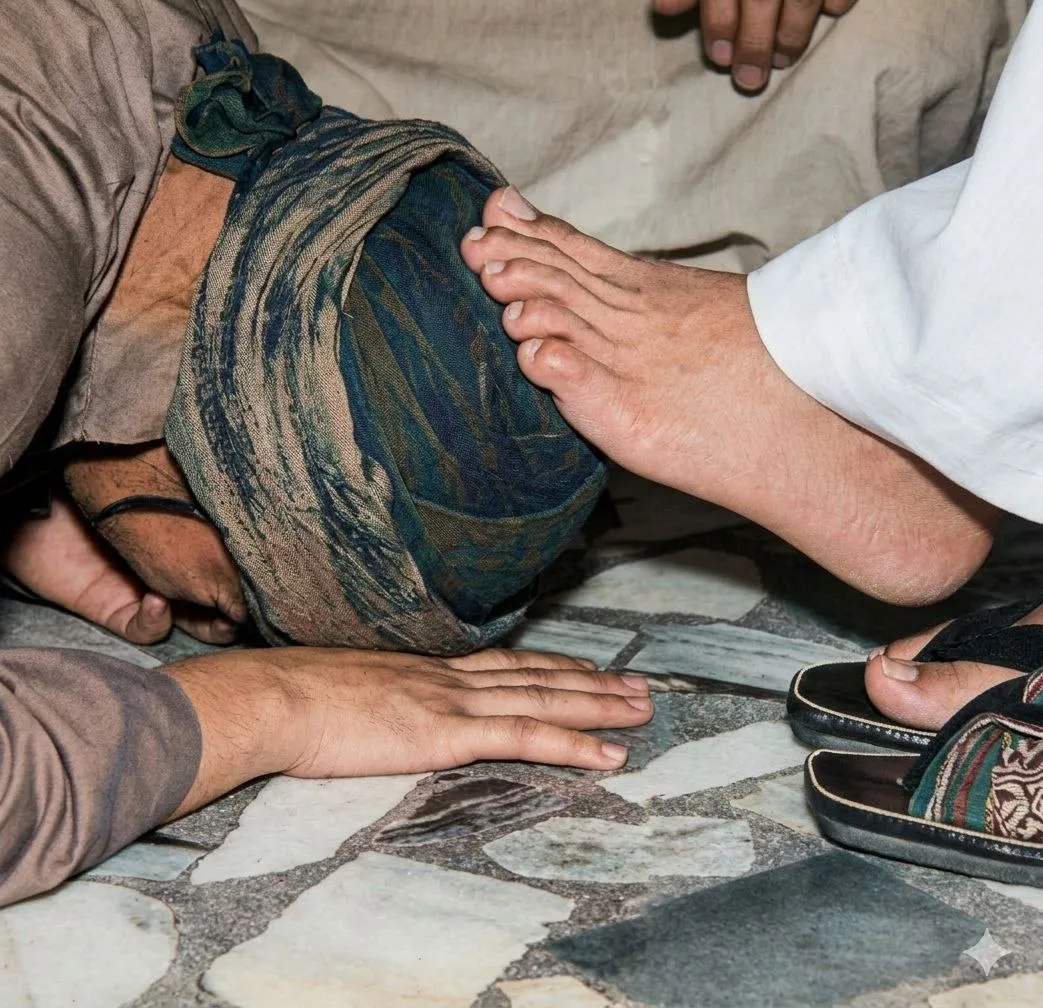
The Kauravas were frightened and flustered: “This is a big problem! Surely the Pandavas will choose the armies. Who would choose Krishna alone! And what would we do with Krishna by himself?” They felt there was bias because the first choice went to the Pandavas. But they were overjoyed when they saw that the “foolish” Pandavas chose Krishna and left all the armies to the Kauravas. Then they rejoiced and concluded that the defeat of these simpletons was certain. “They always play the card of naiveté, they always lose. Another chance to win has been missed. Now victory is assured!” But in that very moment their defeat was sealed. The Pandavas’ choice declared that the choice had become spiritual, had deepened, had become a choice for dharma—and with Krishna standing with them it became decisive. Since I said that sitting at the feet became important, a small incident comes to…
ओशो, वे यह भी तो कह सकते थे कि दोनों मेरे मित्र हो, मैं किसी की भी तरफ से नहीं लडूंगा?
ये सब बहुत छोटी-छोटी बातें बड़ी सूचक बन जाती हैं। हम जिंदगी में वही करते हैं, जो हम हैं। यह आकस्मिक नहीं है। यह इतनी सी घटना भी कि कौरवों का बैठना सिर के पास, पांडवों का बैठना पैर के पास एक्सिडेंटल नहीं है। इसलिए आंख स्वभावतः जो पैर के पास बैठे हैं, उन पर पहले पड़ी। इसलिए चुनाव का पहला मौका उन्हें दिया गया। निश्र्चित ही जो विनम्र हैं, वे पहले जीतेंगे। पहला मौका उनका होगा। ब्लेसिड आर दि मीक, दे शैल इनहेरिट दि अर्थ। वह जो जीसस कहते हैं, धन्य हैं वे जो विनम्र हैं, क्योंकि पृथ्वी का राज्य उन्हीं का होगा। तो वे जो विनम्र थे उनके जिए पहला मौका था कि तुम चुनाव कर लो। कौरव तो बहुत डरे और घबड़ाए कि यह तो बड़ी मुश्किल हो गई, क्योंकि उन्होंने पक्का समझा कि कौन चुनेगा कृष्ण को! फौजें हैं विराट कृष्ण की, वे ही निर्णायक होंगी युद्ध में। वे बहुत घबड़ाए कि यह धोखा हो गया! यह गलती हो गई, यह हमसे भूल हो गई, हम पैर के पास ही क्यों न बैठ गए! यह पहला मौका पांडवों को दिया गया चुनाव का, इसमें पक्षपात हुआ जा रहा है! …
Question: Osho, it seems to me that, while explaining “svadharme nidhanam śreyaḥ,” Krishna pressured Arjuna. Arjuna was overstepping his kṣatriyahood and perhaps wanted to become a brāhmin. When he experienced despondency, when compassion arose in him, he was moving into his own dharma; Krishna stopped him and tried to bring him back into kṣatriyahood. That is how it seems to me. And there is a second point: you said Krishna sets Arjuna free, he doesn’t press him down. But at the beginning of the Gita Arjuna becomes a disciple and says, “śiṣyas te ’haṁ śādhi māṁ tvāṁ prapannam.” Later, after the whole current of the Gita has flowed by, at its completion we hear Arjuna say, “kariṣye vacanaṁ tava.” Doesn’t this give the hint that Krishna established a kind of guru-dom over Arjuna, under whose influence or pressure Arjuna had to say, “kariṣye vacanaṁ tava”?