
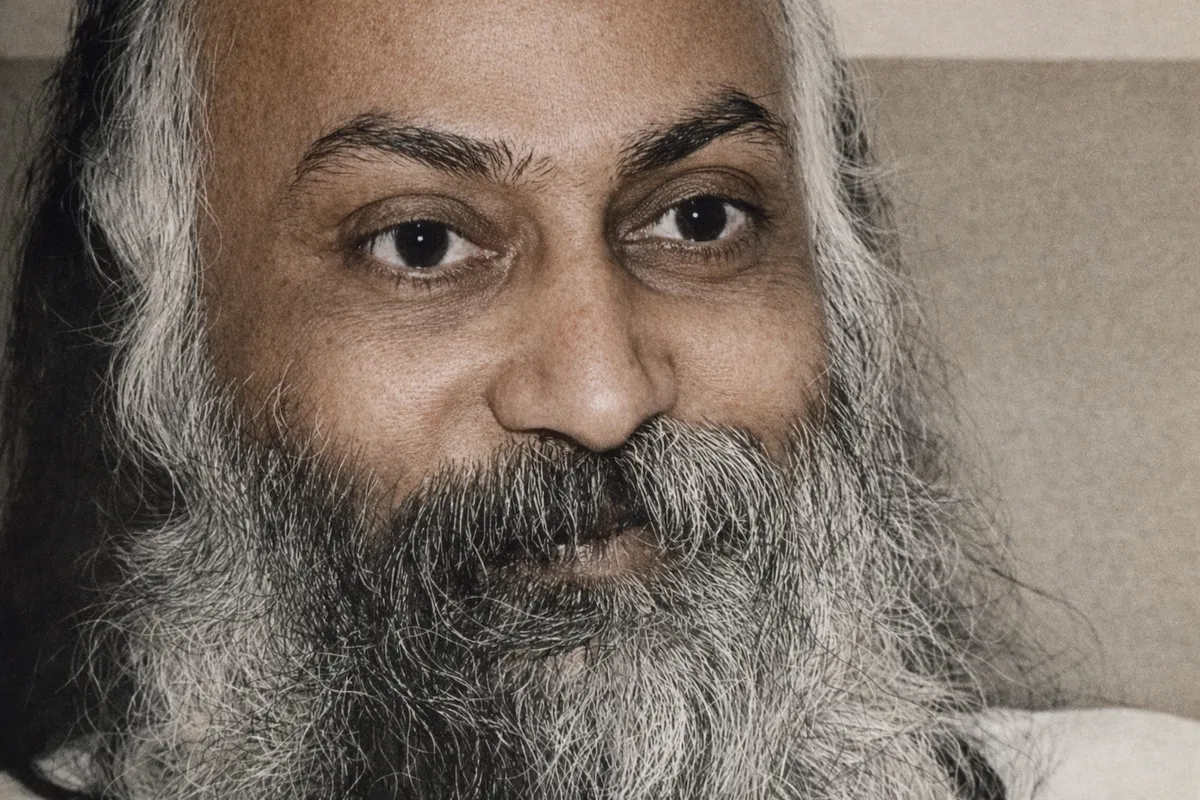
Osho's perspective on Bhagavad Gita
When Osho Spoke About Bhagavad Gita
Passages from the discourses where this theme comes alive.
Osho, the Gita is a personal dialogue between Krishna and Arjuna. But in your Gita discourses you address a group. Please explain whether the Bhagavad Gita can be addressed to a group?
Who told you I’m addressing a group! Does a group have any life with which to understand? Any ears with which to hear? Any heart to beat, any wisdom that can be awakened? “Group” is only a word. A group is not a person. Whenever a dialogue happens, it happens between persons, one to one. A group never meets a person. Have you ever met a group? Wherever you look, you meet individuals. You are here, and others are here with you. But that is only a togetherness. A group is not present; you are present individually. And if people leave one by one, will a group be left behind? The moment persons depart, the group also departs. I am not speaking to your crowd; I am speaking to your person. This is one-to-one. It is direct. And remember: what you understand is what you understand; the person sitting beside…
पहला प्रश्न: ओशो, गीता कृष्ण और अर्जुन के बीच व्यक्तिगत संवाद है। लेकिन आपके गीता-प्रवचनों में आप समूह को संबोधित कर रहे हैं। कृपया समझाएं कि भगवद्गीता क्या समूह को संबोधित की जा सकती है?
किसने कहा तुम्हें कि मैं समूह को संबोधित कर रहा हूं! समूह के पास कोई प्राण होते हैं समझने के? या कि सुनने के लिए कोई कान होते हैं? समूह के पास कोई हृदय होता है धड़कने को? कोई प्रज्ञा होती है जिसे जगाया जा सके? समूह तो मात्र शब्द है। समूह कोई व्यक्ति थोड़े ही है। जब भी संवाद घटित होगा, तब व्यक्ति-व्यक्ति के बीच ही घटित होता है। समूह और व्यक्ति का तो कोई मिलना कभी होता नहीं। तुम कभी समूह से मिले हो? जहां भी पाओगे, व्यक्ति को पाओगे। यहां भी तुम मौजूद हो, और भी लोग तुम्हारे साथ मौजूद हैं। लेकिन वह सिर्फ साथ होना है। समूह थोड़े ही मौजूद है। व्यक्तिगत रूप से तुम अलग-अलग मौजूद हो। और अगर एक-एक व्यक्ति यहां से विदा हो जाए, तो क्या पीछे समूह छूट जाएगा? व्यक्तियों के विदा होते ही समूह भी विदा हो जाएगा। मैं तुम्हारी भीड़ से नहीं बोल रहा हूं, मैं तुम्हारे व्यक्ति से ही बोल रहा हूं। एक-एक से यह बात हो रही है। …
Duryodhana can depend upon Bheema to have a war. There is a deep similarity between them. Both are of the same nature; deep down both have the same kind of thinking, both are the same type of person. Hence if Duryodhana saw Bheema as the central figure on the opposing side, he was absolutely right. Gita also proves later on that Arjuna is eager to desert. Arjuna appears as an escapist, which is highly possible with regard to a person like him. The war has proved tougher for Arjuna. For Arjuna, entering in war became possible only after he underwent a transformation. Only after attaining a new level of understanding could he agree to the war. Bheema was prepared to fight at whatever level of being he was. He accepted war as naturally as did Duryodhana; hence, it is not coincidental that Duryodhana should see Bheema as the central figure.
Osho, did Arjuna, while listening to the wisdom of the Gita, attain the supreme knowledge then and there, or did his devotion-practice, his disciple’s practice, begin only afterward? When and how did he attain God-realization?
Arjuna attained the supreme state just by listening; he had nothing to do. Doing itself is a delusion. The notion that something must be done to attain the Divine is a concept of the ego. The Divine is present; you have to awaken, not do. If there is anything to “do,” it is only to awaken—nothing else. Open your eyes: the Divine stands before you. Look within: He is present within. Touch a tree: He will come into your hand. Gaze into the eyes of animals. Listen to the humming of the winds passing through the trees: you will hear His resonance. The real question is not how to find Him—He is. You are lost; God is not lost. A fish asks, “Where is the ocean?” Born in the ocean, dissolving in the ocean, it asks, “Where is the ocean?” The fish has fallen asleep; it has become empty of…
तीसरा प्रश्न: ओशो, अर्जुन गीता का ज्ञान सुनते-सुनते परम ज्ञान को उपलब्ध हो गया या उसके बाद से उसकी भक्ति-साधना या शिष्य-साधना का प्रारंभ हुआ? उसे भगवत्प्राप्ति कब और कैसे हुई?
अर्जुन सुनते-सुनते ही परम भाव को प्राप्त हो गया; उसे कुछ करना नहीं पड़ा। करना भी एक भ्रांति है। कुछ करना पड़ेगा परमात्मा को पाने के लिए, यह भी अहंकार की ही अवधारणा है। परमात्मा मौजूद है; तुम्हें जागना है, कुछ करना नहीं है। कुछ करना है तो बस जागना ही करना है, और कुछ भी नहीं करना है। आंख खोलनी है; सामने खड़ा है परमात्मा। भीतर देखना है; भीतर मौजूद है। वृक्ष को छूना है; वही तुम्हारे हाथ में आ जाएगा। पशुओं की आंखों में झांकना है। हवाओं के गुंजन को सुनना है वृक्षों से निकलते हुए। उसकी ही गूंज तुम्हें सुनाई पड़ जाएगी। …
Osho, why did Mahavira call the soul “time”? Please tell us what relationship there is between time and the soul.
Albert Einstein considered two constituent elements of existence: time and space. And as his inquiry deepened, it seemed to him that calling them two was not quite right. So he chose a single term for both: spacetime. Space is outside; time is inside. If we understand life rightly, two things are needed for being. You need a place in which to be—you will occupy some room. You are sitting here; you have taken up a little space. That is kshetra, the sky, space. But that alone is not enough. If that were all, you would become an object. Then there would be no difference between you and a table or a chair. The table and the chair also occupy space, just as you do. The floor you are sitting on occupies space, just as you do. Then what is the difference between you and a stone? You have also occupied…
पहला प्रश्न: ओशो, महावीर ने आत्मा को समय क्यों कहा? कृपाकर बतायें कि समय और आत्मा में क्या संबंध है?
… टाइम और स्पेस। समय और क्षेत्र। और फिर बाद में जैसे-जैसे आइंस्टीन की खोज गहरी होती गयी, उसे यह भी प्रतीत होने लगा कि इन दो तत्वों को दो कहना ठीक नहीं है। इसलिए फिर उसने दोनों के लिए एक ही शब्द चुन लिया: स्पेसियोटाइम। समय-क्षेत्र। क्षेत्र बाहर है, समय भीतर है। जीवन को अगर हम ठीक से समझें, तो हमें होने के लिए दो चीजें चाहिए। कोई जगह चाहिए होने के लिए। हम कुछ जगह घेरेंगे। तुम यहां बैठे हो, तो तुमने थोड़ी जगह घेरी। वही है क्षेत्र, आकाश, स्पेस। लेकिन उतना काफी नहीं है। अगर उतना ही हो, तो तुम वस्तु हो जाओगे। …
Profound Quotes on Bhagavad Gita
Explore our structured collection of meaning-mapped quotes regarding Bhagavad Gita.