
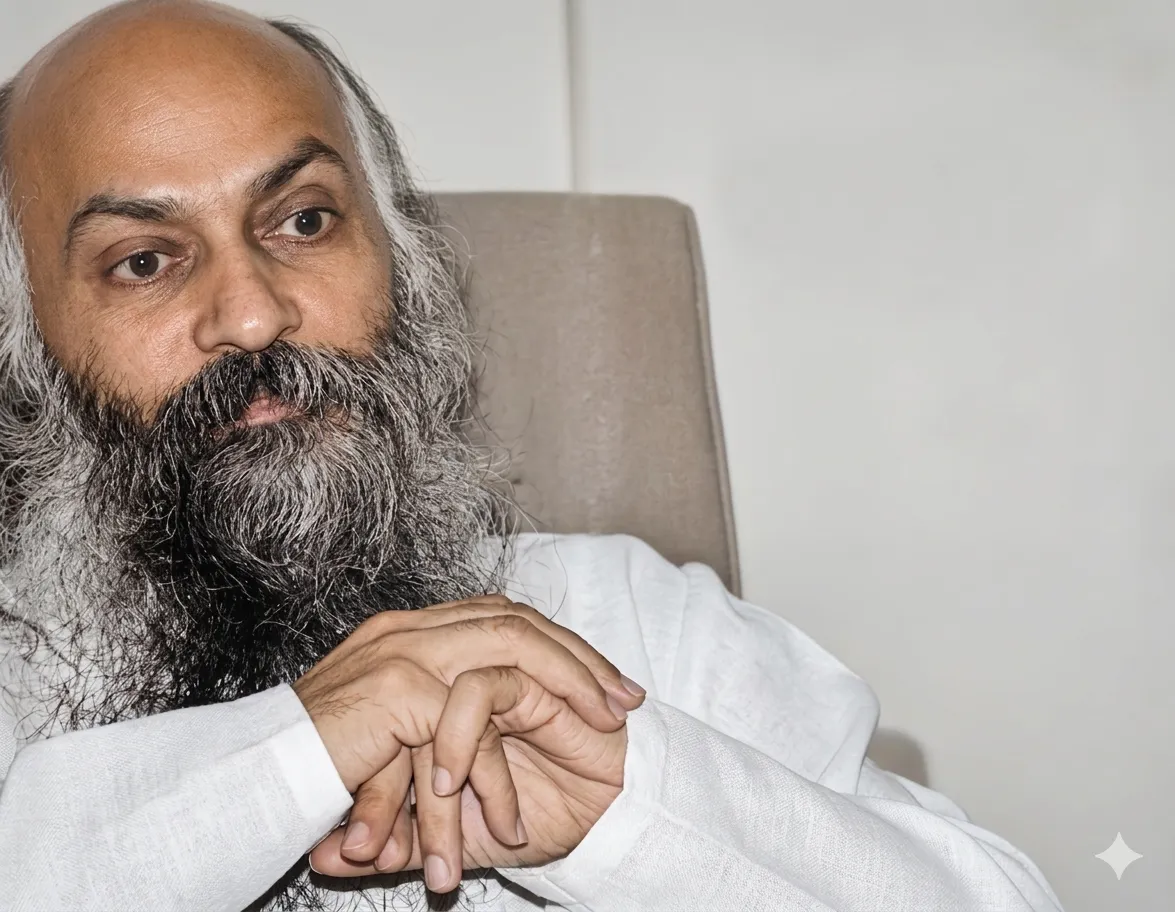
Notice what happens after you follow a feeling—if you end up upset it was ego, if you feel peaceful and happy it was your true nature—and keep learning from these results.
From the Discourses
Passages where Osho speaks to this question — each links to the complete discourse.
You say to do that which fits your own nature. But I have difficulty knowing whether what I do is my nature or my ego. How does one distinguish the voice of one's nature from the many voices of the ego?
Whenever you listen to the voice of the ego, sooner or later there will be trouble. You will fall into the trap of misery. This you have to watch: ego always leads into misery, always, unconditionally; always, categorically, absolutely. And whenever you listen to nature, it leads you to a well-being, a contentment, a silence, a bliss. So this should be the criterion. You will have to make many errors; there is no other way. You have to watch your own choice, from where the voice is coming, and then you have to see what happens -- because the fruit is the criterion. When you do something, watch, be alert. And if it leads to misery, then you know well that it was ego. Then the next time, be alert, don't listen to that voice. If it is nature, it will lead you towards a blissful state of mind. Nature…
Osho, you said... then you will find that the devotee is God. The question arises: if one devotee prefers to be God and another wants to remain only a devotee, then which of the two is superior?
The one who wants to be God will not be able to be. And the one who wants to remain a devotee will become God. The question of superior or inferior does not arise, because only one of the two will happen. The one who does not want to be will be. The one who wants to be will be deprived. That very wanting is of the ego. But the matter is a little delicate. Sometimes humility too belongs to the ego. Beware that your humility may not be of the ego. Perhaps you are saying, “No, I don’t want to be,” because you know that those who refuse are the ones who attain. Then you are clever. Then your humility is adulterous. Your humility is not pure, not sacred, not virginal—it is like a prostitute. The one who wants to be God, whose ego says, “I must become God,”…
Beloved Osho, how can I find out which of the many voices inside me is the one which comes from the real self to guide me? How can I be sure it doesn't come from the unconscious?
It is very simple: none of the voices come from the inner self. All voices come from the mind. When all voices are absent, the inner self inspires you in silence towards a certain action, direction. It does not come in words -- it is just a silent indication. Otherwise it would have been absolutely impossible to find out which one is the voice of the inner self. It is easy because no voice is of the inner self. So when all voices have died down and there is utter silence, the inner self is capable of taking your hand and moving you. That is the moment to be in a let-go, and allow it to take you wherever it takes you. In language we have to use words which do not apply to the inner reality -- for example, the "inner voice." There is no voice -- it is…
I am always listening to inner voices. But one voice says one thing and another says just the opposite. What should I do?
There are many people here who go on listening to inner voices. These inner voices are just crap. These are just fragments of your mind; they have no value at all. And sometimes you may think that you are listening to some inner guide or you are listening to some master from the beyond -- Master K H, or some spirit, some Tibetan spirit -- and you can go on imagining these things. And you will be simply be fooling yourself. These are all your fragments. And if you go on following them you will go crazy -- because one part will pull you to the north, another part to the south. You will start falling apart. Remember, this is neurosis -- you have to learn to watch all these voices. Don't trust any. Only trust silence. Don't trust any voice, because all voices are from the mind. And you…
Beloved master, you continually speak of dropping the ego, but how can I do so when I can't distinguish between what is the ego and what is my true nature?
Anand Vedant, the ego cannot be dropped. It is just like darkness -- you cannot drop darkness, you can only bring light in. The moment light is, darkness is no more. You can say this is the way of dropping darkness, but don't take it literally. Darkness does not exist at all -- it is absence of light. Hence you cannot do anything directly to it. You can only do something to light -- either bring light in or take light out. If you want darkness, put the light off; if you don't want darkness, put the light on. The ego cannot be dropped. Meditation can be learned. Meditation functions as a light, meditation IS light. Become light, and you will not find the ego anywhere. If you want to drop it you will be in trouble, because who is this one who wants to drop it? It is the…