
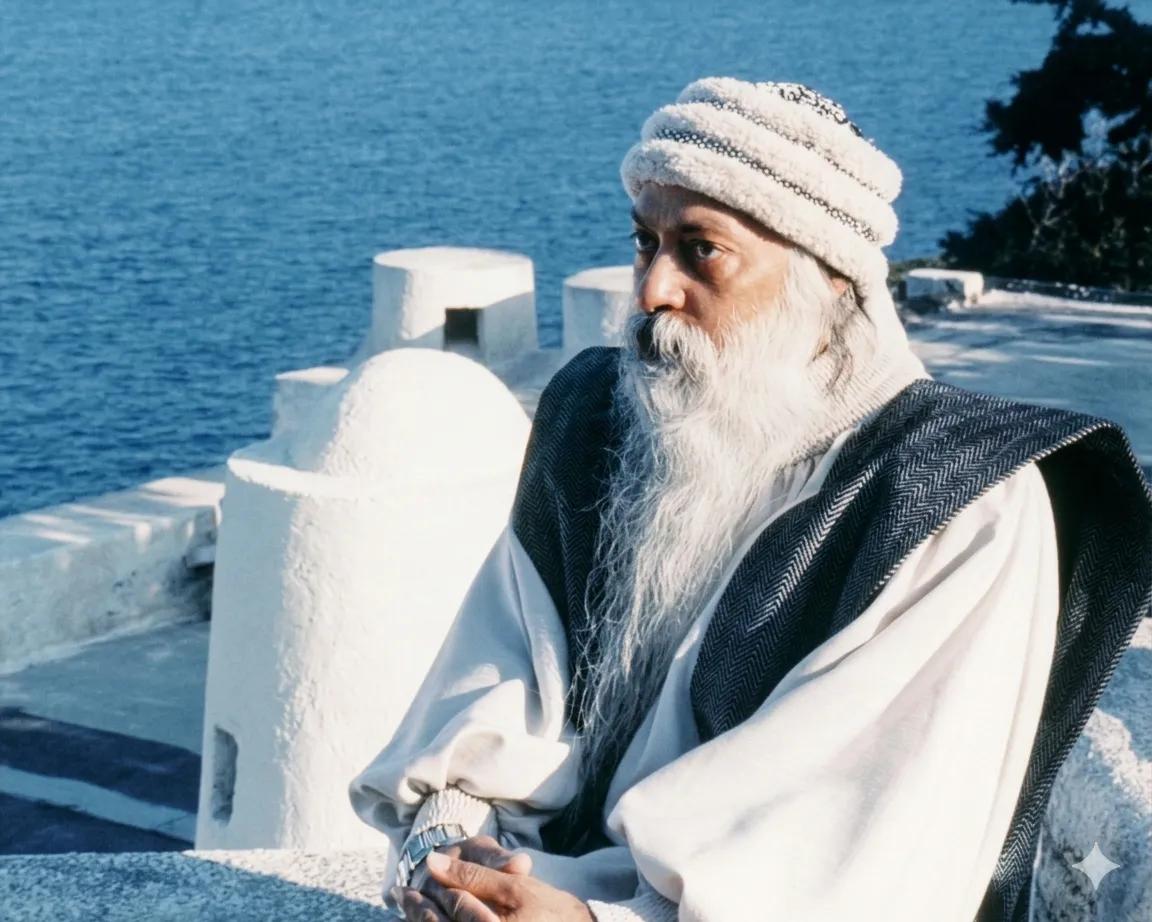
Osho's perspective on Observation
When Osho Spoke About Observation
Passages from the discourses where this theme comes alive.
Osho, is watching the tendencies—observation—also a kind of repression? A form of suppression?
It depends on your inner intention whether the watching of tendencies turns into repression or not. If someone is observing—watching, inspecting, witnessing—the tendencies in order to be free of them, then that very watching will become repression, suppression. If your aspiration in observing is only this: “How can I be free of these tendencies?”—you have already decided beforehand that they are bad; you want to get rid of them; they are hell, you must be liberated from them; they are suffering, you must go beyond them. You go to look at tendencies having already taken sides; you carry condemnation and enmity toward them in your mind. Then even your watching becomes repression. And any watching that becomes repression is not watching. For observation, inspection, witnessing has only one meaning: that a dispassionate seeing can happen. So do not decide in advance that you must be free of tendencies. Do not…
ओशो, वृत्तियों का देखना, ऑब्जर्वेशन भी क्या एक तरह का दमन नहीं है? एक प्रकार का सप्रेशन नहीं है?
यदि कोई व्यक्ति वृत्तियों का ऑब्जर्वेशन, निरीक्षण, देखना, साक्षी होना, इसीलिए कर रहा है कि वृत्तियों से मुक्त कैसे हो जाए, तो यह देखना दमन बन जाएगा, सप्रेशन बन जाएगा। यदि आपकी आकांक्षा निरीक्षण में केवल इतनी ही है कि मैं वृत्तियों से मुक्त कैसे हो जाऊं? मुक्त होने की बात आपने पहले ही तय कर रखी है, वृत्तियों को देखने के पूर्व आप एक पक्ष लेकर ही वृत्तियों को देखने जा रहे हैं कि ये वृत्तियां बुरी हैं, इनसे छुटकारा चाहिए; ये वृत्तियां नरक हैं, इनसे मुक्ति चाहिए; ये वृत्तियां ही दुख हैं, इनसे पार होना है; ऐसा आपने निरीक्षण के पहले ही तय कर रखा हुआ मत है, आपकी पहले से ही एक पक्षपात की दृष्टि है, वृत्तियों की शत्रुता आपके मन में है, कंडेमनेशन, निंदा आपके मन में है, तो फिर वृत्तियों का देखना भी दमन बन जाएगा।
The nightly experiment of unblinking observation—one friend has asked: how will they do it without me?
The question is not about me. Keep gazing at the open sky for forty minutes without blinking. And very wondrous results will follow. As you look at the open sky for forty minutes, you will suddenly find that you have become a part of the sky, the sky has entered within you. Sit by the ocean; gaze unblinkingly at the sea for forty minutes, and you will find that you and the waves have become one. Keep looking at the trees and the same will happen. Anything can be used. And for those in whom an inner connection has been formed by looking at me—as many friends came today and told me that much was revealed to them—if they keep my picture, even then my work will be accomplished.
रात्रि का अपलक निरीक्षण का प्रयोग--एक मित्र ने पूछा है कि मेरे बिना वे कैसे करेंगे?
सवाल मेरा नहीं है। खुले आकाश की तरफ चालीस मिनट बिना आंख झपके देखते रहें। और बहुत अदभुत परिणाम होंगे। खुले आकाश की तरफ चालीस मिनट देखते-देखते आप अचानक पाएंगे कि आप आकाश का हिस्सा हो गए हैं, आकाश आपके भीतर प्रवेश कर गया। समुद्र के किनारे बैठ जाएं, चालीस मिनट तक अपलक समुद्र को देखते रहें और आप पाएंगे कि आप और लहरें एक हो गईं। वृक्षों को देखते रहें और यही हो जाएगा। कुछ भी उपयोग किया जा सकता है। और जिन्हें मेरी तरफ देखने से एक अंतर्संबंध निर्मित हुआ है--जैसा आज बहुत से मित्रों ने आकर मुझे खबर दी कि उन्हें बहुत कुछ प्रतीति हुई है--वे मेरा चित्र रखेंगे, तो भी मेरा काम पूरा हो जाएगा।
A friend has asked, Osho, isn’t the night-meditation experiment simply an exercise in concentration? And what will be the results of this experiment, and what are its foundations?
Keeping the eyes open, fixed, without a blink, is first of all an experiment in resolve: not allowing the eyes to close. To not let the eyes close is an experiment in resolve, in will-power. And if you can keep the eyes open for forty minutes, there will be very broad results. Forty minutes is the span of the human mind’s capacity; that is why in school and college we keep a forty-minute period. Whatever can be done for forty minutes can then be carried much further. If you can keep the eyes open for forty minutes—if this small resolve can be fulfilled—it will have many consequences. First, the result of keeping the eyes open for forty minutes will be that if the eyes have remained open and you have continued to keep them open for that long, your mind’s susceptibility to hypnosis will end at once. You will no…
एक मित्र ने पूछा है कि ओशो, रात्रि का ध्यान का प्रयोग क्या एकाग्रता का ही प्रयोग नहीं है? और इस प्रयोग के क्या परिणाम होंगे और क्या आधार हैं?
एकटक आंख को खुली रखना, पहले तो संकल्प का प्रयोग है, आंख को बंद नहीं होने देना। आंख को बंद नहीं होने देना, यह संकल्प का प्रयोग है, विल-पावर का प्रयोग है। और अगर चालीस मिनट तक आंख खुली रख सकते हैं, तो इसके बड़े व्यापक परिणाम होंगे। चालीस मिनट मनुष्य के मन की क्षमता का समय है। इसलिए हम स्कूल में, कालेज में चालीस मिनट का पीरिएड रखते हैं। चालीस मिनट जो काम हो सकता है पूरा, फिर वह कितना ही आगे किया जा सकता है। अगर आप चालीस मिनट तक आंख खुली रख सकते हैं, यह छोटा सा संकल्प पूरा हो सकता है, तो इसके बहुत परिणाम होंगे। पहला तो यह चालीस मिनट तक आंख खुली रखने का परिणाम यह होगा कि अगर आंख खुली रही और आप चालीस मिनट तक आंख खोले ही रहे, तो आपके चित्त की सम्मोहित होने की क्षमता एकदम समाप्त हो जाएगी। आप फिर सम्मोहित नहीं किए जा सकेंगे। असल में सम्मोहित किए जाने की क्षमता आपके आंख के जल्दी झप जाने पर निर्भर करती है। आप मूर्च्छित भी नहीं हो सकेंगे। …
Osho, in one of your discourses you mentioned the sage Durvasa. You cited him as an example of the deranged state to which concentration can ultimately lead. But in trataka the spirit is also of concentration. What is the difference between the two? Please explain.
The traditional trataka—the conventional understanding of trataka—is indeed concentration. And concentration generates power; siddhis are acquired. But the union with the Divine, the supreme rest we seek, does not happen through it. Concentration is a function and an extension of the ego. You do not dissolve; you become more solid. You do not melt; you freeze like ice. Your power increases, not your bliss. But what I am calling trataka is not the use of concentration; it is only the experiment of seeing—just looking. Understand the difference. Trataka means gathering the entire mind and fixing it on one point—on the sun, on an image, on a mark—on anything. It means narrowing the mind so that it does not run here and there. All the currents of the mind turn in one direction. The mind goes on flowing toward a single point. Not even a single ray of awareness scatters elsewhere.…
प्रश्न: ओशो, आपके किसी प्रवचन में दुर्वासा ऋषि का जिक्र आया है। एकाग्रता की परिणति को विक्षिप्तता की अवस्था के उदाहरण के रूप में दुर्वासा ऋषि बताए गए हैं। पर त्राटक में एकाग्रता का ही भाव रहता है। इन दोनों में क्या फर्क है, कृपा करके बताएं।
फर्क को समझ लें। त्राटक का अर्थ होता है, किसी एक बिंदु पर--सूर्य पर, मूर्ति पर, बिंदु पर--किसी भी चीज पर अपने सारे मन को एकजुट लगा देना है। मन को कर लेना है संकीर्ण कि मन यहां-वहां न भागे। मन की सब धाराएं एक तरफ मुड़ जाएं। मन एक बिंदु की तरफ बहता हुआ रह जाए। जरा-सी भी चेतना की किरण यहां-वहां न बिखरती हो। बिना बिखरे सब एक बिंदु पर आकर टिक जाए। चेष्टा एक बिंदु पर टिकाने की है। मन को बांध-बांधकर, पकड़-पकड़कर एक जगह बिठाने की है।
Profound Quotes on Observation
Explore our structured collection of meaning-mapped quotes regarding Observation.