
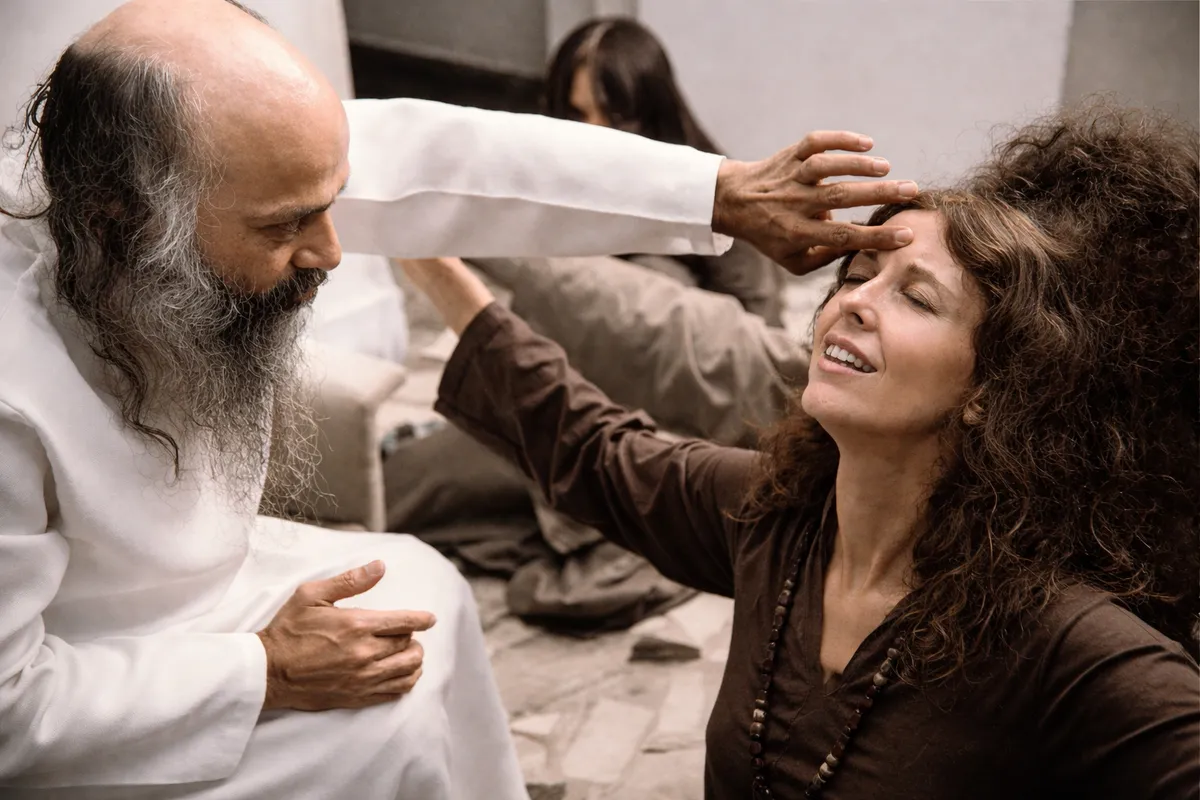
No—‘dharma’ names your true nature that grows through meditation, and ‘spirituality’ means the inner, unborrowed awareness you discover by simply witnessing yourself.
From the Discourses
Passages where Osho speaks to this question — each links to the complete discourse.
And you have asked, “Have designations like dharma and spirituality been unnecessarily attached to self-realization?”
No, not in the least. Those appellations are deeply meaningful. Dharma means: intrinsic nature. It is a very suggestive word. Dharma does not mean religion or creed. Religion or creed we call sampradaya. The meaning of dharma is far deeper. That by virtue of which Islam is called a dharma, Christianity is called a dharma, Jainism is called a dharma, Hinduism is called a dharma—because of which all these are called “dharmas”—that which is the essence of all, that is named dharma. These are all paths that lead to that dharma; therefore they are sampradayas. Christianity is a sampradaya, Hinduism is a sampradaya, Jainism is a sampradaya, Buddhism is a sampradaya, Islam is a sampradaya. Dharma is that which these sampradayas lead up to. So it is not proper to call Islam a dharma, nor Hinduism a dharma—sampradaya! The word sampradaya is good. It means: a path by which we…
और तुमने पूछा है कि ‘धर्म, अध्यात्म जैसे संबोधन अनावश्यक रूप से आत्मज्ञान के साथ जोड़ दिए गए हैं?’
नहीं, जरा भी नहीं। वे संबोधन बड़े सार्थक हैं। धर्म का अर्थ होता है: स्वभाव। वह बड़ा सांकेतिक शब्द है। धर्म का अर्थ रिलिजन या मज़हब नहीं होता। रिलिजन या मज़हब को तो हम संप्रदाय कहते हैं। धर्म का अर्थ तो बड़ा गहरा है। जिसके कारण इस्लाम, धर्म है; और जिसके कारण ईसाइयत, धर्म है; और जिसके कारण जैन, धर्म है; और जिसके कारण हिंदू, धर्म है; जिसके कारण ये सारे धर्म, धर्म कहे जाते हैं--वह जो सबका सारभूत है, उसका नाम धर्म है। ये सब उस धर्म तक पहुंचने के मार्ग हैं, इसलिए संप्रदाय हैं। ईसाइयत एक संप्रदाय हुई, हिंदू एक संप्रदाय है, जैन एक संप्रदाय है, बौद्ध एक संप्रदाय है, इस्लाम एक संप्रदाय है। धर्म तो वह है जहां तक ये सभी संप्रदाय पहुंचा देते हैं। इसलिए इस्लाम को धर्म कहना उचित नहीं, हिंदू को धर्म कहना उचित नहीं--संप्रदाय! …
Osho, please say something about the real nature of dharma.
Dharma means your intrinsic nature. Dharma means your spontaneity. As fragrance is to a rose, as heat is to fire, as coolness is to water, so you too have a nature of your own; living in tune with that nature is called dharma, living against it is called adharma. There will be slight differences in each person’s nature—there must be, because existence does not make carbon copies. Therefore each person’s dharma will also differ a little. What is medicine for one can be poison for another, and what is poison for one can be medicine for another. Hence each person has to search for his own nature in the depths of meditation. No one else can give you a clear, definitive statement about your nature. You yourself have to recognize, slowly, your naturalness in the depths of meditation, and then gather the courage to live according to it. Courage is…
तीसरा प्रश्न: ओशो, धर्म के वास्तविक स्वरूप के संबंध में कुछ कहें।
धर्म का अर्थ होता है स्वभाव। धर्म का अर्थ होता है तुम्हारी सहजता। जैसे गुलाब में गंध है और जैसे अग्नि उत्तप्त है और जैसे जल शीतल है, ऐसे ही तुम्हारा भी एक स्वभाव है; उस स्वभाव में जीने का नाम धर्म है, उस स्वभाव से विपरीत जीने का नाम अधर्म है। फिर प्रत्येक व्यक्ति के स्वभाव में थोड़ा सा भेद होगा--होना ही चाहिए क्योंकि परमात्मा एक जैसे लोग नहीं बनाता। इसलिए प्रत्येक व्यक्ति के धर्म में भी थोड़ा सा भेद होगा। जो एक के लिए दवा है, दूसरे के लिए जहर हो सकता है और जो एक के लिए जहर है, दूसरे के लिए दवा हो सकता है। इसलिए प्रत्येक व्यक्ति को ध्यान की गहराइयों में अपने स्वभाव की तलाश करनी होती है। कोई दूसरा तुम्हें तुम्हारे स्वभाव के संबंध में सुस्पष्ट निर्वचन नहीं दे सकता। तुम्हें ही ध्यान की गहराइयों में धीरे-धीरे अपनी स्वाभाविकता को पहचानना पड़ता है और फिर उसी स्वाभाविकता के अनुसार जीने की हिम्मत जुटानी पड़ती है। …
Osho, you have titled this series of talks “Sahaj Yoga.” Do “sahaj” and “yoga” not seem mutually opposed?
Anand Maitreya! They don’t just seem opposed, they are opposed. But no ultimate truth of life can manifest without contradiction. Life is made of opposites—darkness and light, day and night, woman and man, negative electricity and positive electricity, birth and death. The very structure of life is woven of opposites. Hence the opposites are not only opposed; they are complementary to each other. If you have labored hard all day, you will be able to sleep deeply. Labor and rest are opposites, yet only the one who has worked can rest deeply—and the one who has not worked cannot. So the opposites are not only opposed, they complete each other. And only the one who has rested deeply at night can rise in the morning and engage in work again. One who has not rested through the night will not be able to work in the morning. Look closely at…
पहला प्रश्न: ओशो, आपने इस प्रवचनमाला का शीर्षक दिया है--सहज-योग। क्या सहज और योग परस्पर-विरोधी नहीं लगते?
आनंद मैत्रेय! विरोधी लगते ही नहीं, विरोधी हैं। लेकिन जीवन का कोई भी परम सत्य बिना विरोधाभास के प्रगट हो ही नहीं सकता। जीवन बना है विरोधों से--अंधेरा और प्रकाश, दिन और रात, स्त्री और पुरुष, ऋण विद्युत-धन विद्युत, जन्म-मृत्यु। जीवन की संरचना विरोधों से है। इसलिए विरोधी विरोधी ही नहीं हैं, एक-दूसरे के परिपूरक भी हैं। दिन भर श्रम किया खूब तो गहरी नींद सो सकोगे। श्रम और विश्राम विरोधी हैं, पर जिसने श्रम किया है वही गहरा विश्राम कर सकेगा। और जिसने श्रम नहीं किया वह गहरा विश्राम भी न कर सकेगा। तो विरोधी विरोधी ही नहीं हैं, एक-दूसरे के परिपूरक भी हैं। और जिसने रात्रि गहरा विश्राम किया है वही सुबह जागकर फिर श्रम में संलग्न हो सकेगा। जो रात-भर विश्राम नहीं कर सका वह सुबह श्रम में भी न लग सकेगा।
It is asked again: “Is dharma the truth?”
Dharma is truth. Dharma means: a state of non-relationship. Dharma means: to be steady in one’s own nature; to be immersed in oneself. Nothing remains outside. No kind of connection with the outside remains. Not even the relationship with the master remains. The true master is the one who brings you to the place where you are freed even from the master. Such a master is called a satguru. The one who entangles you in himself is called a false guru—who says, “Don’t go beyond me. This is your halt; the destination has arrived. No further.” The one who holds you stuck in himself is a false guru. The one who lets you go beyond himself, who becomes a ladder, a doorway—so you climb and pass through—he alone is the satguru. And remember: a feeling of gratitude arises only toward the satguru. Toward a false guru, anger will arise—if not…
फिर पूछा है: ‘क्या धर्म सत्य है?’
धर्म सत्य है। धर्म का अर्थ है: असंबंधित दशा। धर्म का अर्थ है: अपने स्वभाव में थिर हो जाना; अपने में डूब जाना। कोई बाहर न रहा। किसी तरह का संबंध बाहर न रहा। गुरु का संबंध भी न रहा। वही है गुरु, जो तुम्हें उस जगह पहुंचा दे, जहां गुरु से भी मुक्ति हो जाए। उस गुरु को सदगुरु कहा है। उस गुरु को मिथ्या-गुरु कहा है, जो तुम्हें अपने में अटका ले। जो कहे, मेरे से आगे मत जाना। बस, यही तुम्हारा पड़ाव आ गया; मंजिल आ गयी। अब आगे नहीं। जो तुम्हें अपने में अटका ले, वह मिथ्या-गुरु। जो तुम्हें अपने से पार जाने दे, जो सीढ़ी बन जाए, द्वार बन जाए; तुम चढ़ो और पार निकल जाओ, वही सदगुरु। और ध्यान रखना: सदगुरु के प्रति ही अनुग्रह का भाव होता है। मिथ्या-गुरु के प्रति तो क्रोध आएगा आज नहीं कल; क्योंकि मिथ्या-गुरु वस्तुतः तुम्हारा दुश्मन है। पहले प्रलोभन दिया विकास का और फिर अटका लिया! पहले आशा जुटायी; तुम्हारे भीतर खूब आशा जगायी कि मुक्ति दूंगा। और फिर तुमने पाया कि एक नए तरह का बंधन हो गया। …
It is a delight to see you. In this solitary place you have come together to realize God, to find the truth, to know your own selves. But may I ask you a question? Is what you are seeking separate from you> You can search for someone who is away but how can you seek that which is your own self> Your own self cannot be sought in the sense in which everything else is sought because in this case there is no difference between the one who is seeking and the one who is being sought. You can seek out the world but you cannot seek your self. He who goes out in search of his self goes farther away from his self. It is important to understand this fact fully. Only then the search may be possible.