
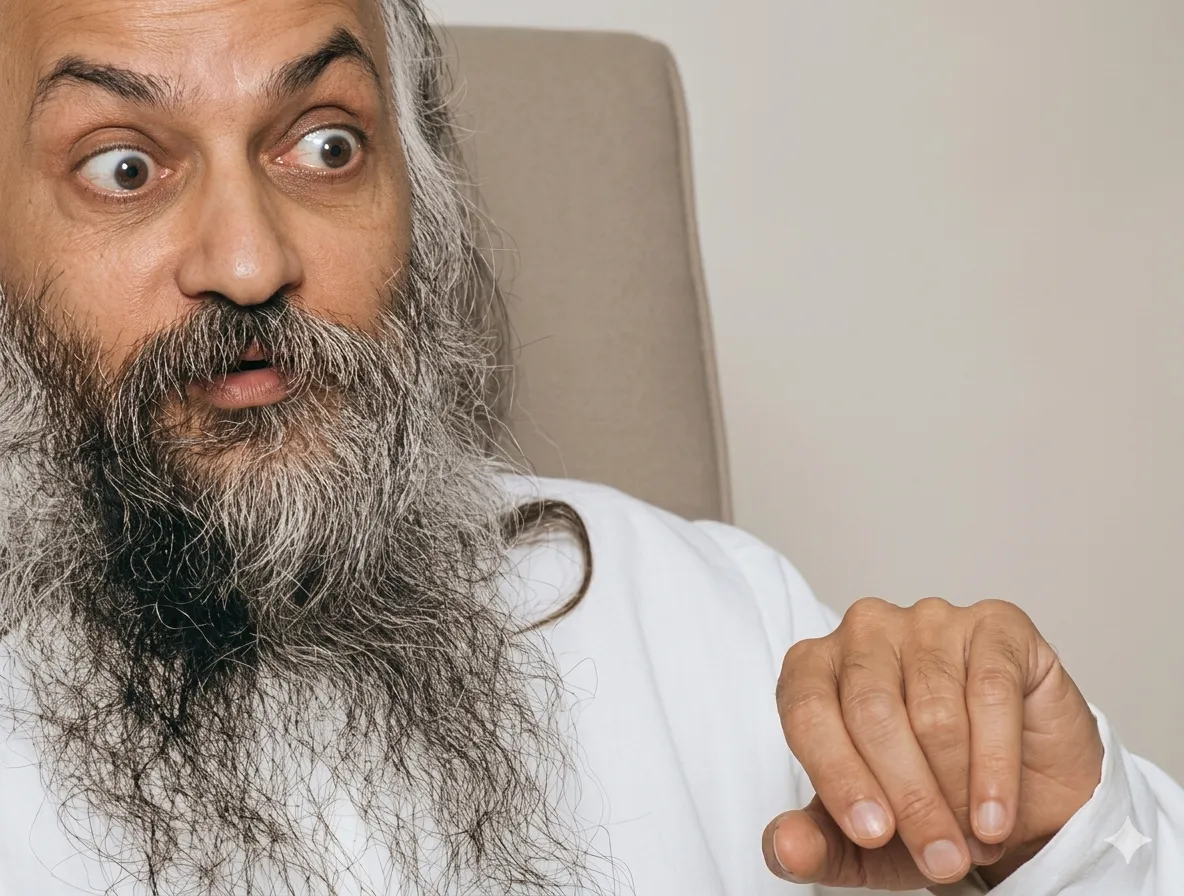
Osho's perspective on Soul
When Osho Spoke About Soul
Passages from the discourses where this theme comes alive.
Osho, why did Mahavira call the soul “time”? Please tell us what relationship there is between time and the soul.
Albert Einstein considered two constituent elements of existence: time and space. And as his inquiry deepened, it seemed to him that calling them two was not quite right. So he chose a single term for both: spacetime. Space is outside; time is inside. If we understand life rightly, two things are needed for being. You need a place in which to be—you will occupy some room. You are sitting here; you have taken up a little space. That is kshetra, the sky, space. But that alone is not enough. If that were all, you would become an object. Then there would be no difference between you and a table or a chair. The table and the chair also occupy space, just as you do. The floor you are sitting on occupies space, just as you do. Then what is the difference between you and a stone? You have also occupied…
पहला प्रश्न: ओशो, महावीर ने आत्मा को समय क्यों कहा? कृपाकर बतायें कि समय और आत्मा में क्या संबंध है?
… टाइम और स्पेस। समय और क्षेत्र। और फिर बाद में जैसे-जैसे आइंस्टीन की खोज गहरी होती गयी, उसे यह भी प्रतीत होने लगा कि इन दो तत्वों को दो कहना ठीक नहीं है। इसलिए फिर उसने दोनों के लिए एक ही शब्द चुन लिया: स्पेसियोटाइम। समय-क्षेत्र। क्षेत्र बाहर है, समय भीतर है। जीवन को अगर हम ठीक से समझें, तो हमें होने के लिए दो चीजें चाहिए। कोई जगह चाहिए होने के लिए। हम कुछ जगह घेरेंगे। तुम यहां बैठे हो, तो तुमने थोड़ी जगह घेरी। वही है क्षेत्र, आकाश, स्पेस। लेकिन उतना काफी नहीं है। अगर उतना ही हो, तो तुम वस्तु हो जाओगे। …
Do souls sometimes wander after leaving the body?
Some souls do find it difficult to take on a new body right after death. There is a reason for this, and perhaps you may not have thought that this could be the reason. All souls, if divided, would fall into three categories. One is the lowest -- people with the most inferior type of consciousness; another is of the very highest kind, very superior, the purest kind of consciousness; and the third consists of people in between -- a combination of something of both. Let's take the example of a damroo, a small drum. It is broad at the ends and thin in the center. Were we to reverse it so that it was broad in the center and narrow at the ends, we would understand the situation of disembodied souls. At the narrow ends there are very few souls. The most lowly souls find it as difficult to…
A friend has asked after the morning talk: Osho, do some souls keep wandering after leaving the body?
Some souls certainly do not at once take another body after leaving the old one. The reason? There is a reason—and perhaps it is not one you would ever have imagined. If we divide all souls, all personalities in the world, they will appear in three kinds. First, those of very low, degraded consciousness; second, those of very high, noble, utterly pure quality; and third, the great crowd in between that is a mixture of both, that goes along combining the bad and the good. Look at a damaru, the little hourglass drum: it is broad at both ends and narrow in the middle. Now invert the picture—thin at both ends and wide in the middle—and you will understand the state of the world: small at the extremes, thick in the middle, the damaru reversed. On these two ends are only a few souls. The very lowliest souls find it…
एक मित्र ने सुबह की चर्चा के बाद पूछा है कि ओशो, क्या कुछ आत्माएं शरीर छोड़ने के बाद भटकती रह जाती हैं?
कुछ आत्माएं निश्चित ही शरीर छोड़ने के बाद एकदम से दूसरा शरीर ग्रहण नहीं कर पाती हैं। उसका कारण? उसका कारण है। और उसका कारण शायद आपने कभी न सोचा होगा कि यह कारण हो सकता है। दुनिया में अगर हम सारी आत्माओं को विभाजित करें, सारे व्यक्तित्वों को, तो वे तीन तरह के मालूम पड़ेंगे। एक तो अत्यंत निकृष्ट, अत्यंत हीन चित्त के लोग; एक अत्यंत उच्च, अत्यंत श्रेष्ठ, अत्यंत पवित्र किस्म के लोग; और फिर बीच की एक भीड़ जो दोनों का तालमेल है, जो बुरे और भले को मेल-मिलाकर चलती है। जैसे कि अगर डमरू हम देखें, तो डमरू दोनों तरफ चौड़ा है और बीच में पतला होता है। डमरू को उलटा कर लें। दोनों तरफ पतला और बीच में चौड़ा हो जाए, तो हम दुनिया की स्थिति समझ लेंगे। दोनों तरफ छोर और बीच में मोटा--डमरू उलटा। इन छोरों पर थोड़ी-सी आत्माएं हैं। निकृष्टतम आत्माओं को भी मुश्किल हो जाती है नया शरीर खोजने में और श्रेष्ठ आत्माओं को भी मुश्किल हो जाती है नया शरीर खोजने में। बीच की आत्माओं को जरा भी देर नहीं लगती। …
Osho, when the soul leaves the body and has not yet assumed another one, is it possible to describe what happens in that timeless interval, and the kind of environment in which it moves? And, along with this, since you have spoken of the soul’s freedom to take birth by its own will, does it also have the freedom to leave the body whenever it wishes—or not to leave it?
If you look at descriptions of hell’s fire, you’ll find this: people are burned in the fire, yet they do not burn up. The inconsistency doesn’t occur to you at that time—that you are being burned, the fire is terrible, the heat unbearable, yet you are not actually burning! That inconsistency may occur later, not in the midst of it. In the interval between two bodies there are two kinds of souls. First, those very bad souls for whom finding a womb will take time; I call them pretas. Second, the good souls for whom finding a suitable womb will also take time; they need a worthy womb—I call them devas. There is no fundamental difference in species—only differences of personality, character, quality of mind. Their experiences are different. The bad souls come back from this interval with such painful memories that the memory itself is the fruit called hell.…
ओशो, आत्मा जब शरीर छोड़ देती है और दूसरा शरीर धारण नहीं करती है, उस बीच के समयातीत अंतराल में जो घटित होता है उसका, तथा जहां वह विचरण करती है उस वातावरण के वर्णन की कोई संभावना हो सकती है? और इसके साथ जिस प्रसंग में आपने आत्मा का अपनी मर्जी से जन्म लेने की स्वतंत्रता का जिक्र किया है, तो क्या उसे जब चाहे शरीर छोड़ने अथवा न छोड़ने की भी स्वतंत्रता है?
कभी आपने देखा कि नरक की आग का जो-जो वर्णन है, उसमें यह बात है कि आग में जलाए जाते हैं, लेकिन जलते नहीं। मगर यह इनकंसिस्टेंसी खयाल में नहीं आती कि आग में जलाया जा रहा हूं, आग भयंकर है, तपन सही नहीं जाती, और जल बिलकुल नहीं रहा हूं! मगर यह इनकंसिस्टेंसी बाद में खयाल आ सकती है। उस वक्त खयाल नहीं आ सकती। तो दो शरीरों के बीच का जो अंतराल है उसमें दो तरह की आत्माएं हैं। एक तो वे बहुत बुरी आत्माएं, जिनके लिए गर्भ मिलने में वक्त लगेगा। उनको मैं प्रेत कहता हूं। दूसरी वे भली आत्माएं, जिन्हें गर्भ मिलने में देर लगेगी, उनके योग्य गर्भ चाहिए। उन्हें मैं देव कहता हूं। इन दोनों में बुनियादी कोई भेद नहीं है--व्यक्तित्व भेद है, चरित्रगत भेद है, चित्तगत भेद है। योनि में कोई भेद नहीं है। अनुभव दोनों के भिन्न होंगे। बुरी आत्माएं बीच के इस अंतराल से इतने दुखद अनुभव लेकर लौटेंगी, उनकी ही स्मृति का फल नरक है। जो-जो उस स्मृति को दे सके हैं लौट कर, उन्होंने ही नरक की स्थिति साफ करवाई। …
Can two souls recognize one another?
definitionDo you believe in the existence of the soul?
definitionDoes the soul exist?
definitionHas the soul become bound because of lust?
definitionHow is the soul related to nothingness?
definitionIn what sense is the soul called time?
definitionIs the soul itself God?
definitionProfound Quotes on Soul
Explore our structured collection of meaning-mapped quotes regarding Soul.