
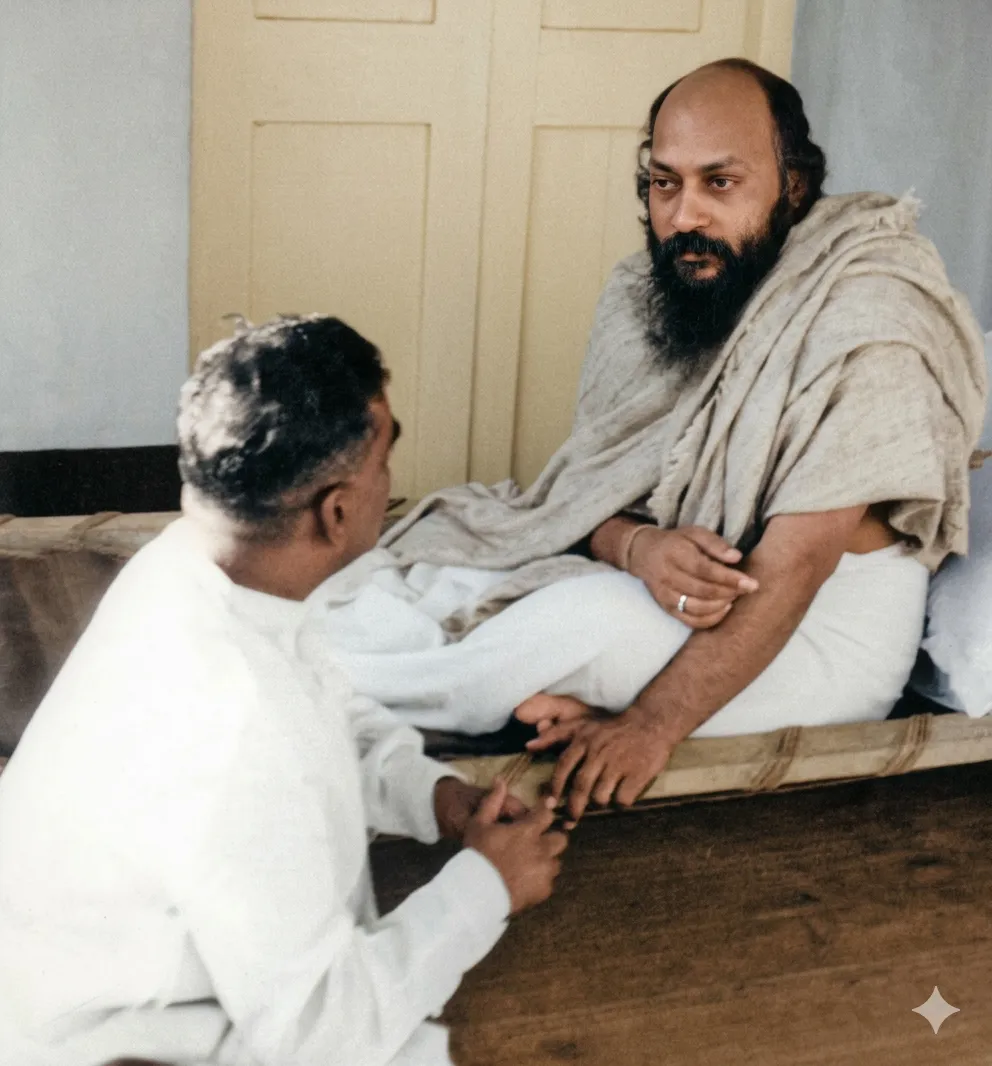
Real nonviolence is kind love that brings joy without forcing your idea of happiness on anyone.
From the Discourses
Passages where Osho speaks to this question — each links to the complete discourse.
Osho, what is the constructive, positive form of nonviolence? And why did Mahavira never offer anyone physical help?
From the very word ‘ahimsa’ comes the sense of the negative, the prohibitive, the “no.” It means: no violence. So the word itself is negative. Why did Mahavira choose that word? He could have chosen love. Love is a constructive, positive word. Ahimsa means: do not cause anyone pain. Love means: give someone happiness. Because ahimsa means “do not cause pain,” it is prohibitive. That is, if I simply do not hurt you, I become nonviolent. Love is an affirmative word: it means giving happiness. So if I merely refrain from hurting you, the matter is not complete; did I also give you joy? Only if I give joy is love fulfilled. Thus love is a constructive word. Jesus used love. Ahimsa is a negative word, and Mahavira used it. Therefore it needs to be understood very deeply. Why does Mahavira employ the formula “do not give pain to anyone”?…
प्रश्न: ओशो, अहिंसा का विधायक स्वरूप क्या है? और महावीर ने किसी की शारीरिक सहायता क्यों नहीं की?
‘अहिंसा’ शब्द से ही निगेटिव का, निषेध का, नकारात्मक का बोध होता है। बोध होता है, हिंसा नहीं। तो अहिंसा शब्द ही नकारात्मक है। महावीर ने क्यों उस शब्द को चुना? वे प्रेम भी चुन सकते थे। प्रेम विधायक शब्द है, वह पाजिटिव है। अहिंसा का मतलब होता है, किसी को दुख नहीं देना है। प्रेम का मतलब होता है, किसी को सुख देना है। अहिंसा का मतलब है, किसी को दुख नहीं देना है। इसलिए निषेधात्मक है। यानी अगर मैंने आपको दुख नहीं दिया तो मैं अहिंसक हो गया। प्रेम विधायक शब्द है। प्रेम का मतलब है, किसी को सुख देना है। तो मैंने आपको दुख नहीं दिया, इतने से ही काफी बात नहीं हल होती, मैंने आपको सुख दिया कि नहीं? अगर सुख दिया तो ही प्रेम पूरा होता है। तो प्रेम तो विधायक शब्द है। जीसस ने प्रेम का उपयोग किया। …
I USED TO THINK A GREAT DEAL ABOUT NON-VIOLENCE, but everything I ever heard about it seemed so superficial. It touched my intellect but not my heart. And slowly I understood why. The non-violence everyone talked about was negative. The negative can never go deeper than the intellect; to touch life something positive is needed, If by non-violence one means nothing more than the renunciation of violence then it can never have any relation to real renunciation, something positive as well as something negative. It is the negative character of the term "non-violence" that has made it so deceptive. The word is negative, but the experience to which it refers is a positive one. Non-violence is an experience of pure love, of a love that is not attached to anything at all.
Should I take it, Osho, that an escapist cannot love and cannot be nonviolent?
Yes, an escapist can neither love nor be nonviolent. But an escapist may appear to love, and he can even put on the costume of nonviolence—and often he will do exactly that. The escapist cannot love because he has not yet been born; he is not yet there. Who will love? As I have said, it does not depend on the one who is loved; it depends on the one who loves. Only one whose individuality has dawned within, whose person has been born, can love. And the person is born out of struggle and challenge, by fighting every day—just as a sculptor chisels a stone. If the stone refuses to be cut and struck, no statue appears; it remains a rough rock. The struggles of life polish the statue within. If we refuse them, we remain stone. If individuality, soul, being, have not yet arisen within, who is there…
शुड आई मीन ओशो, दैट एस्केपिस्ट कैन नॉट लव एण्ड कैन नॉट बी ए नॉन-वायलेंट?
हां, पलायनवादी न तो प्रेम कर सकता है, न अहिंसक हो सकता है। लेकिन पलायनवादी प्रेम करता हुआ दिखाई पड़ सकता है और अहिंसक, अहिंसक पोशाक भी पहन सकता है! और अक्सर वह यही करेगा। पलायनवादी इसलिए प्रेम नहीं कर सकता कि वह पैदा ही नहीं हो पाया, वह है ही नहीं। प्रेम करेगा कौन? जैसा कि मैंने कहा, कि जिसे हम प्रेम करते हैं उस पर निर्भर नहीं है, जो प्रेम करता है, उस पर निर्भर है। तो प्रेम तो वही कर सकता है जिसके व्यक्तित्व का आविर्भाव हो गया है, भीतर इंडिविजुअलिटी आ गई, जिसके भीतर व्यक्ति पैदा हो गया। और व्यक्ति पैदा होता है संघर्ष और चुनौती में रोज लड़ने से। जैसे एक पत्थर पर एक मूर्तिकार छेनी से काटता है। पत्थर इनकार कर दे कटने-पिटने से, फिर मूर्ति पैदा नहीं होती, फिर पत्थर ही रह जाता है अनगढ़।
Osho, yesterday you said that jealousy is included in respect. I have immense respect for you, but the jealousy inherent in it keeps poisoning it, and I feel guilt and pain. Does reverence transcend this poison-laced respect?
It needs a little explaining—it's a delicate point. Whenever you respect someone, you do so because you see in that person something you do not have. You respect because you glimpse in the other something you would also like to possess. A beggar respects an emperor because he, too, longs to be an emperor. So on the one hand he respects, and inside he also envies. Because he is not yet an emperor but wants to be. You have attained what he wants to attain. He respects you as skillful, successful: “I stand far back in the line; you have gone ahead to where I should have been.” So you are powerful, clever, intelligent, strong—he respects you. But inside a fire of jealousy also burns—if he gets the chance, he would like to be in your place and push you aside. And if the beggar gets that chance, he will…
तीसरा प्रश्न: ओशो, आपने कल कहा, आदर में ईर्ष्या सम्मिलित है। आपके प्रति मुझमें अपार आदर है, लेकिन उसमें निहित ईर्ष्या उसमें जहर घोलती रहती है और मैं ग्लानि और पीड़ा का अनुभव करता हूं। क्या श्रद्धा इस विष-भरे आदर का अतिक्रमण करती है?
भिखारी सम्राट का आदर करता है, क्योंकि उसकी भी आकांक्षा है कि सम्राट हो। तो एक तरफ आदर भी करता है, भीतर ईर्ष्या भी करता है। क्योंकि सम्राट अभी वह है नहीं, सम्राट होना चाहता है। तुम हो गए हो, तुमने वह पा लिया है जो वह पाना चाहता है। इसलिए तुम्हें आदर भी करता है कि तुम कुशल हो, सफल हो, मैं पंक्ति में बहुत पीछे खड़ा हूं, तुम आगे पहुंच गए हो, तुम उस जगह पहुंच गए हो जहां मुझे होना चाहिए था। इसलिए तुम शक्तिशाली हो, होशियार हो, बुद्धिमान हो, बलशाली हो, तुम्हारा आदर करता हूं। लेकिन एक भीतर ईर्ष्या की आग भी जलती है--अगर मुझे मौका मिले तो उस जगह मैं होना चाहूंगा, तुम्हें हटाना चाहूंगा। और जब मौका मिल जाएगा इस भिखारी को तो यह सम्राट को हटा कर धक्का दे देगा, सिंहासन पर बैठ जाएगा।
Love is positive — a creative relationship. Ahimsa is negative. Love means: I desire the welfare of the other, the blessing of the other; I become a joy in the other’s life; I lay flowers on the other’s path. Ahimsa means: I do not cause sorrow to the other, I do not give pain. If I do not hurt another, Ahimsa is fulfilled — but love is not. Love cannot rest until it gives joy to the other. Love lays flowers on the other’s way. Ahimsa only says: Do not scatter thorns. But if thorns are already strewn on the other’s path, Ahimsa has nothing to say whether you should pick them up or not. If the other’s path is empty and your hands full of flowers, Ahimsa says nothing about whether you should place them or not. Ahimsa is negative — enough that I do not harm.
प्रेम तो पाजिटिव है। प्रेम तो विधायक संबंध है। और अहिंसा निगेटिव है, नकारात्मक बात है। प्रेम का अर्थ है, मैं दूसरे का मंगल चाहूं, दूसरे का कल्याण चाहूं, दूसरे के जीवन में आनंद बनूं, दूसरे के मार्ग पर फूल बिछाऊं। अहिंसा का मतलब है, मैं दूसरे का दुख न करूं, दूसरे को दुख न दूं। दूसरे को दुख न दूं, तो अहिंसा पूरी हो जाती है, प्रेम पूरा नहीं होता। प्रेम जब तक दूसरे को सुख न दे सके तब तक चुप नहीं बैठ सकता। प्रेम दूसरे के रास्ते पर फूल बिछाता है। अहिंसा केवल दूसरे के रास्ते पर कांटे न बिछाऊं, इतने भर तक जाती है। अहिंसा कहती है, दूसरे के रास्ते पर कांटे मत बिछाना। लेकिन अगर दूसरे के रास्ते पर कांटे बिछे हों, तो अहिंसा का इससे कोई संबंध नहीं कि उनको तुम बीनना कि मत बीनना। अगर दूसरे का रास्ता खाली हो और तुम्हारे हाथ में फूल हों, तो अहिंसा का इससे कोई संबंध नहीं कि तुम उसके रास्ते पर फूल रखना कि नहीं रखना। अहिंसा निगेटिव बात है। मैं दूसरे को दुख न दूं बस इतना पर्याप्त है। …