
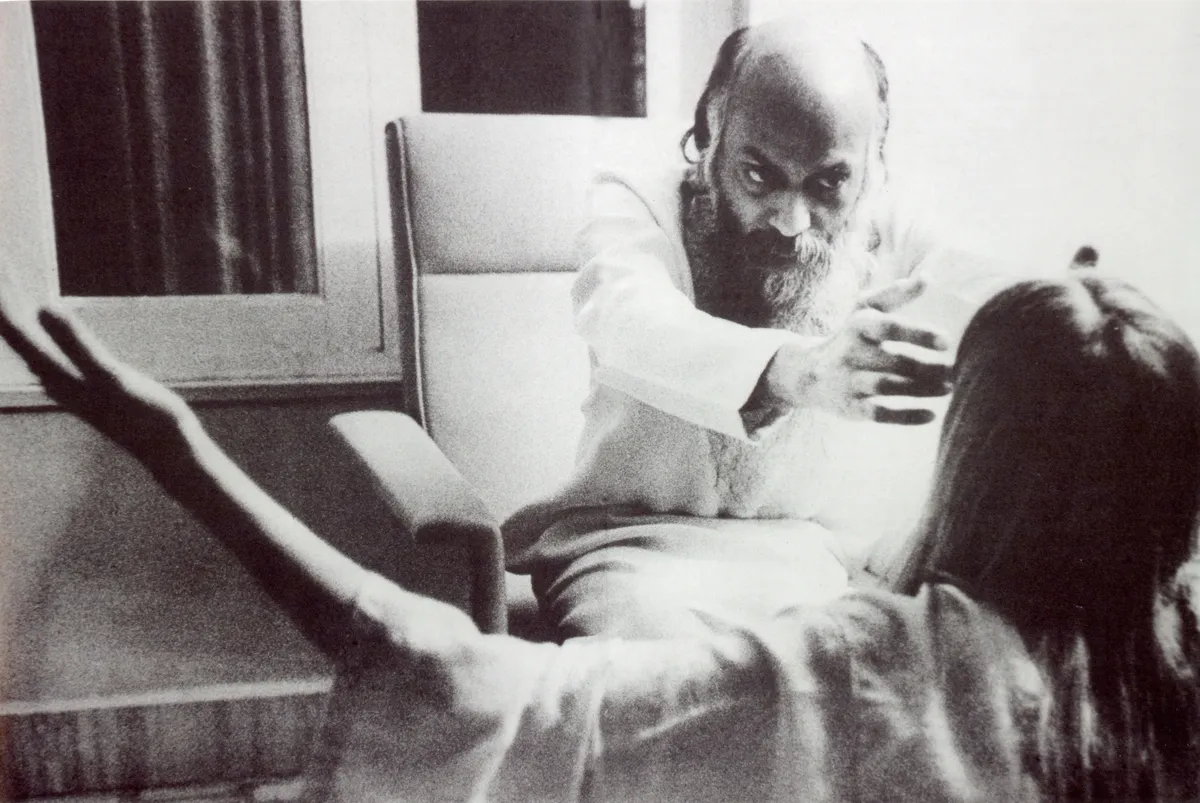
Osho's perspective on Mahabharata
When Osho Spoke About Mahabharata
Passages from the discourses where this theme comes alive.
Osho, in the Mahabharata Krishna urges Arjuna to fight. But I have heard that once Krishna himself went to face Arjuna in battle. What was that incident?
And in the larger meanings of life, this is worth contemplating. If I have an enemy, with the death of the enemy something in me also dies. Not only does the enemy die—something in me dies as well. My being, too, is with the enemy’s being. It is not only that with the death of a friend something is lost within me; with the loss of an enemy also something is lost within me. So the enemy, too, is a part of my personality. Therefore to be overly hostile toward the enemy is meaningless. In some deep sense the enemy is also a friend. And the friend, in some deep sense, is also an enemy. Why? Because in truth—as I have been saying to you continually these past days—the polarities into which we divide life, making poles, are true only in our words and theories. In the direct depth of…
ओशो, महाभारत संग्राम में कृष्ण अर्जुन को युद्ध में प्रवृत्त करते हैं! मगर एक दफा ऐसा घटा, सुना गया कि कृष्ण अर्जुन के सामने संग्राम करने गए थे। वह क्या बात थी?
… यह सोचने जैसा है कि अगर मेरा कोई शत्रु है, तो शत्रु के मरने के साथ मेरे भीतर भी कुछ मर जाता है। शत्रु ही नहीं मरता, मैं भी कुछ मरता हूं। शत्रु के होने के साथ मेरा होना भी है। मित्र के मरने के साथ ही मेरे भीतर से कुछ खोता हो, ऐसा नहीं है, शत्रु के खोने के साथ भी मेरे भीतर से कुछ खो जाता है। तो शत्रु भी मेरे व्यक्तित्व का हिस्सा है। इसलिए शत्रु के प्रति भी बहुत शत्रुतापूर्ण होने का अर्थ नहीं है। शत्रु भी किसी गहरे अर्थों में मित्र है। और मित्र भी किसी गहरे अर्थों में शत्रु है। क्यों? क्योंकि असल में, जैसा कि मैं निरंतर इन पिछले दिनों में आपसे कहा हूं, जिंदगी में जिनको हम पोलेरिटीज में बांटते हैं, ध्रुव बना देते हैं, वे हमारे शब्दों और सिद्धांतों में ही सत्य हैं। जिंदगी के सीधे गहराई में कोई पोलेरिटी सत्य नहीं है, सब पोलेरिटीज जुड़ी हुई हैं। …
Osho, why did Mahavira call the soul “time”? Please tell us what relationship there is between time and the soul.
Albert Einstein considered two constituent elements of existence: time and space. And as his inquiry deepened, it seemed to him that calling them two was not quite right. So he chose a single term for both: spacetime. Space is outside; time is inside. If we understand life rightly, two things are needed for being. You need a place in which to be—you will occupy some room. You are sitting here; you have taken up a little space. That is kshetra, the sky, space. But that alone is not enough. If that were all, you would become an object. Then there would be no difference between you and a table or a chair. The table and the chair also occupy space, just as you do. The floor you are sitting on occupies space, just as you do. Then what is the difference between you and a stone? You have also occupied…
पहला प्रश्न: ओशो, महावीर ने आत्मा को समय क्यों कहा? कृपाकर बतायें कि समय और आत्मा में क्या संबंध है?
… टाइम और स्पेस। समय और क्षेत्र। और फिर बाद में जैसे-जैसे आइंस्टीन की खोज गहरी होती गयी, उसे यह भी प्रतीत होने लगा कि इन दो तत्वों को दो कहना ठीक नहीं है। इसलिए फिर उसने दोनों के लिए एक ही शब्द चुन लिया: स्पेसियोटाइम। समय-क्षेत्र। क्षेत्र बाहर है, समय भीतर है। जीवन को अगर हम ठीक से समझें, तो हमें होने के लिए दो चीजें चाहिए। कोई जगह चाहिए होने के लिए। हम कुछ जगह घेरेंगे। तुम यहां बैठे हो, तो तुमने थोड़ी जगह घेरी। वही है क्षेत्र, आकाश, स्पेस। लेकिन उतना काफी नहीं है। अगर उतना ही हो, तो तुम वस्तु हो जाओगे। …
Osho, you have greatly extolled the Mahabharata, calling it the complete poetry of life. Then is the claim correct that whatever is not in the Mahabharata is nowhere? And does this claim not limit the vastness of life?
Let us understand it in two parts. First, the claim is correct. Whatever is not in the Mahabharata is nowhere. The Mahabharata was born at that ultimate peak to which any civilization can reach. Like spring among the seasons: the beauty known in spring is ultimate. Through the year you may catch its fragrance many times, but the summit is touched only in spring. Every civilization has its spring. But immediately after spring the descent begins. Every civilization reaches its highest peak; from there the decline starts. Wherever there is perfection, from there death begins to happen. The Mahabharata was the ultimate summit of Indian civilization. But from the peak, the fall comes. As the wheel of a cart turns: the part that reaches the very top, the moment it reaches, begins to come down. As the wheel of life turns: one is a child, becomes young, grows old, dies.…
तीसरा प्रश्न: ओशो, महाभारत को आपने बहुत-बहुत महिमा दी है, उसे जीवन का पूरा काव्य कहा है। तब क्या यह दावा सही है कि जो महाभारत में नहीं है, वह कहीं भी नहीं है? और क्या यह दावा विराट जीवन को सीमित नहीं करता है?
पहली बात, दावा सही है। जो महाभारत में नहीं है, वह कहीं भी नहीं है। महाभारत का जन्म हुआ उस आत्यंतिक शिखर पर, जहां तक कोई भी सभ्यता पहुंच सकती है। जैसे ऋतुओं में वसंत है; और वसंत में जो सौंदर्य जाना है, वह आत्यंतिक है। फिर वर्ष में बहुत बार उसकी भनक मिलेगी, लेकिन शिखर तो वसंत में ही छुआ जाएगा। हर सभ्यता के जीवन में वसंत आता है। लेकिन फिर वसंत के बाद ही तो उतार शुरू हो जाते हैं। हर सभ्यता अपने ऊंचे शिखर पर पहुंचती है। फिर वहीं से उतार शुरू हो जाता है। क्योंकि जहां पूर्णता होती है, वहीं से मृत्यु घटने लगती है। महाभारत भारत की सभ्यता का आत्यंतिक शिखर था। पर शिखर से पतन होता है। जैसे गाड़ी का चाक घूमता है; जो हिस्सा ऊपर पहुंचता है, ठीक ऊपर पहुंच जाता है, बस फिर नीचे उतरना शुरू हो जाता है। जैसे जीवन का चाक घूमता है; बच्चा है, जवान होता है, बूढ़ा होता है, मरता है।
Questioner: krishna inspires arjuna to fight in the battle of the mahabharat. But it is said that once it happens, krishna himself prepares to fight with arjuna. What is the matter?
And this is very significant in the larger context of life. It is worth knowing that when my enemy dies, something in me dies with him. Not only my enemy dies, with his death I too die in some measure. My being has been bound with the being of my enemy, so with his death a part of me dies at the same time. Not only I lose something with the death of my friend, I also lose when my enemy dies. After all, even my enemy is as much part of my life as a friend is. So it is not good to be very inimical to our enemies, because in some deeper sense even enemies are friends. In the same way, friends are also enemies. Why is it so? As I have been explaining to you these few days, the polarities into which we divide life are polarities…
Profound Quotes on Mahabharata
Explore our structured collection of meaning-mapped quotes regarding Mahabharata.