
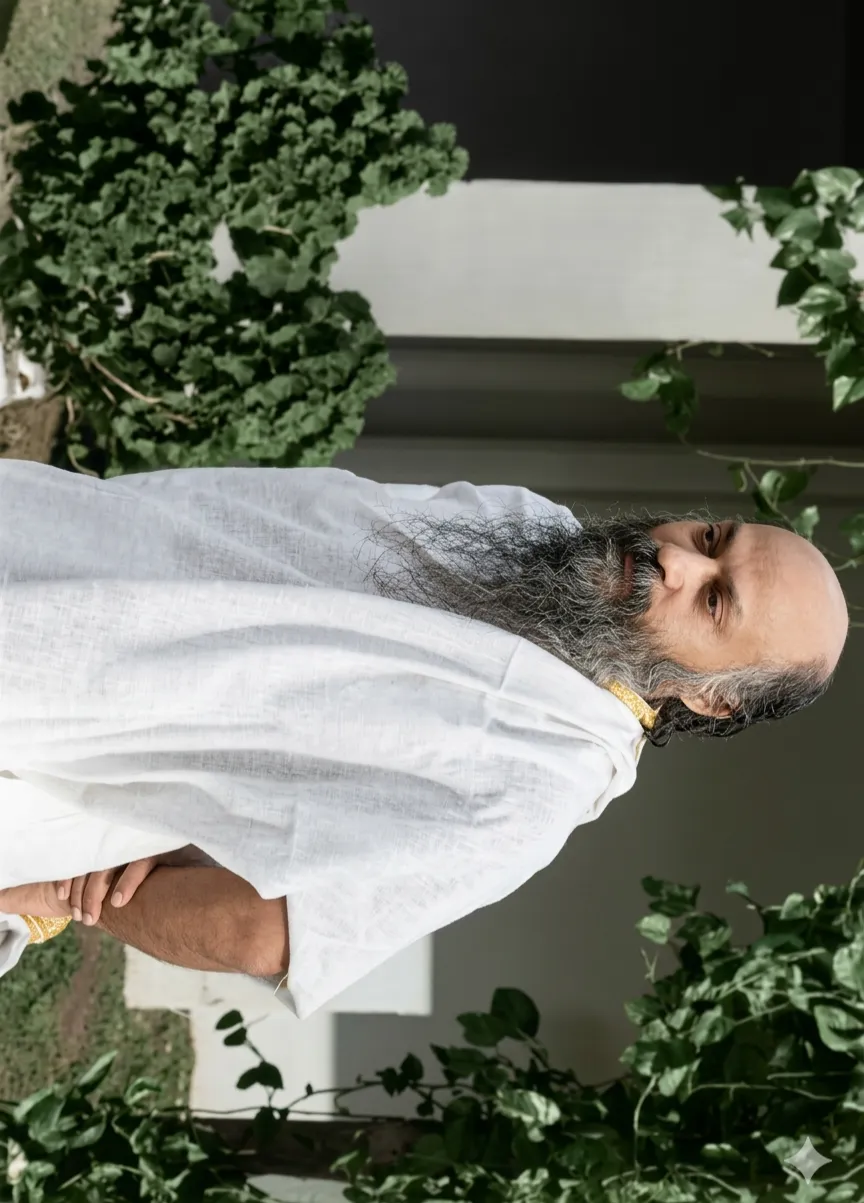
Krishna isn’t stuck with ‘friend’ or ‘enemy’; if truth demands, he’d even fight Arjuna, kindly and cleanly.
From the Discourses
Passages where Osho speaks to this question — each links to the complete discourse.
Osho, in the Mahabharata Krishna urges Arjuna to fight. But I have heard that once Krishna himself went to face Arjuna in battle. What was that incident?
And in the larger meanings of life, this is worth contemplating. If I have an enemy, with the death of the enemy something in me also dies. Not only does the enemy die—something in me dies as well. My being, too, is with the enemy’s being. It is not only that with the death of a friend something is lost within me; with the loss of an enemy also something is lost within me. So the enemy, too, is a part of my personality. Therefore to be overly hostile toward the enemy is meaningless. In some deep sense the enemy is also a friend. And the friend, in some deep sense, is also an enemy. Why? Because in truth—as I have been saying to you continually these past days—the polarities into which we divide life, making poles, are true only in our words and theories. In the direct depth of…
ओशो, महाभारत संग्राम में कृष्ण अर्जुन को युद्ध में प्रवृत्त करते हैं! मगर एक दफा ऐसा घटा, सुना गया कि कृष्ण अर्जुन के सामने संग्राम करने गए थे। वह क्या बात थी?
… यह सोचने जैसा है कि अगर मेरा कोई शत्रु है, तो शत्रु के मरने के साथ मेरे भीतर भी कुछ मर जाता है। शत्रु ही नहीं मरता, मैं भी कुछ मरता हूं। शत्रु के होने के साथ मेरा होना भी है। मित्र के मरने के साथ ही मेरे भीतर से कुछ खोता हो, ऐसा नहीं है, शत्रु के खोने के साथ भी मेरे भीतर से कुछ खो जाता है। तो शत्रु भी मेरे व्यक्तित्व का हिस्सा है। इसलिए शत्रु के प्रति भी बहुत शत्रुतापूर्ण होने का अर्थ नहीं है। शत्रु भी किसी गहरे अर्थों में मित्र है। और मित्र भी किसी गहरे अर्थों में शत्रु है। क्यों? क्योंकि असल में, जैसा कि मैं निरंतर इन पिछले दिनों में आपसे कहा हूं, जिंदगी में जिनको हम पोलेरिटीज में बांटते हैं, ध्रुव बना देते हैं, वे हमारे शब्दों और सिद्धांतों में ही सत्य हैं। जिंदगी के सीधे गहराई में कोई पोलेरिटी सत्य नहीं है, सब पोलेरिटीज जुड़ी हुई हैं। …
Questioner: krishna inspires arjuna to fight in the battle of the mahabharat. But it is said that once it happens, krishna himself prepares to fight with arjuna. What is the matter?
And this is very significant in the larger context of life. It is worth knowing that when my enemy dies, something in me dies with him. Not only my enemy dies, with his death I too die in some measure. My being has been bound with the being of my enemy, so with his death a part of me dies at the same time. Not only I lose something with the death of my friend, I also lose when my enemy dies. After all, even my enemy is as much part of my life as a friend is. So it is not good to be very inimical to our enemies, because in some deeper sense even enemies are friends. In the same way, friends are also enemies. Why is it so? As I have been explaining to you these few days, the polarities into which we divide life are polarities…
Question: Osho, it seems to me that, while explaining “svadharme nidhanam śreyaḥ,” Krishna pressured Arjuna. Arjuna was overstepping his kṣatriyahood and perhaps wanted to become a brāhmin. When he experienced despondency, when compassion arose in him, he was moving into his own dharma; Krishna stopped him and tried to bring him back into kṣatriyahood. That is how it seems to me. And there is a second point: you said Krishna sets Arjuna free, he doesn’t press him down. But at the beginning of the Gita Arjuna becomes a disciple and says, “śiṣyas te ’haṁ śādhi māṁ tvāṁ prapannam.” Later, after the whole current of the Gita has flowed by, at its completion we hear Arjuna say, “kariṣye vacanaṁ tava.” Doesn’t this give the hint that Krishna established a kind of guru-dom over Arjuna, under whose influence or pressure Arjuna had to say, “kariṣye vacanaṁ tava”?
A friend has asked: Osho, the soul cannot be seen. Why is so much importance given to what cannot be seen? And why are you also speaking about this same unseen soul?
A tree is visible; its roots are not. The roots are hidden in the earth. But that does not reduce the value of the unseen roots. In fact, the visible tree depends entirely on those invisible roots. And whoever wastes time caring only for the tree and ignores the roots, his tree is bound to dry up. That tree will bear neither leaves nor flowers nor fruit. The life of the tree is hidden in its unseen roots. Whatever is truly important in life is hidden. What appears is only the outer shell. What remains unmanifest is the inner life-breath. The body is visible because it is the outer shell. What is within the body is not visible. But the value of what is unseen does not diminish for that reason. Rather, precisely because it is not visible, its search becomes all the more necessary. Let it not happen that…
एक मित्र ने पूछा है: ओशो, आत्मा दिखाई नहीं देती है। और जो नहीं दिखाई देती, उसका इतना महत्व क्यों माना जाता है? और आप भी उसी न दिखाई पड़ने वाली आत्मा की बात क्यों कर रहे हैं?
वृक्ष दिखाई पड़ता है, जड़ें दिखाई नहीं पड़तीं; जड़ें जमीन के भीतर छिपी होती हैं। लेकिन इस कारण नहीं दिखाई पड़ने वाली जड़ों का मूल्य कम नहीं हो जाता है। बल्कि जो वृक्ष दिखाई पड़ता है, वह उन्हीं जड़ों पर निर्भर होता है, जो दिखाई नहीं पड़तीं। और वृक्ष की ही देख-सम्हाल में जो समय गंवा देगा और जड़ों की फिकर नहीं करेगा, उसका वृक्ष सूख जाने वाला है। उस वृक्ष पर न पत्ते आएंगे, न फूल आएंगे, न फल लगेंगे। नहीं दिखाई पड़ने वाली जड़ों में ही वृक्ष के प्राण छिपे हैं।
Questioner: you once said that buddha and mahavira were masochistic sannyasins. But in fact they came to sannyas from very affluent families; their sannyas was a follow up to their affluence. So how can you associate them with the sannyas of sorrow?
Gandhi found himself in such a dilemma when he wanted to discuss Krishna. In fact, he was more in agreement with Arjuna than with Krishna, How can Gandhi accept it when Krishna goads Arjuna into war? He could be rid of Krishna if he were clearly bad, but his badness is not that clear, because Krishna accepts both good and bad. He is good, utterly good, and he is also utterly bad -- and paradoxically, he is both together, and simultaneously. His goodness is crystal-clear, but his badness is also there. And it is difficult for Gandhi to accept him as bad. Under the circumstances there was no other course for Gandhi but to say that the war of Mahabharat was a parable, a myth, that it did not happen in reality. He cannot acknowledge the reality of the Mahabharat, because war is violence, war is evil to him. So…