
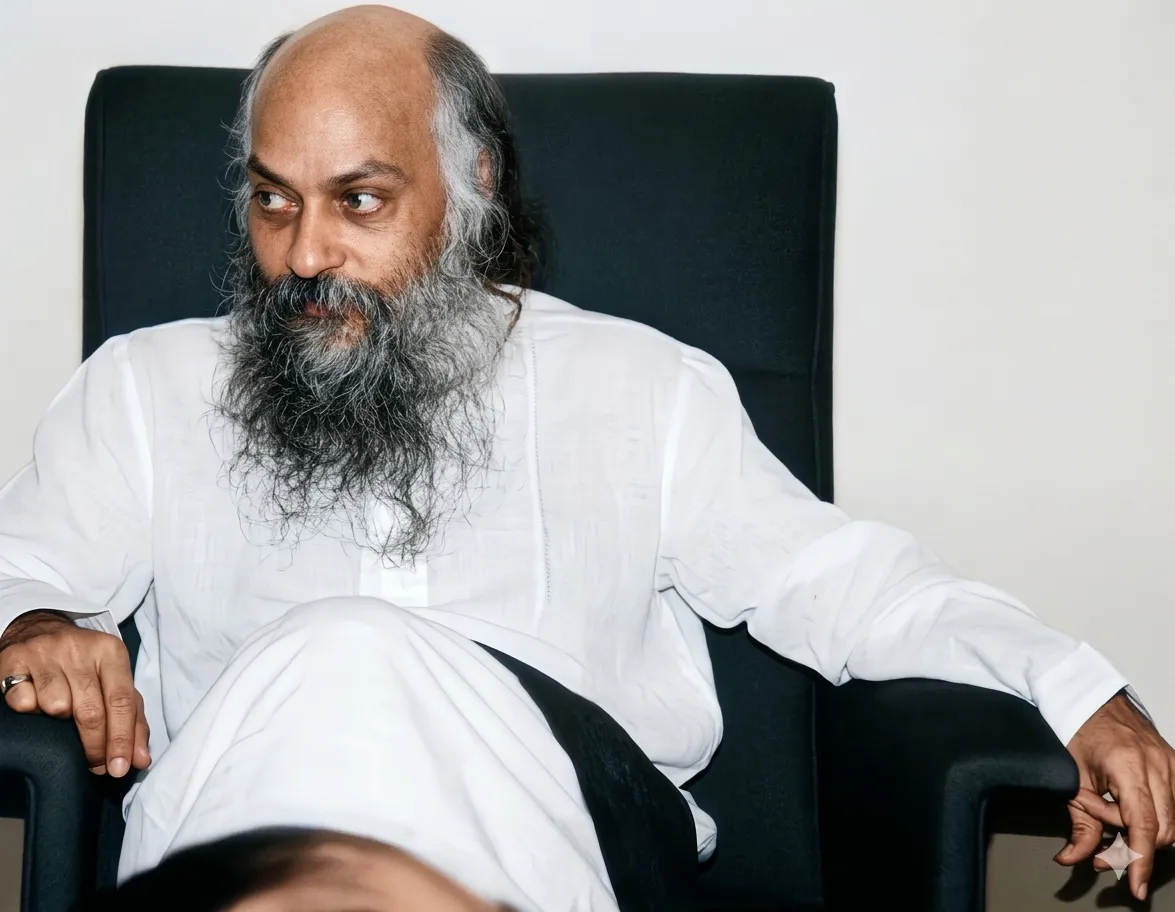
Osho's perspective on Bhajan
When Osho Spoke About Bhajan
Passages from the discourses where this theme comes alive.
Osho, is the happening that occurs immediately after darshan what is called bhajan? Please explain.
Greed will whisper, “Pick a little from Narada’s aphorisms—so lovely! Pick a little from Mahavira—so profound!” But the chooser will be “you,” and you will pick what suits you. You will drop what doesn’t suit you. Yet what you drop may be exactly what could transform you. What you assemble will be artificial. Remember the word “organic.” A living form is organic—like a tree, like your body. Cut off a hand—it cannot live by itself; its life was in the organic unity. Pluck out the eye—it won’t see. One of Mulla Nasruddin’s eyes was glass. He used to oversee laborers, standing there; if he was present, they worked; if he left, they idled. One day he had to go and performed a “miracle.” He popped out his glass eye, put it on the table, and said, “This eye will keep watching—don’t try to fool me.” The workers were stunned; they…
दूसरा प्रश्न: ओशो, दर्शन के तत्क्षण बाद घटी घटना को ही क्या भजन कहते हैं? कृपा करके समझाएं।
लोभ तुमसे कह सकता है कि थोड़ा भक्ति से चुन लो, थोड़े नारद के सूत्र बड़े प्यारे हैं; थोड़ा महावीर से चुन लो, महावीर के सूत्र बड़े प्यारे हैं! लेकिन ‘तुम’ चुनने वाले होओगे और ‘तुम’ जिन सूत्रों को चुन लोगे वह तुम्हारे अनुकूल होंगे। और तुम उन्हें छोड़ दोगे जो तुम्हारे अनुकूल नहीं मालूम होते। संभावना इसकी है कि जिन्हें तुम छोड़ोगे उनसे ही तुम्हारा रूपांतरण होता। और जो तुम चुनकर एक कृत्रिम ढांचा बना लोगे.कृत्रिम, याद रखना। अंग्रेजी में एक शब्द है: आर्गनिक। एक तो ढांचा होता है: सावयव। जैसे एक वृक्ष है, वृक्ष एक सावयव ढांचा है, आर्गनिक है। जैसे तुम हो, तुम्हारा शरीर एक आर्गनिक ढांचा है। अगर तुम्हारे हाथ को तोड़ दें तो हाथ अलग से न जी पायेगा; तुम्हारे साथ ही जी सकता था। उसका प्राण तुम्हारी सावयव एकता में था; अलग होकर मुर्दा हो जायेगा। तुम्हारी आंख को बाहर निकाल लें, फिर न देख पायेगी। मुल्ला नसरुद्दीन की एक आंख कांच की है। वह मजदूरों से काम लेता है तो वहां खड़ा रहता है। एक दिन जरूरी था उसको जाना। …
Osho, when bhajan is fulfilled, is what remains that surati?
So, first, this cannot be done by the mind. In the mind nothing is unbroken; everything is in fragments. This will happen only by going beyond the mind. Where the mind dissolves, there surati is born. Where the mind disappears, there the Divine arrives. So surati is not manan (reflection), because manan is a process of the mind. It is not chintan (thinking), because chintan too is a process of the mind. Surati is a very rare, extraordinary happening. You have asked: "Where the bhajan comes to completion..." Well asked: Where bhajan is completed. Where whatever had to be done has been done. There is doing in bhajan; in surati there is no doing. Where you have done all you could—prayed, worshipped, made offerings, sung bhajans, danced—whatever you could do, you did it all; and you did so much, so much, so much that slowly, slowly... As Paltu said yesterday:…
पहला प्रश्न: ओशो, क्या भजन जब पूरा हो जाता है, तब जो शेष रह जाता है, वही सुरति है?
तो पहली तो बात, मन से यह काम न हो सकेगा। मन में तो कुछ भी अखंड नहीं होता; सब खंड-खंड होता है। यह बात तो मन के पार ही होकर हो सकेगी। जहां मन विसर्जित होगा, वहीं सुरति का जन्म होगा। जहां मन गया, वहीं प्रभु आया। तो सुरति कोई मनन नहीं है, क्योंकि मनन तो मन की प्रक्रिया है। यह कोई चिंतन नहीं है, क्योंकि चिंतन भी मन की ही प्रक्रिया है। सुरति बड़ी अपूर्व घटना है। तुमने पूछा है कि ‘जहां भजन पूरा हो जाता है...।’ ठीक पूछा है। जहां भजन पूरा हो जाता है। जहां करने योग्य किया जा चुका। भजन में कृत्य है। सुरति में कृत्य नहीं है। जहां तुम जो कर सकते थे, प्रार्थना कर सकते थे, पूजा कर सकते थे, अर्चना कर सकते थे, भजन कर सकते थे, नाच सकते थे, तुम जो कर सकते थे, सब तुमने कर लिया, लेकिन तुमने इतना किया, इतना किया, इतना किया, कि धीरे-धीरे...जैसा कल पलटू ने कहा कि तिल के दानों के पास सुगंधित फूल रख दो तो तिल के दाने सुगंधित फूल की सुवास से भर जाते हैं। इसलिए तो तेल में गंध आ जाती है। …
Osho, is bhajan, like prayer, merely an act of thanksgiving?
Prayer is the seed; bhajan is the tree. Prayer is the unmanifest, bhajan the manifest. Bhajan is prayer dancing, prayer singing. Bhajan is prayer’s expression. If you want to see prayer, you will find it in Mahavira and Buddha; if you want to see bhajan, in Meera and Chaitanya. What is gathered within in Buddha and Mahavira flows outward in Meera and Chaitanya. What is still in Buddha and Mahavira rises into dance in Meera and Chaitanya. Bhajan is the articulation of prayer. Understand it this way: you are in love with someone. You can keep it inside; there is no need to say it. Even if you never say, “I love you,” it is fine; you can hold it within, guard it. Often women do not say they are in love; they keep it safe. It is—why say it? Being is enough. But sometimes love also expresses—sometimes in a…
आखिरी प्रश्न: ओशो, क्या प्रार्थना की तरह भजन भी धन्यवाद-ज्ञापन मात्र है?
प्रार्थना बीज है, भजन वृक्ष। प्रार्थना अप्रकट है, भजन प्रकट। भजन नाचती हुई प्रार्थना है, गाती हुई प्रार्थना है। भजन अभिव्यक्ति है प्रार्थना की। अगर प्रार्थना देखनी है, तो तुम्हें महावीर और बुद्ध में दिखाई पड़ेगी; अगर भजन देखना है तो मीरा और चैतन्य में। बुद्ध और महावीर में जो भीतर सम्हला हुआ है, मीरा और चैतन्य में बाहर बह गया है। बुद्ध और महावीर में जो थिर है, मीरा और चैतन्य में नाच उठा है। भजन प्रार्थना की अभिव्यंजना है। ऐसा समझो कि तुम्हें किसी के प्रति प्रेम है। तुम इसे भीतर भी रख सकते हो, कोई जरूरत नहीं कहने की। कभी तुम ऐसा न भी कहो कि मुझे तुझसे प्रेम है, तो भी चलेगा; तुम भीतर ही भीतर रख सकते हो, सम्हाले रखते हो। अक्सर स्त्रियां किसी को कहती नहीं कि उन्हें प्रेम है; सम्हाल कर रखती हैं। है--कहना क्या; होना काफी है। लेकिन कभी प्रेम प्रकट भी होता है--कभी गीत में, कभी हाथ के स्पर्श में, कभी आंख की भाव-व्यंजना में, कभी मौन में भी। …
Beloved Osho, is singing the song of the divine, like prayer, also an expression of thanks?
Prayer is the seed, bhajan, singing the song of the divine, is the tree. Prayer is hidden -- not expressed, bhajan is the expression. Bhajan is the dancing prayer, the singing prayer. Bhajan is the expression of prayer. If you want to see prayer, you will have to look at it in Mahavira and Buddha. If you want to see bhajan then you had better look at Meera and Chaitanya. Bhajan is the prayer expressed. What remains within Mahavira and Buddha flows out of Meera and Chaitanya. What is static within Buddha and Mahavira has started dancing in Meera and Chaitanya. Bhajan is the expression of prayer. You can understand it like this. Suppose you are in love with someone. You can just keep it to yourself, there is no need to say anything about it. It does not matter even if you do not say, "I love you." You…
What is bhajan?
definitionWhat remains after bhajan is fulfilled?
definitionProfound Quotes on Bhajan
Explore our structured collection of meaning-mapped quotes regarding Bhajan.