
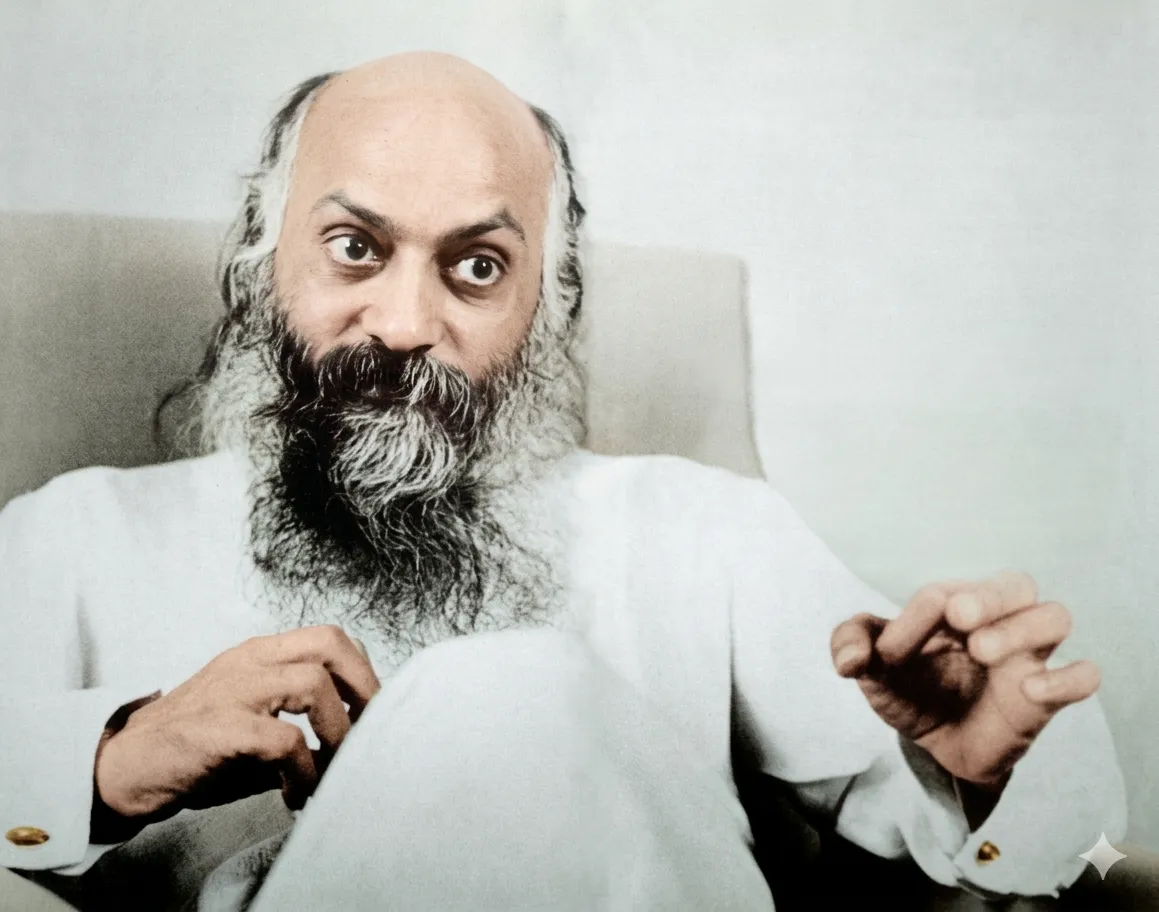
No—after darshan comes knowledge on Mahavira’s way; bhajan is a separate, feeling-filled celebration on the devotional path.
From the Discourses
Passages where Osho speaks to this question — each links to the complete discourse.
Osho, is the happening that occurs immediately after darshan what is called bhajan? Please explain.
Greed will whisper, “Pick a little from Narada’s aphorisms—so lovely! Pick a little from Mahavira—so profound!” But the chooser will be “you,” and you will pick what suits you. You will drop what doesn’t suit you. Yet what you drop may be exactly what could transform you. What you assemble will be artificial. Remember the word “organic.” A living form is organic—like a tree, like your body. Cut off a hand—it cannot live by itself; its life was in the organic unity. Pluck out the eye—it won’t see. One of Mulla Nasruddin’s eyes was glass. He used to oversee laborers, standing there; if he was present, they worked; if he left, they idled. One day he had to go and performed a “miracle.” He popped out his glass eye, put it on the table, and said, “This eye will keep watching—don’t try to fool me.” The workers were stunned; they…
दूसरा प्रश्न: ओशो, दर्शन के तत्क्षण बाद घटी घटना को ही क्या भजन कहते हैं? कृपा करके समझाएं।
लोभ तुमसे कह सकता है कि थोड़ा भक्ति से चुन लो, थोड़े नारद के सूत्र बड़े प्यारे हैं; थोड़ा महावीर से चुन लो, महावीर के सूत्र बड़े प्यारे हैं! लेकिन ‘तुम’ चुनने वाले होओगे और ‘तुम’ जिन सूत्रों को चुन लोगे वह तुम्हारे अनुकूल होंगे। और तुम उन्हें छोड़ दोगे जो तुम्हारे अनुकूल नहीं मालूम होते। संभावना इसकी है कि जिन्हें तुम छोड़ोगे उनसे ही तुम्हारा रूपांतरण होता। और जो तुम चुनकर एक कृत्रिम ढांचा बना लोगे.कृत्रिम, याद रखना। अंग्रेजी में एक शब्द है: आर्गनिक। एक तो ढांचा होता है: सावयव। जैसे एक वृक्ष है, वृक्ष एक सावयव ढांचा है, आर्गनिक है। जैसे तुम हो, तुम्हारा शरीर एक आर्गनिक ढांचा है। अगर तुम्हारे हाथ को तोड़ दें तो हाथ अलग से न जी पायेगा; तुम्हारे साथ ही जी सकता था। उसका प्राण तुम्हारी सावयव एकता में था; अलग होकर मुर्दा हो जायेगा। तुम्हारी आंख को बाहर निकाल लें, फिर न देख पायेगी। मुल्ला नसरुद्दीन की एक आंख कांच की है। वह मजदूरों से काम लेता है तो वहां खड़ा रहता है। एक दिन जरूरी था उसको जाना। …
If another can hear it, it is not bhajan. What kind of bhajan is that which others can hear? Then you are doing it to be heard by others. Either your innermost knows, or the Divine knows; it is between the two. A third cannot hear—cannot. It is so subtle—it is a state of feeling. Bhajan is a feeling—anubhava—not an arrangement of words and sounds. Bhajan is grace. You are so brimming that even your walking has a dance in it, a fragrance, a glow. Full, you walk. Have you seen someone walking who has fallen in love? Yesterday he walked the same road to the same office with the same legs—but now something has changed. There is some new energy in the feet, some dance has entered. No ankle-bells tied, yet they tinkle within. He walks—he seems to fly; the pull of the earth does not touch him.
दूसरा सुन ले तो भजन ही न रहा। वह क्या भजन रहा जिसको दूसरे ने सुन लिया? तब तुम दूसरे को सुनाने को कर रहे होओगे। या तो तुम्हारी अंतरात्मा जानती है या परमात्मा। वह दो के बीच है, तीसरा उसे सुनता ही नहीं। सुन ही नहीं सकता। वह इतना सूक्ष्म है। वह एक भाव है। भजन एक भाव है। वह शब्दों की, ध्वनियों की व्यवस्था नहीं है, एक भाव-दशा है। भजन अनुग्रह है। तुम ऐसे भरपूर हो कि तुम चलते हो तो तुम्हारे चलने में एक नाच है। तुम्हारे पैर में एक महक, एक दमक है। भरे-पूरे चलते हो। जैसे कभी किसी को तुमने चलते देखा हो, कोई प्रेमी को, जो किसी के प्रेम में पड़ गया, उसकी चाल बदल जाती है। कल तक वैसे ही--इसी दफ्तर जाता था, इसी रास्ते से गुजरता था, यही पैर थे, लेकिन अब जरा बात बदल गई। अब पैरों में कुछ ऊर्जा और है। पैरों में अब कुछ नाच समा गया। घूंघर न बांधे हों। लेकिन कहीं भीतर घूंघर बजते हैं। चलता है, लगता है उड़ता है। जमीन की कशिश का प्रभाव नहीं पड़ता जैसे। कुछ पा लिया है। जरा एक स्त्री मुस्कुरा दी है। …
Osho, the bhakta saints have sung greatly of bhajan’s glory. What is bhajan?
He asked again, Look, I will forget; tell me once more. Then, as Moses, having taught him the second time, was leaving, the man ran after him and said, Just once—once more. Because I will forget; these are difficult words. And if I make a mistake—then great harm will be done. Till now I was ignorant; whatever I did, I did. But now, now mistakes will not be tolerated. Now I shall be in trouble. Where will I find you? That prayer was mine—there was no hindrance in it. Every day I would make it up afresh; I would do whatever needed to be done. But now I must proceed by a rule. When Moses, very pleased at having taught him the third time, went on his way, he heard from the sky a great, solemn thunder. God was very angry. And God said, Listen! I sent you into the…
आखिरी प्रश्न: ओशो, भक्त संतों ने भजन की बहुत महिमा गाई है। यह भजन क्या है?
उसने फिर दुबारा पूछा कि देखो मैं भूल जाऊंगा, एक दफा और बता दो। फिर मूसा दूसरी दफा बता कर जा रहे थे, वह भागा फिर आया और उसने कहा, एक बस--एक दफे और। क्योंकि मैं भूल जाऊंगा। ये कठिन शब्द हैं। और अगर भूल-चूक हो गई तो--तो फिर बड़ा नुकसान होगा। अब तक अज्ञानी था, जो करता रहा सो करता रहा। मगर अब, अब भूल-चूक नहीं सही जाएगी। अब मैं मुश्किल में पड़ जाऊंगा। तुम्हें कहां खोजूंगा? वह तो मेरी प्रार्थना थी, उसमें कुछ अड़चन ही नहीं थी। रोज अपनी बना लेता था, जो जैसी करनी थी कर लेता था। अब तो एक नियम से चलना होगा। जब मूसा बड़े प्रसन्न भाव से उसको समझा कर तीसरी बार अपने रास्ते पर चले तो उन्होंने आकाश से एक बड़ी गंभीर गर्जना सुनी। ईश्वर बहुत नाराज था। और ईश्वर ने कहा कि सुनो, मैंने तुम्हें दुनिया में भेजा है कि तुम जो मुझसे भटक गए हैं उन्हें मुझसे मिलाना। लेकिन तुम जो मुझसे मिले हुए हैं उनको भटका रहे हो। तुम वापस जाकर उस आदमी से क्षमा मांगो। वह अकेला है इस प्रांत में जो प्रार्थना जानता है। उसका भाव तो देखो! …
Osho, Sri Shankaracharya teaches the wisdom of the ultimate (tattva-jnana) and also sings Govinda’s bhajans. Is there an interrelationship between knowledge and bhajan, between knowledge and devotion?
Knowledge is negating; devotion is affirmative. Knowledge is like preparing the soil—removing weeds, adding manure; devotion is like sowing the seed. Knowledge by itself is incomplete. It clears the field, but it does not implant the seeds. It is necessary, not sufficient. For knowledge belongs to the intellect; devotion belongs to the heart. On the path to the divine, all the obstacles can be cut away by knowledge; but the steps are climbed by devotion. So knowledge is negating; it is very effective in breaking the futile, not in giving birth to the meaningful. Shankara speaks of knowledge so that the layers upon layers of ignorance within you are cut away. And once the ground of the mind is clear—no useless rubbish, no trash—then the seeds of devotion can be sown; then “bhaj Govindam” becomes possible. There is no opposition between the two; devotion is the culmination of knowledge, and…
पहला प्रश्न: ओशो, श्री शंकराचार्य तत्वज्ञान सिखाते हैं और साथ ही गोविन्द के भजन भी गाते हैं। क्या ज्ञान और भजन में, ज्ञान और भक्ति में कोई अंतर्संबंध है?
शंकर ज्ञान की बात कर रहे हैं, ताकि तुम्हारे भीतर अज्ञान की जो पर्त दर पर्त भीड़ लगी है, कट जाए। और जब एक बार मन की भूमि साफ हो गई, व्यर्थ का कचरा न रहा, कूड़ा-करकट न रहा, तो फिर भक्ति के बीज बोए जा सकते हैं; फिर भज गोविन्दम् की संभावना है। विरोध नहीं है दोनों में; भक्ति ज्ञान की ही पराकाष्ठा है और ज्ञान भक्ति की ही शुरुआत है। क्योंकि मनुष्य के भीतर हृदय भी है, बुद्धि भी है। दोनों को छूना होगा। दोनों का रूपांतरण चाहिए।
Osho, what is the fundamental anguish of human life?
There is only one anguish: that a human being cannot become what he was born to be. There is only one anguish: that the seed remains a seed and does not bloom like a flower; that it cannot scatter its fragrance to the infinite winds; cannot converse with the moon and stars; cannot offer its colors to the sky; cannot be expressed. If the poem within the poet cannot be revealed—anguish. If the painter cannot paint—anguish. If the dancer cannot dance—if chains lie on his feet—anguish. Anguish means only this: that what we are meant to be—our innate nature and destiny—does not come to fruition, and we are forced to be something else. Then anguish is born. Then melancholy gathers over life. And all those countless people you see burdened with sorrow, living in a kind of hell—the reason is only this: each has come carrying the seed of becoming…
चौथा प्रश्न: ओशो, मनुष्य जीवन का मूल संताप क्या है?
एक ही संताप है कि मनुष्य वह न हो पाए जो होने को पैदा हुआ है। एक ही संताप है, कि बीज बीज रह जाए, फूल की तरह खिल न पाए। बिखेर न सके अपनी सुवास को अनंत-अनंत हवाओं में; कर न सके गुफ्तगू चांद-तारों से; निवेदन न कर पाए अपने रंगों का आकाश के प्रति; अभिव्यक्त न हो पाए--एक ही संताप है। कवि के भीतर की कविता प्रकट न हो सके--तो संताप। चित्रकार चित्र न बना सके--तो संताप। नर्तक नाच न सके, पैरों में जंजीरें पड़ी हों--तो संताप। संताप का एक ही अर्थ होता है: जो हम होने को हैं, जो हमारी सहज प्रकृति और नियति है, वह न हो पाए और हमें अन्यथा होने को मजबूर होना पड़े, तो संताप पैदा होता है। तो जीवन में विषाद घिरता है।