
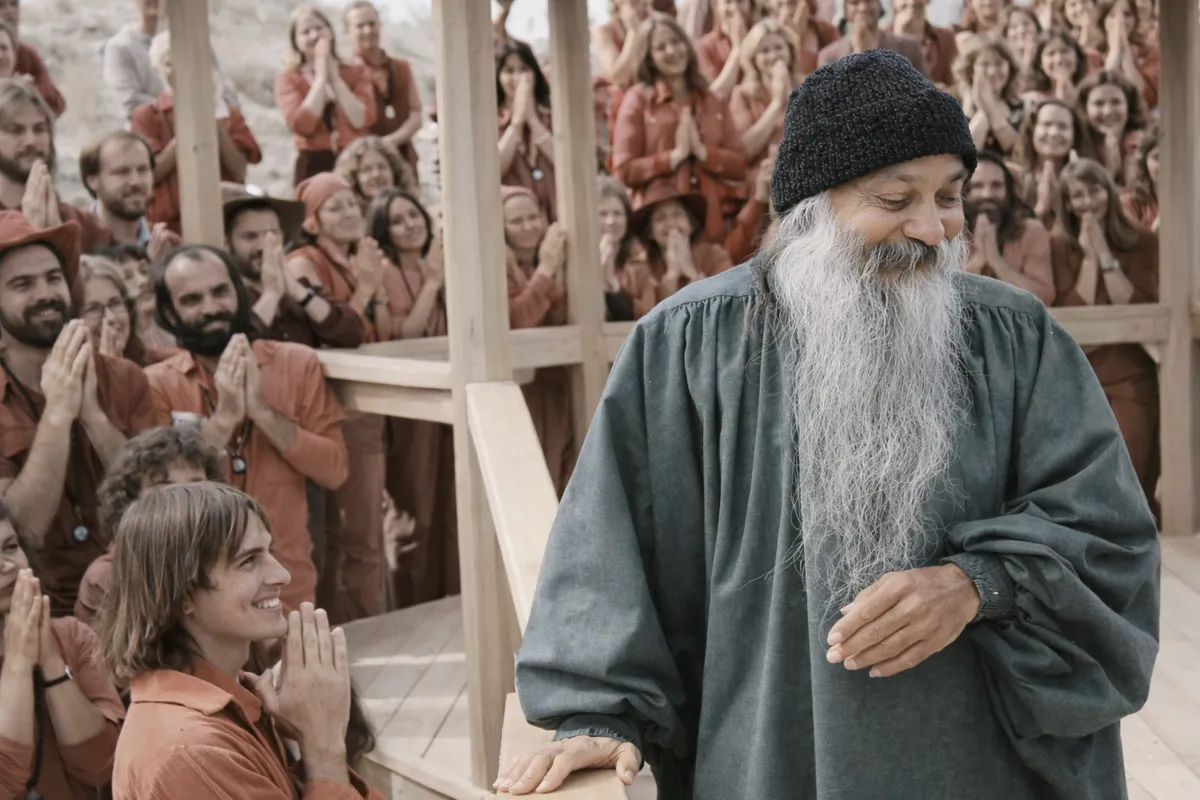
We keep it private so only people who truly want to change come, and they can learn without noisy crowds getting in the way.
From the Discourses
Passages where Osho speaks to this question — each links to the complete discourse.
Osho, why is there so much secrecy in the ashram?
The ashram is not a marketplace; it is not open to the crowd. Here I am available to those few who genuinely want to be transformed. Sightseers, passersby—there is no purpose in their coming here. The invitation is only for those who have truly come close to transformation, for that small number. Therefore there is privacy in every respect. And the privacy will increase. Because as I see that more of the unnecessary can be sifted out, I will sift them out—since they themselves gain nothing, and by their presence they do not let others gain either. I have remained open to all for a long time and have seen what happens. I found that the crowd of the pointless becomes so thick that the meaningful person gets no chance at all. The merely curious surround so much that the true inquirer is left standing at the back. The mumukshu—the…
तीसरा प्रश्न: ओशो, आश्रम में इतनी गोपनीयता क्यों है?
आश्रम कोई बाजार नहीं है, भीड़-भाड़ के लिए खुला नहीं है। यहां मैं उन थोड़े से लोगों के लिए उपलब्ध हूं, जो वस्तुतः रूपांतरित होना चाहते हैं। तमाशबीन, राह चलते लोग, उनके लिए कोई यहां आने का प्रयोजन नहीं है। यहां तो उन्हीं के लिए निमंत्रण है जो सच में ही रूपांतरित होने के करीब आ गए हैं, उन थोड़े से लोगों के लिए है। इसलिए सब तरह की गोपनीयता है। और गोपनीयता बढ़ती जाएगी। क्योंकि जैसे-जैसे मैं पाऊंगा कि और व्यर्थ लोग छांटे जा सकते हैं, उनको मैं छांट दूंगा। क्योंकि न तो उनको कोई लाभ होता, न उनके कारण दूसरों को वे लाभ होने देते। मैंने बहुत दिन सबके लिए खुला रह कर देख लिया। मैंने पाया, उसमें जो व्यर्थ के लोग हैं उनकी भीड़ इतनी हो जाती है कि सार्थक आदमी को मौका ही नहीं मिल पाता। उसमें कुतूहल वाले लोग इतना घेर लेते हैं कि जिज्ञासु पीछे ही खड़ा रह जाता है। मुमुक्षु तो विनम्र होता है। वह कहता है, जब मुझे मौका मिलेगा तब मैं पूछ लूंगा। उसको मौका ही नहीं मिलता। …
Osho, while speaking on Lao Tzu you said that for those who cannot be trusted, policies, rules and police are made; and you also said that it is dignity to see the auspicious even in a bad man. Then the question arises: why is the security here in the ashram so strict?
Many things have to be understood; and it is right that they be understood. For me there is no bad person, no enemy. The arrangements in the ashram are not to protect against any enemy. It may appear so to you—that is your interpretation. The arrangements here are to be protected from friends. And no one has ever been able to protect anyone from enemies; how could you? Jesus was crucified; twelve guards, twelve disciples were keeping watch. What can you do with twelve disciples? The enemy came with a crowd of five hundred. All arrangements can be broken. Jesus was a fakir, but even with all the arrangements America has to protect Lincoln and Kennedy—they still could not be saved. To save one from an enemy is almost impossible. It has never been done. For Gandhi, every precaution was taken. What can you do? A single madman can finish…
ओशो, लाओत्से पर बोलते हुए आपने कहा कि जिस पर भरोसा न हो उसके लिए नीति, नियम और पुलिस की व्यवस्था की जाती है; और आपने यह भी कहा कि बुरे आदमी में भी शुभ देखना गरिमा है। तो प्रश्न यह उठता है कि यहां आश्रम में सुरक्षा की इतनी कड़ी व्यवस्था क्यों है?
मेरे लिए तो कोई बुरा नहीं है, कोई शत्रु नहीं है। आश्रम में जो व्यवस्था है वह किसी शत्रु से बचने की व्यवस्था भी नहीं है। तुम्हें ऐसा दिखाई पड़ता होगा, वह तुम्हारी व्याख्या है। आश्रम में जो व्यवस्था है, वह मित्रों से बचने की है। और शत्रुओं से कभी कोई किसी को बचा भी नहीं सका; कैसे बचा सकते हो? जीसस को सूली लग गई; बारह ही पहरेदार, बारह शिष्य पहरा दे रहे थे। तो अब क्या करोगे? बारह शिष्य क्या करोगे? दुश्मन पांच सौ की भीड़ लेकर आ गया था। सब व्यवस्था तोड़ी जा सकती है। फिर जीसस तो फकीर थे, लेकिन अमरीका के पास जितनी व्यवस्था है लिंकन को, केनेडी को बचाने की--वे भी नहीं बचा सकते। बचाना तो करीब-करीब असंभव है शत्रु से। कभी नहीं बचा सकते।
Osho, our commune is not like any of the traditional ashrams or monasteries. Would you talk to us more about the function of your commune?
IT is necessary first to understand the traditional structure of an ashrama, and also of a monastery. It will give you the background to understand the meaning of my commune. The ashrama is an Eastern concept based on renouncing society, its comforts, conveniences. An ashrama is a group of people living together in austerity, self-imposed poverty, starvation in the name of fasting; torturing the body in order to have control over the physical by the spiritual; doing all kinds of exercises so that they become able to concentrate on the idea of God if they are Hindus, or on the idea of the ultimate growth of human consciousness if they are Buddhists and Jainas. But the goal is far away for all the three -- you can call it God, you can call it the Buddha, you can call it the Jina. They are different words signifying nothing, but pointing…
Osho, except for discourses and darshan you always remain in your secluded room. Even so, where do you get so much information that, in your reply about U.G. Krishnamurti, you spoke of all those much-discussed reports about him? Do you too have some secret agency like the CIA, KGB, or CBI?
Himmat, brother… the combined total of all three! But don’t keep asking such pointless questions. Let us speak of the Master; let the mind be absorbed in the Master. Even if you feel curiosity, always go to the original source. Beware of borrowed ideas and thought-thieves. If you want to understand J. Krishnamurti’s vision, if there is juice in it for you, then drink that juice directly from Krishnamurti. Then there is no need to sip from U.G. Krishnamurti. When the original is available, why get tangled in a copy? Beware of carbon copies. And carbon copies are often aggressive claimants. A thief has to strive hard to prove that the ideas are his. He must gather many arguments and much evidence to show the ideas are his. One whose ideas truly arise from himself neither gathers arguments nor evidence—the ideas are his, simply. And from the standpoint of consciousness,…
पहला प्रश्न: ओशो, प्रवचन और दर्शन को छोड़ कर आप सदा-सर्वदा अपने एकांत कमरे में रहते हैं। फिर भी आपको इतनी सारी सूचनाएं कहां से मिलती हैं, कि यू. जी. कृष्णमूर्ति से संबंधित प्रश्न के उत्तर में, आपने उनके बारे में उन सब खबरों की चर्चा की है, जो बहुचर्चित हैं! सी. आई. ए, के. बी. जी. और सी. बी. आई. जैसी कोई गुह्य संस्था भी आपके पास है क्या?
लेकिन ऐसे व्यर्थ के प्रश्न बार-बार न पूछो। साहिब की ही बात करें। साहिब में ही मन लगाएं। अगर तुम्हें उत्सुकता भी हो तो सदा मूल-स्रोत पर जाओ। उधार, विचार-चोरों से सावधान रहो। जे. कृष्णमूर्ति की जो दृष्टि है, अगर उसे समझना है, उसमें रस है, तो फिर कृष्णमूर्ति से ही उस रस को उठाओ। फिर यू. जी. कृष्णमूर्ति में रस लेने की कोई जरूरत नहीं है। जब मूल उपलब्ध हो, तो नकल से क्यों उलझना? कार्बनकापियों से सावधान रहना जरूरी है। और कार्बनकापियां काफी दावेदार होती हैं। चोर को बड़ी चेष्टा करनी पड़ती है यह सिद्ध करने के लिए कि ये विचार मेरे हैं। उसे अतिशय श्रम उठाना पड़ता है। उसे बहुत तर्क, बहुत प्रमाण जुटाने पड़ते हैं कि ये विचार मेरे हैं। जिसके वस्तुतः विचार अपने होते हैं, वह न तो तर्क जुटाता है, न प्रमाण जुटाता है--विचार उसके हैं ही।
Osho, why does there seem to be so much conflict between the world and God?
It is as if someone were sleeping deeply in this garden. The cuckoo comes and sings, birds are chattering, the sun rises, breezes dance through the trees; but someone is fast asleep. The breezes touch him, the birds’ songs echo at his ears, the sun’s rays play on his face, but he knows nothing. Then someone comes and shakes him awake. His eyes open—the glory of the sun is revealed, the song of the passing breeze is heard, suddenly the cuckoo’s call, the fragrance of flowers. Do you think something new has happened? Everything was already there, just as it is. Only this man has become new—nothing else has changed. The same garden, the same sun, the same flowers, the same birds—everything the same; only a small difference: he was asleep; he is awake. The meaning of “world” is: you are asleep in God. The meaning of “God” is: you…
पहला प्रश्न: ओशो, संसार और परमात्मा में इतना विरोध क्यों लगता है?
फिर कोई आए और उसे झकझोर कर जगा दे। आंख खुले सूरज की महिमा प्रकट हो, पास से गुजरती हवा का गीत सुनाई पड़े, अचानक कोयल की आवाज आए, फूलों की सुगंध आए, क्या तुम सोचते हो कुछ नया हो गया? सब था, सब वैसा का वैसा है, सिर्फ यह आदमी नया हो गया और कुछ नया नहीं हुआ है। वही बगीचा, वही सूरज, वही फूल, वही पक्षी, सब वही है, सिर्फ इस आदमी में थोड़ा फर्क पड़ा है, यह सोया था, यह जाग गया।