
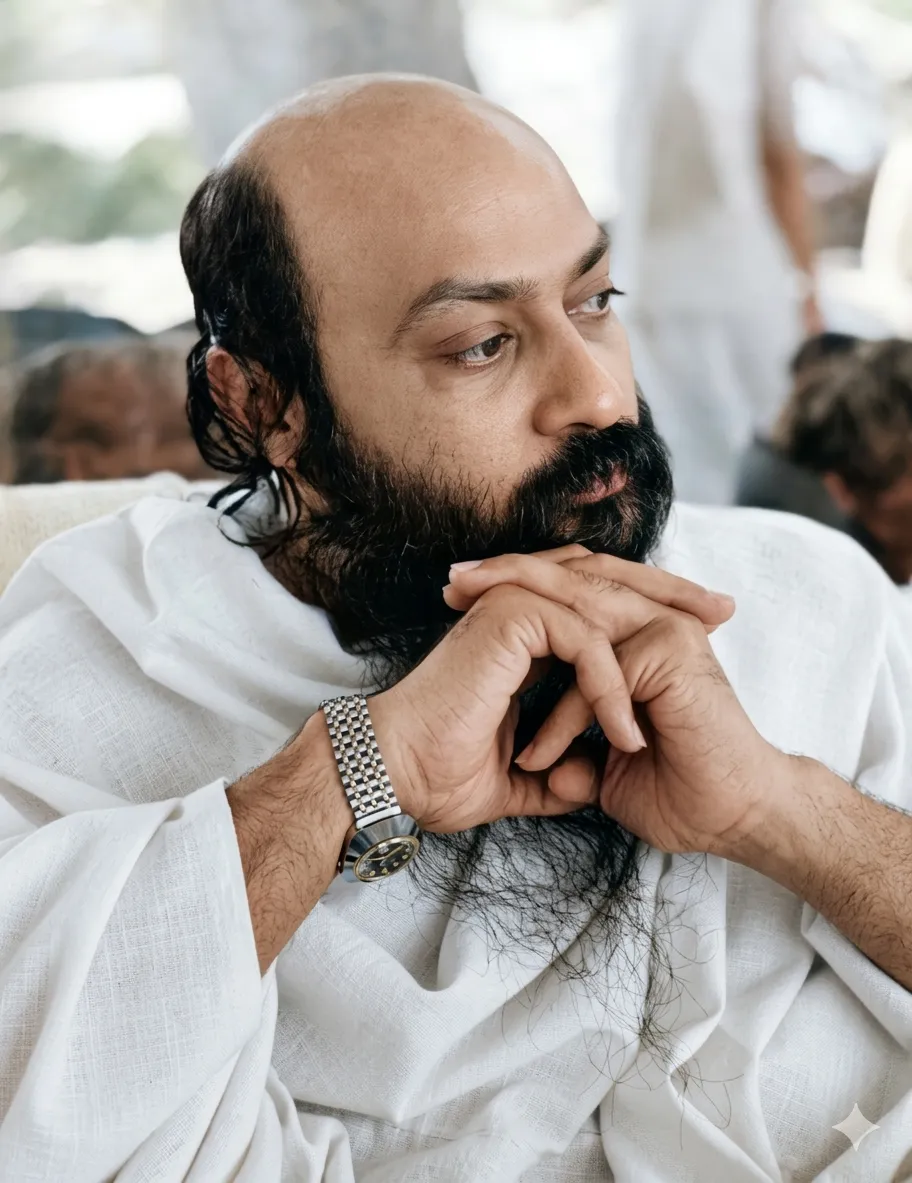
You relax with Osho because he doesn’t control you; the ashram is a worldly place with rules, so don’t confuse it with him.
From the Discourses
Passages where Osho speaks to this question — each links to the complete discourse.
Osho, while speaking on Lao Tzu you said that for those who cannot be trusted, policies, rules and police are made; and you also said that it is dignity to see the auspicious even in a bad man. Then the question arises: why is the security here in the ashram so strict?
Many things have to be understood; and it is right that they be understood. For me there is no bad person, no enemy. The arrangements in the ashram are not to protect against any enemy. It may appear so to you—that is your interpretation. The arrangements here are to be protected from friends. And no one has ever been able to protect anyone from enemies; how could you? Jesus was crucified; twelve guards, twelve disciples were keeping watch. What can you do with twelve disciples? The enemy came with a crowd of five hundred. All arrangements can be broken. Jesus was a fakir, but even with all the arrangements America has to protect Lincoln and Kennedy—they still could not be saved. To save one from an enemy is almost impossible. It has never been done. For Gandhi, every precaution was taken. What can you do? A single madman can finish…
ओशो, लाओत्से पर बोलते हुए आपने कहा कि जिस पर भरोसा न हो उसके लिए नीति, नियम और पुलिस की व्यवस्था की जाती है; और आपने यह भी कहा कि बुरे आदमी में भी शुभ देखना गरिमा है। तो प्रश्न यह उठता है कि यहां आश्रम में सुरक्षा की इतनी कड़ी व्यवस्था क्यों है?
मेरे लिए तो कोई बुरा नहीं है, कोई शत्रु नहीं है। आश्रम में जो व्यवस्था है वह किसी शत्रु से बचने की व्यवस्था भी नहीं है। तुम्हें ऐसा दिखाई पड़ता होगा, वह तुम्हारी व्याख्या है। आश्रम में जो व्यवस्था है, वह मित्रों से बचने की है। और शत्रुओं से कभी कोई किसी को बचा भी नहीं सका; कैसे बचा सकते हो? जीसस को सूली लग गई; बारह ही पहरेदार, बारह शिष्य पहरा दे रहे थे। तो अब क्या करोगे? बारह शिष्य क्या करोगे? दुश्मन पांच सौ की भीड़ लेकर आ गया था। सब व्यवस्था तोड़ी जा सकती है। फिर जीसस तो फकीर थे, लेकिन अमरीका के पास जितनी व्यवस्था है लिंकन को, केनेडी को बचाने की--वे भी नहीं बचा सकते। बचाना तो करीब-करीब असंभव है शत्रु से। कभी नहीं बचा सकते।
Osho, earlier I had the notion that you too would be an embodiment of Buddha, Nanak, Kabir, etc. But when I saw you with my own eyes, I was greatly shocked. And then, as soon as I stepped outside after seeing and hearing you, I felt duped on seeing, amid the crowd, a foreign young couple entwined in a captivating embrace of love. And I thought: can this too be called religion? Bhagwandas Arya has asked. The little tail attached to his name—“Arya”—the question has come from that very tail.
First thing: I am not anyone’s replica. A replica would be a copy, a carbon copy. No one is anyone’s replica; nor is anyone meant to be. Do you think Nanak was a replica of Buddha? Or that Buddha was a replica of Krishna? Or that Kabir was a replica of Mahavira? Then you have not understood at all. Had you gone to Kabir, you would have faced the same obstacle you’ve met here. You would have said, “Ah! We thought Kabir would be Mahavira’s image! But he is sitting wearing clothes! Not only wearing, he is weaving cloth! A weaver! And Mahavira stood naked. Forget weaving—he didn’t even wear clothes. He didn’t even touch cloth. How can Kabir be Mahavira’s replica?” And every day Kabir goes to the market to sell his woven cloth. Kabir has a wife! Kabir has a son! Kabir has a family. And Buddha left…
तीसरा प्रश्न: ओशो, पहले मेरी धारणा थी कि आप भी बुद्ध, नानक, कबीर आदि की प्रतिमूर्ति होंगे। लेकिन जब अपनी आंखों से आपको देखा तो मुझे बहुत धक्का लगा। और फिर आपको देख-सुनकर जैसे ही बाहर निकला कि भीड़ के बीच एक विदेशी युवा जोड़े को मनोहारी प्रेम-पाश में बंधे देखकर मैं ठगा-सा रह गया। और सोचा: क्या यह भी धर्म कहा जा सकता है? पूछा है भगवानदास आर्य ने। उनके पीछे जो पूंछ लगी है--आर्य--उसी में से प्रश्न निकला है।
… प्रतिमूर्ति कोई किसी की नहीं है; न होना है किसी को। क्या तुम सोचते हो कि नानक बुद्ध की प्रतिमूर्ति थे? या तुम सोचते हो कि बुद्ध कृष्ण की प्रतिमूर्ति थे? या तुम सोचते हो कि कबीर महावीर की प्रतिमूर्ति थे? तो तुम समझे ही नहीं। अगर तुम कबीर के पास गए होते, तो भी तुम्हें यही अड़चन हुई होती, जो यहां हो गयी। तुम कहते, अरे! हमने तो सोचा था कि कबीर महावीर की प्रतिमूर्ति होंगे! और ये तो कपड़ा पहने बैठे हैं! कपड़ा पहने ही नहीं बैठे, कपड़ा बुन रहे हैं! जुलाहा! और महावीर तो नग्न खड़े हो गए थे। बुनने की तो बात दूर, पहनते भी नहीं थे कपड़ा। छूते भी नहीं थे कपड़ा। ये कैसे महावीर की प्रतिमूर्ति हो सकते हैं? और रोज कबीर बाजार जाते हैं, बुना हुआ कपड़ा जो है, उसे बेचने। और कबीर की पत्नी भी है! और कबीर का बेटा भी है। और कबीर का परिवार भी है। और बुद्ध तो सब छोड़कर भाग गए थे।
Question: Second question: Osho, why am I afraid of sannyas? Harish! Fear of sannyas is natural. You are dyed in the colors of the world—well dyed. With birth itself you are initiated into the world. If you are forty or fifty now, that is forty or fifty years of the world’s hypnosis. We start hypnotizing little children in the language of the world. We tell them, “If you study and write, you’ll become a nawab. If you play and frolic, you’ll be spoiled.” To make them nawabs you’re busy ruining their heads. You don’t see the state of the nawabs—that all the nawabs have become kebabs—yet you keep trying to make the kids nawabs! “Study and become a nawab,” and, “If you play you’ll be ruined.” The poor child gives up play and begins to study and write. Study becomes ambition. “Come first! Bring the gold medal!
हरीश! संन्यास से भय स्वाभाविक है। संसार में तुम रंगे हो--खूब रंगे हो। जन्म के साथ ही संसार की दीक्षा मिलती है। अब अगर तुम्हारी उम्र चालीस साल है या पचास साल, तो पचास साल का सम्मोहन है संसार का। हम छोटे-छोटे बच्चों को सम्मोहित करने लगते हैं, संसार की भाषा में। हम छोटे-छोटे बच्चों को कहते हैं: पढ़ोगे-लिखोगे तो बनोगे नवाब। उनको नवाब बनाने के लिए उनका सिर खराब करने में लगे हो। नवाबों की हालत देखते नहीं कि सब नवाबों का कबाब हो गया है और तुम उनको अभी भी नवाब बना रहे हो! लेकिन, ‘पढ़ोगे-लिखोगे तो बनोगे नवाब।’ और ‘खेलोगे-कूदोगे तो होओगे खराब।’
Osho, I am ignorant. All around me there is nothing but darkness. What is the path for me?
Music! Darkness is only proof that light can be. Darkness is only evidence that light is possible. So do not look at darkness with a negative outlook. Do not look with the eyes of an atheist; look with the eyes of a theist. Then even in darkness you will sense light hidden within it. Darkness is the womb of light. Do not be alarmed by darkness, nor afraid, nor anxious—be blissful, for the morning must be coming! And the denser the darkness, the nearer the dawn. Deep is this darkness; by the veils of selfishness we have been plundered. A wall of dead matter stands encircling, people speak as if turning their faces away; in this sky there is no sun, no moon, no star. An infinite ocean of imagination this, roaring as it girds the body, fierce— nothing is understood; where is the dusky shore? Beloved, give me that…
आखिरी प्रश्न: ओशो, मैं अज्ञानी हूं। मेरे चारों ओर अंधकार ही अंधकार है। मेरे लिए क्या मार्ग है?
संगीत! अंधकार केवल एक बात का प्रमाण है कि आलोक हो सकता है। अंधकार केवल एक चीज का सबूत है कि आलोक संभव है। इसलिए अंधकार को नकारात्मक दृष्टि से मत देखो। नास्तिक की दृष्टि से मत देखो। आस्तिक की दृष्टि से देखो। तो फिर तुम्हें अंधकार में भी रोशनी छिपी मालूम पड़ेगी। अंधकार तो गर्भ है रोशनी का। अंधकार से घबड़ा न जाओ, न भयभीत, न चिंतित--आनंदमग्न, क्योंकि आती होगी सुबह! और जितना अंधकार घना होता है, भोर उतनी ही करीब होती है। गहन है यह अंध कारा; स्वार्थ के अवगुंठनों से हुआ है लुंठन हमारा। खड़ी है दीवार जड़ की घेर कर, बोलते हैं लोग ज्यों मुंह फेर कर, इस गगन में नहीं दिनकर, नहीं शशधर, नहीं तारा।
Osho, when we sow a seed, the sprout takes time to emerge. Yet you say everything can happen this very moment. And man is called the seed of the Divine.
I certainly say so. When you sow a seed, it takes time. The time is taken in the breaking of the seed, not in the sprouting. The sprout bursts forth in a single instant—an explosion. But the seed’s breaking takes time. Your breaking can take time—I don’t deny that. But the coming of the Divine takes no time; it happens in a single moment. It is like heating water. Heating can take time. To reach a hundred degrees takes time. But becoming steam takes no time—a leap! The water reaches a hundred degrees—the jump—and it has leapt, become steam. It is not that steam takes time to form—half water, half steam; one corner steaming, another not. No, when steam happens, it happens in a jump. Yes, reaching the point of steam takes time. But until it becomes steam, it is still water—whether at a hundred degrees, ninety-nine, or ninety-eight. The…
ओशो, बीज बोते हैं तो अंकुर आने में समय लगता है। और आप तो कहते हैं कि इसी क्षण हो सकती है सब बात। और आदमी को परमात्मा का बीज कहते हैं।
जरूर कहता हूं। बीज बोते हैं, समय लगता है। समय बीज के टूटने में लगता है, अंकुर के निकलने में नहीं। अंकुर तो एक क्षण में ही निकल आता है, विस्फोट होता है अंकुर का तो। लेकिन बीज के टूटने में वक्त लग जाता है। आपके टूटने में वक्त लग सकता है, वह मैं नहीं कहता। लेकिन परमात्मा के आने में वक्त नहीं लगता, वह एक क्षण में ही आ जाता है। जैसे हम पानी को गरम करते हैं। तो गरम करने में वक्त लग सकता है। सौ डिग्री तक गरम होगा तो वक्त लगेगा। लेकिन भाप बनने में वक्त नहीं लगता--छलांग! पानी सौ डिग्री गरम हुआ--दि जंप--कूद गया, भाप हो गया। ऐसा नहीं है कि भाप बनने में वक्त लगे--कि पानी थोड़ा अभी भाप बना आधा, अभी आधा भाप नहीं बना; अभी बूंद थोड़ी सी भाप बन गई एक कोने से, दूसरे कोने से भाप नहीं बनी--ऐसा नहीं, भाप तो बनेगी तो छलांग में। हां, लेकिन भाप तक पहुंचने में वक्त लगता है। लेकिन जब तक भाप नहीं बनी तब तक वह पानी ही है--चाहे सौ डिग्री गरम हो, चाहे निन्यानबे डिग्री गरम हो, चाहे अट्ठानबे डिग्री गरम हो।