
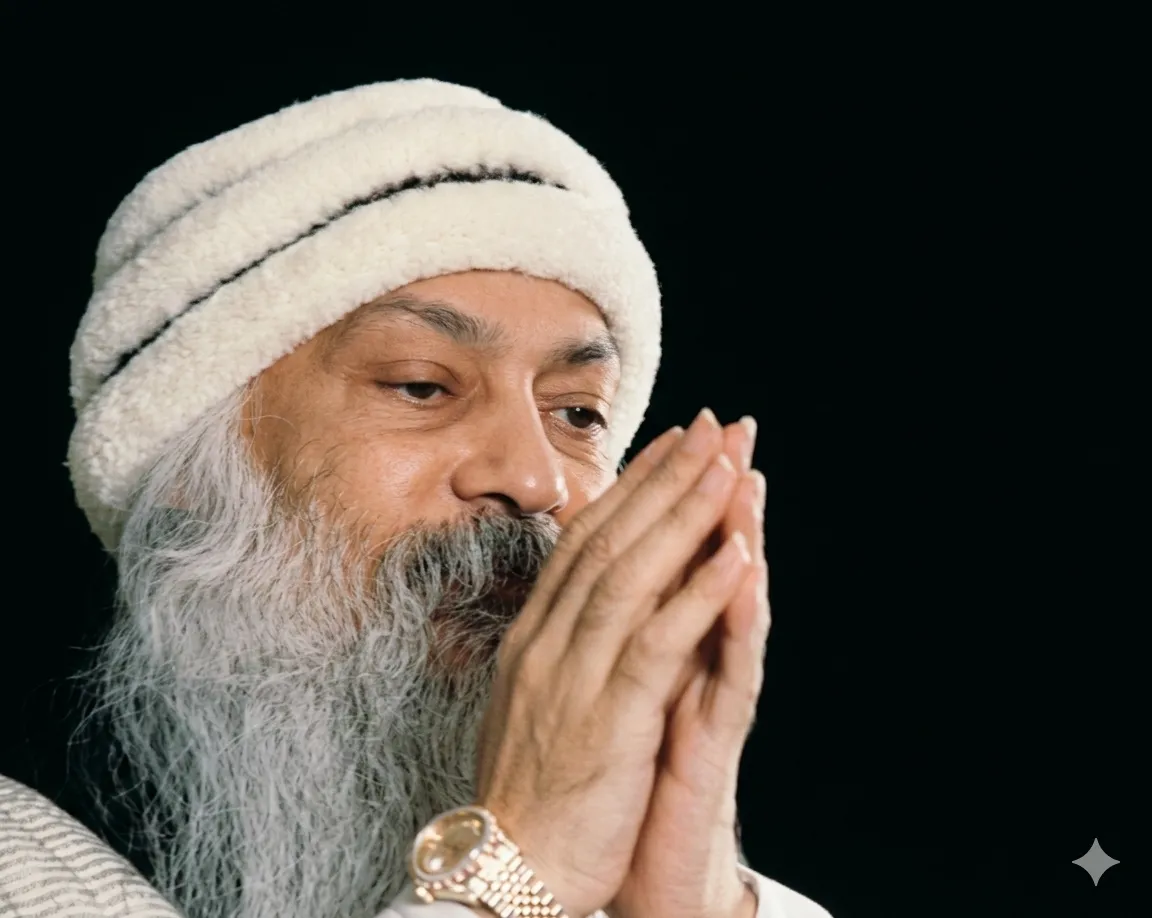
You’ve changed how you see life, so talking with people still following old programs feels like speaking different languages—be kind, don’t force, and accept some distance.
From the Discourses
Passages where Osho speaks to this question — each links to the complete discourse.
Beloved Osho, why it is so difficult for sannyasins to have deep relationships with non-sannyasins?
His father was working in a coal mine; his parents were really poor, and you cannot say anything against them. And Vincent van Gogh's first works are just coal sketches -- but they are tremendously beautiful. Now even those coal sketches have a value of millions of dollars. But his parents would not give him money for paints, for canvases, and finally they had to turn him out. One of his friends took pity on van Gogh and asked him to stay with him until he got some employment. And he fell in love with the sister of the friend -- just love at first sight. The first day in the house of the friend, he proposed to the girl. The girl simply laughed; they were more comfortably-off people -- better educated, middle class, higher than Vincent van Gogh and his family. She could not believe that this poor beggar…
Osho, you say one thing and people understand something else. Why?
Narottam! If it were otherwise, that would be the surprise. You speak; the listener carries his past, his memory, his vested interests. The words are yours, but the meanings will be his. You cannot claim ownership over the meanings. Say what you have to say, but he will hear what he wants to hear—and even from that hearing, he will extract only the meaning he wants to extract. So don’t be annoyed. Present your point; then let him understand whatever he understands. What will you do? What can you do? If you say something more, he will take that too to mean something else. There is no end to it. Often it happens that you want to say something—with goodwill, with love, with compassion—and when you see the other has understood it all wrong, it hurts deeply. It feels as if he is being dishonest knowingly, as if he is…
Beloved Osho, you said to us this week that we should not concern ourselves with others. But most of us from the west have friends and relatives with whom we would like to share what we've found. What should we tell them about sannyas? What should we tell them about you? How can we explain the unexplainable?
But sannyas cannot be categorized. It is not a category. It is such an altogether different quality of being, there exists no category for it. It cannot be analyzed, it cannot be broken into fragments. It is not a mechanism; you cannot break it, take the pieces apart and put them together again. No, it is an organic unity. If you analyze it, it is no longer there, and you can never put it back together again. It is impossible. Sannyas is a live force -- organic, just like a flower. Analyze the flower, take each petal away, break it, look inside it, be satisfied that you have inquired, then try to put it back together. By that time, the flower is gone, the petals are dead and they can never be put back again in the same way, because it was an organic unity, it was not a mechanism.…
Osho, even after arriving at the camp why does a divide still appear? Does the distance vanish the moment one takes sannyas? Is your blessing only for sannyasins? Is it not for all living beings?
Blessing is for everyone. But it is not that just because I give it you will receive it; you will receive it only if you take it. The river is flowing—flowing for all. Trees will drink, animals and birds will drink, humans will drink. But only the one who drinks will be quenched. If you stand stiff on the bank, the river will not jump into your cupped hands. You will have to bend, you will have to form your palms into a cup—only then will you be able to drink. If you do not drink, if the water is not drunk, then do not complain about the river. The river was flowing. But man is very upside down. If he does not receive blessing, he thinks the blessing must not have been given. But do you have the capacity to receive? Will you accept blessing? Blessing is not a…
[A sannyasin, recently returned from the West, said he was experiencing difficulty in maintaining a relationship as well as meditating and moving deeper into his 'inner world'.] When you move on an inner pilgrimage, the energies turn inwards, the same energies that were moving outwards, and suddenly you find yourself alone like an island. The difficulty arises because you are not really interested in being yourself, and all relationships look like a dependence, a bondage. But this is a passing phase; don't make it a permanent attitude. Sooner or later when you are settled inside again, you will be overflowing with energy and will want to move into a relationship again. So for the first time that mind becomes meditative, love appears to be like a bondage. And in a way it is true because a mind that is not meditative cannot really be in love.