
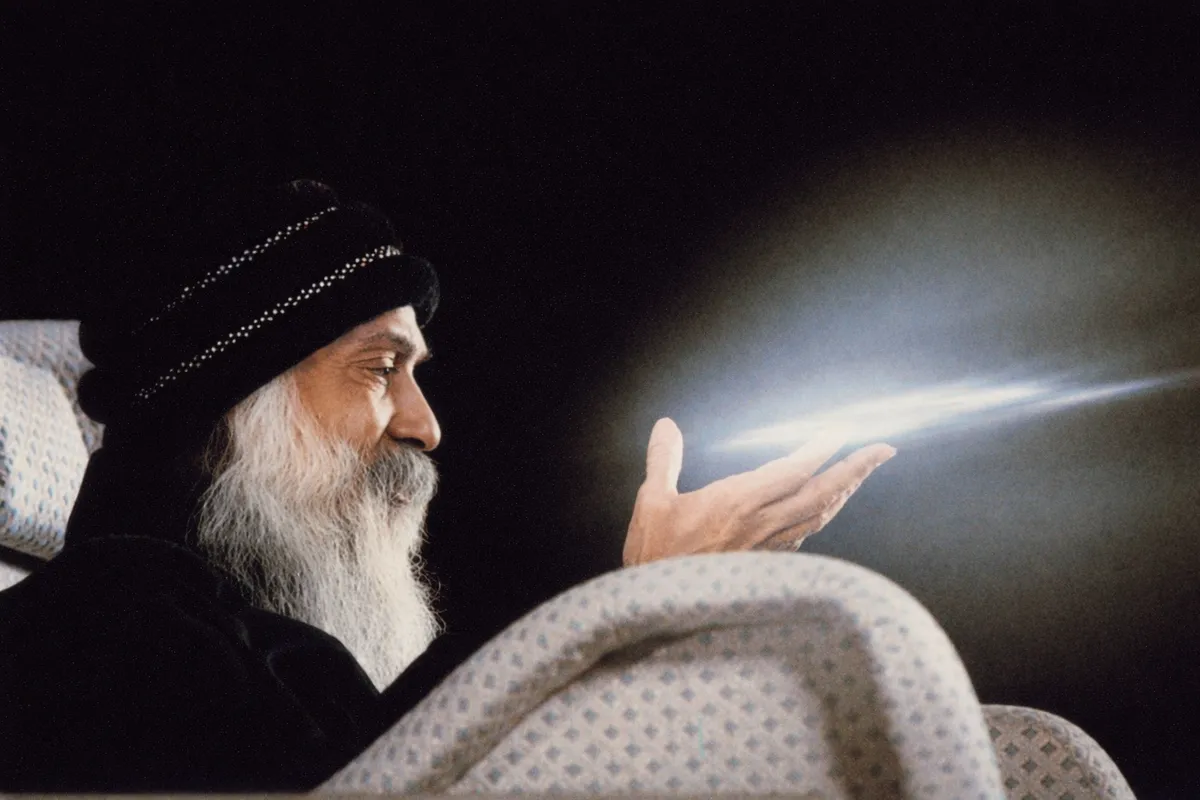
Zen masters did strange things to stop your busy thoughts so you feel quiet inside, and Osho updates those tricks for today’s minds.
From the Discourses
Passages where Osho speaks to this question — each links to the complete discourse.
Osho, Master Shuzan raised his short staff and said: If you call it a short staff, you oppose its truth. And if you do not call it a short staff, you deny the fact. Now tell me, what would you like to call it? Osho, kindly explain the intent embedded in this Zen master's riddle.
As human opinion changes, beauty and ugliness change. What is beautiful? What is ugly? There is no definitive yardstick; it depends on your intellect. The intellect lives by comparison, so the very moment you see something you start comparing. This Zen master says to his disciple: do not compare—and without comparison, tell me what this is. He says: if you call it a short staff, you oppose truth—because in truth there is no comparison; comparison is of the mind. As long as mind remains, you will not know truth. Truth is incomparable. It is neither beautiful nor ugly; neither auspicious nor inauspicious; neither good nor bad. There is no division—there is only “is-ness.” Will you call this entire existence beautiful or ugly? Good or bad? People have called it one thing or another: the theist says “absolutely good—God created it.” The atheist says, “How can it be good with so…
ओशो, सदगुरु शुजान ने अपना छोटा डंडा उठाया और कहा: ‘अगर तुम इसे छोटा डंडा कहते हो, तो तुम इसके सत्य का विरोध करते हो। और अगर तुम इसे छोटा डंडा नहीं कहते हो, तो तुम इसके तथ्य को अस्वीकारते हो। अब कहो, तुम इसे क्या कहना पसंद करोगे?’ ओशो, झेनगुरु की इस पहेली में निहित अभिप्राय समझाने की अनुकंपा करें।
आदमी का विचार बदलता है, सौंदर्य बदल जाता है, कुरूपतायें बदल जाती हैं। क्या सुंदर है? क्या कुरूप है? निर्णायक कोई मापदंड नहीं है। तुम्हारी बुद्धि पर निर्भर है। बुद्धि तुलना से जीती है। इसलिए तुम देखते भी नहीं हो किसी चीज को कि तत्क्षण तुलना करते हो। यह झेन गुरु अपने शिष्य से कह रहा है कि तुलना मत करना, और बिना तुलना किए कहना कि यह क्या है! कह रहा है अगर तुमने इसे छोटा डंडा कहा, तो सत्य का विरोध हो गया। क्योंकि सत्य में कोई तुलना नहीं है; तुलना मन में है। इसलिए मन के रहते तुम सत्य को न जान पाओगे। सत्य अतुल्य है, इनकम्पेरेबल है। वह न सुंदर है न कुरूप है; न शुभ न अशुभ; न अच्छा न बुरा; वहां कोई भेद नहीं है। वह सिर्फ ‘है’। होना मात्र उसका लक्षण है। इस पूरे अस्तित्व को तुम सुंदर कहोगे या कुरूप? अच्छा कहोगे या बुरा? लोगों ने कुछ न कुछ कहा है। आस्तिक कहता है बिलकुल अच्छा, क्योंकि भगवान ने बनाया; नास्तिक कहता है, इतने युद्ध, इतनी बीमारी, बच्चे सड़ते मरते हैं, कैंसर है, टी. बी. है, कैसे अच्छा? …
Question: Maneesha is asking again: BELOVED OSHO, YOU SPEAK SO HIGHLY OF THE ZEN MASTERS, THEIR INGENIOUS AND YET SIMPLE METHODS, AND THE INNOCENCE OF THE KIND OF PEOPLE WHO COULD BECOME REALIZED THROUGH THEM. YET WHILE I DO SOMETIMES SEE YOU AS A ZEN MASTER, I WOULD NOT SAY YOUR APPROACH IS CHARACTERISTIC OF THEIRS. IS THAT BECAUSE THE KIND OF PEOPLE YOU HAVE ARE TOO CEREBRAL, ARE SO MUCH OUT OF CONTACT WITH INNOCENCE AND SPONTANEITY, OR IS IT THAT YOU HAVE A DIFFERENT UNDERSTANDING OF WHAT IS MOST EFFECTIVE... OR BOTH? Maneesha, (OSHO SPREADS OUT BOTH HIS ARMS) ... both. I am myself a category in itself. I will not stand in any queue, even with Gautam Buddha. I love my aloneness, my own spontaneity. That makes a difference.
A monk came to a master for help on working on one of the classic questions in zen dialectic: 'what is the meaning of bodhidharma's coming from the west?' the master suggested that before proceeding with the problem the monk should make him a low salaam. As he was dutifully prostrating himself the master gave him a good swift kick. The unexpected kick resolved the murk irresolution in which the monk had been foundering on for some time. When he felt the master's foot he attained immediate enlightenment. Subsequently he said to everyone he met, 'since I received that kick from matzu, I haven't
That is primal innocence, and that is our ultimate. Our ultimate being is before thought and after thought. Not that it disappears when thought is there, but it becomes clouded -- just like the sun surrounded by too many clouds, dark clouds. It appears as if the sun has disappeared. We never lose our ultimacy, we cannot. That's what ultimacy is -- it cannot be lost. It is our innermost nature. There is no way to lose it. But it can become clouded. The flame can become too clouded with smoke; can almost be thought of as lost. The sun can be so clouded that it appears as if it has become dark night. That's the situation. We are before thought, we are while thought is there, we will be there when thought has disappeared -- we are always there. But when thought is there it is very difficult to…
When thoughts stop, when suddenly one hits you, the whole world is in a whirl. Thoughts stop and you are shocked. Even breathing stops: "I was asking a relevant question and what kind of mad master is he? He hits me..." And before you have opened your mind, he hits you again. Once Ma Tzu hit a person sixty-six times.... Because he was hit, he was shocked and still started opening his mouth. Again another hit... until he stopped opening his mouth, until he understood that this opening of the mouth is creating the whole trouble. But Ma Tzu was a totally different master, very loving and very compassionate -- he had the right to hit. And as the man became silent, Ma Tzu closed his eyes, the man closed his eyes. Nothing was asked, nothing was said, and everything was understood.
Question: BELOVED OSHO, TWO AWAKENINGS IN THE OLD DAYS THE VENERABLE YEN YANG ASKED CHAO CHOU, "WHAT'S IT LIKE WHEN NOT BRINGING A SINGLE THING?" CHOU SAID, "PUT IT DOWN." YEN YANG SAID, "SINCE NOT A SINGLE THING IS BROUGHT, PUT WHAT DOWN?" CHOU SAID, "IF YOU CAN'T PUT IT DOWN, PICK IT UP." AT THESE WORDS, YEN YANG WAS GREATLY ENLIGHTENED. AGAIN: A MONK ASKED AN ANCIENT WORTHY, "WHAT'S IT LIKE WHEN THE STUDENT CAN'T COPE?" THE ANCIENT WORTHY SAID, "I TOO AM LIKE THIS." THE MONK SAID, "TEACHER, WHY CAN'T YOU COPE EITHER?" THE ANCIENT WORTHY SAID, "IF I COULD COPE, I COULD TAKE AWAY THIS INABILITY TO COPE OF YOURS." AT THESE WORDS, THE MONK WAS GREATLY ENLIGHTENED. THE ENLIGHTENMENT OF THESE TWO MONKS IS PRECISELY WHERE YOU ARE LOST; WHERE YOU HAVE DOUBTS IS EXACTLY WHERE THESE TWO MONKS ASKED THEIR QUESTIONS.