
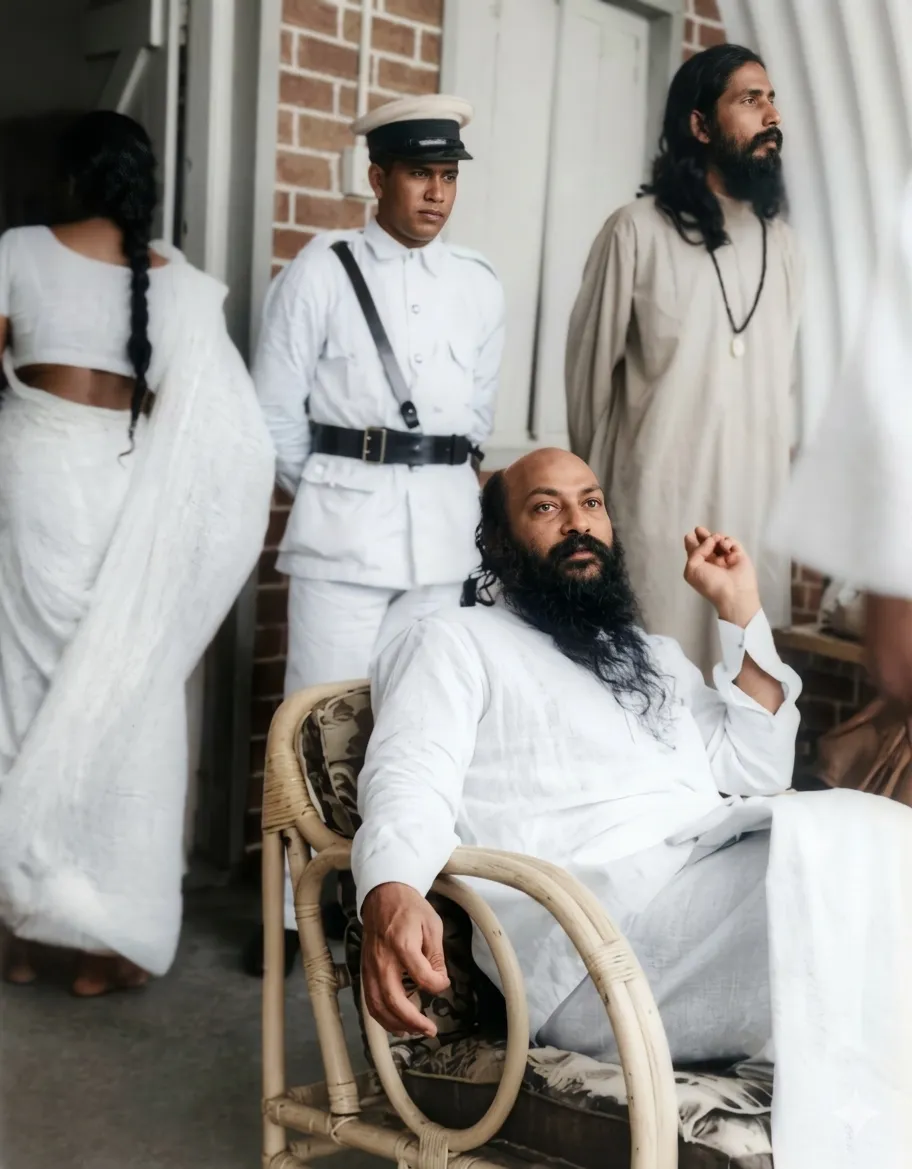
According to Osho, inner ‘hearing’—bells, mantras, any sound—is only a technique that concentrates the mind and can hypnotize, giving peace by stopping thought. But meditation itself begins only when all sound—outer or inner—fades and the mind dissolves into no-mind: utter silence. Use sound as a bridge, then drop it; otherwise attachment to hearing becomes the obstacle that prevents the flowering of true meditative silence.
Sounds can calm you, but real meditation starts when even those sounds vanish and you rest in quiet, alert stillness.
From the Discourses
Passages where Osho speaks to this question — each links to the complete discourse.
Beloved Osho, when I close my eyes I often hear the sound of a tiny bell ringing within. Can you please tell us about hearing, meditation, sound and silence?
It is possible that hearing inside you a tiny bell when you enter into meditation may be related to your past life, particularly as a Tibetan, because for centuries in Tibet this has been the conditioning of the mind -- that when you enter meditation, you hear tiny bells. And if a conditioning has been continued too long, it is carried into new lives. But hearing the tiny bell is not meditation; it is just a conditioning. When you start entering into total silence where no bells are ringing, then meditation begins. The tiny bell rings in the mind, and meditation is a state of no-mind. Tiny or not tiny, no bell can ring there; it is utter silence. But many religions, particularly in the East... and the most prominent is the Tibetan religion which has used tiny bells. It is a significant technique but dangerous, as all techniques are:…
Some friends come to me and say, Osho, we keep hearing all sorts of sounds. When will this stop?
It is never going to stop. You are not to become unconscious so that you don’t hear sounds. No—meditation will not come by the stopping of sounds. Sounds are there, and within you no reaction, no response arises—meditation is concerned only with this much. A man is shouting next door; nothing happens to you: you hear, and nothing happens. A sister came to me today and said that in the last fifteen minutes of the afternoon silence her heartbeat increased a lot. So many sounds became audible that she got frightened; she felt like getting up and running away. Not hearing sounds would be a swoon. Hearing sounds and reacting by running away—that is the ordinary state. Hearing sounds and simply listening, remaining only the witness, the watcher—that is meditation. You are not to become stupefied. Whatever is happening, you will know it all—but it will become dreamlike. As long…
The ultimate sound is heard only When the mind is completely silent. It is the sound of silence. It is silence dancing, it is silence vibrating. To hear it is the goal of all meditation. ONce you have heard it You are transformed into a totally new being Transmuted in a new dimension. You are no more a mind, you become a no-mind. And that is the most beautiful experience To be a no-mind, to be utterly silent. But that silence is not dead It is so musical that all music is nothing but noise. Make every effort to be silent So that you can hear the ultimate sound. It is this sound That the Bible talks about In the beginning was the word, The Word was with god and the word was god.
[NOTE: This is an unedited tape transcript of an unpublished darshan diary, which has been scanned and cleaned up. It is for reference purposes only.] Meditation is a full stop on the mind. Ordinarily the mind goes on and on, you don't know how to put it off. There is a way to put it off. That's what meditation is all about. Once you have learned, it is a very simple process, just like putting the light on and off. Then the same mind which is ordinarily a torture becomes immensely useful. Then you can use it but you are the master. Right now the master is absolutely in the hands of the servant. The mind goes on manipulating you; you have no power over it. You cannot even say to it 'Shut up!' It does not listen at all. One feels absolutely impotent with the mind.
Nischalatwam pradakshinam "stillness is pradakshina, the movement around that for worship."
Accept your anger. It is there: accept it and be aware of it. These are two things: acceptance and awareness. And you can be aware only if you accept totally. If you do not accept me, you cannot look at my face. If you do not accept me, you will try to avoid me in subtle ways. Even if I am present in the room, you will look in some other direction, you will think of something else. If you do not accept me, if you reject me, your whole mind will try to avoid me. If you reject anger, you cannot be aware. You cannot encounter it face to face. And when anger is encountered face to face, it dissolves. When sex is encountered face to face, the energy is released into a different dimension. Encounter your mind and accept it. The negative teachings, the condemnatory teachings, teachings which…