
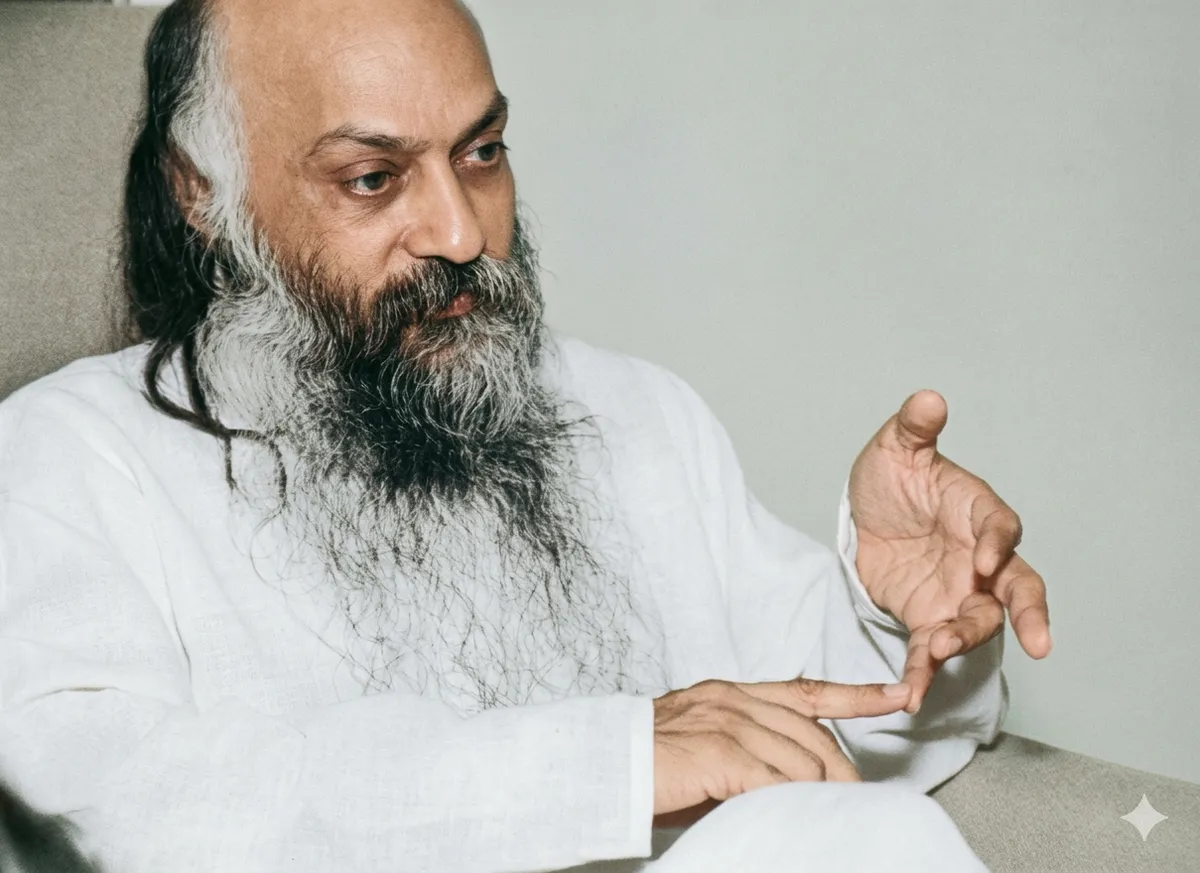
Like a clear mirror, you become so peacefully aware that you stop chasing things to know and simply rest in quiet being.
From the Discourses
Passages where Osho speaks to this question — each links to the complete discourse.
What is its manifestation? How will people on the outside come to know?
Yes—about its manifestation, we will speak later. It is simply a matter of knowing—like a mirror. What does a mirror mean? It has the capacity to mirror. It is not necessary that, at this very moment, some image is forming in it, some person’s face is appearing; it may be lying empty. But whoever’s face comes before it can be known. A mirror holds the capacity to know. That is its potentiality. It is not necessary that someone be standing before it right now for it to know. Yes—if anyone stands before it, it will know. But if one person stands there, it becomes difficult to know the second; if two stand there, it becomes difficult to know the third. And if ten men surround it, and behind them there are millions in a crowd, it will be difficult to know them. Yet whoever stands directly before it—that one it…
प्रश्न: उसकी प्रकटता क्या है? बाहर के लोगों को कैसे मालूम पड़ेगा?
हां, उसकी अपन पीछे बात करेंगे। वह सिर्फ जानने की...जैसे कि आईना है। आईने का क्या मतलब है? उसके पास एक क्षमता है कि वह दर्पण हो सकता है। जरूरी नहीं है कि इस वक्त उसमें कोई छाया बन रही हो, किसी आदमी का चेहरा बन रहा हो, वह खाली पड़ा हो। लेकिन कोई भी चेहरा सामने आए तो जाना जा सकता है। दर्पण जाने जा सकने की क्षमता रखता है। वह उसकी पोटेंशियलिटी है। जरूरी नहीं है कि इस वक्त कोई उसके सामने खड़ा हो, वह जाने। हां, कोई भी खड़ा हो जाए तो वह जानेगा। लेकिन एक खड़ा हो जाए तो दूसरे को जानना मुश्किल हो जाएगा और दो खड़े हो जाएं तो तीसरे को जानना मुश्किल हो जाएगा। और दस आदमी उसको घेर लें तो पीछे करोड़ों की भीड़ हो तो उसको जानना मुश्किल हो जाएगा। लेकिन इनमें से कोई भी आदमी उसके सामने खड़ा हो तो वह जान सकेगा।
And someone has asked: Osho, who is it that thinks when one is witnessing?
As it is now, whenever we know, three things are present: the one who knows—the knower; that which is known—the known; and the relationship between the two—knowledge. Knowledge is bound and burdened by the knower and the known. Keval-gyan means the known dissolves—the object disappears. And when the known dissolves, where will the knower be? He was bound to the known. When the known dissolves, the knower dissolves. What remains then? Only knowledge remains. In that moment of pure knowing there is the sense of liberation and of freedom. So keval-gyan means to experience pure knowledge. What I have called samadhi is the experience of pure knowing. These are different names in different traditions: what Patanjali called samadhi, the Jains called keval-gyan, and Buddha called prajna. Keval-gyan does not mean telling what is going on in your head. That is very easy—a simple thing. That is ordinary telepathy, thought-reading; it…
और पूछा है, ओशो, साक्षी होकर कौन विचार करता है?
अभी जब भी हम कुछ जानते हैं, तो जानने में तीन चीजें होती हैं--जानने वाला होता है, वह ज्ञाता होता है; जिसको जानते हैं, वह होता है, वह ज्ञेय होता है; और इन दोनों के बीच जो संबंध होता है, वह ज्ञान होता है। तो ज्ञान जो है, ज्ञाता और ज्ञेय से दबा रहता है, उनसे बंधा रहता है। केवल-ज्ञान का अर्थ है कि ज्ञेय विलीन हो जाए, आब्जेक्ट विलीन हो जाए। और अगर ज्ञेय विलीन हो जाएगा, तो फिर ज्ञाता कहां रहेगा! वह तो ज्ञेय से बंधा हुआ था। जब ज्ञेय विलीन हो जाएगा, तो ज्ञाता विलीन हो जाएगा। तब क्या शेष रह जाएगा? तब मात्र ज्ञान शेष रह जाएगा। उस ज्ञान की घड़ी में मुक्ति का बोध होता है और स्वतंत्रता का बोध होता है। तो केवल-ज्ञान का अर्थ है, शुद्ध ज्ञान को अनुभव कर लेना। जिसको मैंने समाधि कहा है, वह शुद्ध ज्ञान का अनुभव है। यह अलग-अलग संप्रदायों के अलग-अगल सत्य हैं। जिसे पतंजलि ने समाधि कहा है, उसे जैनों ने केवल-ज्ञान कहा है, उसे बुद्ध ने प्रज्ञा कहा है।
Osho, you said... then you will find that the devotee is God. The question arises: if one devotee prefers to be God and another wants to remain only a devotee, then which of the two is superior?
The one who wants to be God will not be able to be. And the one who wants to remain a devotee will become God. The question of superior or inferior does not arise, because only one of the two will happen. The one who does not want to be will be. The one who wants to be will be deprived. That very wanting is of the ego. But the matter is a little delicate. Sometimes humility too belongs to the ego. Beware that your humility may not be of the ego. Perhaps you are saying, “No, I don’t want to be,” because you know that those who refuse are the ones who attain. Then you are clever. Then your humility is adulterous. Your humility is not pure, not sacred, not virginal—it is like a prostitute. The one who wants to be God, whose ego says, “I must become God,”…
दूसरा प्रश्न: ओशो, आपने कहा... तब पाओगे कि भक्त ही भगवान है। प्रश्न उठता है कि एक भक्त भगवान होना पसंद करे और दूसरा सिर्फ भक्त रहना चाहे, तो दोनों में श्रेष्ठ कौन है?
जो भगवान होना चाहे वह तो हो न पाएगा। और जो भक्त भक्त ही रहना चाहे वह भगवान हो जाएगा। श्रेष्ठ-अश्रेष्ठ का सवाल नहीं उठता, क्योंकि एक ही हो पाएगा। जो नहीं होना चाहता वही हो पाएगा। जो होना चाहता है, वह तो वंचित रह जाएगा। वह तो चाह भी अहंकार की ही है। लेकिन मामला थोड़ा नाजुक है। कभी-कभी ऐसा होता है कि विनम्रता भी अहंकार की ही होती है। कहीं तुम्हारी विनम्र्रता भी अहंकार की ही न हो। कहीं तुम इसलिए ही न कर रहे होओ कि नहीं मैं नहीं होना चाहता, क्योंकि तुम जानते हो कि जो इनकार करते हैं वही हो पाते हैं। तो तुम चालाक हो। तो तुम्हारी विनम्रता व्यभिचारी है। तो तुम्हारी विनम्रता शुद्ध नहीं, पवित्र नहीं, कुंआरी नहीं, वेश्या जैसी है।
Osho, the one who sees all and dwells within everyone—why does he still not come to be known? How does that Seer and Witness of all come to be known? Please explain.
Only such a light, subtle sensing will be there—a faint intimation. But you will not be able to see it. You cannot hold it in your hand. It is inexorably the Seer and cannot become the seen. So what to do? Then what to do? Only one thing can be done: bid farewell to the seen. Whatever is seen, let it be dismissed. Let no scene remain upon the screen. Have you ever noticed? You go to the cinema to watch a film. It begins—the play of light and shadow starts upon a blank white screen—and you become absorbed. When you are completely absorbed in watching, when the story grips your very life, you lose awareness of yourself—you forget that you are the watcher. The seen becomes everything; the Seer becomes null. The Seer is forgotten; the scenes become all in all. If the scene is tragic, tears stream from…
पांचवां प्रश्न: ओशो, जो सब का देखनेवाला है और सबके अंदर में ही रहता है, फिर भी जानने में क्यों नहीं आता? वह सर्व का द्रष्टा और साक्षी जो है, वह कैसे जानने में आता है? कृपया समझायें।
उसकी तो सिर्फ ऐसी हल्की-हल्की प्रतीति होगी, आभास होगा। लेकिन तुम उसे देख न पाओगे। तुम उसे हाथ में पकड़ न पाओगे। वह अपरिहार्य-रूपेण द्रष्टा है और दृश्य नहीं हो सकता है। इसलिये क्या करें? फिर क्या करें? एक ही काम किया जा सकता है: दृश्य को विदा करो। जो-जो दृश्य है उसे विदा करते जाओ। दृश्य-पटल पर कोई दृश्य न रह जाये। कभी तुमने खयाल किया कि तुम सिनेमा गये फिल्म देखने, फिल्म चली, सफेद कोरे पर्दे पर धूप-छाया का खेल शुरू हुआ, तुम तल्लीन हो गये। जब तुम फिल्म को देखने में पूरे तल्लीन हो जाते हो, जब कथा तुम्हारे प्राणों को पकड़ लेती है, तब तुम्हें अपनी याद नहीं रह जाती...तब तुम भूल जाते हो कि मैं देखनेवाला हूं। तब दृश्य ही सब कुछ हो जाते हैं, द्रष्टा शून्य हो जाता है। द्रष्टा की विस्मृति हो जाती है, दृश्य सब कुछ हो जाते हैं। अगर दृष्य कोई दुखांत होता है, तुम्हारी आंखों से झर-झर आंसू टपकते हैं। अगर दृश्य कोई उत्तेजक होता है तो तुम कुर्सी को छोड़कर रीढ़ सीधी करके बैठ जाते हो। …
We are not the body and we are not the mind either. Mind is also part of the body. The visible part is called body, the invisible part is called mind. It is a psychosomatic mechanism and we are the witness of it. We are in it but we are not it. This is the greatest experience. Once it has happened your life goes through a radical change. Then you are never the same again. It is a breakthrough. The whole effort here is to bring this breakthrough closer and closer. Every support, every technique and device is provided for this breakthrough so that you can see yourself as a witness of it all, as pure consciousness. To know oneself as pure consciousness is to be free of all bondage. It is to be free of birth and death, it is to be free of time.