
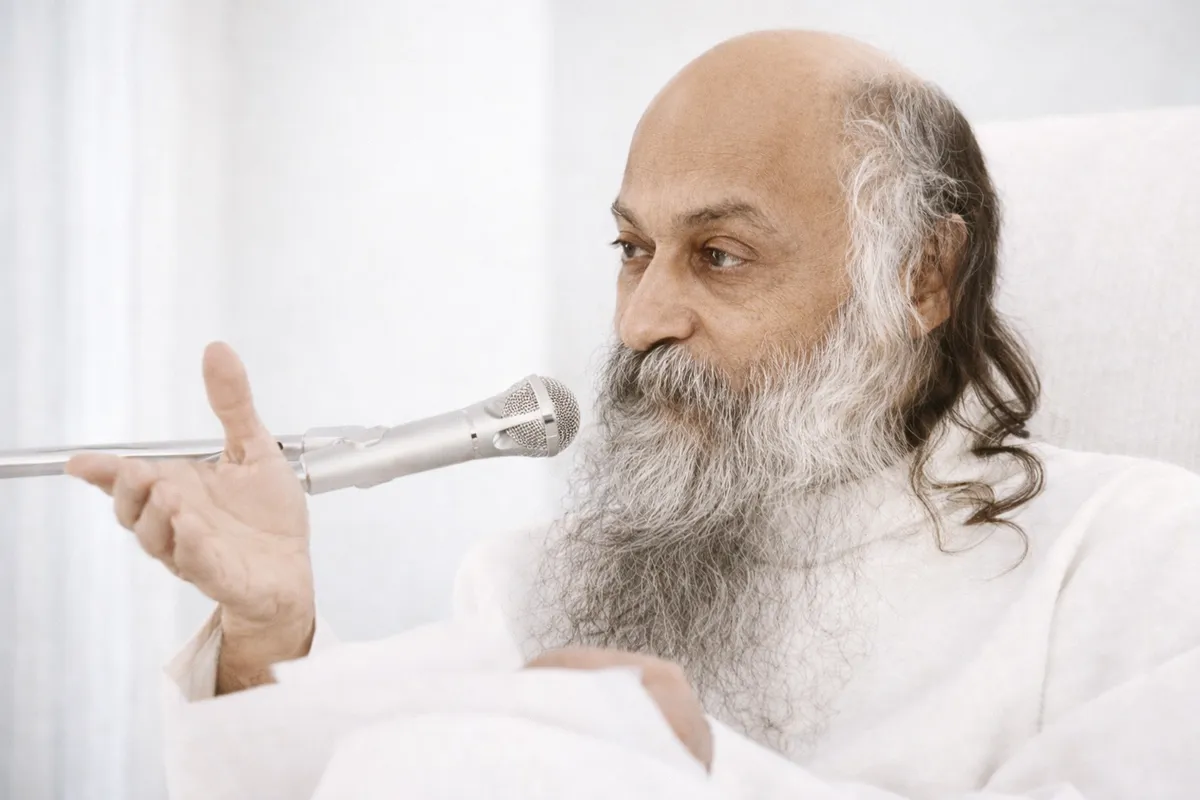
Krishna is called a ‘Brahmin’ because he realized the ultimate truth, not because of his birth; real identity comes from awareness, not labels.
From the Discourses
Passages where Osho speaks to this question — each links to the complete discourse.
Once you said that krishna was a brahmin, but really he was a kshatriya. Nobody is ready to accept him as a brahmin. Which is correct?
WHEN I SAY SOMETHING there is no need to ask anybody about it. Meditate over it. When I said that Krishna was a BRAHMIN I mean that he has known the ultimate truth. BRAHMA is the ultimate truth. By knowing it one becomes a BRAHMIN. When I say Krishna is a BRAHMIN I mean Mahavira is a BRAHMIN, Buddha is a BRAHMIN -- so is Moses, so is Jesus, so is Lao Tzu. I don't mean the caste BRAHMIN. By birth nobody is a BRAHMIN, nobody can be. I also know that he was a KSHATRIYA a KSHATRIYA by birth. That is meaningless. That is formal, accidental. I don't talk about accidents. By accident I was born in India but I am not an Indian. By accident you may have been born in Germany but you are not a German. By accident you may be black or white but you…
Questioner: did he come to wholeness straightaway?
To us it seems difficult to understand how one can come straightaway to wholeness. We think one must pass through a criss-crossing of roads before he arrives. Again, this is the same question that pilgrims asked of the Zen monk Lying near a cave. The monk says he does not have to do a thing, because he is already there where one should be. The pilgrims wonder how one could arrive without traveling, it seems impossible. They all had to walk long distances before they reached the place of pilgrimage, but the sage says to them, "If you cannot attain to truth right here, how can you attain to it by going to the mountain top? Truth is everywhere. It is here and now. This is not something that one needs any traveling to arrive at." But there are some types who cannot arrive without making a long journey. Even…
I have heard—one man died. He reached heaven and knocked at the gate. From within—“Who?” He said, “I come from the earth.” Then again, “Were you married?” He said, “Yes.” Instantly the sentry opened the gate—“Welcome, come in—for you have already seen hell.” The sentry barely shut the door when another knocked. “Who?” “I come from the earth.” “Were you married?” “Not once, twice.” The sentry said, “Then go to hell; there is no place for fools here.” To err once is understandable—pardonable; but twice!... And how many times have you erred? A life full of errors upon errors. And the greatest, the most fundamental error—from which all other leaves and branches sprout—is ego. Remember two words. I call one “ahancharya”—the practice of ego; the other “brahmacharya”—the practice of Brahman. Only two kinds of people exist in the world.
Osho, there seems to be another contradiction. You have said that Krishna is accomplished from birth and Mahavira is a seeker. Yet in the Kashmir camp you said about Mahavira that he had completed all his practice in previous lives. In this life he had nothing to practice, only to express. Then Mahavira too was accomplished from birth and was like Krishna.
No, I did not say that. I only said that whatever Mahavira became, he became through becoming—through practice. Whether he practiced in the last life or the one before that makes no difference. Whatever he is, he is through sadhana. Before his state of perfection there is a journey of practice. Krishna, in no life, ever practiced. Straightaway complete? We find that difficult. We find it difficult that one could be complete straightaway. We feel one can become perfect only by walking in zigzags. We feel… It is the same question as with that fakir. People passing by say to him, “So, you reached just lying here? We climbed all the way up to the shrine to reach—how could you reach lying here? That can’t be!” But the fakir says, “If you cannot reach while lying here, how will you reach by climbing up? Where there is to be reached…
ओशो, एक जगह और विरोधाभास लग गया। आपने कहा है कि कृष्ण जन्म से ही सिद्ध हैं और महावीर साधक हैं। जब कि कश्मीर के शिविर में आपने महावीर के बारे में कहा है कि उन्होंने पिछले जन्मों में ही अपनी सारी साधना पूरी कर ली थी। इस जन्म में उन्हें कुछ भी साधना नहीं करनी थी, केवल अभिव्यक्ति करनी थी। तो महावीर भी जन्म से सिद्ध हुए और कृष्ण जैसे हुए।
नहीं, ऐसा मैंने नहीं कहा। मैंने इतना ही कहा है कि महावीर जो भी हुए हैं, वह होकर हुए हैं। चाहे वह पिछले जन्म में साधना की हो, या उसके पिछले जन्म में साधना की हो, इससे कुछ लेना-देना नहीं है। वह जो भी हुए हैं, साधना से हुए हैं। उनकी सिद्धावस्था के पहले साधना की यात्रा है। कृष्ण किसी जन्म में कभी भी साधना नहीं किए। सीधे पूर्ण हो गए? हमें कठिनाई लगती है। हमें कठिनाई लगती है कि सीधे पूर्ण हो गए? हमें लगता है कि आड़े-तिरछे चल कर ही पूर्ण हो सकते हैं। हमें लगता है...वह वही फकीर का सवाल, वह फकीर यही तो कह रहा है। उससे आने-जाने वाले लोग कहें कि अच्छा, तुम यहीं पड़े-पड़े पहुंच गए? हम तीर्थ तक चढ़ कर पहुंचे, तुम यहीं पड़े पहुंच गए? ऐसा हो नहीं सकता! लेकिन वह फकीर यह कहता है कि अगर तुम यहीं पड़े-पड़े नहीं पहुंच सकते, तो ऊपर चढ़ कर भी कैसे पहुंच जाओगे? जहां पहुंचना है, वह कोई ऐसी चीज नहीं है जिसके लिए यात्रा जरूरी हो। लेकिन टाइप हैं कुछ, जो बिना यात्रा किए नहीं पहुंच सकते। …
Osho, here Krishna is telling one to subdue the senses through the mind; but you tell us to dissolve the mind itself! How does that make sense?
Therefore Krishna says: what must be done, do it wholly aware, as your own dharma. And he adds another point: let it be shastra-sanctioned. Your svadharma, sanctioned by shastra. Shastra does not mean “a book.” Its original, deeper meaning is: that which is sanctioned by those who have known—what the knowers, the realizers, have affirmed. Human consciousness has a long journey. We come for a hundred years or so and depart. The individual comes and goes; humanness continues. Humanity’s experience is of millions of years; there is a distilled essence of that experience. Those who have known have said certain things. Krishna says: let your svadharma be what is sanctioned by that—the science known by the knowers since beginningless time. Two things here need to be understood. In this country since ancient times society was divided into four varnas. Arjuna belongs to the kshatriya varna. From birth we divided society…
प्रश्न: ओशो, कृष्ण यहां मन से इंद्रियों को वश में करने को कह रहे हैं; लेकिन आप तो मन को ही विसर्जित करने को कहते हैं! यह कैसी बात है?
इसलिए कृष्ण कहते हैं, जो करना ही है, उसे परिपूर्ण रूप से जानते हुए, होशपूर्वक, स्वधर्म की तरह करना उचित है। और एक दूसरी बात कहते हैं। वे कहते हैं, जो स्वधर्म है, और साथ में एक बात कहते हैं, शास्त्र-सम्मत। जो शास्त्र-सम्मत स्वधर्म है। शास्त्र का अर्थ है--किताब नहीं--शास्त्र का मौलिक, गहरा अर्थ है, आज तक जिन लोगों ने जाना, उनके द्वारा सम्मत; जो जानते हैं, उनके द्वारा सम्मत; जो पहचानते हैं, उनके द्वारा सम्मत। एक लंबी यात्रा है मनुष्य की चेतना की, उसमें हम सौ-पचास वर्ष के लिए आते हैं और विदा हो जाते हैं। आदमी आता है, विदा हो जाता है, आदमीयत चलती चली जाती है। आदमी के अनुभव हैं करोड़ों वर्ष के, सार है अनुभव का। आदमी ने जाना है, उस जाने को निचोड़कर रखा है। कृष्ण कह रहे हैं कि वह जो अनादि से, सदा से जानने वाले लोगों ने जिस बात को कहा है, उससे सम्मत स्वधर्म। इसमें दो बातें समझ लेनी जरूरी हैं। एक तो इस देश में बहुत प्राचीन समय से हमने समाज को चार वर्णों में बांट रखा था। …