
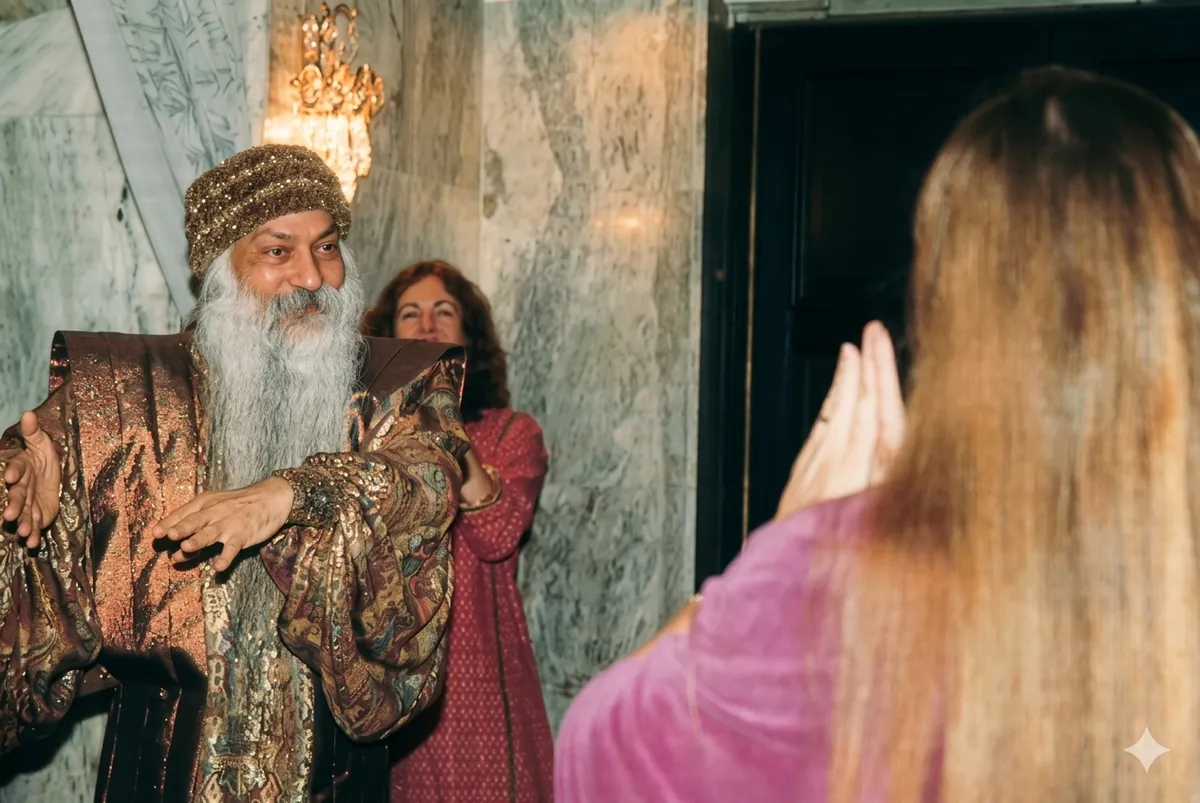
Osho's perspective on Kshatriya
When Osho Spoke About Kshatriya
Passages from the discourses where this theme comes alive.
Osho, why did it become necessary to be a Kshatriya in order to be a Tirthankara or an avatar?
There are reasons—reasons rooted in the very structure of karma. As I have said, there are three gunas: tamas, rajas, sattva; and three fundamental varnas: Shudra, Kshatriya, Brahmin. The Vaishya is a mixture of all—he is a compromise, a crossroads, a crowd. He is not truly a varna, but a confluence of all the varnas. These three have three distinct streams of life. The Shudra is utterly outward-turned—the extravert, as Jung called it. His gaze looks outward, not inward. Therefore service alone can be his religion. He can see the other. Either he plunders the other or he serves the other. If he plunders, it becomes adharma; if he serves, it becomes dharma. But his gaze is on the other. The Shudra is an extrovert; his eyes open only outward. The Brahmin is inward-turned; his eyes do not open outward—he is an introvert. Hence remembrance, remembrance of the divine, devotion,…
चौथा प्रश्न: ओशो, तीर्थंकर या अवतार होने के लिए क्षत्रिय होना क्यों जरूरी बन गया?
जैसा मैंने कहा कि तीन गुण हैं, तमस, रजस, सत्व; और तीन ही मौलिक वर्ण हैं, शूद्र, क्षत्रिय, ब्राह्मण। वैश्य सभी का मिश्रण है। वह एक समझौता है, चौराहा है, भीड़ है। वह वस्तुतः वर्ण नहीं है, बल्कि सभी वर्णों का संगम है। ये जो तीन वर्ण हैं, इन तीनों की तीन अलग जीवन-धाराएं हैं। शूद्र आत्यंतिक रूप से बहिर्मुखी है; एक्सट्रोवर्ट जिसको जुंग ने कहा है। उसकी दृष्टि बाहर देखती है, भीतर नहीं। इसीलिए तो सेवा ही उसके लिए धर्म हो सकता है। दूसरे को ही वह देख सकता है। या तो दूसरे को लूटे या दूसरे की सेवा करे। लूटे तो अधर्म हो जाता है; सेवा करे तो धर्म हो जाता है। लेकिन नजर उसकी दूसरे पर है। शूद्र है एक्सट्रोवर्ट, बहिर्मुखी, बाहर ही उसकी आंख खुलती है।
He came, of His own will He came. And understand this too. Wherever you are, you are by your own will. If you are in the world, it is by your own will. The Divine within you chose this. There is nothing to be troubled about. You are not here against your will. You are here by your own cause, your own longing. And this is great good fortune—that it is not against your will. Because the day you will, that very day the door of home is open—you can return. As long as you wish, you can go far. The very day you decide, that very day the return will begin. Brahmin culture is the tale of the Divine’s expansion. Shramana culture is the tale of the Divine’s return home. Surely, the one who had grown tired in aloneness will be tired in the crowd as well.
और इसे भी समझ लेना जरूरी है। तुम जहां हो, अपनी मर्जी से हो। संसार में हो तो अपनी मर्जी से हो। तुम्हारे भीतर के परमात्मा ने यही चुना। कुछ परेशान होने की बात नहीं। बेमर्जी से तुम नहीं हो। अपने ही कारण हो। अपनी ही आकांक्षा से हो। और यह बड़े सौभाग्य की बात है कि बेमर्जी से नहीं हो। क्योंकि जिस दिन चाहो, उसी दिन घर का द्वार खुला है, लौट आ सकते हो। जब तक चाहो, जा सकते हो दूर। जिस दिन निर्णय करोगे, उसी दिन लौटना शुरू हो जाएगा। ब्राह्मण-संस्कृति परमात्मा के फैलाव की कथा है। श्रमण-संस्कृति परमात्मा के घर लौटने की कथा है। तो निश्चित ही, जो अकेले में थक गया था, वह भीड़ में भी थक ही जाएगा।
Osho, if a Tirthankara wishes to take birth again, it would be in the physical body, right?
Now, this matter is quite another thing. This point, you see, is a completely different matter. Let me say a little about it. If a Tirthankara has to take birth—as a Tirthankara takes birth—there is a very interesting thing: before dying, he does not have to drop the fourth body. And there is a way not to drop it, a method. That way is the vasana—the urge, the seed-intention—of being a Tirthankara. When the fourth body is about to drop, one vasana must be saved so that the fourth does not drop. After the fourth has dropped you cannot be born again; the bridge through which you could return is broken. So, before the fourth body, the vasana of being a Tirthankara has to be preserved. That is why not all who are qualified to be Tirthankaras become Tirthankaras. Many who are qualified simply set out straight on the journey.…
प्रश्न: ओशो, तीर्थंकर यदि जन्म लेना चाहे तो स्थूल शरीर में लेंगे न?
अब यह जो मामला है, यह बहुत दूसरी बात हुई। यह जो बात है न, यह बिलकुल दूसरी बात है। थोड़ी सी बात कर लें। अगर तीर्थंकर को जन्म लेना हो, जैसा कि तीर्थंकर जन्म लेता है, तो एक बड़ी मजे की बात है और वह यह है कि मरने के पहले उसे चौथे शरीर को छोड़ना नहीं पड़ता। और न छोड़ने का एक उपाय है और उसकी विधि है। और वह है तीर्थंकर होने की वासना। तो चौथा शरीर जब छूट रहा हो तब एक वासना बचा लेनी पड़ती है, ताकि चौथा न छूटे। चौथे के छूटने के बाद तो जन्म ले नहीं सकते, फिर तो तुम्हारा सेतु टूट गया जिससे तुम आ सकते थे। तो चौथे शरीर के पहले तीर्थंकर होने की वासना को बचाना पड़ता है। इसलिए सभी लोग, तीर्थंकर होने के योग्य लोग तीर्थंकर नहीं होते। बहुत से तीर्थंकर होने योग्य लोग सीधे यात्रा पर निकल जाते हैं। थोड़े से लोग.और इसलिए उनकी संख्या भी तय कर रखी है। वह संख्या तय करने का कारण है कि उतने से काम चल जाता है, उतने से ज्यादा लोगों को वैसी वासना रखने की कोई जरूरत नहीं। …
Before asking about the fifth verse, three small questions remain from yesterday’s discussion. Yesterday you said that the Kshatriya is extroverted and the Brahmin is introverted, and accordingly their spiritual practices differ. Please tell us: in which mental category would you place the Vaishya and the Shudra?
The Kshatriya’s longing is a longing for power; the Brahmin’s longing is a longing for peace. The Kshatriya longs for power. And if someone fails to become a Kshatriya and remains a Vaishya, then the Vaishya’s personality is very fearful, frightened, timid—but he carries the Kshatriya’s seed, so the longing for power does not leave him. Yet he cannot attain power as a Kshatriya would. Therefore the Vaishya seeks power through wealth. He tries to manufacture power by means of money. He cannot fight, cannot be on the battlefield, cannot take a sword in his hand—but a strongbox can be held, and swords can be bought. Indirectly, then, the lust for wealth is a lust for power—by a backdoor, fearful route. The longing to be a Brahmin is present in the Shudra too; it must be, for the seed of introversion is within him. If he develops, he will set…
प्रश्न: ओशो, पांचवें श्लोक पर प्रश्न करने के पहले कल की चर्चा के संबंध में तीन छोटे प्रश्न रह गए हैं। कल आपने कहा कि क्षत्रिय बहिर्मुखी है और ब्राह्मण अंतर्मुखी है और तदनुरूप उनकी साधना में भेद है। कृपया बताएं कि वैश्य और शूद्र को आप किस चित्त-कोटि में रखेंगे?
क्षत्रिय की आकांक्षा शक्ति की आकांक्षा है, ब्राह्मण की आकांक्षा शांति की आकांक्षा है। क्षत्रिय की आकांक्षा शक्ति की है। और अगर क्षत्रिय न हो पाए कोई वैश्य रह जाए। तो बहुत भयभीत, डरा हुआ, कायर व्यक्तित्व होता है वैश्य का, लेकिन बीज उसके पास क्षत्रिय के हैं, इसलिए शक्ति की आकांक्षा भी नहीं छूटती। लेकिन क्षत्रिय होकर शक्ति को पा भी नहीं सकता। इसलिए वैश्य फिर धन के द्वारा शक्ति को खोजता है। वह धन के द्वारा शक्ति को निर्मित करने की कोशिश करता है। लड़ तो नहीं सकता, युद्ध के मैदान पर नहीं हो सकता, हाथ में तलवार नहीं ले सकता, लेकिन तिजोरी तो ली जा सकती है और तलवारें खरीदी जा सकती हैं। इसलिए इनडाइरेक्टली धन की आकांक्षा, शक्ति की आकांक्षा है--परोक्ष, पीछे के रास्ते से, भयभीत रास्ते से।
Profound Quotes on Kshatriya
Explore our structured collection of meaning-mapped quotes regarding Kshatriya.