
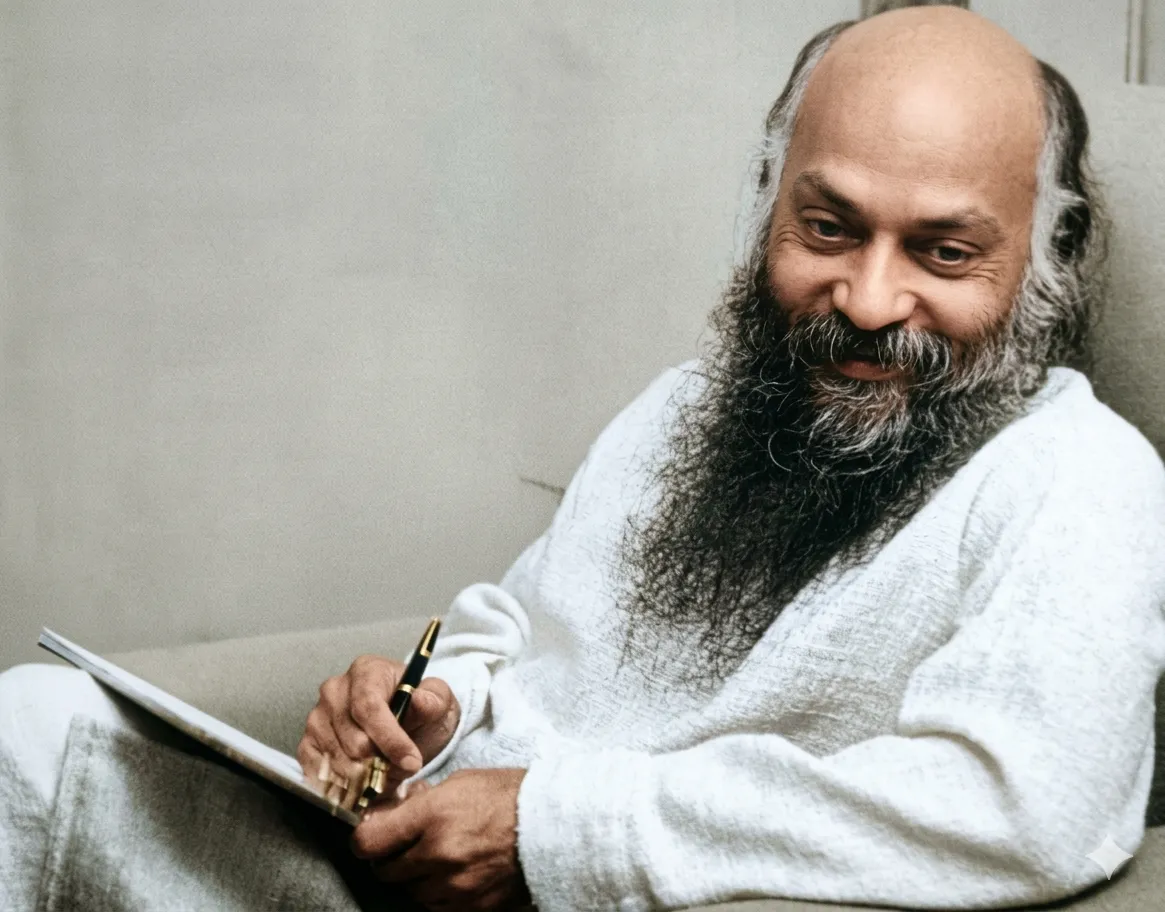
A real devotee doesn’t want rewards, cleverness, or paradise—only to melt so completely into God that nothing of “me” is left.
From the Discourses
Passages where Osho speaks to this question — each links to the complete discourse.
Osho, what does a devotee truly desire—merit, or knowledge, or heaven?
Its falling from the eye gives such pain, for in it the whole world of love was housed. Only the devotee knows the value of a tear—only the devotee knows it fully! Lovers get a little hint; the devotee knows through and through. No, the devotee has no use for merit, nor for knowledge, nor for heaven. The devotee asks: Give me weeping. Give me longing. Let me weep for You. Let me ache; give me the pain of separation. Give me thirst. Kindle my thirst. Make me white-hot. Why am I so enamored of the garden? Listen to me: Someone’s radiance has come and hidden itself in the rose. The whole creation has poured into the heart’s reflecting cup; What grain is there that does not hold what the sun contains? There was light in the world of faith and trust; Darkness is all I found in questions and…
तीसरा प्रश्न: ओशो, भक्त की चाह क्या है--पुण्य, या ज्ञान, या स्वर्ग?
उस आंसू का आंख से गिर जाना बड़ी पीड़ा दे जाता है, क्योंकि उसी आंसू में तो सारे प्रेम का संसार बसा था। भक्त जानता है आंसू का मूल्य--केवल भक्त ही जानता है! प्रेमियों को थोड़ी-थोड़ी खबर मिलती है, भक्त को पूरा-पूरा अनुभव होता है। नहीं, भक्त को कोई प्रयोजन नहीं है पुण्य से, न ज्ञान से, न स्वर्ग से। भक्त मांगता है: मुझे रुदन दो। मुझे विरह दो। मैं रोऊं तुम्हारे लिए। मैं तड़पूं, मुझे तड़पन दो। मुझे प्यास दो। जलाओ मेरी प्यास को। मुझे उत्तप्त करो। गुलशन परस्त क्यों हूं, मेरी बात तो सुनो, जलवा किसी का आके छुपा है गुलाब में। कुल कायनात आई दिले अक्सयाब में, जर्रे में क्या नहीं है जो है आफताब में। दुनियाए-एतकादो-यकीं में थी रौशनी, तारीकियां मिली हैं सवालो-जवाब में।
Osho, what is the fundamental anguish of human life?
There is only one anguish: that a human being cannot become what he was born to be. There is only one anguish: that the seed remains a seed and does not bloom like a flower; that it cannot scatter its fragrance to the infinite winds; cannot converse with the moon and stars; cannot offer its colors to the sky; cannot be expressed. If the poem within the poet cannot be revealed—anguish. If the painter cannot paint—anguish. If the dancer cannot dance—if chains lie on his feet—anguish. Anguish means only this: that what we are meant to be—our innate nature and destiny—does not come to fruition, and we are forced to be something else. Then anguish is born. Then melancholy gathers over life. And all those countless people you see burdened with sorrow, living in a kind of hell—the reason is only this: each has come carrying the seed of becoming…
चौथा प्रश्न: ओशो, मनुष्य जीवन का मूल संताप क्या है?
एक ही संताप है कि मनुष्य वह न हो पाए जो होने को पैदा हुआ है। एक ही संताप है, कि बीज बीज रह जाए, फूल की तरह खिल न पाए। बिखेर न सके अपनी सुवास को अनंत-अनंत हवाओं में; कर न सके गुफ्तगू चांद-तारों से; निवेदन न कर पाए अपने रंगों का आकाश के प्रति; अभिव्यक्त न हो पाए--एक ही संताप है। कवि के भीतर की कविता प्रकट न हो सके--तो संताप। चित्रकार चित्र न बना सके--तो संताप। नर्तक नाच न सके, पैरों में जंजीरें पड़ी हों--तो संताप। संताप का एक ही अर्थ होता है: जो हम होने को हैं, जो हमारी सहज प्रकृति और नियति है, वह न हो पाए और हमें अन्यथा होने को मजबूर होना पड़े, तो संताप पैदा होता है। तो जीवन में विषाद घिरता है।
Osho, what is the first experience of samadhi like?
You will know only when it happens. It cannot be said; at most a few hints can be given. It is as if, in the dark, a lamp is suddenly lit. Or as if a dying patient, right at the edge of death, suddenly finds a medicine that works; life’s wave, life’s thrill spreads again—so it is. As if a corpse becomes alive—such is the first experience of samadhi. It is the taste of nectar. The experience of the ultimate music. But it will be only when it happens; and only then will you understand. You will not understand by my saying it. It is as with love. How can anyone explain it? To someone who has never loved, never known love, no matter how many explanations you offer—he will hear it all and still ask, “I haven’t understood; please explain a little more.” It is like explaining light to…
तीसरा प्रश्न: ओशो, समाधि का पहला अनुभव कैसा होता है?
होगा तो ही जानोगे। कहा जा सके, ऐसा नहीं है। कुछ-कुछ इशारे किये जा सकते हैं। जैसे अंधेरे में अचानक दीया जल जाये, ऐसा होता है। या जैसे बीमार मरता हो और अचानक कोई दवा लग जाये...मरते-मरते कोई दवा लग जाये; और जीवन की लहर, जीवन की पुलक फिर फैल जाये--ऐसा होता है। जैसे कोई मुर्दा जिंदा हो जाये--ऐसा होता है समाधि का पहला अनुभव। अमृत का अनुभव है। परम संगीत का अनुभव है। पर होगा तो ही होगा। और होगा तो ही तुम समझ पाओगे; मेरे कहने से समझ में न आ सकेगा। प्रेम में जैसा होता है। अब कोई किसी को कैसे समझाये? …
Osho, to cross the ocean of becoming and dissolve into the Supreme Self, which should one rely on—insensate devotion, foolish devotion, or blind devotion?
So drop this worry—whether insensate devotion, foolish devotion, blind devotion, or deranged devotion. Drop it; devotion is enough. And in devotion all these labels will take care of themselves. Become a devotee once, and “blind” you will automatically be—meaning: the whole world will call you blind. You will not become blind; rather, you will gain eyes. You will begin to see what ordinary eyes cannot see. The invisible will become visible; the imperceptible will come within perception. That which no one has ever touched will be felt as touch. But the world will call you blind. The world will not be able to accept it—because the world is blind, and the blind call you blind. H. G. Wells has a story: somewhere in Mexico there is a valley where children go blind within three months of birth. The story is based on fact. The climate, the food—something there ruins the…
दूसरा प्रश्न: ओशो, भवसागर से पार उतरकर परम आत्मा में लीन होने के लिए जड़भक्ति, मूढ़भक्ति एवं अंधभक्ति में से किसका सहारा लिया जाये?
तो तुम यह फिक्र छोड़ो कि जड़भक्ति कि मूढ़भक्ति कि अंधभक्ति कि विक्षिप्त भक्ति, यह छोड़ो तुम फिक्र; भक्ति काफी है। और उस भक्ति में ये सब चीजें अपने आप आ जायेंगी। तुम एक दफा भक्त तो हो जाओ, अंधे अपने आप हो जाओगे। सारी दुनिया तुमको अंधा कहेगी, तुम नहीं अंधे हो जाओगे। तुम्हें तो आंखें मिल जायेंगी। तुम्हें तो वह दिखाई पड़ने लगेगा जो साधारण आंखों से दिखाई ही नहीं पड़ता। अदृश्य तुम्हारे लिए दृश्य बनने लगेगा। अगोचर गोचर हो जायेगा। जिसे कभी किसी ने नहीं छुआ उसका स्पर्श अनुभव होने लगेगा। लेकिन दुनिया तुम्हें अंधा कहेगी। दुनिया न मान सकेगी। क्योंकि दुनिया अंधी है। और दुनिया तुम्हें अंधा कहेगी।
Osho, “A devotee will remain a devotee; he can never become God,” as Islam, Christianity, and, among Hindus, Madhvacharya have maintained. What is the basis of this doctrinal system? Can it also be used as a method, like a technique?
He spoke rightly; this is the final state of a devotee. He arrived there through prayer. While he prayed in the church, all was fine—then he stopped praying, because he came to the moment Kabir describes: “Who is to worship whom, when the two have become one, duality has dissolved?” When he declared duality dissolved—no church, no worship; whom to worship?—the trouble began. “This man is dangerous—either corrupted or supremely enlightened.” The common people will take him as corrupt. The Pope sent word: stop this talk; it will not be allowed. And they expelled Eckhart from the Church—the most Christian was cast out as un-Christian! That is why I say: if Christ were to come again, he would not be allowed to be Christian; the Church would expel him—just as it did Eckhart. Eckhart’s words are as precious as Kabir’s. If anyone in Christianity stands beside Kabir, it is Eckhart.…
दूसरा प्रश्न: ओशो, भक्त भक्त ही बना रहेगा, भगवान कभी नहीं हो सकता। जैसा कि इस्लाम, ईसाइयत और हिंदुओं में भी माधवाचार्य मानते रहे हैं। इस मत-प्रणाली की आधारभूमि क्या है? क्या इसका भी एक विधि, टेक्नीक की तरह उपयोग किया जा सकता है?
… जब तक प्रार्थना करता था चर्च में, ठीक था; फिर उसने प्रार्थना बंद कर दी। क्योंकि वह उसी घड़ी में आ गया, जिसको कबीर कहते हैं कि कौन किसको पूजे? दोनों एक हो गए, दुई मिट गई। जब उसने घोषणा कर दी कि दुई मिट गई, कोई चर्च नहीं है, कोई पूजा नहीं है; किसकी पूजा करनी? तब खतरा शुरू हो गया। यह आदमी खतरनाक बातें कह रहा है। यह आदमी या तो भ्रष्ट हो गया या परम ज्ञान को उपलब्ध हो गया। …