
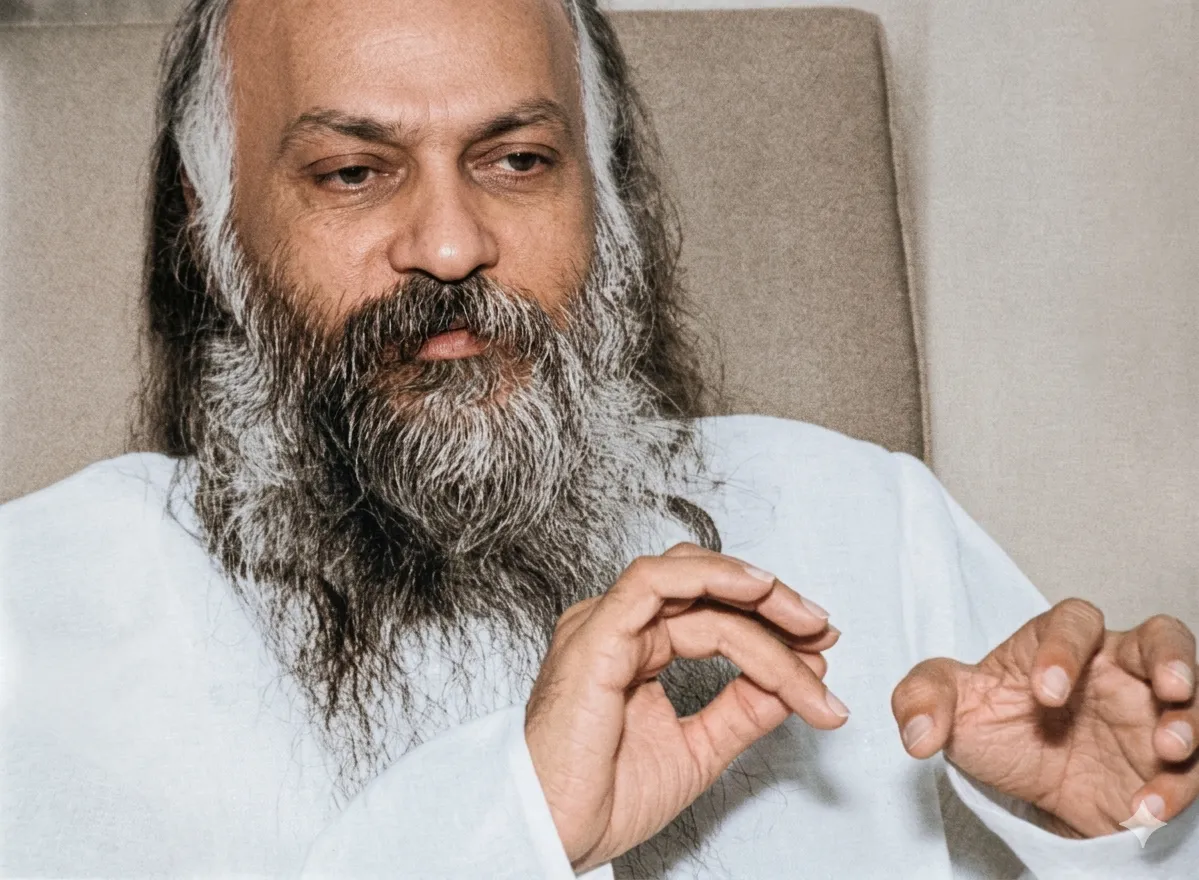
When you stop trying to control and give your whole heart to the Divine, a natural, deep joy shows you were never separate.
From the Discourses
Passages where Osho speaks to this question — each links to the complete discourse.
Osho, is there an inner harmony between “God,” “devotion,” and “bhog” (divine enjoyment)?
How could you even be without being joined to the Divine? Not for a moment, not for a single instant. If He breathes in you, breath goes on. If He shines as the sun, your body is warmed. If He moves as the winds, you receive life. If He comes as rain, your thirst is quenched. If He appears as food, you gain strength. Only when He comes in a thousand forms do you live at all. Severed from Him for even a moment, life ends. The very name of being joined to Him is “life.” Therefore the devotee says: there has been no breaking—talk of joining is mistaken. We are joined; now simply enjoy. The devotee says: you are joined and yet you do not enjoy—how insane! What are you waiting for? The celebration is already prepared. Everything is all-ready—how can you sit there sad? For whom are you…
पहला प्रश्न: ओशो, ‘भगवान’ ‘भक्ति’ और ‘भोग’ में क्या कुछ आंतरिक तारतम्य है?
तुम हो कैसे सकते हो बिना परमात्मा से जुड़े हुए? एक क्षण को भी न हो सकोगे, एक पल को भी न हो सकोगे। वही श्वास लेगा तो श्वास चलेगी। वही सूरज बन कर चमकेगा तो शरीर को उत्ताप मिलेगा। वही हवाओं में आएगा तो प्राण मिलेगा। वही वर्षा में आएगा तो प्यास बुझेगी। वही भोजन में आएगा तो शक्ति मिलेगी। वही हजार-हजार रूपों में आएगा तो ही तुम जी सकोगे। एक क्षण को भी उससे टूटे कि जीना समाप्त हुआ। उससे जुड़े होने का नाम ही तो जीवन है। इसलिए भक्त कहता है: टूटना तो हुआ ही नहीं, जोड़ने की बात ही गलत है। भक्त कहता है: जुड़े हैं, अब बस भोगना है। भक्त कहता है: तुम जुड़े हो और भोग नहीं रहे--कैसे पागल हो! किस बात की प्रतीक्षा कर रहे हो? उत्सव की पूरी तैयारी हो चुकी है। सब पूरा-पूरा तैयार है, तुम बैठे कैसे हो उदास? तुम राह किसकी देखते हो? जिसकी तुम राह देखते थे वह आ ही चुका है। वह तुम्हारे भीतर ही निनादित है। तुम किसे पुकार रहे हो? जिसने पुकारा है, वही तो तुम्हारी पुकार है। तुम किसे खोजने चले हो? …
In your effacement, your absorption, your utter immersion—God appears. Therefore in the devotee you will find both intoxication and awareness. In the knower you will find awareness, not intoxication. In the drunkard, the sinner—you will find intoxication, not awareness. In the yogi you will find awareness, in the sensualist you will find intoxication—in the devotee you will find both. The sensualist envies him and the yogi too. The yogi sees: such limitless possibility of awareness is not in him. The sensualist sees: even after all his indulgence, such ecstasy never came to him. All indulgence leaves a bitter aftertaste. Narada says rightly: “Knowledge, action, yoga—do not reach the heights of devotion.” In devotion, God is accepted in His totality; the world too is included in that acceptance. The devotee does not run from the world; he does not run from enjoyment either—he accepts even that as God’s grace.
ज्ञानी में तुम्हें होश मिलेगा, बेहोशी न मिलेगी। शराबी में, पापी में, तुम्हें बेहोशी मिलेगी, होश न मिलेगा। योगी में तुम्हें होश मिलेगा, भोगी में तुम्हें बेहोशी मिलेगी--भक्त में तुम्हें दोनों मिलेंगे। भोगी भी उससे ईर्ष्या करेगा और योगी भी उससे ईर्ष्या करेगा। क्योंकि योगी देखेगा, ऐसी अपरिसीम होश की संभावना उसके भीतर भी नहीं है। और भोगी देखेगा, इतना भोग कर भी ऐसी मस्ती उसके पास नहीं आई।
Osho, Sri Shankaracharya teaches the wisdom of the ultimate (tattva-jnana) and also sings Govinda’s bhajans. Is there an interrelationship between knowledge and bhajan, between knowledge and devotion?
Knowledge is negating; devotion is affirmative. Knowledge is like preparing the soil—removing weeds, adding manure; devotion is like sowing the seed. Knowledge by itself is incomplete. It clears the field, but it does not implant the seeds. It is necessary, not sufficient. For knowledge belongs to the intellect; devotion belongs to the heart. On the path to the divine, all the obstacles can be cut away by knowledge; but the steps are climbed by devotion. So knowledge is negating; it is very effective in breaking the futile, not in giving birth to the meaningful. Shankara speaks of knowledge so that the layers upon layers of ignorance within you are cut away. And once the ground of the mind is clear—no useless rubbish, no trash—then the seeds of devotion can be sown; then “bhaj Govindam” becomes possible. There is no opposition between the two; devotion is the culmination of knowledge, and…
पहला प्रश्न: ओशो, श्री शंकराचार्य तत्वज्ञान सिखाते हैं और साथ ही गोविन्द के भजन भी गाते हैं। क्या ज्ञान और भजन में, ज्ञान और भक्ति में कोई अंतर्संबंध है?
शंकर ज्ञान की बात कर रहे हैं, ताकि तुम्हारे भीतर अज्ञान की जो पर्त दर पर्त भीड़ लगी है, कट जाए। और जब एक बार मन की भूमि साफ हो गई, व्यर्थ का कचरा न रहा, कूड़ा-करकट न रहा, तो फिर भक्ति के बीज बोए जा सकते हैं; फिर भज गोविन्दम् की संभावना है। विरोध नहीं है दोनों में; भक्ति ज्ञान की ही पराकाष्ठा है और ज्ञान भक्ति की ही शुरुआत है। क्योंकि मनुष्य के भीतर हृदय भी है, बुद्धि भी है। दोनों को छूना होगा। दोनों का रूपांतरण चाहिए।
Osho, when a devotee meets God he experiences a thrill and bliss. Does God also, in that moment, experience the same thrill and bliss?
Therefore my teaching is of joy. I do not want to make you gloomy—closing your eyes, meditating, sitting sad and corpse-like with a long face—as if you were doing some great work, as if you were conferring a favor upon God, as if you were being very gracious by sitting for an hour with a rosary in hand like a stone. No. There are plenty of stones. There is no need for you to become another stone. Dance. People come to me and say, “What kind of meditations are these of yours? We always thought meditation meant closing the eyes, fixing oneself in lotus posture, and sitting quietly. Dance! Music! What kind of meditation is that?” I tell them: have you ever seen God sitting like that, gloomy? Look all around—birds are singing, the wind is dancing, and what to say of the thrill of the trees! A celebration is…
पहला प्रश्न: ओशो, भक्त जब भगवान को मिलता है, तब उसे पुलक और आनंद का अनुभव होता है। क्या भगवान को भी उस क्षण वैसी ही पुलक और आनंद का अनुभव होता है?
इसलिए मेरी शिक्षा आनंद की है। मैं तुम्हें उदास नहीं बनाना चाहता कि तुम आंखें बंद करके ध्यान लगाकर उदास होकर, मुरदा होकर बैठ जाना लंबे चेहरे करके; कि तुम कोई बहुत बड़ा काम कर रहे हो, कि तुम जैसे परमात्मा पर कोई अनुग्रह कर रहे हो, कि तुम्हारी बड़ी कृपा है कि घंटे भर तुम चेहरा बनाकर, हाथ में माला लेकर और पत्थर की तरह बैठे रहते हो। नहीं, पत्थर बहुत हैं। तुम्हारे और पत्थर होने की जरूरत नहीं है। तुम नाचो। मेरे पास लोग आते हैं, वे कहते हैं, ये आपके ध्यान कैसे हैं? क्योंकि हम तो यही सोचते थे कि आंख बंद करके पद्मासन जमाकर और शांत होकर बैठ जाना है। नाचना! संगीत! यह ध्यान कैसा? मैं उनसे कहता हूं कि तुमने कभी परमात्मा को ऐसा बैठा देखा है उदास? चारों तरफ देखो, पक्षी गीत गा रहे हैं, हवा नाच रही है, वृक्षों की पुलक का क्या कहना! समारंभ चल रहा है, उत्सव चल रहा है। तुम इसके भागीदार होना चाहते हो? नाचो! नाचो कि मोर फीके पड़ जाएं। गाओ कि पक्षी चुप होकर सुनने लगें। पुलकित हो उठो कि हवाएं झेंप जाएं। …
Osho, with reference to “Raso Vai Sah,” can taste too be made a means to the experience of the Divine?
Brahman means “the expanding one”—that which keeps spreading, which is ever extending. That which does not stand still anywhere, which never makes any boundary into a boundary, which always flows beyond. If you would know the Divine, then—even on a small scale—do not make boundaries. Expand, keep expanding! If you have fragrance, share it with the winds! If you have light, give it to the paths! If you have awareness, give it to others! Whatever you have! And who is there who has nothing? There is no such human being. The Divine is within everyone; therefore something or other will surely be there. Search. You cannot be without purpose. Through you he wishes to sing some song. Through you he wishes to dance some dance. Through you he wishes to bloom some flower. You cannot be in vain. You have a destiny. There is a secret hidden within you. Open…
तीसरा प्रश्न: ओशो, ‘रसो वै सः’ के संदर्भ में बताएं कि क्या स्वाद को भी परमात्म-अनुभूति का साधन बनाया जा सकता है?
ब्रह्म शब्द का अर्थ होता है: ‘दि एक्सपैंडिंग वन।’ वह जो फैलता ही जा रहा है। ब्रह्म का अर्थ है: विस्तीर्ण होता जा रहा है। जो ठहरा नहीं है। जो कहीं ठहरता नहीं। जो किसी सीमा को सीमा नहीं बनाता, जो हमेशा सीमा के ऊपर से बह जाता है। अगर तुम्हें परमात्मा को जानना हो, तो छोटे पैमाने पर ही सही, लेकिन तुम भी सीमा मत बनाना। फैलना, फैलते जाना! सुगंध हो तुम्हारे पास, बांटना हवाओं को! प्रकाश हो, बांट देना रास्तों पर! बोध हो, दे देना दूसरों को! जो कुछ भी तुम्हारे पास हो.! और ऐसा तो कौन है मनुष्य जिसके पास कुछ भी न हो! ऐसा तो मनुष्य है ही नहीं कोई कि जिसके पास कुछ भी न हो। परमात्मा तो सभी के भीतर है, इसलिए कुछ न कुछ तो होगा। खोजना। तुम अकारण नहीं हो सकते। तुम्हारे द्वारा उसने कोई गीत गाना ही चाहा है। तुम्हारे द्वारा उसने कोई नाच नाचना ही चाहा है। तुम्हारे द्वारा उसने कोई फूल खिलाना ही चाहा है। व्यर्थ तुम नहीं हो सकते। तुम्हारी कोई नियति है। तुम्हारे भीतर छिपा हुआ कोई राज है। खोलो, खोजो! …