
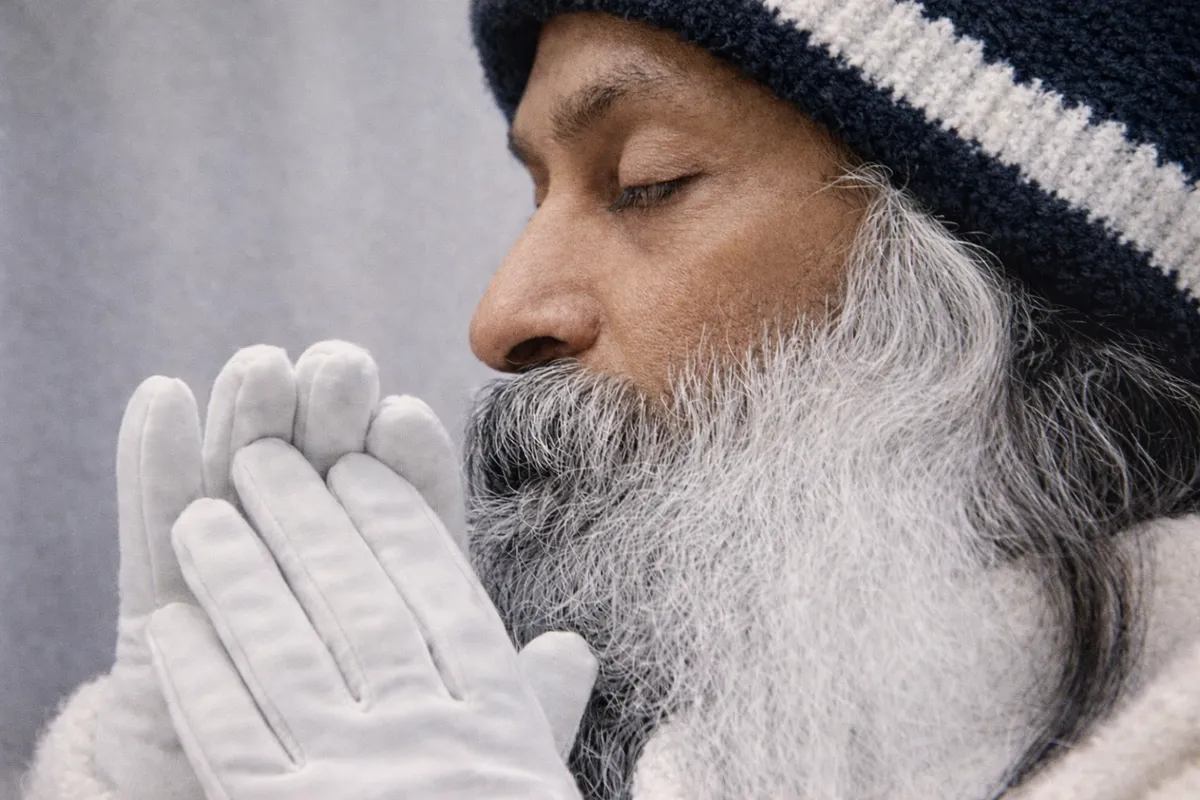
According to Osho, science cultivates detached, cold observation to know matter; art practices participatory, hot observation to feel beauty. Religion is neither: it is cool, choiceless awareness—pure witnessing where subject and object dissolve. Observation is the common thread, but its quality ascends: detached (science), participant (art), and finally just observation (religion), the highest, beyond both inside and outside.
Science watches from outside, art joins in, but religion just quietly watches without being in or out.
From the Discourses
Passages where Osho speaks to this question — each links to the complete discourse.
I am a scientist. Science teaches to observe detachedly. Is it not the same with religion?
Science teaches detached observation, art teaches nondetached observation, religion simply teaches observation, neither detached nor nondetached. The scientist has to be there just as a spectator, indifferent, cold; that's how he can come to know the secrets of matter. The artist has to participate in nature; without participation he will not know the beauty of the flower, of the moon, of the sunset, of the clouds. He will have to become a participant, he will have to dissolve himself into their reality. The observer has to become the observed in the world of art; only then is he able to paint, to sculpt, to create music or poetry. A man came to a great painter and asked him, "I want to paint bamboos. What should I do?" The master said, "First you go into the jungle and live with the bamboos for three years. When you start feeling that you…
Beloved Osho, what is the difference between the emptiness of the child before the formation of the ego and the awakened childlikeness of a buddha?
Whether you are for it or against it doesn't matter -- your concern shows where your ego is hanging. And I will include the capitalist in it also: his whole concern is how to gather money, hoard money -- because money has power over matter. You can purchase any material thing through money. You cannot purchase anything spiritual, you cannot purchase anything that has any intrinsic value; you can purchase only things. If you want to purchase love, you cannot purchase; but you can purchase sex. Sex is the material part of love. Through money, matter can be purchased, possessed. Now you will be surprised: I include the communist and the capitalist both in the same category, and they are enemies, just as I include Charvaka and Mahatma Gandhi in the same category, and they are enemies. They are enemies, but their concern is the same. The capitalist is trying…
Where is the witness when the observer and the observed become one?
Anand Pravesh, the observer and the observed are two aspects of the witness. When they disappear into each other, when they melt into each other, when they are one, the witness for the first time arises in its totality. But this question arises in many people; the reason is that they think the witness is the observer. In their minds, the observer and the witness are synonymous. It is fallacious; the observer is not the witness, but only a part of it. And whenever the part thinks of itself as the whole, error arises. The observer means the subjective, and the observed means the objective. The observer means that which is outside the observed, and the observer also means that which is inside. The inside and the outside can't be separate; they are together, they can only be together. When this togetherness, or rather oneness, is experienced, the witness arises.…
I am smaller than the smallest; I am also the most vast. I am the marvelous cosmos.
I AM THE ANCIENT ONE, PURUSHA -- THE BASE OF ALL. I AM HIRANYAMAYA, THE EFFULGENT ONE, THE EVER- Science is bound to come -- reducing everything to its atomic existence -- to the minutest part. Then the whole world becomes a chaos; there is no inter-relatedness. Really, with science there is no universe. Universe means one. Science has created multi-verses. The very word universe means one -- "uni" means one. Science has created multi-verses. Every science has its own universe, and no two sciences are in any way related. Every science goes into its own specialization, more to the part, and then the whole is lost. You can know a part, but a part is always dead. Life exists in the relatedness of the total. Life is always of the whole. That's why life is holy. Both the words mean the same thing. Holy means of the whole, belonging…
The fool is careless. But the master guards his watching. It is his most precious treasure.
HE NEVER GIVES IN TO DESIRE. HE MEDITATES. AND IN THE STRENGTH OF HIS RESOLVE HE DISCOVERS TRUE HAPPINESS. HE OVERCOMES DESIRE -- AND FROM THE TOWER OF WISDOM HE LOOKS DOWN WITH DISPASSION UPON THE SORROWING CROWD. FROM THE MOUNTAINTOP HE LOOKS DOWN ON THOSE WHO LIVE CLOSE TO THE GROUND. MINDFUL AMONG THE MINDLESS, AWAKE WHILE OTHERS DREAM, SWIFT AS THE RACE HORSE HE OUTSTRIPS THE FIELD. BY WATCHING INDRA BECAME KING OF THE GODS. HOW WONDERFUL IT IS TO WATCH, HOW FOOLISH TO SLEEP. THE BHIKKHU WHO GUARDS HIS MIND AND FEARS THE WAYWARDNESS OF HIS THOUGHTS BURNS THROUGH EVERY BOND WITH THE FIRE OF HIS VIGILANCE. THE BHIKKHU WHO GUARDS HIS MIND AND FEARS HIS OWN CONFUSION CANNOT FALL. HE HAS FOUND THE WAY TO PEACE. She knew that these were to be her last few hours on this earth, so she called her husband to…