
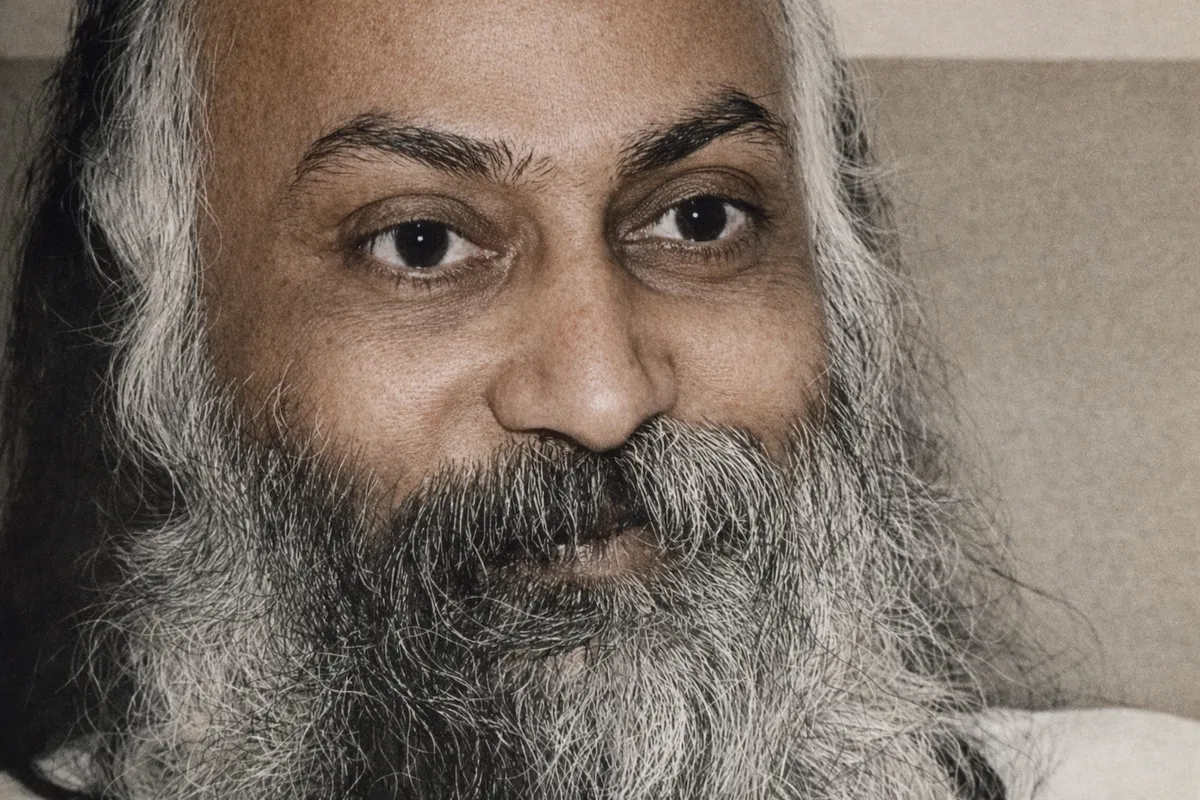
Books can tell you about religion, but to really know it you must quiet your mind and feel the truth inside yourself.
From the Discourses
Passages where Osho speaks to this question — each links to the complete discourse.
Osho, isn’t reading and understanding religious books necessary to understand religion?
Not at all. If you want to know something about religion, then books are necessary. But if you want to know religion, books are not necessary. To know about religion, books are very necessary; to know religion, books are absolutely unnecessary. To know religion, you will have to read yourself. And to know about religion, there are texts, there are scriptures—you will have to read them. One who reads about religion does not become religious; he becomes a pundit of religion. One who knows religion becomes religious. You do see the difference between the “religious” and the “pundit,” don’t you? A pundit is one who knows everything about religion, but the scriptures on him are like scriptures loaded on a donkey. They have no connection with his life. He is not a religious man. He is carrying a burden. The pundit carries a load. His own wisdom has not opened;…
Osho, how can one be free of scriptures and doctrines? They have such a grip that no way to be free seems visible.
Scriptures are not to be discarded. Where have I discarded them? Has anyone given as much respect to scriptures as I have? So how can I tell you to drop them? I am saying something else. I am saying that nothing of your purpose will be fulfilled by scriptures until your own samadhi happens. To give value to samadhi I say, “Drop scriptures,” otherwise you will cling to scripture and go on missing samadhi. I have heard: A young man went to America’s great millionaire, Morgan, and said, I have written this book. It is so astounding that millions of copies will sell and millions will benefit. Please publish it. Morgan asked—without even taking the book in his hand—What is the name of this book? The young man said: Its name is “A Hundred Ways to Make Money.” Morgan looked him up and down—shabby condition. He asked: How did you…
Osho, if reading and listening do not bring knowledge, then what is the need for reading and listening? And besides, you yourself have been reading and listening for so long! What is the difference there?
Yes. In truth, life is woven of great opposites. And it is true that by reading and understanding, by listening, knowledge does not simply arrive. If the awareness remains alive in you that reading and listening alone do not bring knowledge, then reading and listening can become a means to invite knowledge within—provided that awareness stays clear that by these alone knowledge does not come. But if the notion takes hold that reading and listening themselves give knowledge, then knowledge will never dawn in you. Reading will not be a means; it will become a hindrance. Now, on the surface these things look reversed. If it is firmly clear to you what reading can and cannot give, you can even gain something through reading—because then you won’t cling to the reading. It is already clear to you that nothing final is obtained by reading. Then you won’t clutch at listening…
Why, Osho, isn't knowledge of the scriptures helpful in finding the truth?
Maneeshi, KNOWLEDGE IS NOT YOURS, THAT'S WHY. It is borrowed. And can you borrow truth? Truth is untransferable; nobody can give it to you. Not even an alive Master can transmit it to you. You can learn, but it cannot be taught. So what to say about dead scriptures, howsoever holy they may be? They must have come from some original source; some Master, someone awakened must have been at the very source of them -- but now they are only words. They are only words about truth, information about truth. To be with Krishna is a totally different matter from reading the Bhagavad Gita. To be with Mohammed, attuned, in deep harmony, overlapping with his being, allowing his being to stir and move your heart, is one thing. And just to read the Koran is a far, faraway cry; it is an echo in the mountains. It is not…
Osho, you said that scriptures and religious texts are of no use—except after enlightenment. Please explain this clearly. It is generally held that after enlightenment there is no need for any scripture.
When Buddha first attained enlightenment, he came to Kashi. He stayed under a tree outside the city. No one knew him then, no one recognized him. He was an insignificant, unknown, unfamiliar beggar—a bhikkhu. The king of Kashi, much troubled and anxious one evening, went out in his chariot for some air. As he left the town, the sun’s rays were slanting; Buddha was sitting, leaning against a tree, sunlight on his face. The king said to his charioteer, “Stop, stop! This man is something extraordinary—so luminous, so peaceful! I have never seen eyes so full of music, so full of joy! Stop; let me go near him a little.” As when you pass a garden brimming with fragrance and you feel like pausing a while; or when, parched by the sun, you come under the shade of a great banyan and feel to rest awhile—so it happened to that…