
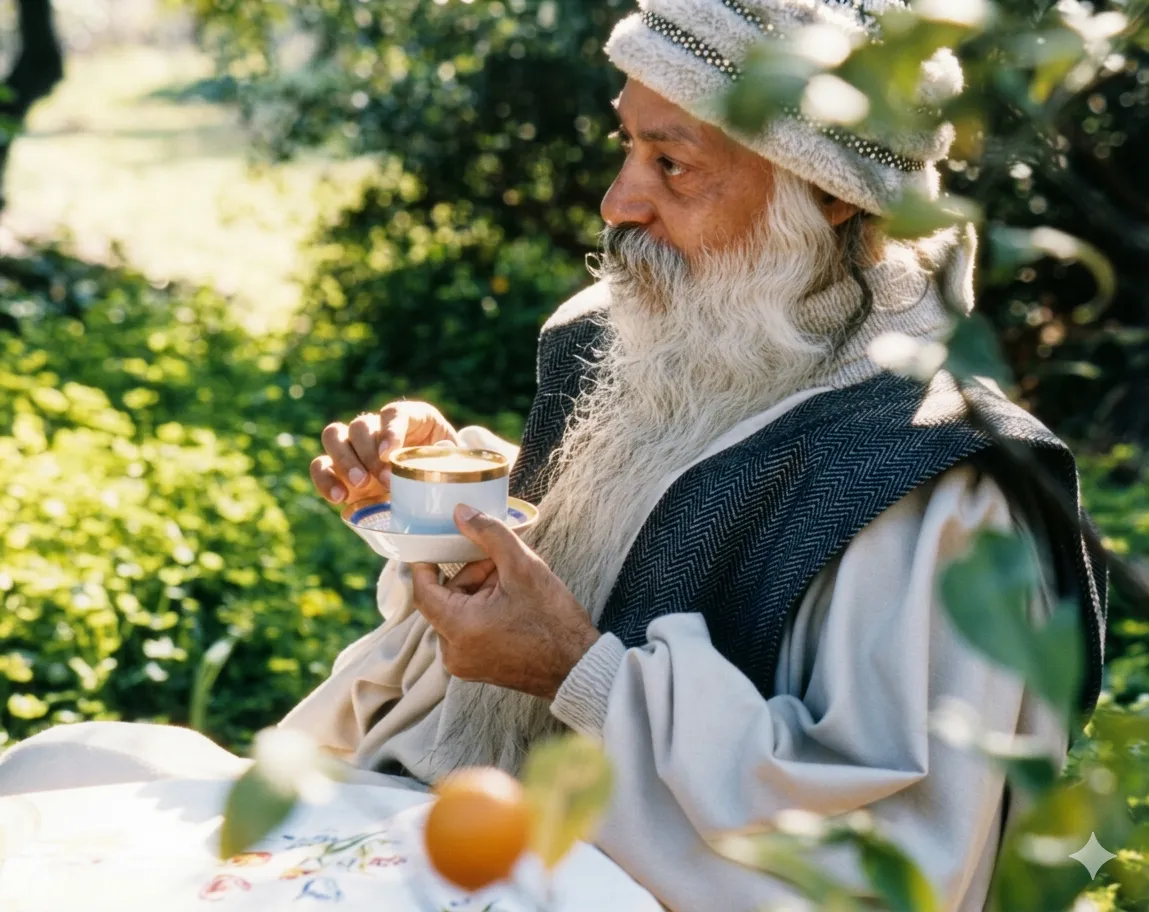
According to Osho, old religions failed because they condemned life and preached renunciation of the only world we have. By opposing our natural needs—sex, food, bodily rhythms—they created guilt, perversion, and inner division, turning humanity into a madhouse. Real transformation arises from affirming life: rejoicing in existence, honoring our naturalness, and living in conscious, loving harmony with the interconnected whole.
They failed by telling people to reject life, which made everyone torn inside; real change comes from joyfully embracing our natural connection to the world.
From the Discourses
Passages where Osho speaks to this question — each links to the complete discourse.
Beloved master, why have the old religions failed in transforming humanity?
This is making people schizophrenic, divided against themselves, and a house that is divided against itself cannot stand long; it is going to be in ruins soon. And that's what has happened to humanity:all human beings are not what they would have been, they are just ruins. In a very subtle and psychological way they have been deprived of their own nature. That's why old religions have not been able to transform humanity. On the contrary, they have been the hindrance for any transformation. I am telling you to be natural. When you are hungry you should eat, and when you are not hungry you should not eat. One extreme creates another extreme. Hungry people go on remaining hungry and torturing their bodies -- this is one extreme. Then the other extreme is thirty million Americans are dying of over-eating; everybody is dieting. Either you are fasting or you are…
(Religions in the past succeeded only in making man unwholey, Osho told us.) The old idea of all the religions of the world was to renounce, to reject, to condemn this world in order to praise the other world. They were creating an unnecessary opposition between this and that, between this shore and the further shore. And they are not in opposition at all. This shore and the further shore are in deep cooperation with each other. They help the same river to flow between them. They belong to the same river, they are not separate. Underneath the river they both are joined together; they are holding he river. If one shore disappears the river will die -- it needs both shores, both are absolutely needed. But they are not two, just two extremes of one energy, two polarities like positive and negative electricity.
* bhagwan, why have all the religions failed in changing the world?
ANSWER:* The first thing, they failed in changing the world because they never wanted to change it. They wanted it to remain as it is. It was their need. They could exist only in this world -- with poverty, with sickness, with exploitation, with misery, with crime; all these are basically necessities for all those religions to exist. They may have talked about changing the world, but they never meant it. On the contrary, they gave all kinds of rationalizations for the world as it is. Christianity, for example, says to people that, "You are born in sin, and suffering is your fate; misery is just the outcome of your sin." And they really convinced millions of people for something very illogical. Adam and Eve disobeyed God, according to Christianity six-thousand years before, and you are suffering in misery because they disobeyed. There seems to be no logic in it.…
Osho, what is the definition of God?
Words are very small. If you say God is light, then what of darkness? The scriptures have said that God is light. Suppose we accept this as a definition—then what about darkness? Where will darkness go? Darkness is too; in fact it is far more than light. Light sometimes is and sometimes is not; darkness is always, eternal. Where will you place darkness? If you say God is light, darkness is left out. If you say God is darkness, then light is left out. If you say God is both darkness and light, a contradiction arises: they cannot be together. Try to have both darkness and light in the same room. If you bring in light, darkness disappears; if you preserve darkness, you cannot have light. Then how can both be together? That becomes an impossibility. So you cannot say “both” either. Then the fourth device is to say: it…
Question: Osho, to me the present state of world affairs appears illusory. Eminent scholars from different walks of life offer various themes for the transformation of life. For instance, religious leaders affirm that God or religion alone is omnipotent and can transform life and provide heaven. Sociologists, politicians, educationists and moralists believe that only better forms can create a better society. Naturalists say that understanding nature will bring transformation. Whereas psychologists and psychopathologists believe that psychoanalysis, tranquilizers, sedatives or brainwashing agents can transform life, etc., etc. But to me, sir, all this appears to be merely a partial transformation. Would you suggest what total and spontaneous transformation is? As you say: clothes are fine, houses are fine, roads are fine; all kinds of instruments have been developed by which man’s senses have become a hundred million times more mobile.