
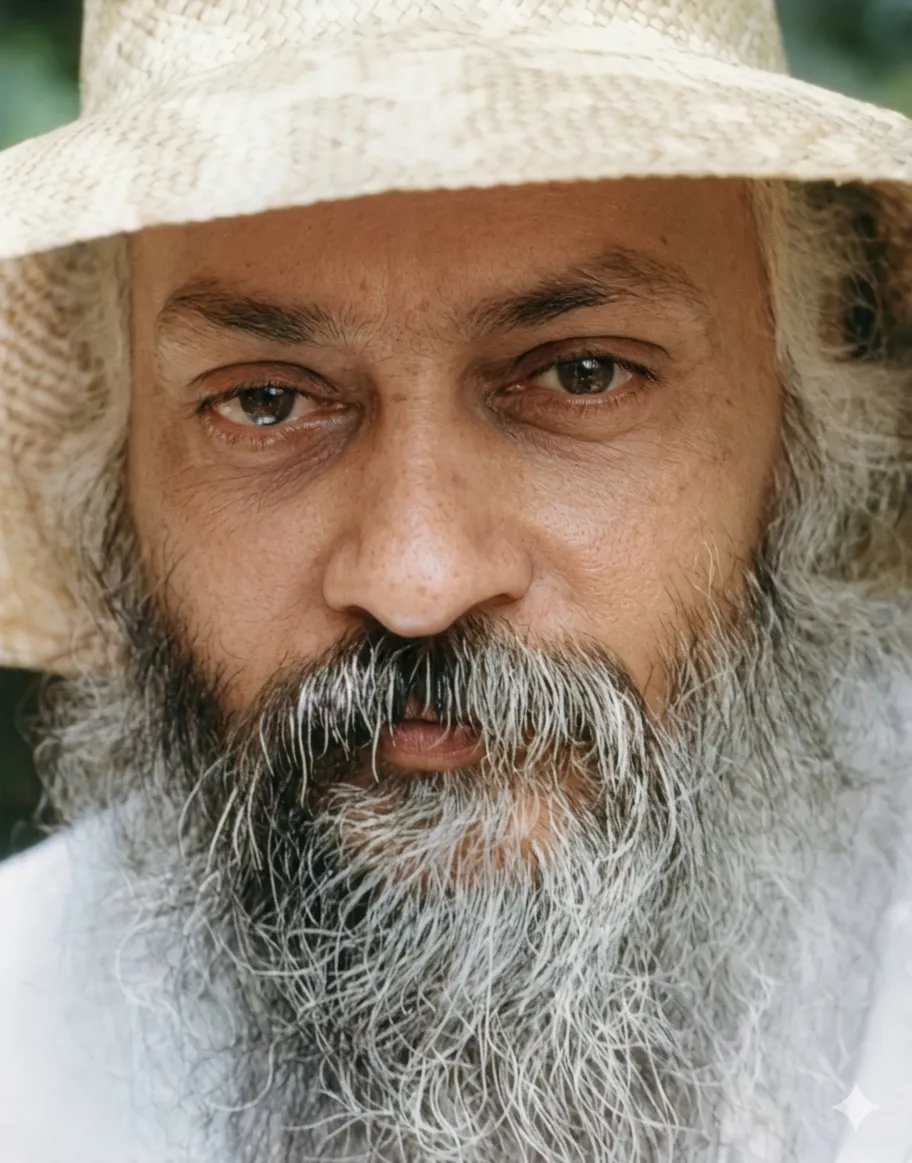
According to Osho, a young unenlightened man like him would avoid the ashram altogether; not from disrespect, but from a love of inner freedom. He wouldn’t join any institution—his or anyone else’s—would do no assigned work, and, upon sensing organization, would simply escape. The deeper point: awakening can’t be institutionalized; the true seeker refuses belonging-as-identity and keeps moving, unconfined.
He’d just run away, because real seeking for him means not getting boxed in by any group, job, or role.
From the Discourses
Passages where Osho speaks to this question — each links to the complete discourse.
Osho, sannyas was born in this land; it was granted the dignity of Gaurishankar (Everest). But today its honor has become merely superficial. Inside, the individual and society alike are afraid of it. Why have sannyas and the sannyasin lost their meaning? Please explain.
In my sannyas there is no prohibition—no “leave this, run from that.” Awakening is enough. Cowards run. Those who awaken remain where they are and are free there. My sannyas does not want to give you knowledge; it wants to give you meditation. Meditation means emptiness; it means: I do not know. Life is such an ultimate mystery that nothing definitive can be known about it. And I want to give sannyas a new posture—creativity. I will call him a sannyasin who sings a new song; who strikes a new music from the veena; who dances a new dance; who makes this world a little more beautiful, brings a little more blessedness to the earth. Then sannyas can regain its dignity. And I would have the sannyasin not imitate. Listen, understand, contemplate—but live from your own individuality. Therefore I give my sannyasins no codes of conduct—only processes to awaken the…
Question: Second question: Osho, my guru Swami Latpatanand Brahmachari used to say: Maintain a sattvic diet of milk and fruit. Rise at brahma muhurta and chant Om. Keep only three pieces of clothing with you. Accumulate nothing else. See every woman as your mother–sister–daughter. Do not allow bad thoughts to arise in the mind. And keep your loincloth tight and firm. But my guru Latpatanand soon passed away to heaven, and I have still not been able to walk the path of truth according to his teachings. Now your words attract me, and they also feel strange and create a kind of doubt within me: does the search for truth require discipline or a free, unrestrained life? I am twenty-six years old, and it is time to enter the householder stage. I am in a dilemma whether to take sannyas or to marry. Please guide me.
Osho, the balance between East and West, science and religion, and the outer and the inner that you are trying to bring about—why doesn’t this make sense to ordinary people?
Kamal Bharati, The very meaning of “ordinary people” is: those to whom nothing really makes sense. If it did, why call them ordinary? Then they would be extraordinary! Understanding makes one extraordinary. Without understanding, one is ordinary, separate. No insight, blind, a stickler for the beaten track, living traditionally, rigid—ordinary. Everyone is born extraordinary and then becomes ordinary. Because soon enough all get entangled in who knows what. Their brilliance is lost. Everyone brings a fresh mirror in which the image of the divine could be reflected, but very soon a thick layer of dust gathers upon it. Then, the ordinary person thinks and hears in his own way. What I say is hardly what he hears. I say one thing; he hears something else. Mulla Nasruddin’s wife was ill. A doctor came to see her. After examining her, he went with Nasruddin into another room. Nasruddin said, “My condition…
Question: First question: Osho, you said the thirsty one goes to the well, not the well to the thirsty. Those who are thirsty have already come, are coming, and will keep coming; but what of those so deeply asleep that they do not even know they are thirsty, or who, sipping the waters of dream, feel as if they are waking—how will they ever experience real thirst? Will your fountain of bliss not flow everywhere, awaken their thirst, and then quench it? It is said that the supreme expression of Lord Buddha’s compassion was his vow that until all living beings attain nirvana, he himself will not enter nirvana. Who knows how powerful he was. Even though in realization of the Absolute all enlightened ones are one, still their expressions and their capacity to help others realize the Absolute are different.
Osho, I am ignorant. All around me there is nothing but darkness. What is the path for me?
Music! Darkness is only proof that light can be. Darkness is only evidence that light is possible. So do not look at darkness with a negative outlook. Do not look with the eyes of an atheist; look with the eyes of a theist. Then even in darkness you will sense light hidden within it. Darkness is the womb of light. Do not be alarmed by darkness, nor afraid, nor anxious—be blissful, for the morning must be coming! And the denser the darkness, the nearer the dawn. Deep is this darkness; by the veils of selfishness we have been plundered. A wall of dead matter stands encircling, people speak as if turning their faces away; in this sky there is no sun, no moon, no star. An infinite ocean of imagination this, roaring as it girds the body, fierce— nothing is understood; where is the dusky shore? Beloved, give me that…