
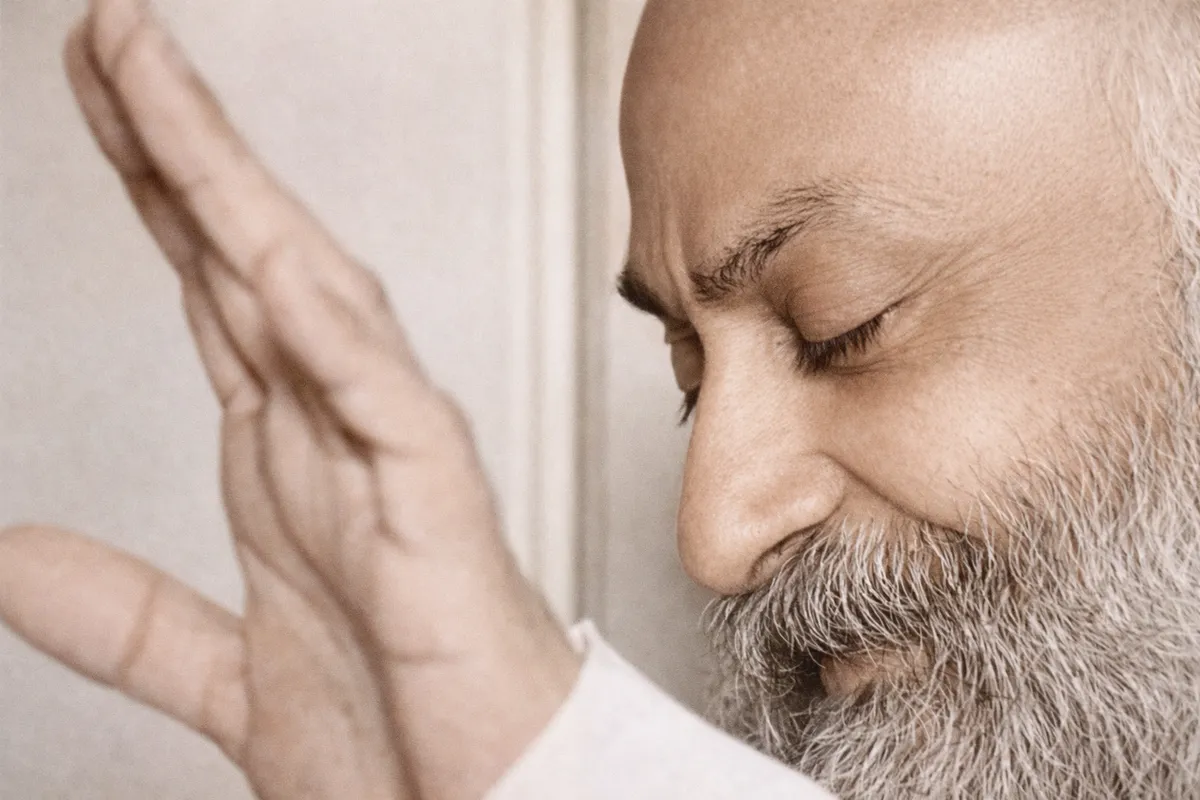
According to Osho, everyone is born enlightened—innocent, pure, empty—but loses it unconsciously; the enlightened simply reclaim it consciously. The difference is not talent or extraordinariness, but awareness: the same ordinary life becomes luminous when lived wakefully. Enlightenment is everyone’s birthright, available at any moment if one turns from unconsciousness to conscious being, nurturing the small flame of life into full, present awareness.
We’re all born awake inside but forget it; an enlightened person is just someone who has consciously remembered.
From the Discourses
Passages where Osho speaks to this question — each links to the complete discourse.
Beloved master, is there really no difference between an ordinary person and one who is enlightened?
Narendra, everyone is born enlightened. Everyone is born absolutely innocent, absolutely pure, absolutely empty. But that innocence, that purity, that emptiness, is bound to be lost because it is unconscious. One has to regain it -- one has to gain it consciously. That is the only difference between an ordinary person and the enlightened one. The ordinary person came with the same potential, has got the same potential still, but he has not claimed it yet. The enlightened one has lost it and claimed it back. The ordinary person is in a state of paradise lost and the enlightened person is in the state of paradise regained. But you can gain it any moment, it is up to you. Nobody can prevent you from becoming enlightened. It is not a question of any particular talent. Not everybody is a musician and not everybody can be a musician; that is a…
Beloved Osho, what is enlightenment? Have the experience and the idea of enlightenment evolved with time?
So nirvana is just like darkness. The light is put off and your reality is all there, with all its beauty, benediction, blessing. But there is no word in English to translate nirvana. Jainas use the word moksha. Moksha means absolute freedom, ultimate freedom, freedom from all fetters. And the biggest fetter is the ego. Other fetters are just parts of the ego: greed, lust, ambition, anger. All that is thought to be sin in other religions, in Jainism is thought only to be a fetter. But the root, the main root of the whole tree of your slavery, is the ego. So cut the main root and all other roots will die of their own accord. Don't bother to cut small roots, branches, leaves, because they will come again. Cut the main root and the whole tree will die. And when all your fetters fall, what remains? The unfettered…
Are you the only enlightened person in this ashram? If yes, is it impossible to enlighten or to be enlightened near an enlightened person?
SINCE I BECAME ENLIGHTENED I have never come across a person who is not enlightened. You see only that which you are. Before I became enlightened, the same was the case with me -- the whole world used to appear tremendously asleep, in darkness, in death, unenlightened, because you are reflected continuously everywhere. Every other person is just a mirror; you see yourself. So don't be worried about others; think about yourself. That should be your problem. Others are not your problems. Whether they are enlightened or not, how does it concern you? Why should you be worried about it? If somebody wants to remain unenlightened, it is absolutely his business to decide about it. If they want to play the game of being unenlightened, it's perfectly okay. If you have become fed up with the world, if you are fed up with your anguish and anxiety and you have…
Osho, what is the most significant thing about enlightenment?
People want definite answers to believe in: this way or that. Either be a Catholic or be a communist, but be clear. People want clarity because they are so confused, and this man brings all these seven categories; now their confusion is worse, they are even more confounded. First you were at least aware that you were confused. Now you will not be aware to which category you belong: yes, no, yes -- no both, neither yes nor no, or indescribable. Mahavira could not create a world religion for the simple reason that perhaps he had the deepest penetration into reality. If you ask about his enlightenment, he will answer in seven sentences. You will not be able to come to any conclusion -- and I feel this is something tremendously valuable. Why this urge to come to a conclusion? If existence is a continuum, an ongoing process -- never…
Osho, what is the difference between surrender and blind imitation?
So be careful: the freedom you allow yourself, allow the other too. You have no right to judge another as blindly credulous or as a surrendered being. Drop that concern. You cannot judge anyway—how will you enter another’s heart? How will you know? Think only about yourself. See within whether, up to now, you have lived by blind belief or by surrender. Decide only there; leave worrying about others. Otherwise, all your judgments will be wrong. Jesus said: Judge not; do not set yourself up as a judge in relation to another. To the friend who has asked: if you are asking for yourself, good. Drop worrying about others. Look within and see: whatever I have been clinging to till now—have I ever staked my life to hold it? Have I meditated for it? Have I loved for it? Or am I just clutching what culture, society, civilization handed me?…