
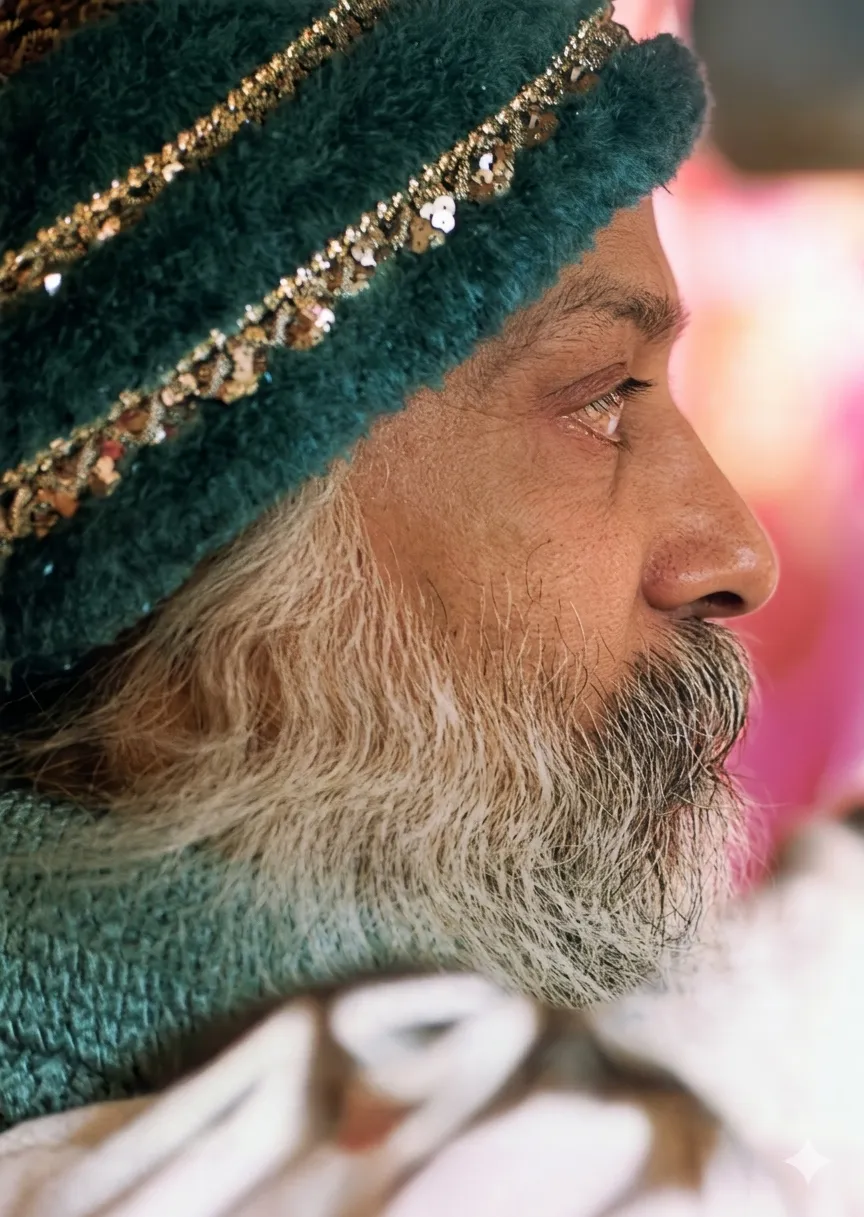
When you’re on autopilot there’s no “my will”; wake up inside, and the small “me” fades so only the bigger will moves you.
From the Discourses
Passages where Osho speaks to this question — each links to the complete discourse.
How to see what is my will and god's will?
There is a Chinese saying: Man is a puppet when he acts, a poet when he describes. All that you think is your freedom is nothing but your poetry. An unconscious man cannot be free, cannot have any freedom. Freedom comes as a consequence of consciousness, freedom is the function of consciousness. An unconscious man exists like a machine, like a robot. You may not know, but you are continuously functioning as a robot. Somebody abuses you and anger arises. It is almost like when you push the button and the fan starts moving. Somebody pushes the button and you become angry. What kind of freedom is this? You don't have any choice, to be angry or not to be angry. If the choice is not there there is no freedom. Freedom means freedom to choose -- you can decide whether to be angry or not, then you are free.…
Osho, there is a longing to disappear, to become a mere instrument, and let my life flow only according to His will. I have also had a few small glimpses of this. But on many occasions I fall into conflict and confusion: is it His will or my will?
“And let my life flow according to His will…” If it is His will, then what “life of yours” is left? Let His own life flow. His will, His life—why do you come in between? But no—then the fun evaporates. If it is all His will and His life, and you do not come in at all, the ego loses all its juice. “I have had a few small glimpses…” So long as the ego remains, even the “glimpses” will be imagination. And if a glimpse of That truly happens, will you still hold on to the ego? If diamonds and jewels appear before you, will you go on clutching pebbles? Will you then come and ask me, “How to drop the pebbles? How to empty the bag so I can fill it with diamonds?” You will drop them yourself. You won’t even come to ask; you won’t come to…
पांचवां प्रश्न: ओशो, अभीप्सा है कि मिट जाऊं, निमित्त-मात्र हो जाऊं और उसकी मर्जी के अनुसार ही मेरा जीवन बहे। कुछ छोटी-मोटी झलकें भी इसकी मिली हैं। लेकिन अनेक अवसरों पर मैं द्वंद्व और दुविधा में पड़ जाता हूं कि यह उसकी मर्जी है या मेरी मर्जी है!
और उसकी मर्जी के अनुसार ही मेरा जीवन बहे.। अब जब उसकी ही मर्जी है, तो तुम्हारा क्या खाक जीवन है! उसको ही बहने दो। उसकी ही मर्जी, उसका ही जीवन, तुम बीच में क्यों आते हो? लेकिन नहीं, तब तो मजा ही चला गया। अगर उसकी ही मर्जी और उसका ही जीवन है, और तुम बीच में बिलकुल न आए, तब तो अहंकार का सारा रस चला गया। कुछ छोटी-मोटी झलकें भी मिली हैं.। अहंकार के रहते हुए झलकें भी कल्पना ही होंगी। और अगर झलक मिल जाए उसकी, तो फिर भी तुम अहंकार को पकड़े रहोगे? हीरे-जवाहरात दिखाई पड़ जाएं, फिर तुम कंकड़-पत्थर हाथ में लिए रहोगे? फिर तुम मुझसे पूछने आओगे, कैसे छोड़ें कंकड़-पत्थर? कैसे झोली खाली करें, ताकि हीरे भर लें? तुम भर ही लोगे, तुम पूछने भी न आओगे, तुम बताने भी न आओगे। तुम हीरे भरकर अपने हीरों के भोग में लग जाओगे। कबीर ने कहा है, हीरा पाया गांठ गठियाया, फिर बाको बार-बार क्यों खोले। अब मिल गया हीरा, उसको जल्दी से आदमी गांठ में लपेट लेता है। फिर खोलकर भी नहीं देखता कि कोई और न देख ले। …
Osho, are we free to indulge in desire and to refrain from it?
Naturally Jesus cried out, looking toward the sky—“O Lord, what is this you have shown me? Have you forsaken me? Have you abandoned me? Will I not receive your grace?” Here Jesus’ humanity was manifest. But instantly the point also became clear to Jesus, that a complaint had entered. My prayer has been broken. Where there is complaint, prayer dies. Prayer does not know complaint; prayer has no acquaintance with grievance. Prayer is supreme consent. If life, then life; if death, then death. If a throne, then a throne; if a cross, then a cross. Prayer does not even know how to say, “Lord, what is this you are showing me?” Jesus saw the point. He was a man of deep wisdom; his eyes were clear. A streak of smoke had been drawn, a small cloud had come, and for a moment the sun was hidden. But the cloud passed…
पहला प्रश्न: ओशो, क्या हम वासना करने और नहीं करने के लिए स्वतंत्र हैं?
स्वाभाविक जीसस चिल्ला उठे आकाश की तरफ देख कर--हे प्रभु, यह तू मुझे क्या दिखा रहा है? क्या तूने मुझे त्याग दिया? क्या तूने मुझे बिसार दिया? मुझे तेरा प्रसाद नहीं मिलेगा? यहां जीसस की मनुष्यता प्रकट हुई। लेकिन तत्क्षण जीसस को समझ में भी आ गई बात कि इसमें शिकायत हो गई है। प्रार्थना मेरी खंडित हो गई है। जहां शिकायत है वहां प्रार्थना की मृत्यु। प्रार्थना शिकायत जानती ही नहीं। प्रार्थना को शिकवा से पहचान ही नहीं है। प्रार्थना तो परम राजीपन है। जीवन हो तो जीवन और मृत्यु हो तो मृत्यु। और सिंहासन हो तो, और सूली हो तो। यह बात प्रार्थना जानती ही नहीं कि प्रभु, यह तू मुझे क्या दिखा रहा है? जीसस को दिख गई बात। गहन प्रज्ञा-पुरुष थे। आंखें उनकी साफ थीं। एक धुएं की लकीर खिंची थी, एक छोटी सी बदली आ गई थी और सूरज क्षण भर छिप गया था। लेकिन बदली गुजर गई और सूरज फिर प्रकाशित हो उठा। और जीसस मुस्कुराए और उन्होंने आकाश की तरफ आंखें उठा कर कहा: ‘नहीं-नहीं, मेरी मत सुनना। जो तेरी मर्जी हो, पूरी हो। …
Osho! Why does life feel so topsy-turvy? Everything is a mess. What is God’s will in this?
The question was fed into the machine and a button pressed. Out popped a slip: “Your father is sitting in a liquor shop in Bombay, drinking.” “Absolutely wrong,” the girl said. “My father died twenty years ago.” “This machine never makes a mistake,” the operator said confidently. “Ask the same question a little differently.” This time the girl wrote: “Where is my mother’s husband?” Again the button was pressed. Out popped a slip: “Your mother’s husband died twenty years ago, but your father is sitting in a liquor shop in Bombay, drinking.” God is not turning life upside down. Spare God; have some mercy on Him. You don’t know anything about Him. We have messed it up ourselves. We have turned sweet into dung. It is our responsibility. Man, with his own hands, has smeared his life with soot, put masks on his face, become a hypocrite. He says one…
दूसरा प्रश्न: ओशो! जीवन इतना उलटा-उलटा क्यों मालूम होता है? सभी कुछ अस्तव्यस्त है। इसमें परमात्मा की क्या मर्जी है?
फिर से प्रश्न को मशीन में डाला गया और बटन दबाई गई। बटन के दबाते ही फटाक से एक पुर्जा बाहर आया जिस पर लिखा था: तुम्हारी मां के पति को मरे बीस साल हो गए हैं, लेकिन तुम्हारा बाप बंबई की एक शराब की दुकान में बैठा शराब पी रहा है। परमात्मा नहीं कर रहा है जिंदगी को उलटा। परमात्मा को बख्शो, उस पर कृपा करो। उसका तुम्हें कुछ पता भी नहीं है। हमने ही सब गड़बड़ कर लिया है। हमने ही गुड़-गोबर कर लिया है। हमारी जिम्मेवारी है। मनुष्य ने अपने हाथ से ही अपनी जिंदगी पर कालिख पोत ली है, अपने चेहरे पर नकाब लगा लिए हैं, मुखौटे पहन लिए हैं, पाखंडी हो गया है। कुछ कहता है, कुछ करता है। किसी बात का भरोसा नहीं है। …
Osho, in reference to the subject of offering to the divine, please explain what is the significance of will and surrender? What are the similarities and differences between will and surrender?
THE END is always the same, but the beginning differs, and all the differences belong always to the beginning. The nearer you reach, the less is the difference between paths. In the beginning will and surrender are diametrically opposed. Surrender means absolute will-lessness. You have no will of your own, you feel helpless, you feel you cannot do anything. You are so totally helpless that you cannot even say that will exists; the very concept of will is illusory. You have no will. Rather, on the contrary, you have destiny, not will, so you can only surrender. It is not that you surrender: rather, it is that you cannot do anything else. So surrender is not an act. Rather, it is a recognition. It is not an act! How can surrender be an act? How can you surrender? If you surrender, then how will you call it surrender when you…