
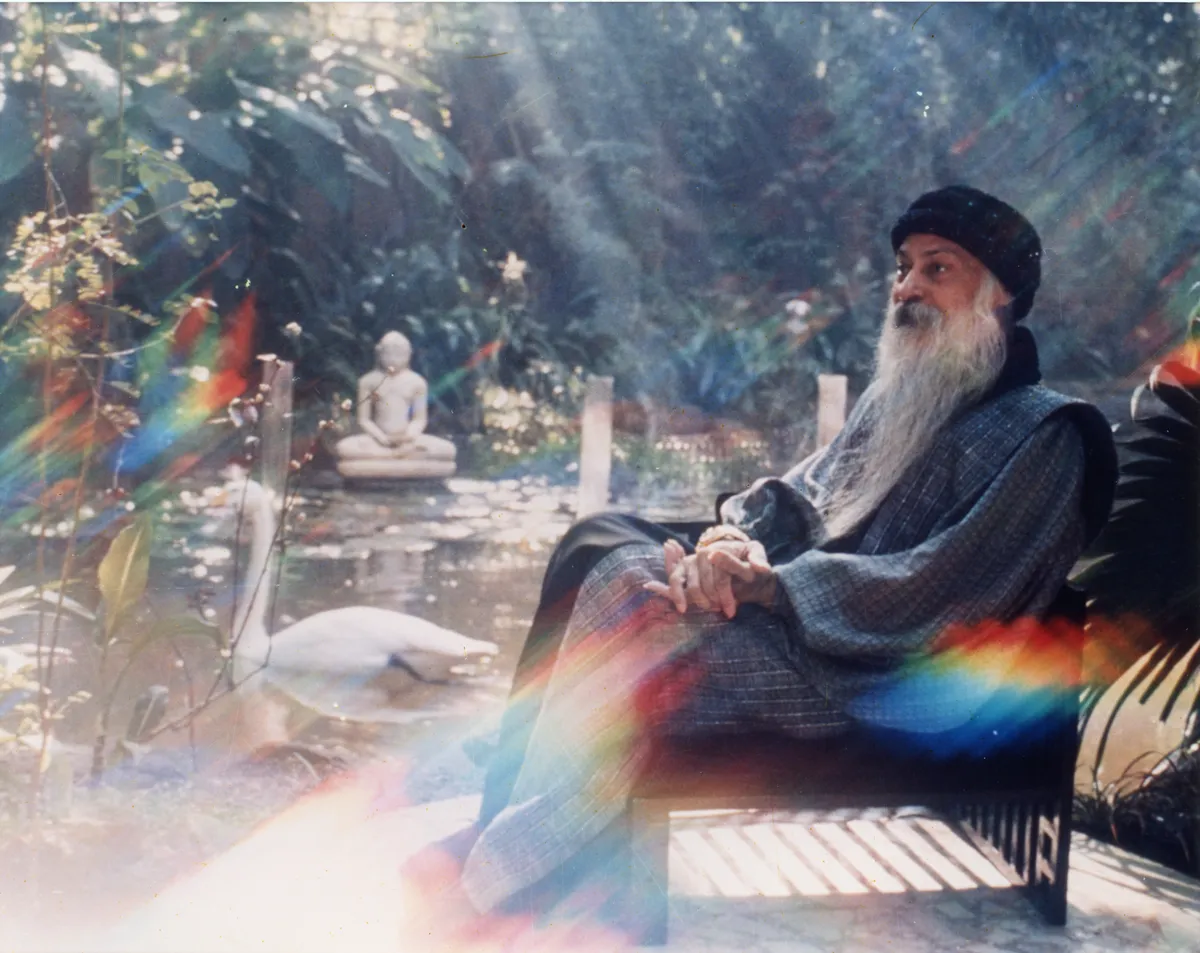
According to Osho, you don't teach children religion or morality - you protect their natural intelligence, wonder, and authenticity. Religion is a lived love affair with existence, not borrowed beliefs. Let them 'catch' it from your presence: your silence before stars, tears at sunsets, joy with roses. Avoid conditioning and commandments; nurture freedom, awareness, and sincerity so their innate morality flowers by itself.
Don't stuff kids with beliefs; keep their wonder alive and show your own joy and reverence so they naturally become good and soulful.
From the Discourses
Passages where Osho speaks to this question — each links to the complete discourse.
Question: OSHO, HOW CAN WE TEACH CHILDREN TO BE MORAL AND RELIGIOUS? The Protestant booklet that I was just talking about also mentions one fact: that one thing has to be learned from Rajneesh and his sannyasins -- that why they feel so committed. why they feel so involved, so deeply in love. No Christian seems to be so deeply in love with Christ. Why are they so in love with their own Master? There must be some reason behind it that has to be explored. The reason is clear-cut: sannyas is not imposed upon you, you have chosen it. The same was the case with the disciples of Jesus, with the disciples of Buddha. But it happens only when the Master is alive; when the Master is gone... In fact, children should be allowed to choose their own Masters. Parents should not enforce their own ideology on their children.
Osho, is it not good to teach the children something of religion? Will it not benefit them fo help them know something about jesus christ?
Yes, when you are praying, let the child be present there. When you are dancing, let the child be present there. And the child will soon join you -- how can the child resist joining a dance? Let the child know that life has grace in it; let the child know that life is not only suffering but much ecstasy too. Let the child know that laughter is good, divine, that love is good, godly. And these things are not to be taught: they have to be imbibed by the child. You have to create the vibe. And then sooner or later the child will start becoming aware of many more things which cannot be seen just by the physical eyes. Because you will have given him more sensitivity. Otherwise you can go on teaching him, and nobody even remembers. How much do you remember that was taught to you?…
Osho, what is the first experience of samadhi like?
You will know only when it happens. It cannot be said; at most a few hints can be given. It is as if, in the dark, a lamp is suddenly lit. Or as if a dying patient, right at the edge of death, suddenly finds a medicine that works; life’s wave, life’s thrill spreads again—so it is. As if a corpse becomes alive—such is the first experience of samadhi. It is the taste of nectar. The experience of the ultimate music. But it will be only when it happens; and only then will you understand. You will not understand by my saying it. It is as with love. How can anyone explain it? To someone who has never loved, never known love, no matter how many explanations you offer—he will hear it all and still ask, “I haven’t understood; please explain a little more.” It is like explaining light to…
Osho, can children understand the truth?
RAJ, CHILDREN CAN UNDERSTAND THE TRUTH but cannot understand that they understand it. They understand more clearly than you can understand because they are more clean, more innocent; but they are so innocent that they cannot understand that they understand. Hence you need another childhood, a second childhood. First you have to lose your first childhood. That is the whole meaning of the biblical story of Adam and Eve losing paradise: that is losing the first childhood. It is a tremendously significant story. It has so many meanings, it is such a multi-dimensional parable, that I don't think there exists any other parable comparable to it. You can look at it from many aspects. It is losing the first childhood -- which is inevitable. Adam and Eve are not committing a sin. In fact, the word "sin" comes from a root which means forgetting, and that is a beautiful meaning:…
Many questions have come before me. First of all, this morning I said: what we do not know, we should know well that we do not know. In this connection someone has asked: should we not tell our children that God exists? Should we say nothing to them about religion? Should we not give them any belief about the Atman? Such questions have been asked. What we do not know—if we wish to give it, will we be able to give it? And that which is unknown even to us—will teaching it, coming from us, create reverence for us in the child’s mind? Will this not be the beginning of untruth? And can the knowing of God ever be erected upon untruth? Can we imagine that upon untruth a child will ever become religious? This is exactly how the world has become irreligious.