
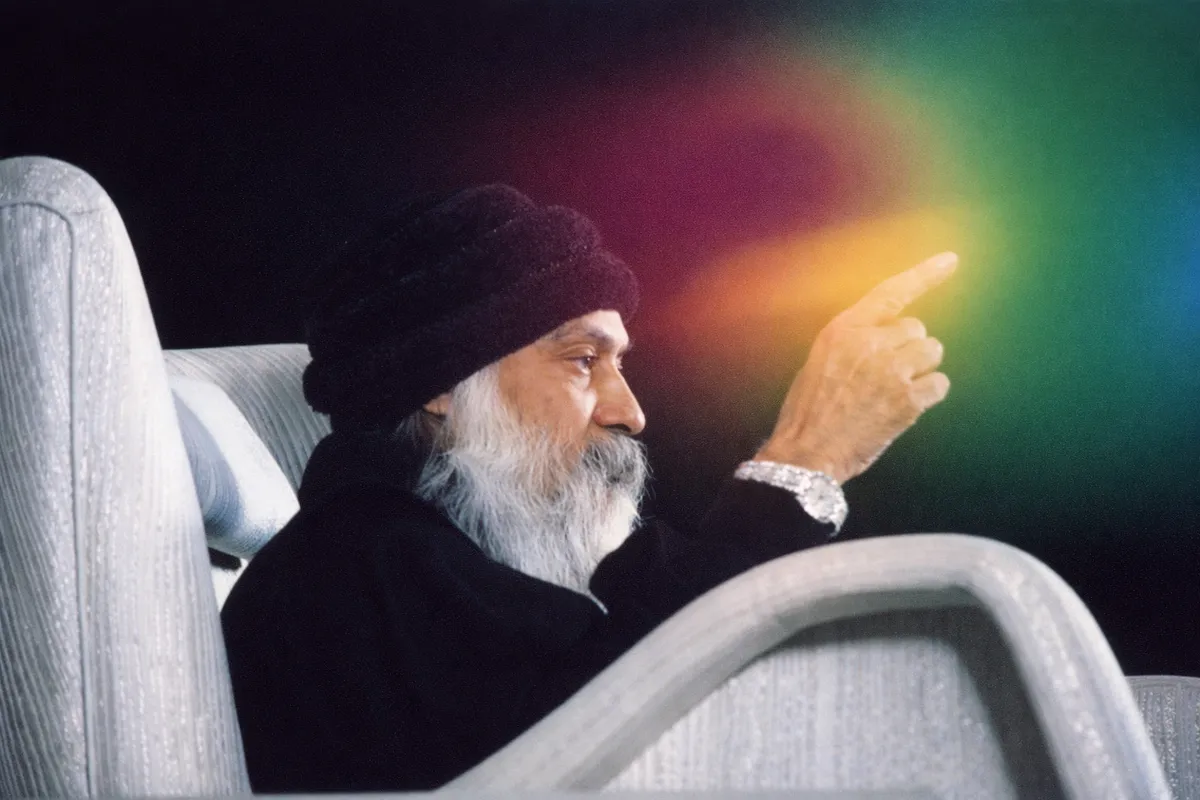
According to Osho, sink deeper into surrender by letting the I-sense fall and allowing the sense of Brahman to grow. Keep vigilant watch to avoid feeding the ego; do only what weakens it and offer it, with gratitude, to existence—like setting a lamp afloat on the river. When action arises from egolessness, even breathing is virtue; when the 'I' dissolves, only Brahman knows Brahman.
Keep noticing when you’re trying to be a ‘somebody,’ thank that impulse, and gently let it go—like placing a small lamp on a river—so life can flow through you without needing to be important.
From the Discourses
Passages where Osho speaks to this question — each links to the complete discourse.
Question: First question: Osho, how can the state of surrender be attained? In life, the most difficult, the most arduous inner state is surrender. The mind is built around the ego. It is easy for the mind to assume, “I am the center of the whole universe,” as if the earth, the sun, the stars all revolve around me, for me; the whole of life is a means, and I am the end. The ego-state means: I am the goal and everything else is a means. Everything exists for me; I exist for no one. I am the target; all that happens is for me. All is an arrangement to serve me. This is the ego-mood. Surrender is exactly the opposite: I am nothing. My being is like a void, and the center lies outside me.
Osho, you have earlier said, “Live moment to moment, live in the present.” Now you are saying, “Return to the past.” What should we do?
So it is with the mind—there are ruts. The past means endless grooves. However much you understand, your intellect agrees, you make decisions, you resolve—at the moment of resolve you feel something is going to change. But not even an hour passes before your decision breaks. Then only self-condemnation is produced, nothing else. Your saints, your fakirs, your priests and pundits—most of the time they only succeed in producing self-condemnation in you, nothing else. Their words are logically correct. You cannot even say they are wrong; you have to admit they are right. In that admission you take a decision. But against what are you deciding? Inside are grooves carved since who knows when, deep tracks. Walking in them has become a habit. It is easy to walk in them. They will pull you again and again. The meaning of returning into the past is: these grooves must be erased.…
Osho, what does surrender mean?
Resolve means: I. Surrender means: not-I. Resolve means: the sense of doership. Surrender means: the sense of non-doership. Resolve means: only through what I do can anything happen; without my doing, nothing will happen—effort is everything. Surrender means: grace is everything. What will happen through my doing? If the Beloved does, it happens. I am only a hollow reed of bamboo; if He plays, I become a flute. His song is everything. I should give Him passage, not become an obstruction. I should step aside from the path. A tiny bud walked along the riverbank and reached—then stepped down into the stream! The lover, bound for tryst, descended from steps to the waves. On the faces of the stars a shimmer came. So much is joined. When even a tiny bud steps into a ripple, in the eyes of stars at immeasurable distances a sparkle appears. Over the whole current…
On the path of surrender, how does the seeker come to the right technique out of one hundred and twelve methods?
There are so many stories which have become meaningless for us because we do not know how they happened. Mahakashyap came to Buddha, and Buddha just touched his head with his hand, and the thing happened. And Mahakashyap began to dance. So Ananda asked Buddha, "What has happened to him? And I have been for forty years with you! Is he mad? Or is he just fooling others? What has happened to him? And I have touched your feet thousands and thousands of times." Of course, to Ananda, this Mahakashyap will either look like he is mad or as if he is just deceiving. He was with Buddha for forty years, but there was a problem. He was his elder brother, Buddha's elder brother; that was the problem. When Ananda came to Buddha forty years before, the first thing he said to Buddha was this: "I am your elder brother,…
Osho, what is surrender? I used to think I knew. Now it is a mystery.
THE FALSE KNOWLEDGE de-mystifies existence; the true knowledge re-mystifies it. Knowing, if authentic, makes life more of a mystery than it has ever been before. Knowledge certainly covers your eyes with dark clouds, creates a wall of thick smoke, and you start feeling you know. In fact, you are going deeper into ignorance. To be knowledgeable is to be more ignorant than even the ignorant ones. The Upanishads have a tremendously significant statement. They say: The ignorant man is lost in darkness, but the knowledgeable is lost in deeper darkness than the ignorant -- because the knowledgeable lives in an "as if" world. He thinks he knows, but he knows not. He only believes; he has not seen. He believes in God, he believes in love, he believes in surrender, but belief is always a cover-up. Your wound is covered, but it is not healed that way. In fact, the…