
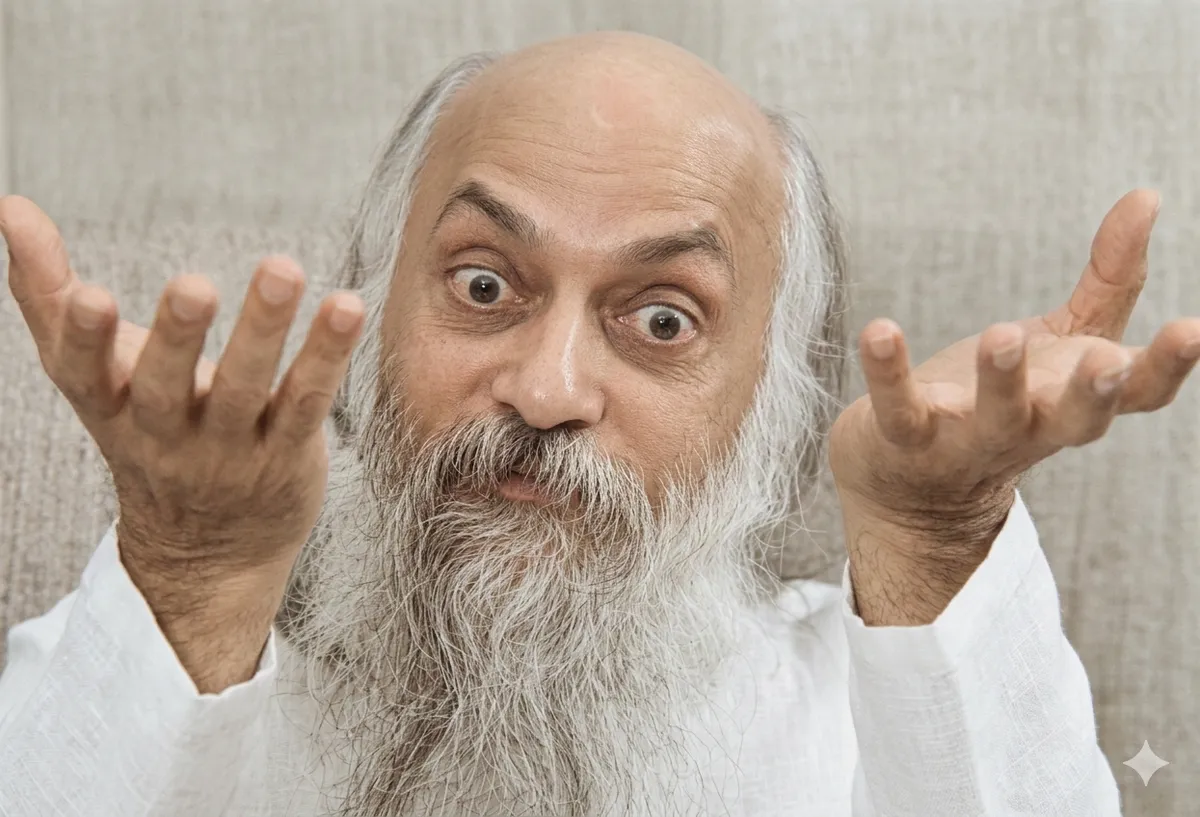
Osho's perspective on Virtue
When Osho Spoke About Virtue
Passages from the discourses where this theme comes alive.
Osho, one should believe in the good and in virtues, shouldn’t one?
If, in this direction, we can drop belief, then that which we call good, that which we call significant, will arise within you. But if you cling to belief, it will never arise. Virtue cannot be born in you without knowing. And that is why your belief is one thing and your conduct another. You say that stealing is bad—and you steal. Why is there a gap between belief and conduct? Because the belief is false, and it has been fabricated first, without knowing and understanding conduct. Therefore conduct never fits it. It is like a tailor who makes your clothes without taking your measurements, and then tries to fit those clothes onto you. Then the cutting and trimming will have to be done on you, not on the clothes—your hands and feet would have to be cut.
प्रश्न: ओशो, शुभ और सदगुणों पर तो बिलीफ करना चाहिए न?
इस दिशा में अगर हम बिलीफ छोड़ सकें, तो जिसे हम शुभ कहें, महत्वपूर्ण कहें, वह आपमें उत्पन्न हो जाएगा। और अगर बिलीफ आप पकड़े रहे, आपमें कभी उत्पन्न नहीं होगा। आपमें सदगुण पैदा ही नहीं हो सकता बिना ज्ञान के। और यही तो वजह है कि आपकी बिलीफ एक होती है और आचरण दूसरा होता है। आप कहते तो हैं कि चोरी करना बुरा है और चोरी करते हैं। आपका विश्वास और आचरण में भेद क्यों है? भेद इसलिए है कि विश्वास झूठा है और विश्वास पहले बना लिया गया है, बिना आचरण को जाने और पहचाने। इसलिए आचरण उसके अनुकूल नहीं बैठता कभी। यानी वह मामला ऐसा है कि जैसे कोई दर्जी आपको बिना नापे-जोखे और आपके कपड़े बना ले। …
Osho, yesterday you explained that punya means that which gives joy and liberates. Then what does the statement mean that one must be free from sin, and also free from virtue?
Certainly, one has to be free from sin. I said: sin is that which takes you outward. I said: virtue is that which brings you inward. But one must be free of the outer—and free of the inner as well. First be free of the outer; then, immediately, you will find that what we had called “inner” was only inner in comparison to the outer. The moment you are free of the outer, you will discover that what had seemed inner now also appears outer—because in relation to you, that too is outside. You are where there is neither outside nor inside—you are the pure witness. One has to be free from sorrow, and free from happiness too. Sorrow binds, and happiness also binds. That is why only in our land there are three words that exist nowhere else in the world—because nowhere has the inquiry gone so deep: heaven,…
आखिरी प्रश्न: ओशो, कल आपने समझाया कि पुण्य अर्थात जो आनंदित करे, मुक्त करे! तो फिर इस कथन का क्या अर्थ है कि पाप से तो मुक्त होना ही है, पुण्य से भी मुक्त होना है?
निश्चित ही, पाप से तो मुक्त होना है। मैंने कहा, पाप वह, जो बाहर ले जाए। मैंने कहा, पुण्य जो भीतर लाए। लेकिन बाहर से तो मुक्त होना ही है, भीतर से भी मुक्त होना है। पहले बाहर से मुक्त हो लो, तब तत्क्षण तुम पाओेगे कि जिसे हमने भीतर कहा था, वह बाहर की तुलना में भीतर था। जैसे ही बाहर से तुम मुक्त हुए, वैसे ही तुम पाओगे कि अब तक जो भीतर मालूम पड़ता था, अब वह भी बाहर मालूूम पड़ता है। क्योंकि तुम्हारी तुलना में तो वह भी बाहर है। तुम तो वहां हो जहां बाहर भी नहीं है और भीतर भी नहीं है--तुम तो साक्षीमात्र हो। दुख से तो मुक्त होना ही है, सुख से भी मुक्त होना है। दुख तो बांधता ही है, सुख भी बांध लेता है। इसलिए सिर्फ हमारे मुल्क में तीन शब्द हैं, सारे संसार में कहीं नहीं हैं, क्योंकि इतनी गहरी किसी ने कभी खोज नहीं की: स्वर्ग है, नरक है, मोक्ष है। ईसाइयत के पास दो शब्द हैं: स्वर्ग और नरक। इस्लाम के पास दो शब्द हैं: स्वर्ग और नरक। सिर्फ इस देश में हमारे पास तीन शब्द हैं: स्वर्ग, नरक और मोक्ष। …
Beloved Osho, nietzsche's maxim: "one is punished most for one's virtues" I see the truth of most clearly in you. But even a man who is virtuous by society's standards is subtly punished too, isn't he? -- punished by jealousy and criticism. It is as if one is only meant to strive towards; to attain is an altogether different matter. Is this so?
For a man of love, nationality is nothing but a beautiful name for hatred. Religious organizations are nothing but sophisticated ways of hating others who don't belong to your organization, to your herd, to your crowd. Friedrich Nietzsche is right; his whole life's experience is condensed in that small statement. He suffered for his virtues. The Italian priest was preaching about sex and morality to his congregation. "Sex is-a dirty", he shouted. "I wanna see only good-a girls today. I wanna every virgin in-a church to-a stand up." Not a soul moved. Then after a long pause a sexy looking blond holding an infant in her arms got to her feet. "Virgins is-a what I want," said the outraged priest. "Hey father," she asked, "you expect a two month old baby to stand by herself?" I was in Greece and one of my sannyasins, Amrito, who was my hostess, told…
Question: BELOVED OSHO, CAN YOU SAY SOMETHING ABOUT VIRTUE? ... Out of awareness whatever you do is virtue according to me. And out of unawareness whatever you do is sin according to me. And according to me, your sins are not going to take you to hell. Your sins immediately give you hell -- here, just now. And your virtues are not going to give you an eternity of paradise. Your virtues give you joy, blissfulness, the moment you act with full awareness. The punishment and the reward is immediate: the reward follows your action. But it depends where your action will lead you. It can be unconscious action, then hell herenow. It has nothing to do with geography; it is something to do with your psychology. Acting consciously, you are in paradise wherever you are. Once you have learned, you will not ask, "What is virtue?
What is virtue?
definitionProfound Quotes on Virtue
Explore our structured collection of meaning-mapped quotes regarding Virtue.