
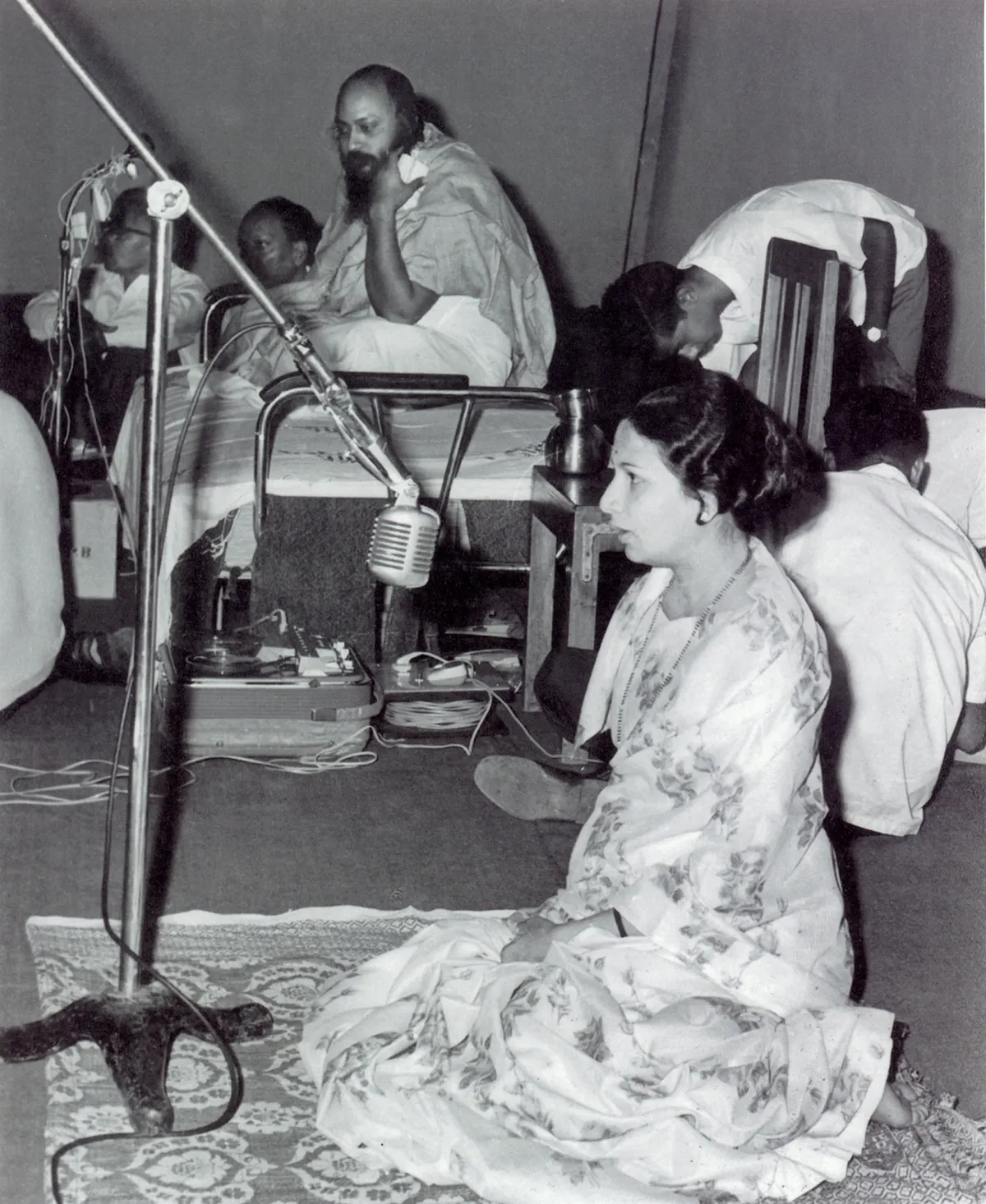
According to Osho, enlightenment has many expressions: some masters danced, sang and whirled—Krishna, Chaitanya, Rumi, Meera, Kabir, Nanak—while others like Buddha, Lao Tzu, Bodhidharma did not outwardly dance because their inner being was dancing. There is no rule. Real spirituality is overflowing joy; if dance arises, dance; if stillness arises, let the soul dance within.
Yes—enlightened people may dance on the outside or feel a happy dance inside; follow what’s true and joyful.
From the Discourses
Passages where Osho speaks to this question — each links to the complete discourse.
Osho, I am not a dancer, but I love to dance. At times I would like to leap and twirl and stay in the air. But, Osho, I worry about enlightenment. Does an enlightened man dance?
You must have come from a Christian family so you don't have any idea that enlightened people have been of all kinds. It is a spectrum, the whole rainbow. There has been Krishna -- the dancer, the flute-player, the singer. There has been Chaitanya -- a mad dancer, he will dance and dance for hours, until he will fall in ecstasy; the joy will be so overflowing, uncontainable. There has been Jalaluddin Rumi who twirled -- he became enlightened while twirling. He whirled for thirty-six hours continuously, non-stop; then he fell, exhausted by the ecstasy, and when he opened his eyes the old man was gone and the new has arrived. It is Jalaluddin Rumi who founded the whirling dervishes and their whole beautiful tradition. There has been Meera in India, who danced to abandon, who danced from one village to another village, almost covering the whole north of India.…
Question: The last question: Osho, do enlightened ones also shed tears? Now you will say, “Can an enlightened one flee?” Krishna fled. “Can an enlightened one lie?” In Krishna’s life there are many lies. “Can an enlightened one break a given promise?” Krishna broke them. What will you do? “Can an enlightened one take a sword in hand?” Mohammed did. Although on the sword was written, “Peace is my message.” The meaning of Islam is peace. Now to write on the sword itself, “Peace is my message”—couldn’t you find any other place to write it? It is hard to say. On one side there is a Buddha who says even to kill an ant is sin. On the other side there is a Mohammed who, sword in hand, kept cutting down men—and did not worry at all. On one side there is Mahavira who even drinks water after straining it.
Osho, I am dancing here. I, who never danced. Far from dancing—I had never even thought I would dance. I am astonished at myself. I ask: what has happened to me?
Love has happened to you; religion has happened to you. You have begun to come toward your home. You have turned back. You have set out toward your source. The Ganges has started flowing back toward Gangotri. The current has reversed. Your first steps have begun to fall in the direction from which you came. And when the first steps fall that way, dance is born. The farther you go from the divine, the more dance is lost; gloom, frustration, melancholy spread through life. When you are very miserable, understand that you are very far from the divine. The rishis have described the divine as sat-chit-ananda—being, consciousness, bliss. Saraha says, Tilopa says: it is mahāsukha, the great bliss. That means the more you are in sorrow, the farther you are from it. The proportion of your sorrow is the proportion of your distance. The measure of your sorrow is the…
My understanding is that dance, in the beginning, was born out of meditation. And I think all that is significant in life has had its origin in meditation. Meera did not have to go anywhere to learn dancing. People are mistaken if they think that Meera found God through dancing. Meera burst into dancing when she found God. The fact is otherwise: no one finds God through dancing, but one can dance if he finds God. What can a drop do but dance when a whole ocean enters into it? What can a beggar do but dance when he suddenly comes upon a treasure of infinite wealth? But man has been so much crushed and crippled by civilization that he cannot dance.
Why do the sufis dance?
Yes, it is a pertinent question. Buddhists only sit silently. Why do Sufis dance? Zen people only meditate, sitting silently, not doing a thing, doing nothing -- just sitting silently? spring comes, and the grass grows by itself. But Sufis dance. These are the two different paths, because there are two types of energy in the world: the positive and the negative, male and female, yin and yang. Zen people use the negative energy; they use the passive path. Sufis use the positive energy; they use the active path. They are very vibrant people. Their meditation is not of passivity; their meditation is that of ecstasy. Both are ways you can reach to the same goal, because the goal is exactly in the middle. The positive is one extreme, the negative the other extreme. Between the positive and the negative there is a middle point, exactly in the middle, from…