
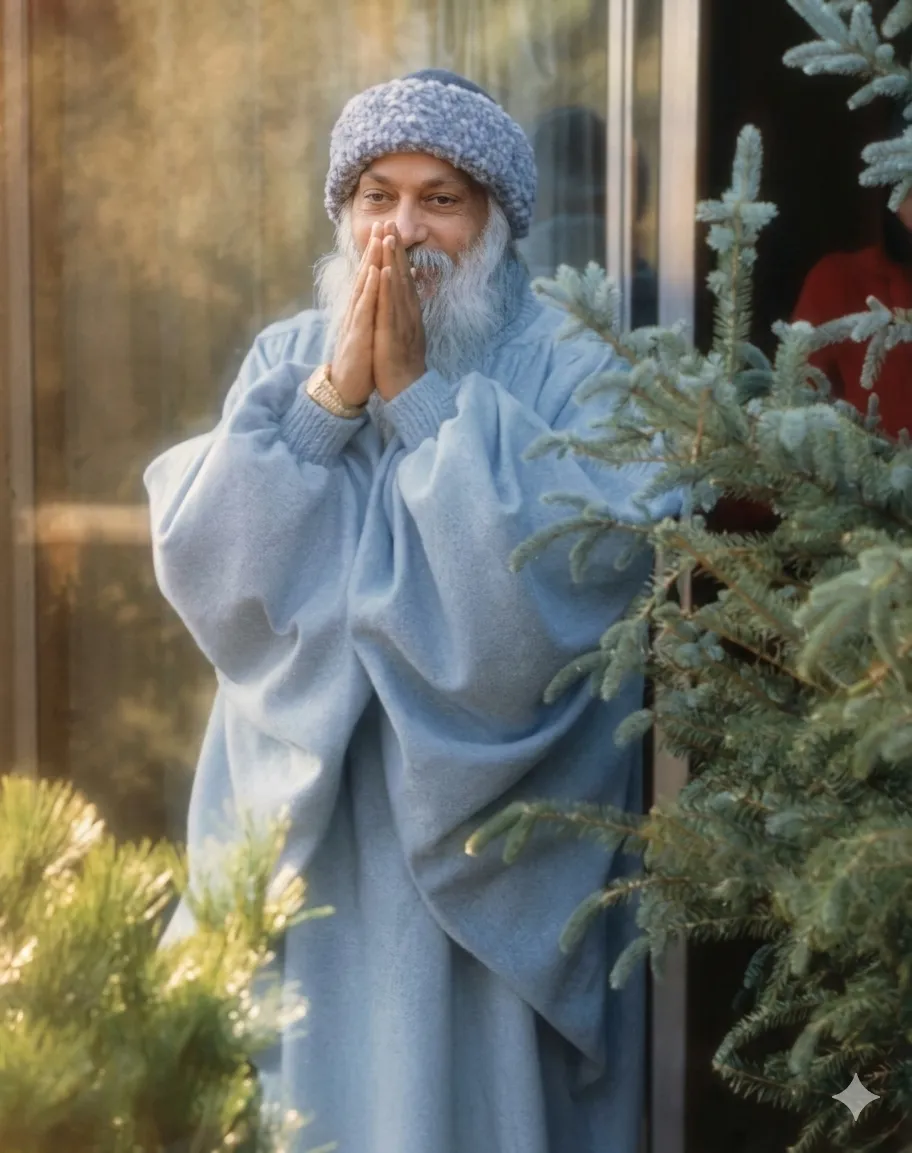
Truth is already here; some people realize it right away by relaxing, while others reach it by working hard—both are fine.
From the Discourses
Passages where Osho speaks to this question — each links to the complete discourse.
Questioner: did he come to wholeness straightaway?
To us it seems difficult to understand how one can come straightaway to wholeness. We think one must pass through a criss-crossing of roads before he arrives. Again, this is the same question that pilgrims asked of the Zen monk Lying near a cave. The monk says he does not have to do a thing, because he is already there where one should be. The pilgrims wonder how one could arrive without traveling, it seems impossible. They all had to walk long distances before they reached the place of pilgrimage, but the sage says to them, "If you cannot attain to truth right here, how can you attain to it by going to the mountain top? Truth is everywhere. It is here and now. This is not something that one needs any traveling to arrive at." But there are some types who cannot arrive without making a long journey. Even…
Osho, there seems to be another contradiction. You have said that Krishna is accomplished from birth and Mahavira is a seeker. Yet in the Kashmir camp you said about Mahavira that he had completed all his practice in previous lives. In this life he had nothing to practice, only to express. Then Mahavira too was accomplished from birth and was like Krishna.
No, I did not say that. I only said that whatever Mahavira became, he became through becoming—through practice. Whether he practiced in the last life or the one before that makes no difference. Whatever he is, he is through sadhana. Before his state of perfection there is a journey of practice. Krishna, in no life, ever practiced. Straightaway complete? We find that difficult. We find it difficult that one could be complete straightaway. We feel one can become perfect only by walking in zigzags. We feel… It is the same question as with that fakir. People passing by say to him, “So, you reached just lying here? We climbed all the way up to the shrine to reach—how could you reach lying here? That can’t be!” But the fakir says, “If you cannot reach while lying here, how will you reach by climbing up? Where there is to be reached…
ओशो, एक जगह और विरोधाभास लग गया। आपने कहा है कि कृष्ण जन्म से ही सिद्ध हैं और महावीर साधक हैं। जब कि कश्मीर के शिविर में आपने महावीर के बारे में कहा है कि उन्होंने पिछले जन्मों में ही अपनी सारी साधना पूरी कर ली थी। इस जन्म में उन्हें कुछ भी साधना नहीं करनी थी, केवल अभिव्यक्ति करनी थी। तो महावीर भी जन्म से सिद्ध हुए और कृष्ण जैसे हुए।
नहीं, ऐसा मैंने नहीं कहा। मैंने इतना ही कहा है कि महावीर जो भी हुए हैं, वह होकर हुए हैं। चाहे वह पिछले जन्म में साधना की हो, या उसके पिछले जन्म में साधना की हो, इससे कुछ लेना-देना नहीं है। वह जो भी हुए हैं, साधना से हुए हैं। उनकी सिद्धावस्था के पहले साधना की यात्रा है। कृष्ण किसी जन्म में कभी भी साधना नहीं किए। सीधे पूर्ण हो गए? हमें कठिनाई लगती है। हमें कठिनाई लगती है कि सीधे पूर्ण हो गए? हमें लगता है कि आड़े-तिरछे चल कर ही पूर्ण हो सकते हैं। हमें लगता है...वह वही फकीर का सवाल, वह फकीर यही तो कह रहा है। उससे आने-जाने वाले लोग कहें कि अच्छा, तुम यहीं पड़े-पड़े पहुंच गए? हम तीर्थ तक चढ़ कर पहुंचे, तुम यहीं पड़े पहुंच गए? ऐसा हो नहीं सकता! लेकिन वह फकीर यह कहता है कि अगर तुम यहीं पड़े-पड़े नहीं पहुंच सकते, तो ऊपर चढ़ कर भी कैसे पहुंच जाओगे? जहां पहुंचना है, वह कोई ऐसी चीज नहीं है जिसके लिए यात्रा जरूरी हो। लेकिन टाइप हैं कुछ, जो बिना यात्रा किए नहीं पहुंच सकते। …
Osho, seekers have always observed that God-realization is an extremely arduous event. But enlightened ones like you have always emphasized that the divine can happen here and now. Is saying this again and again a challenge and a way to make people try—a method, a device?
He began to beg. Twenty years passed. He forgot. If someone begs for twenty years, to keep remembering “I am a prince” would be impossible, painful; it would make begging difficult. So it is only fitting that he forgot. He had to forget, otherwise how could he beg? A prince—and he begs? Door to door, standing with a begging bowl at thresholds! Begging outside hotels and restaurants, asking for leftovers! A prince! He had to forget the prince entirely, had to consign it to oblivion. That chapter was closed. As if it had been some dream, some story read, a film seen—what did it have to do with him? After twenty years, when the emperor—his father—grew old, he became anxious: there was only one son! He alone was the heir. He told his ministers: Go find him, and wherever he is, bring him back. Tell him his father has forgiven…
दूसरा प्रश्न: ओशो, सदा से खोजियों का यह अवलोकन रहा है कि परमात्म-उपलब्धि अत्यंत दुःसाध्य घटना है। लेकिन आप जैसे बुद्धपुरुष सदा से इस बात पर जोर देते रहे हैं कि परमात्मा अभी और यहीं घट सकता है। क्या बार-बार यह कहना एक चुनौती और एक प्रयास करने की एक विधि है, एक उपाय है?
भीख मांगने लगा। बीस वर्ष बीत गये। भूल ही गया। अब बीस वर्ष कोई भीख मांगे तो याद रखना कि मैं सम्राट हूं, असंभव, कष्टपूर्ण होगा; भीख मांगने में कठिनाई पड़ेगी; यही उचित है कि भूल ही जाओ। वह भूल ही गया था, अन्यथा भीख कैसे मांगे! सम्राट, और भीख मांगे! द्वार-द्वार, दरवाजे-दरवाजे भिक्षापात्र ले कर खड़ा हो! होटल में, रेस्तरां के सामने भीख मांगे! जूठन मांगे! सम्राट! सम्राट को भुला ही देना पड़ा, विस्मृत ही कर देना पड़ा। वह बात ही गई। वह जैसे अध्याय समाप्त हुआ। वह जैसे कि कहीं कोई सपना देखा होगा, कि कोई कहानी पढ़ी होगी, कि फिल्म देखी होगी, अपने से क्या लेना-देना! बीस साल बाद जब सम्राट बूढ़ा हो गया, उसका बाप, तो वह घबड़ाया: एक ही बेटा था! वही मालिक था। उसने अपने वजीरों को कहा: उसे खोजो और जहां भी हो उसे ले आओ। कहना, बाप ने क्षमा किया। अब क्षमा और न क्षमा का कोई अर्थ नहीं, मैं मर रहा हूं। अब यह राज्य कौन सम्हालेगा? यह औरों के हाथ में जाये इससे बेहतर है मेरे खून के हाथ में जाये। …
Osho, I have a question regarding oneness. Until now I have understood that when a person becomes enlightened, his oneness is simultaneously with the whole cosmos— not that if it is with the inanimate it is not with the animate; or if it is with the animate it is not with the inanimate. But from what you said it seemed as if when Mahavira’s oneness is with the inert, with trees, then it is not with human beings. Otherwise the person who was driving nails into his ears would not have been able to. So I have always believed that when oneness happens, it happens simultaneously with all. Does it h
Absolutely right—what you say is right. When total oneness happens it is simultaneous, but that happens only in moksha. And what I said was that Mahavira is among those who returned before attaining complete liberation—there is oneness, but then Mahavira would disappear. In complete oneness, Mahavira is no more. Therefore there remains no way to send a message. One who is liberated becomes a part of the divine. The divine does not send you messages. Its oneness is with you. To bring a message, Mahavira has returned—one step before. Knowledge is complete, but he has not yet dissolved into the ocean. Like a river that has reached the shore of the ocean and, just before it merges, turns back to call out once. Gibran has used this symbol: “I am like that river which has come close to falling into the ocean, and before I fall, I remember all those…
प्रश्न: ओशो, मेरे मन में एक प्रश्न है तादात्म्य के संबंध में। मैं अब तक ऐसा ही समझता रहा कि जिस व्यक्ति को ज्ञान होता है, उसका तादात्म्य संपूर्ण जगत से युगपत होता है। ऐसा नहीं कि स्थावर से कर लिया तो चेतन से नहीं; चेतन से कर लिया तो स्थावर से नहीं। और आपके कहने से ऐसा लगा जैसे महावीर का तादात्म्य जब जड़ के साथ है, वृक्ष के साथ है, तो मनुष्य के साथ नहीं है। अन्यथा जब उनके कानों में जो व्यक्ति कील ठोंक रहा था, वह कील न ठोंक पाता। तो मैं यही मानता रहा अब तक कि तादात्म्य जब होता है तब युगपत सबके साथ हो जाता है। एक-एक के साथ अलग-अलग होता है...?
बिलकुल ठीक, तुम्हारा कहना ठीक ही है। जब पूर्ण तादात्म्य होता है तो युगपत हो जाता है, लेकिन वह मोक्ष में ही होता है। और जो मैंने कहा कि महावीर उन लोगों में से हैं, जो परिपूर्ण रूप से मोक्ष पाने के पहले वापस लौट आए हैं--वह तादात्म्य तो होता है, लेकिन तब महावीर मिट जाते हैं। पूर्ण तादात्म्य में फिर महावीर नहीं रह जाते। इसलिए संदेश पहुंचाने का भी उपाय नहीं रह जाता। इसलिए जो मुक्त हो जाता है, वह परमात्मा का हिस्सा हो जाता है। परमात्मा कोई संदेश नहीं पहुंचाता आपको। उसका तादात्म्य आप से है। संदेश पहुंचाने के लिए महावीर लौट आए हैं वापस, एक सीढ़ी पहले। ज्ञान पूरा हो गया है, लेकिन अभी डूब नहीं गए हैं सागर में। जैसे एक नदी पहुंच गई है सागर के किनारे और डूबने के पहले है, कि लौट कर एक आवाज दे दे। जिब्रान ने इस प्रतीक का उपयोग किया है कि मैं उस नदी की भांति हूं, जो सागर में गिरने के करीब पहुंच गई है, और इसके पहले कि सागर में गिर जाऊं, उन सबका स्मरण आता है, जो मार्ग में पीछे छूट गए हैं। …
Beloved Osho, it has always been the observation of seekers that the realization of godliness is a very arduous phenomenon. But enlightened ones like you always emphasize that it can happen right here, right now. Is saying this again and again a provocation? And a method or device to arouse thirst in us?
Don't laugh, because most people are just like Chinmaya. Don't think that your laughing proves that you are different than Chinmaya. Chinmaya at least got up the courage to ask -- you didn't even ask. This is the only difference. You are just like him. If you haven't become God by the time the Ashtavakra Gita discourses are over, then know: there is no difference, you are just like him. But if while listening you wake up and become God, then just the shadow of the whip has worked. "It has always been the observation of seekers that the realization of God is a very arduous phenomenon." The seeker is off track from the very beginning. The very meaning of seeker assumes that God has to be sought, that he has lost God somewhere. The seeker accepts that he has lost the divine somewhere. What a strange idea. He has…