
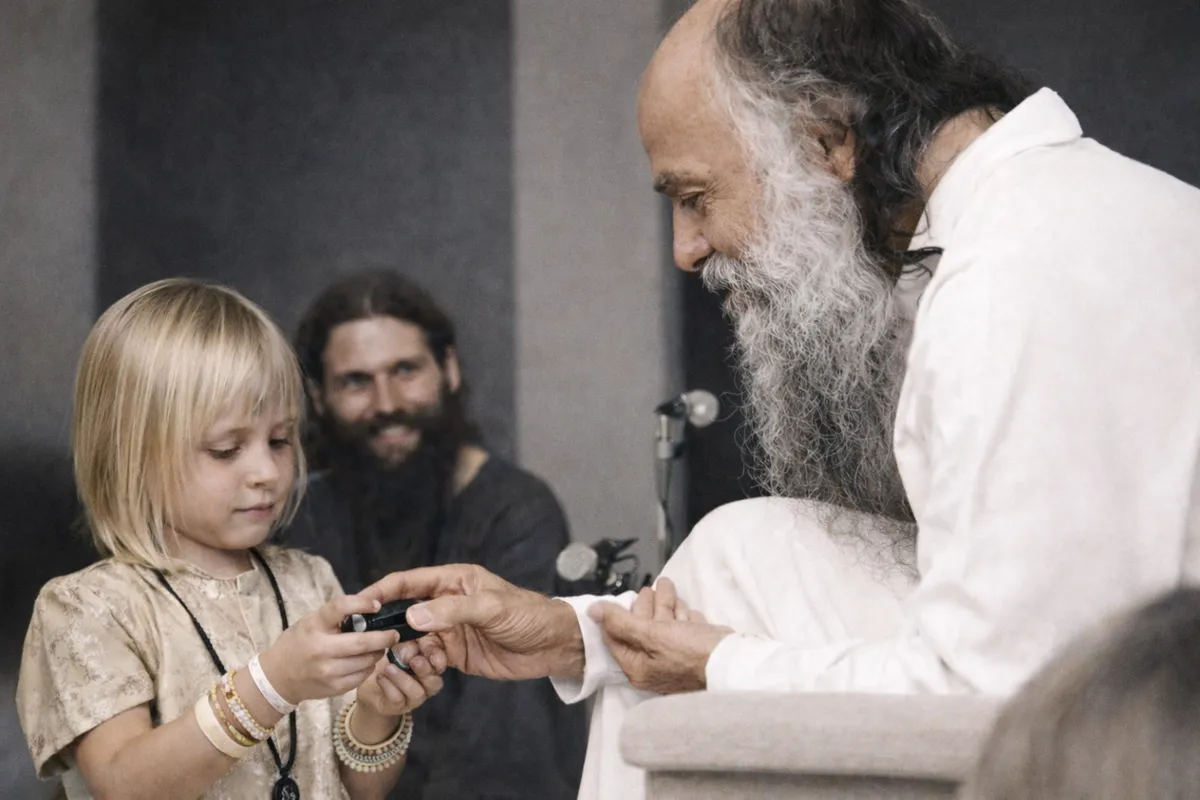
Poets get beautiful peeks of truth, but seers disappear into it and live there.
From the Discourses
Passages where Osho speaks to this question — each links to the complete discourse.
Osho, what is the definition of God?
Words are very small. If you say God is light, then what of darkness? The scriptures have said that God is light. Suppose we accept this as a definition—then what about darkness? Where will darkness go? Darkness is too; in fact it is far more than light. Light sometimes is and sometimes is not; darkness is always, eternal. Where will you place darkness? If you say God is light, darkness is left out. If you say God is darkness, then light is left out. If you say God is both darkness and light, a contradiction arises: they cannot be together. Try to have both darkness and light in the same room. If you bring in light, darkness disappears; if you preserve darkness, you cannot have light. Then how can both be together? That becomes an impossibility. So you cannot say “both” either. Then the fourth device is to say: it…
पहला प्रश्न: ओशो, परमात्मा की परिभाषा क्या है?
शब्द तो बड़े छोटे-छोटे हैं। अगर कहो परमात्मा प्रकाश है, तो फिर अंधेरे का क्या होगा? ऐसा कहा है शास्त्रों में कि परमात्मा प्रकाश है। चलो मान लें इसे परिभाषा, फिर अंधेरे का क्या होगा? फिर अंधेरा कहां जायेगा? अंधेरा भी है, प्रकाश से कहीं ज्यादा है। प्रकाश तो कभी होता है कभी नहीं भी होता; अंधेरा सदा है, शाश्वत है। अंधेरे को कहां रखोगे? अगर कहा परमात्मा प्रकाश है, तो अंधेरा बाहर पड़ गया। अगर कहा परमात्मा अंधेरा है, तो प्रकाश बाहर पड़ गया। अगर कहो परमात्मा अंधेरा प्रकाश दोनों है, तो विरोधाभास होता है। दोनों एक साथ हो नहीं सकता। एक ही कमरे में अंधेरा और प्रकाश करके दिखाओ। प्रकाश करोगे, अंधेरा खो जायेगा; अंधेरा बचाओगे, प्रकाश न कर सकोगे। तो दोनों साथ कैसे होंगे? तब एक असंभव बात हो गई। तो यह भी नहीं कह सकते कि दोनों है।
Osho! You say the poet is close to the seer. Yet it is surprising that even poets and artists with such sensitive hearts—who have set out in life seeking satyam, shivam, sundaram—hesitate to come here. You say meditation deepens sensitivity. Then what are these poets and artists afraid of? Are meditation and creation not possible together?
Arun Satyarthi! The poet is certainly close to the rishi. Poet means: one who has begun to receive glimpses of the Divine. Rishi means: one who has become one with it. Poet means: one who has seen, from afar, the snow-white peaks of the Himalayas. Rishi means: one who has made his home upon those peaks. Between the poet and Truth there is a slight distance; the rishi is one with Truth. But without being a poet no one becomes a rishi. Though not all poets become seers, all seers are bound to be poets. One can choose to cling to the glimpses, to revel in them. The poet is showered by a drizzle; the rishi is drenched in a cloudburst. The poet, you can say, lives by ponds and pools; the rishi is merged into the ocean—he becomes the ocean. Yet a poet may mistake his pond for the…
दूसरा प्रश्न: ओशो! आप कहते हैं कि कवि ऋषि के निकट है, लेकिन बड़ा आश्चर्य होता है कि इतने संवेदनशील हृदय वाले कवि-कलाकार भी, जो कि जीवन में सत्यम् शिवम् सुंदरम् की तलाश में निकले हैं, वे भी यहां आने से कतराते हैं! आप कहते हैं कि ध्यान संवेदनशीलता को और गहरा करता है। फिर इन कवि-कलाकारों का भय क्या है? क्या ध्यान और सृजन साथ-साथ संभव नहीं हैं?
अरुण सत्यार्थी! कवि तो निश्चित ही ऋषि के निकट है। कवि का अर्थ है जिसे झलकें मिलने लगीं परमात्मा की। और ऋषि का अर्थ है जो उसके साथ एकाकार हो गया। कवि का अर्थ है जिसने दूर से देखा है हिमालय के धवल शिखरों को। और ऋषि का अर्थ है जो उन शिखरों पर ही निवास करने लगा है। कवि में और सत्य में थोड़ी सी दूरी है; ऋषि सत्य के साथ एकाकार है। मगर कवि हुए बिना कोई ऋषि नहीं होता। यद्यपि सारे कवि ऋषि नहीं हो पाते, लेकिन सारे ऋषि कवि तो होंगे ही। कोई चाहे तो झलकों पर ही अटक जाए, कोई चाहे तो झलकों में ही रम जाए। कवि पर तो बूंदाबांदी होती है; मूसलाधार वर्षा तो ऋषि पर होती है। कवि तो ऐसा समझो कि ताल-तलैयों में जीता है; ऋषि सागर में लीन हो गया होता है, सागर ही हो जाता है।
Osho, is being attracted to Krishna not the same as being free of life’s other attractions?
One has to think a little. Here lies Krishna’s distinction. If you are attracted to Mahavira, you will have to be free of all the world’s attractions. If you go toward Mahavira, you will have to go against the world. That is Mahavira’s path. But with Krishna the matter is a little delicate and deep. Krishna says, if you want to come to me, you must seek me right within the attractions of the world; for I am present there too. There is no need to run away from there. Understand it like this. You relish food. If you listen to Mahavira, there will be a vow of non-taste (aswad-vrat). Then you must drop taste. Eat as a function, a necessity; do not savor. Put food into the body so that the body’s work may continue, but take no relish in it. Drop taste, continue eating. Let food become tasteless,…
चौथा प्रश्न: ओशो, कृष्ण के प्रति आकर्षित होना क्या जीवन के अन्य आकर्षणों से मुक्त होना नहीं है?
सोचना पड़े। यहीं कृष्ण का भेद है। अगर तुम महावीर में आकर्षित होते हो, तो तुम्हें संसार के समस्त आकर्षणों से मुक्त होना पड़ेगा। अगर महावीर की तरफ जाते हो, तो संसार के विपरीत जाना पड़ेगा। वह महावीर का मार्ग है। लेकिन कृष्ण के संबंध में मामला जरा नाजुक है और गहरा है। कृष्ण कहते हैं, अगर तुम्हें मेरी तरफ आना है, तो तुम्हें संसार के आकर्षण में ही मुझे खोजना पड़ेगा; क्योंकि मैं वहां भी मौजूद हूं। वहां से भागने की कोई जरूरत नहीं है। इसे ऐसा समझो। तुम्हें भोजन में रस है। अगर तुम महावीर की सुनते हो, तो अस्वाद व्रत होगा। तब तुम्हें स्वाद छोड़ना है। भोजन ऐसे कर लेना है कि काम है, जरूरत है; स्वाद नहीं लेना है। भोजन को ऐसे शरीर में डाल देना है कि काम शरीर का चल जाए, लेकिन उसमें कोई रस नहीं लेना है। स्वाद छोड़ना है, भोजन जारी रखना है। भोजन बेस्वाद हो जाए, अस्वाद हो जाए, स्वादहीन हो जाए, स्वादातीत हो जाए। स्वाद न रह जाए। बस, शरीर का धर्म है, पूरा कर देना है। तो भोजन ले लेना है। …
Osho, yesterday you said that when anger is watched consciously, it dissolves. But why is it that when sexual desire arises, even in awareness its intensity persists? Why is it so?
There is no entanglement in the breath. If you try to practice on anger… Anger is not happening every moment; it happens sometimes. And when it happens, it happens with such intensity that you are already going deep into it; so much is at stake in those moments that you may think, “We will look into awareness later; first let’s settle this now.” Lust is very deep, because existence has made it so deep; life depends on it. If lust were so easy that you decided and were freed, perhaps you would not even have been born—because many before you would have become free, and the possibility of your being would have been almost nil. But your parents, and their parents, did not become free; therefore you are. You too will not get free so easily, because your children are also to be—they are waiting: “Do not run away midway.”…
दूसरा प्रश्न: ओशो, आपने कल कहा कि क्रोध को होशपूर्वक देखने पर क्रोध विलीन हो जाता है। लेकिन क्या कारण है कि कामवासना के उठने पर होश में भी उसकी प्रगाढ़ता बनी रहती है। ऐसा क्यों है?
श्वास में कुछ झंझट नहीं है। अब तुम या तो क्रोध पर साधोगे...। क्रोध रोज तो होता नहीं, प्रतिपल होता नहीं, कभी-कभी होता है; जब होता है तब इतनी प्रगाढ़ता से होता है कि तुम गहरे में उतर रहे हो; जब होता है तब इतनी बातें दांव पर लग जाती हैं कि शायद तुम सोचोगे, ‘फिर देख लेंगे होश इत्यादि! यह अभी, अभी तो निपट लें।’ कामवासना तो बहुत गहरी है, क्योंकि प्रकृति ने उसे बहुत गहरा बनाया है, क्योंकि जीवन उस पर निर्भर है। अगर कामवासना इतनी आसान हो कि तुमने चाहा और छूट गए, तो तुम शायद पैदा ही न होते, क्योंकि तुमसे पहले बहुत लोग छूट चुके होते; तुम्हारे होने की संभावना न के बराबर होती। मगर वह तो तुम्हारे माता-पिता उनके माता-पिता नहीं छूट सके, इसलिए तुम हो। तुम भी इतनी आसानी से न छूट जाओगे, क्योंकि तुम्हारे बच्चों को भी होना है; वे भी प्रतीक्षा कर रहे हैं कि ऐसे भाग मत जाना बीच से। जीवन बहुत कुछ टिका है कामवासना पर। इसलिए उसका छूटना इतना आसान नहीं है। असंभव नहीं है, आसान भी नहीं है। …
Question: Third question: Osho, I am a poet; isn’t that enough to attain truth? Dinesh! Being a poet is beautiful, even necessary—but not sufficient. One must also be a rishi, a seer. Above the poet is the seer. In language the two words may seem to overlap, but existentially there is a great difference. The poet sees as if in a dream; the seer sees with eyes open, awake. The seer is a witness; the poet is imaginative. In the poet’s imagination, sometimes reflections of truth appear, as when the full moon is in the sky and its reflection forms in the lake. The poet is like the moon’s reflection in the lake, while the seer has lifted his eyes and seen the moon in the sky. The poet keeps singing of the reflection and gets entangled in it.