
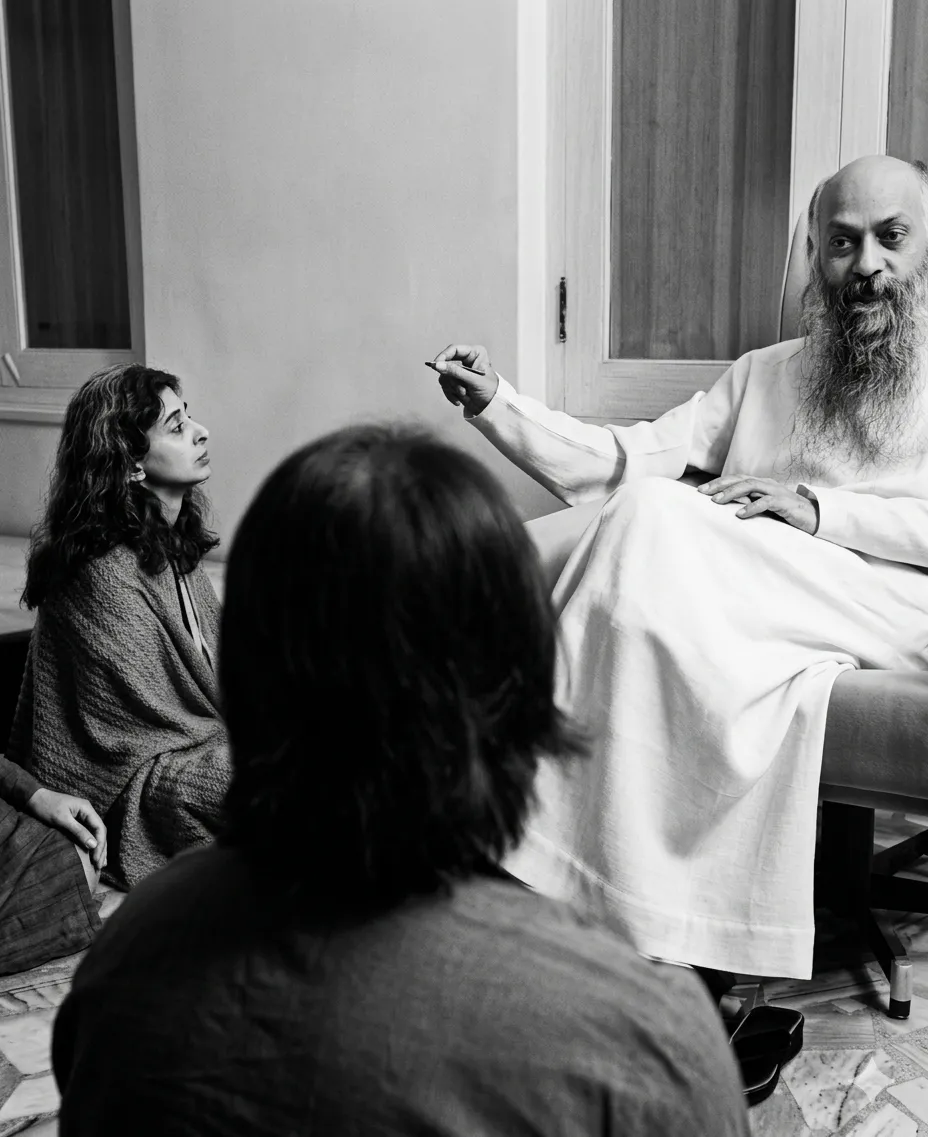
Osho's perspective on Individuality
When Osho Spoke About Individuality
Passages from the discourses where this theme comes alive.
I am confused about the difference between surrender and following my inner light. It seems that when I want to surrender, I am afraid to be responsible for myself, and when I want to follow my inner light, I'm afraid of what you will ask of me in surrender.
You have to be absolutely clear about it: if you already have the inner light there is no need for any surrender, because surrender is only going to help you to bring the inner light. If you have it already, then forget all about surrender. But... you don't have it. Just to avoid surrender you imagine that you have it. If you have it, you have it. Then the question of surrender does not arise. You don't have it. You only have inner darkness, no inner light. So when you go in you find darkness; then you start thinking of surrender. When you start thinking of surrender then you become afraid -- because the ego comes in. It is not the inner light that is hindering you. Inner light never hinders anybody. Let me say it in this way: if you surrender, it is a help to the inner light;…
Question: BELOVED OSHO, WHEN I DIE, DOES MY INDIVIDUALITY REMAIN? Yes, your individuality remains, but your personality disappears -- and you have to understand the difference between the two. The personality is something that is given by the society, by the religion, by education, by your profession. You have got a certain personality. That will be gone because it is a social product. But you were born with an individuality of your own. With death, you will be taking your individuality with you. Everything else that you have earned on the way will be taken back; it does not belong to you. Your degrees, your prizes, your awards, your Nobel prizes, your prestige, your reputation -- everything will be dropped. That I call your personality. But you have an individuality -- innocent, just the way you were born... utterly clean, a tabula rasa, nothing written on you, no name, nameless.
Osho, what is the fundamental anguish of human life?
There is only one anguish: that a human being cannot become what he was born to be. There is only one anguish: that the seed remains a seed and does not bloom like a flower; that it cannot scatter its fragrance to the infinite winds; cannot converse with the moon and stars; cannot offer its colors to the sky; cannot be expressed. If the poem within the poet cannot be revealed—anguish. If the painter cannot paint—anguish. If the dancer cannot dance—if chains lie on his feet—anguish. Anguish means only this: that what we are meant to be—our innate nature and destiny—does not come to fruition, and we are forced to be something else. Then anguish is born. Then melancholy gathers over life. And all those countless people you see burdened with sorrow, living in a kind of hell—the reason is only this: each has come carrying the seed of becoming…
चौथा प्रश्न: ओशो, मनुष्य जीवन का मूल संताप क्या है?
एक ही संताप है कि मनुष्य वह न हो पाए जो होने को पैदा हुआ है। एक ही संताप है, कि बीज बीज रह जाए, फूल की तरह खिल न पाए। बिखेर न सके अपनी सुवास को अनंत-अनंत हवाओं में; कर न सके गुफ्तगू चांद-तारों से; निवेदन न कर पाए अपने रंगों का आकाश के प्रति; अभिव्यक्त न हो पाए--एक ही संताप है। कवि के भीतर की कविता प्रकट न हो सके--तो संताप। चित्रकार चित्र न बना सके--तो संताप। नर्तक नाच न सके, पैरों में जंजीरें पड़ी हों--तो संताप। संताप का एक ही अर्थ होता है: जो हम होने को हैं, जो हमारी सहज प्रकृति और नियति है, वह न हो पाए और हमें अन्यथा होने को मजबूर होना पड़े, तो संताप पैदा होता है। तो जीवन में विषाद घिरता है।
Osho, Mahavira and Gautam Buddha were contemporaries. From your talks it becomes clear that the two were saying the same thing. Yet their disciples would argue and quarrel among themselves. After they were gone, there was even violence and war among their followers. But if Mahavira and Buddha had said that we are speaking of the same religion and the only difference is in method, then such hostility would not have grown and the harm that befell both religions would not have occurred. Kindly explain. Amrit Bodhidharma has asked:
If someone is enchanted by the design of the mosque, by its minarets, let him go to the mosque. But this has nothing to do with religion; it has to do with architecture, with aesthetic sense. You build your house one way, I build mine another—this creates no quarrel. I build my God’s house one way, you build yours another—why should that create quarrel? I build mine round, you build yours square—there is no quarrel. The purpose of a house is one: that I will live in this round house, you will live in that square one. We build houses to live in. There must be that much freedom—that whoever wishes should build as he likes; in old style or new; ancient design or an invented one; with a high roof or low; with a garden or without; with plants or with sand—a matter of taste! We do not quarrel…
पहला प्रश्न: ओशो, महावीर और गौतम बुद्ध समकालीन थे। आपके प्रवचनों से स्पष्ट हो रहा है कि दोनों बात भी एक ही कहते थे। लेकिन दोनों के शिष्य आपस में विवाद और झगड़े भी करते थे। उनके जाने के बाद उनके अनुयायियों के बीच हिंसा और युद्ध भी हुए। लेकिन यदि महावीर और बुद्ध ने कहा होता कि हम एक ही धर्म की बात करते हैं, भेद सिर्फ पद्धति का है, तो इतनी शत्रुता नहीं बढ़ती और दोनों धर्मों की जो क्षति हुई वह न होती। कृपापूर्वक समझाएं। पूछा है अमृत बोधिधर्म ने।
फिर धर्म की शैलियां अलग हो सकती हैं। किसी को रुचिकर लगता है प्रार्थना, तो रुचि से प्रार्थना करे, लेकिन इससे कुछ झगड़ा नहीं है। किसी को रुचिकर लगता है ध्यान, तो ध्यान करे। और किसी को मंदिर के स्थापत्य में लगाव है, तो मंदिर जाए। और किसी को मस्जिद की बनावट में रुचि है और मस्जिद के मीनार मन को मोहते हैं, तो मस्जिद जाए। लेकिन यह धर्म से इसका कोई संबंध नहीं है, स्थापत्य से संबंध है, सौंदर्य-बोध से संबंध है। तुम अपना मकान एक ढंग से बनाते हो, मैं अपना मकान एक ढंग से बनाता हूं, इससे कोई झगड़ा तो खड़ा नहीं होता। मैं अपने भगवान का मकान एक ढंग से बनाता हूं, तुम अपने भगवान का मकान एक ढंग से बनाते हो, इससे झगड़ा खड़ा क्यों हो? मैं अपना मकान बनाता हूं गोल, तुम चौकोन, इससे कोई झगड़ा खड़ा नहीं होता। झगड़े की जरूरत ही नहीं, तुम्हारी पसंद अलग, मेरी पसंद अलग; हम दोनों जानते हैं कि मकान का प्रयोजन एक कि मैं इस गोल मकान में रहूंगा, तुम उस चौकोन मकान में रहोगे। रहने के लिए मकान बनाते हैं। …
Is it a paradox that the most individualistic being can also be the purest medium for another?
definitionProfound Quotes on Individuality
Explore our structured collection of meaning-mapped quotes regarding Individuality.