
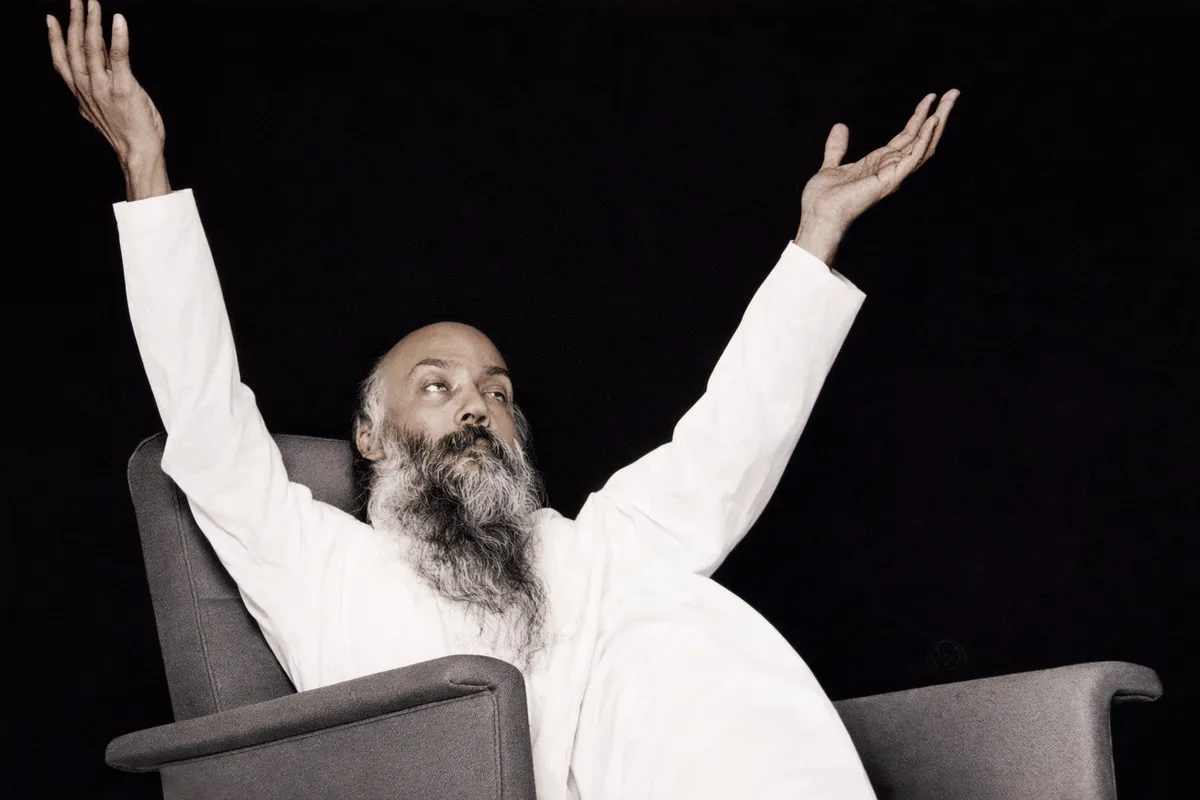
Your feelings get too big for laughs, and since you were taught to hold them back, they come out as tears instead.
From the Discourses
Passages where Osho speaks to this question — each links to the complete discourse.
Beloved Osho, why do I always weep when I can't laugh? Isn't weeping opposed to dancing, singing and celebrating?
The phenomenon of weeping is mysterious. It does not mean that you are sad, not necessarily. It is not necessarily against celebrating, against cheerfulness, against laughing; no. The tears have a very strange function: whenever something in your heart is so much that it cannot be expressed by normal means, tears are an emergency method. So they may mean anything. You may be very happy, so happy that laughing will look stupid but tears will look perfectly right. Your tears will show that your happiness is not an ordinary happiness -- it is so deep that only tears can express it; it is so extraordinarily deep that an emergency method is used. Two friends meeting after many days, many years, may not feel like talking; talking may look too profane. They may like just to hug each other and weep on each other's shoulders. They are saying many many things...…
Osho, when I listen to you, every word sinks to the depths of my heart and stirs me. But when I read you, it remains a mental game. Please tell me why this happens.
It’s plain. The arithmetic is simple. When you read, only you are there; I am not. What you read is nothing but you. It becomes a game of the mind. When you listen to me, then sometimes—knowingly or unknowingly—I also slip into you. You seldom give such a chance, but now and then a lapse happens on your side. Unaware, you leave the door a little open—and I come in. So when you are hearing me, it’s a different matter. That is why truth has always been spoken, not written. It cannot be written. Even speaking it is very difficult, yet it can still be said—at least a little can be said, a little news can be given. Because in speaking, many elements are involved that are lost in writing. When you read a book, the book is dead. A book cannot create an atmosphere around you. A book has…
आखिरी प्रश्न: ओशो, जब आपको सुनता हूं तो आपका प्रत्येक शब्द दिल की गहराई तक उतर जाता है और हलचल पैदा करता है। लेकिन जब आपको पढ़ता हूं तो वह दिमागी खेल बनकर रह जाता है। कृपया बताएं कि ऐसा क्यों होता है?
साफ-साफ है। गणित बिलकुल सीधा है। जब तुम पढ़ते हो तब तुम्हीं होते हो, तब मैं नहीं होता। जो तुम पढ़ते हो, वह तुम ही तुम हो। दिमागी खेल बनकर रह जाता है। जब तुम मुझे सुनते हो तो कभी-कभी तुम्हारे जाने-अनजाने मैं भी तुम में प्रवेश कर जाता हूं। कम ही तुम ऐसा मौका देते हो। लेकिन कभी-कभी चूक तुमसे हो जाती है। कभी-कभी बे-भान, तुम जरा दरवाजा खुला छोड़ देते हो, मैं भीतर आ जाता हूं। इसलिए तुम जब मुझे सुन रहे हो तो बात और है। इसलिए सत्य सदा कहा गया है, लिखा नहीं गया। लिखा जा नहीं सकता। कहना भी बहुत मुश्किल है, लेकिन फिर भी कहा जा सकता है, थोड़ा-सा कहा जा सकता है। ऐसी थोड़ी-सी खबर दी जा सकती है। क्योंकि कहने में कई बातें सम्मिलित हैं, जो लिखने में खो जाती हैं।
Osho, you make us laugh so much, but why do you yourself never laugh?
Veena, I laugh in solitude. Here, when I look at you, I feel like crying. The human condition is so wretched, so full of inner pain. It’s a wonder one is alive at all. So I can make you laugh, but I myself cannot. In solitude I do. When you are not there, when the very memory of you fades, when your faces are no longer before me, when your pain and your sorrow are forgotten—then I laugh. But before you, laughing is impossible. Those in whose breath no fragrance of flowers ever dwelt, who at playful buds have only ever cracked crude jests; in whose eyelid-gardens no butterfly was ever caught, on whose lips a smile never came, not even by mistake— if I could make such ill-starred ones laugh their fill, then I would laugh; I do laugh—let me get into the mood and I will laugh. Those…
अंतिम प्रश्न: ओशो, आप हमें इतना हंसाते हैं, मगर स्वयं कभी क्यों नहीं हंसते?
वीणा, एकांत में हंसता हूं। इधर तो तुमको देखता हूं तो रोना आता है। आदमी की हालत इतनी बुरी है कि हंसो तो कैसे हंसो! आदमी बड़ी दयनीय अवस्था में है, बड़ी आंतरिक पीड़ा में है। कैसे जिंदा है, यह भी आश्चर्य की बात है। इसलिए तुम्हें तो हंसा देता हूं, लेकिन खुद नहीं हंस पाता हूं। एकांत में हंस लेता हूं। जब तुम नहीं होते, जब तुम्हारी याद बिलकुल भूल जाती है, तुम्हारे चेहरे नहीं दिखाई पड़ते, तुम्हारी पीड़ा, तुम्हारा दुख विस्मृत हो जाता है--तब हंस लेता हूं। लेकिन तुम्हारे सामने हंसना असंभव है। जिनकी सांसों में कभी गंध न फूलों की बसी, शोख कलियों पे जिन्होंने सदा फब्ती ही कसी; जिनकी पलकों के चमन में कोई तितली न फंसी, जिनके होंठों पे कभी आई न भूले से हंसी; ऐसे मनहूसों को जी भर के हंसा लूं तो हंसूं, अभी हंसता हूं, जरा मूड में आ लूं तो हंसूं।
Osho! While listening to you I start to weep. Now, even in the celebration of active meditation, tears burst forth. What is this? In the midst of meditation a feeling arises that this body is a hindrance now; how can it be shed—the feeling keeps growing more intense. Why? Please explain out of compassion.
Akshay Vivek! Human beings have been given such wrong conditioning that they have neither ever cried to their heart’s content nor laughed to their heart’s content. They have never really lived to their heart’s content. In no aspect, in no dimension, have they ever done anything totally; everything remains half-done! So many things hang inside, suspended like Trishanku. I say meditation is a celebration, but what is happening to you happens to others as well. While celebrating, suddenly tears arise from some unknown corner! They must have been suppressed somewhere—perhaps for lifetimes. Especially in men. Because from childhood we tell boys: Don’t cry! Girls cry. You are a man; crying is not for you. This is false. It is utterly false. Nature has made the tear glands in the eyes of men and women just the same. Men’s tear glands are not smaller than women’s. So one thing is certain—nature…
पहला प्रश्न: ओशो! आपको सुनते-सुनते रोना आ जाता है। अब सक्रिय ध्यान के उत्सव के समय पर रोना फूट पड़ता है। यह क्या है? ध्यान के बीच-बीच ऐसा भाव जगता है कि यह शरीर अब रुकावट है; यह कैसे छूटे--ऐसा भाव सघन होता जाता है। यह क्यों? समझाने की अनुकंपा करें।
अक्षय विवेक! मनुष्य को ऐसे गलत संस्कार दिए गए हैं कि न तो वह जी भर कर कभी रोया है, न जी भर कर कभी हंसा है। जी भर कर जीया ही नहीं है। किसी पहलू से, किसी आयाम में, जी भर कर कोई काम किया ही नहीं, सब अधूरा-अधूरा है! और इसलिए भीतर बहुत सी चीजें त्रिशंकु की भांति लटकी रह जाती हैं। मैं तो कहता हूं ध्यान उत्सव है, लेकिन यह घटना जो तुम्हें घट रही है, औरों को भी घटती है। उत्सव मनाते-मनाते अचानक रोना न मालूम किस कोने से उभर आता है! दबा पड़ा होगा कहीं; जन्मों से दबा पड़ा होगा। विशेषकर पुरुषों को। क्योंकि बचपन से ही हम सिखाते हैं लड़कों को: रोना मत! रोती हैं लड़कियां। तुम हो मर्द बच्चे, रोना तुम्हारा काम नहीं है। यह बात झूठ है। यह सरासर झूठ है। प्रकृति ने पुरुष और स्त्री की आंखों में आंसुओं की ग्रंथियां एक जैसी बनाई हैं। पुरुष की आंखों में आंसू की ग्रंथियां छोटी नहीं हैं स्त्रियों से। इसलिए एक बात तो तय है--प्रकृति चाहती थी दोनों बराबर रोएं। …
Osho, the moment I arrived here, intellect turned into heart and words into silence. While listening to you, my heart sometimes begins to flow as tears. I am doubtful whether this state will remain when I return home. Kindly explain how this state can be stabilized.
First thing: a human being has nothing more sacred than tears. There is no prayer greater than tears. People have known only one form of tears—tears of sorrow. But there is another form—tears of joy. Very few have known it; very few ever come to know it. When you see someone crying, you think he must be unhappy, in pain, wounded, burning. Not necessarily. Tears flow whenever any feeling becomes so intense that you cannot contain it—any feeling. If sorrow grows too much, it overflows as tears. If happiness grows too much, it too overflows as tears. Great pain flows out and lightens the heart through tears; great bliss also flows out as tears. So first, do not tie tears inextricably to sorrow. Deep down our minds have been conditioned to think tears come because of suffering. So we hide them, we hold them back. We try hard that tears…
पहला प्रश्न: ओशो, यहां आते ही बुद्धि हृदय में और शब्द मौन में रूपांतरित हो गये। आपको सुनते समय मेरा हृदय कभी-कभी आंसू बनकर बहने लगता है। संदेह है कि यहां से घर लौटने पर भी यह अवस्था बनी रहेगी अथवा नहीं। कृपापूर्वक समझाएं कि किस तरह यह अवस्था स्थिर हो?
पहली बात, आंसुओं से ज्यादा पवित्र मनुष्य के पास और कुछ भी नहीं है। आंसुओं से बड़ी कोई प्रार्थना नहीं है। आंसुओं का केवल एक रूप ही लोगों ने जाना है। वह रूप है--दुख-रूप। आंसुओं का एक और रूप है--आंनद-रूप। उसे बहुत कम लोग जान पाये। बहुत कम लोग जान पाते हैं। किसी को तुम रोेते देखते हो, तो सोचते हो दुखी होगा। किसी को तुम रोते देखते हो, तो सोचते हो कुछ पीड़ा होगी। कुछ चुभन होगी, जलन होगी। जरूरी नहीं। आंसू तो तभी बहते हैं जब कोई भी भावदशा इतनी ज्यादा हो जाती है कि तुम संभाल नहीं पाते। कोई भी भावदशा। दुख बहुत हो जाए तो आंसुओं से बहता है। सुख बहुत हो जाए तो भी आंसुओं से बहता है। पीड़ा बहुत हो, तो आंसुओं से बहकर हल्का हो जाता है मन। आनंद बहुत हो, तो आंसुओं से बह जाता है। तो पहली तो बात, आंसुओं के साथ दुख का अनिवार्य संबंध मत जोड़ना। गहरे में हमारे मन में यह बात बनी ही हुई है कि आंसू दुख के कारण आते हैं। तो हम आंसुओं को छिपाते भी हैं। आंसू आते हों तो रोकते भी हैं। …